

Surface Spot: Finding colour in the things we throw away

When we consider the materials that make up our interior surfaces, how often do we give much thought to where their colour comes from? Pigments and dyes are integral to the manufacture of everything from ceramic tiles to textiles, yet their origins and the resources required to produce them are rarely at the forefront of material specification. For Lithuanian designer Agnė Kučerenkaitė, colour has become the starting point for an ongoing investigation into the value of industrial and agricultural waste.
Among the designers contributing to the Vilnius-based Biomaterials Library, which we recently profiled, Agnė occupies an interesting territory between bio-based material research and the recovery of inorganic resources. Working from the Netherlands, her research brings together chemistry, craft and industrial manufacturing, with the intention of finding commercially viable applications for materials that might otherwise be discarded.
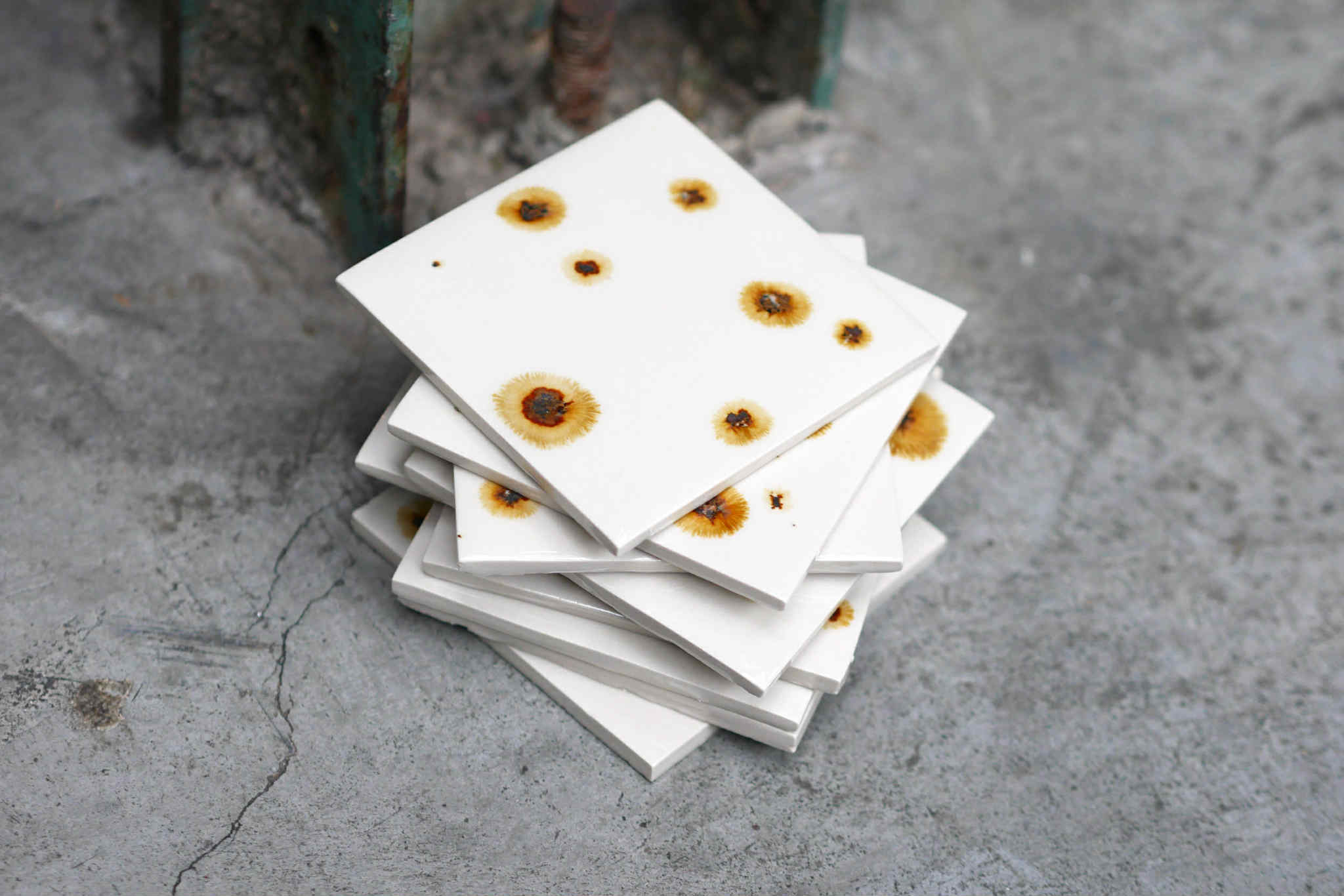
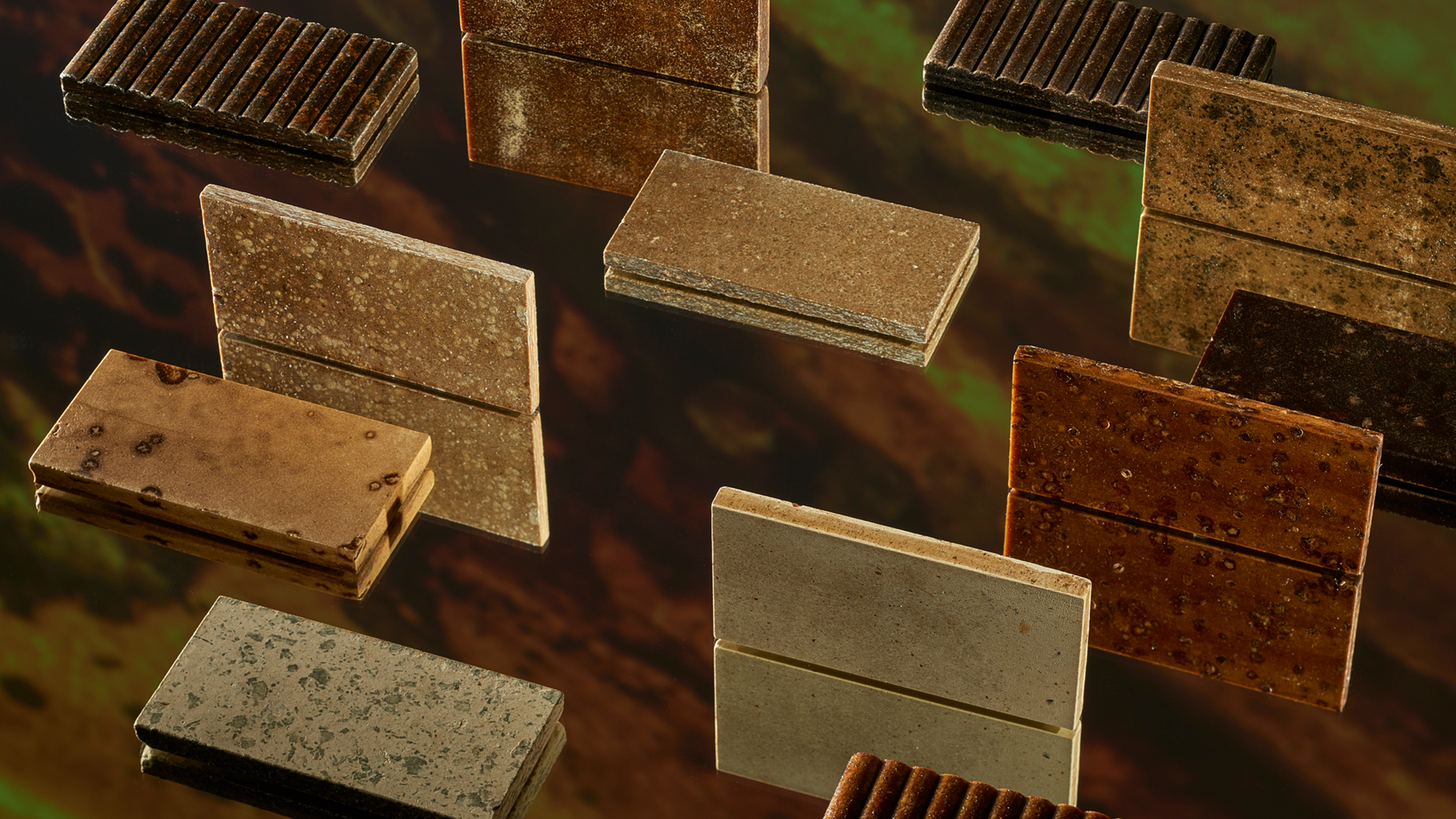
Her aptly named Ignorance is Bliss project began in 2016 with an exploration of the colouring properties of metal-rich residues. Among her sources were drinking water treatment facilities and companies involved in soil remediation, both of which generate substantial quantities of waste. Often arriving in the form of sludge, the material undergoes a process of drying, milling and sieving before it can be introduced into a ceramic glaze.
Given that metal oxides are already widely employed to introduce colour into ceramics, there's a certain logic to the process. The challenge lies in understanding the chemical composition of these less predictable ingredients and developing formulations that respond to different clay bodies, firing temperatures and kiln atmospheres.
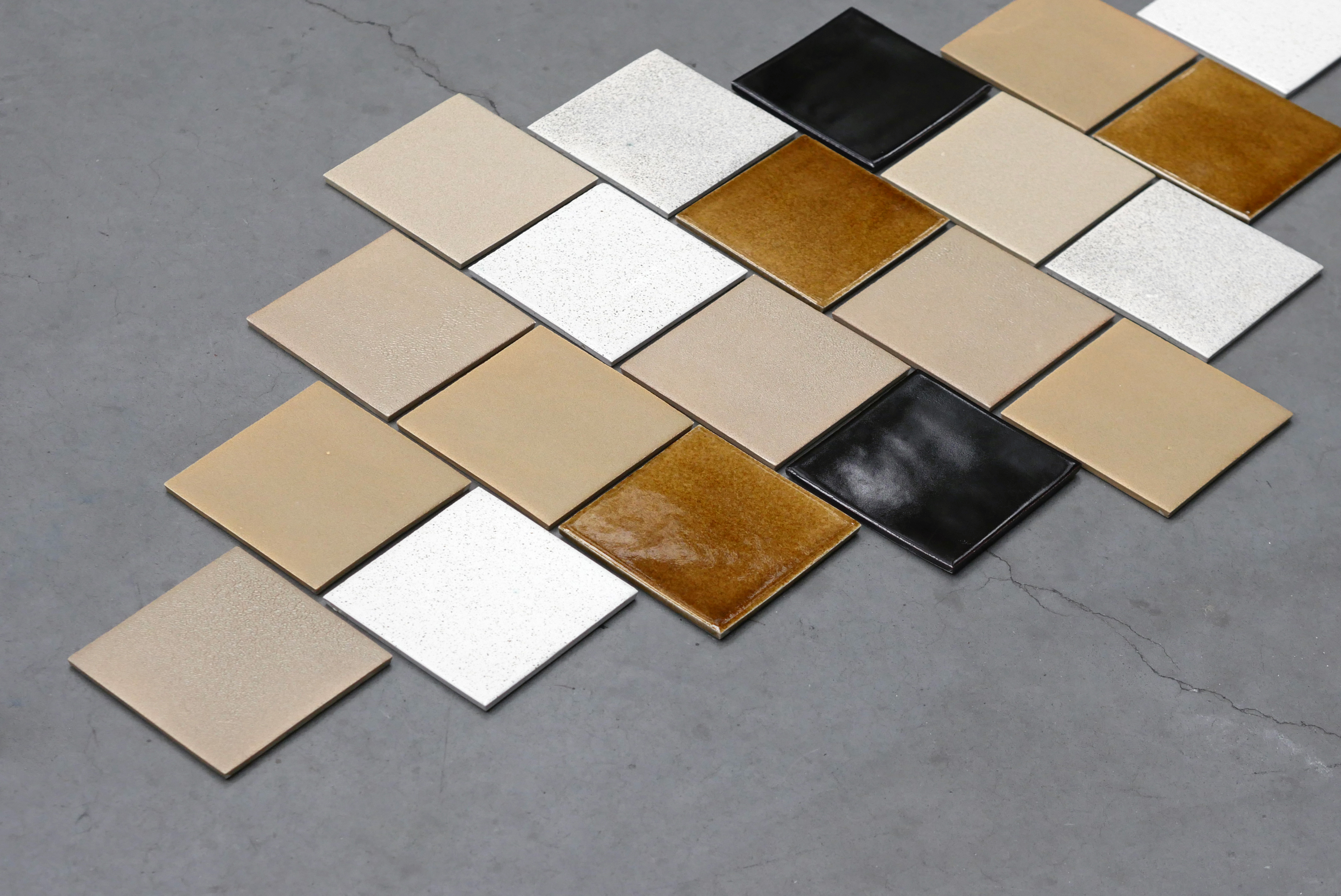
Having initially applied her research to porcelain tableware, Agnė began developing stoneware tiles, producing a collection for a restaurant in Rotterdam in 2017. A collaboration with Dutch tile manufacturer Albarello subsequently enabled her to move production from the workshop to the factory.
The resulting collection comprises more than 20 colours, with waste accounting for up to 40% of the glaze composition. There are earthy greens, rich browns and darker shades derived from iron-rich residues, alongside lighter, granular finishes produced using waste from soil remediation. What's particularly pleasing is that the manufacturing process retains an element of handcraft, lending the tiles subtle irregularities and variations in colour.
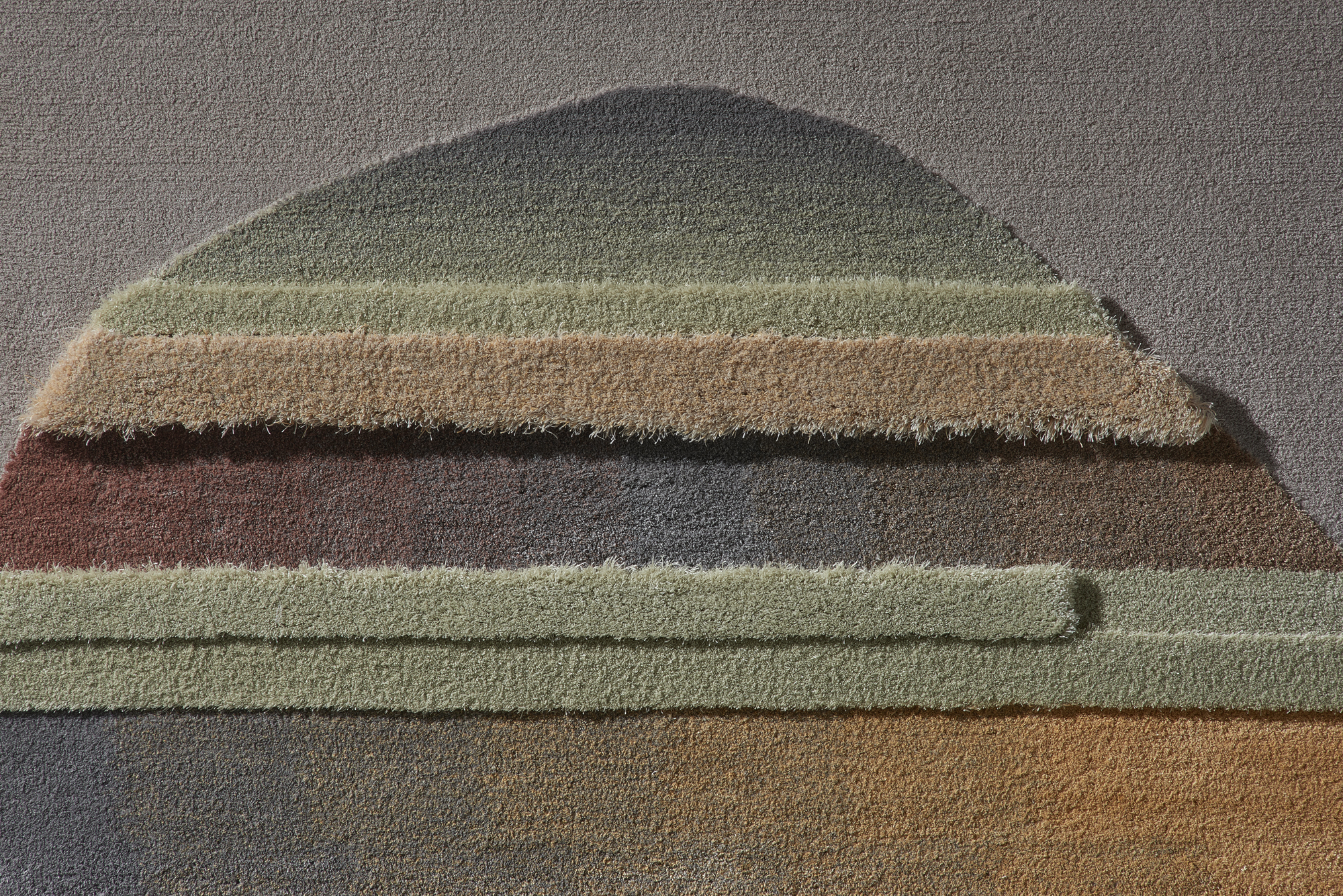
The exploration of colour has also taken Agnė's practice in an altogether softer direction. Having experimented with iron waste as a textile dye, she began investigating the colouring potential of agricultural by-products, working with Lithuanian producers to make use of residues from crops including hemp, mustard and evening primrose.
Her Lutetia and Juno rugs, introduced in 2021, bring together nine colours developed from these botanical and metal-based resources. The yarns are hand-dyed before being hand-tufted into rugs. The choice of linen introduces another bio-based element to the collection, making use of a hardwearing fibre derived from flax, a crop with comparatively modest water requirements during cultivation.
While ceramics and textiles might appear to occupy quite different corners of the interiors industry, it's interesting to see how a common approach to sourcing raw ingredients can inform the production of both. And Agnė's research continues to broaden, with investigations into waste generated through the processing of amber and stone, as well as residues from biofuel production.
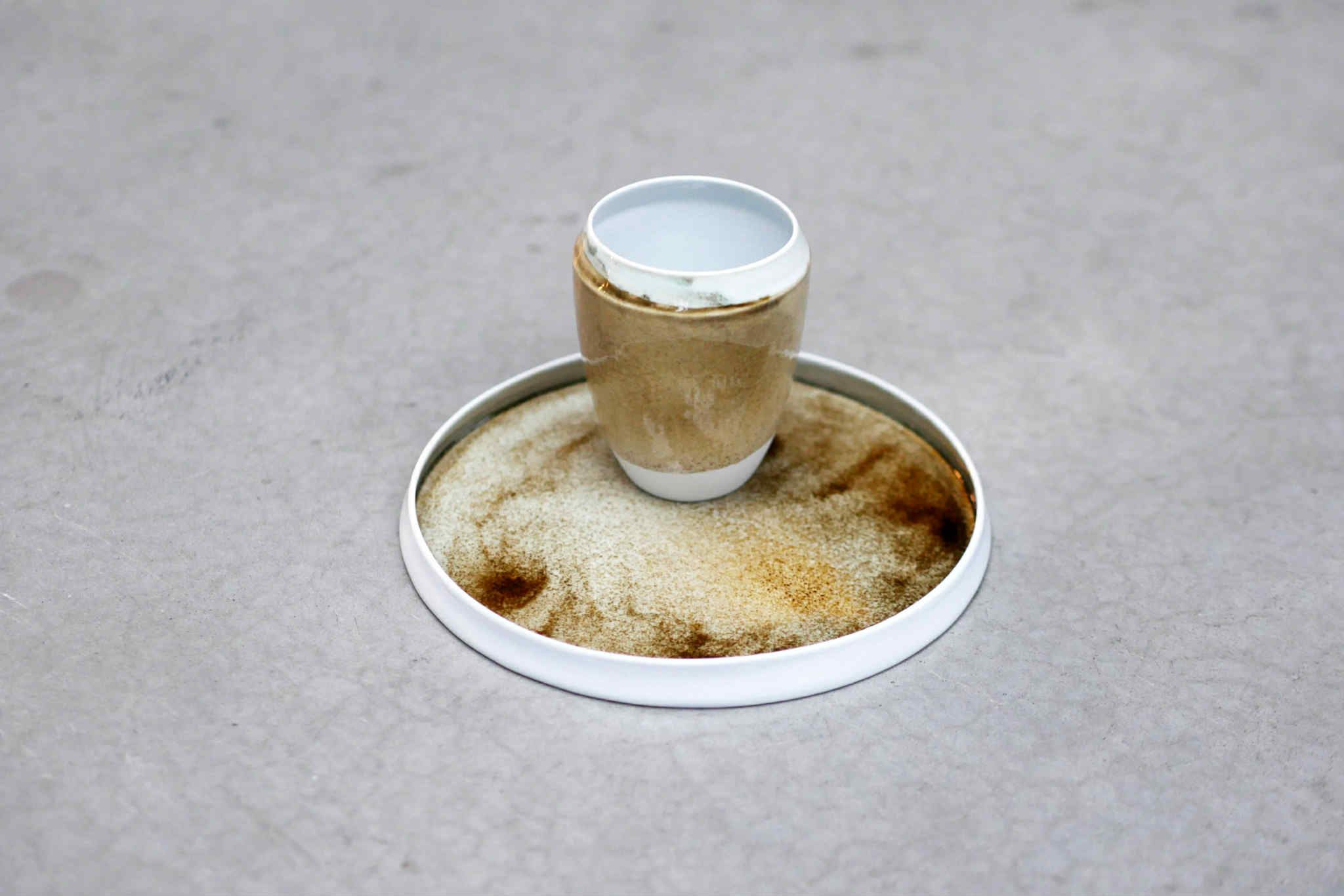
Perhaps one of the most interesting aspects of her practice is that the aesthetic qualities of the finished products are dictated, to a considerable extent, by the resources available to her. In an industry accustomed to creating materials to match predetermined colour palettes, there's something refreshing about allowing the origins of a material to have rather more influence on the outcome - which are uniquely beautiful in their own right.