

Case Study: Clayrise, Templeton Ford

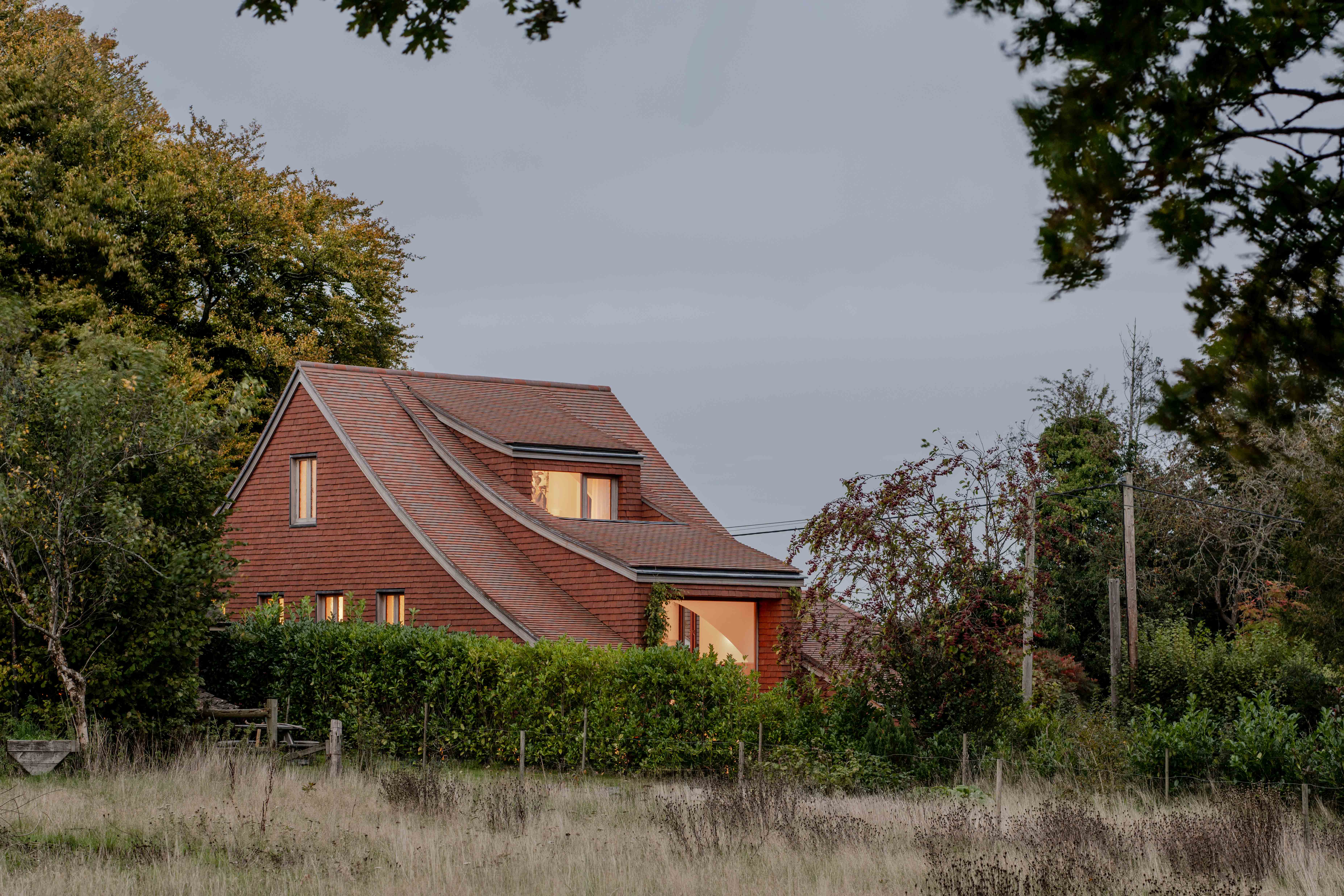
Set on the neighbouring plot of architect Andre Templeton Ford’s childhood home, Clay Rise is a highly personal and site-specific project, shaped by the materials and traditions of its rural context. The local vernacular of clay-tiled cottages, handmade brickwork and a long-established culture of craft informed both the form of the building and the choice of materials. “We sought to produce a home that is entirely of its place, through a deep understanding of its context and local craft traditions,” says Ford. “It allowed us to explore ideas that we’ve been collecting for many years.”
The project marks the debut of London-based architecture and interior design practice Templeton Ford, which was founded in 2025 by architect Andre Templeton Ford and stylist Jessica Templeton Ford. Their combined experience across decades in award-winning architectural practices, design, art, and creative direction shines through the project, which has been shortlisted for the 2025 Manser Medal.
Located in the village of West Hoathly, West Sussex the three-bedroom home balances heritage and contemporary expression, blending the solid mass of traditional Sussex brick buildings with a sweeping, curved roofline that softens the building’s profile. Layered roof forms roll down from the ridge to frame windows across all three storeys, opening long views over neighbouring fields and towards the South Downs beyond.
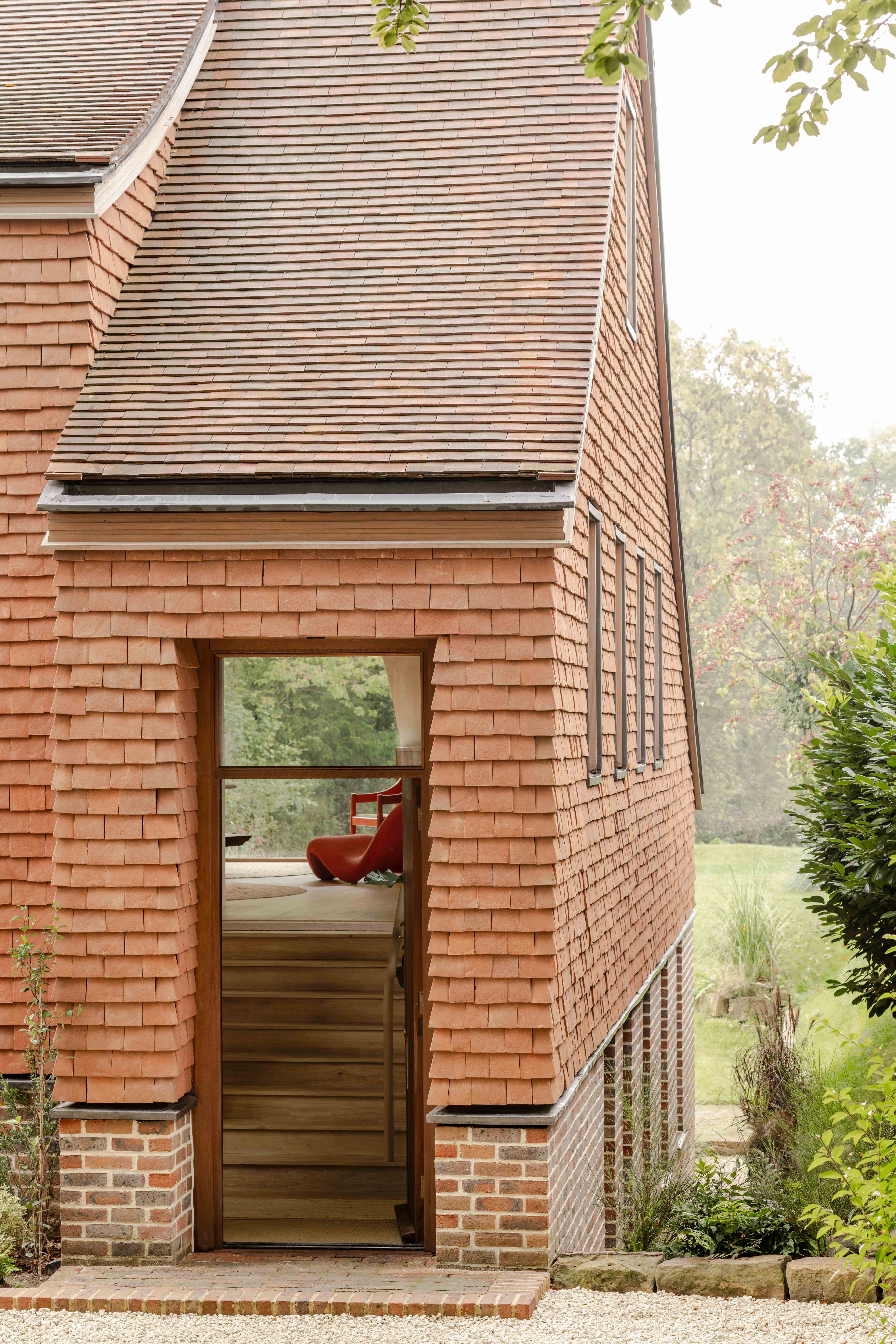
Materiality is inseparable from the architecture. Clay Rise is constructed using a prefabricated, panelised timber frame system, selected for its precision, speed of erection and environmental credentials. The structure was assembled on site in just two weeks, allowing the design team to focus attention on detailing and finishes. Externally, the building is wrapped in locally sourced brick made from the same clay originally found in the soil beneath the site, reinforcing the project’s connection to place. A continuous datum line marks the junction between brickwork and red clay roof tiles, while additional brickwork is used at the rear, where the house is embedded 1.5 metres into the hillside.
By lowering the building into the site, Templeton Ford created a split-level arrangement of internal floors and a natural grassy slope to the rear garden. This strategy not only integrates the house into its landscape, but also enables the dramatic curved roof form that defines the project’s architectural identity.
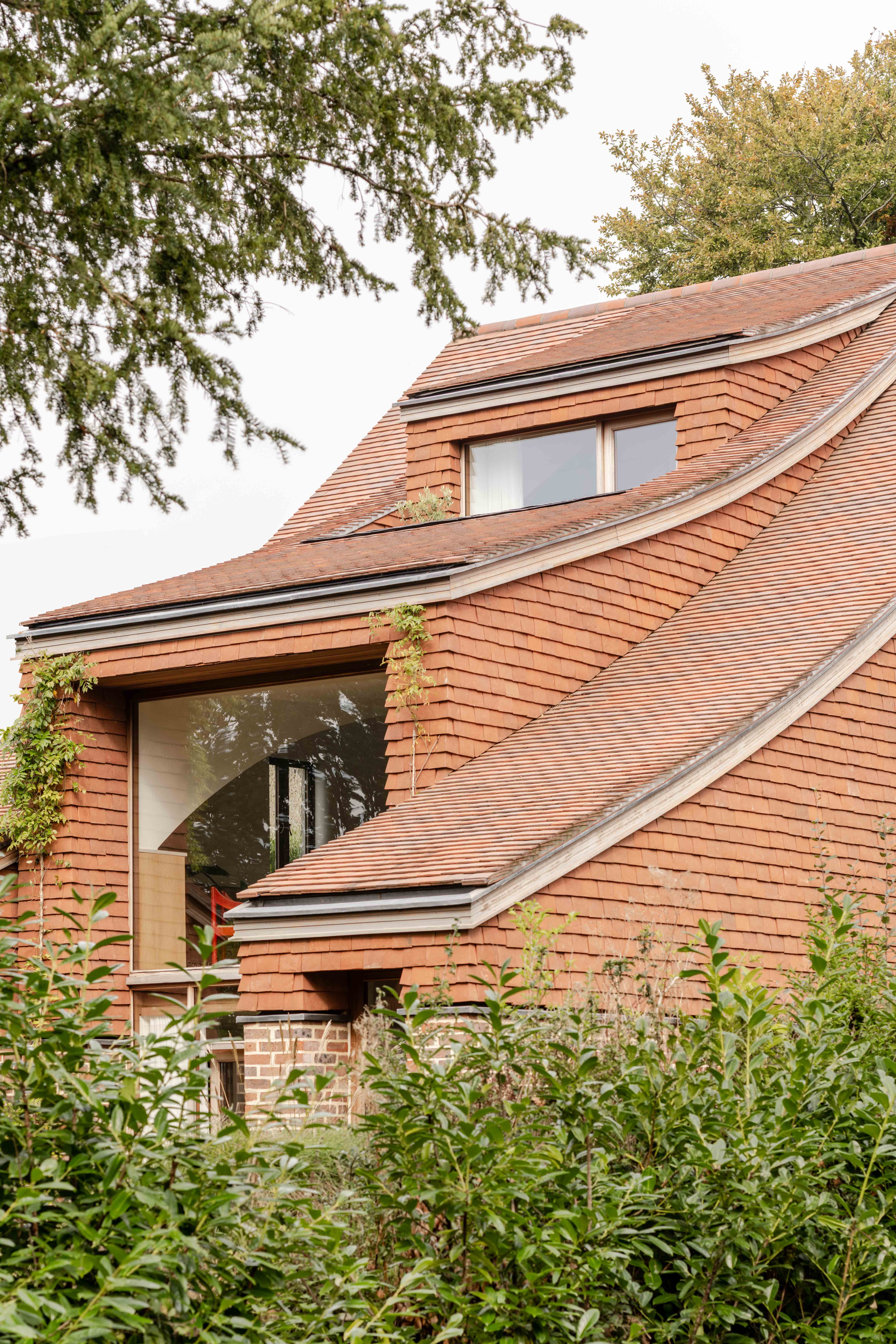
Originally conceived as a multigenerational family home, the split-level plan allows the building to function as two independent dwellings: a self-contained two-bedroom apartment at ground level and the main living spaces above, including the kitchen, living area and principal bedroom suite. This adaptability supports evolving patterns of occupation, while maintaining clear spatial organisation.

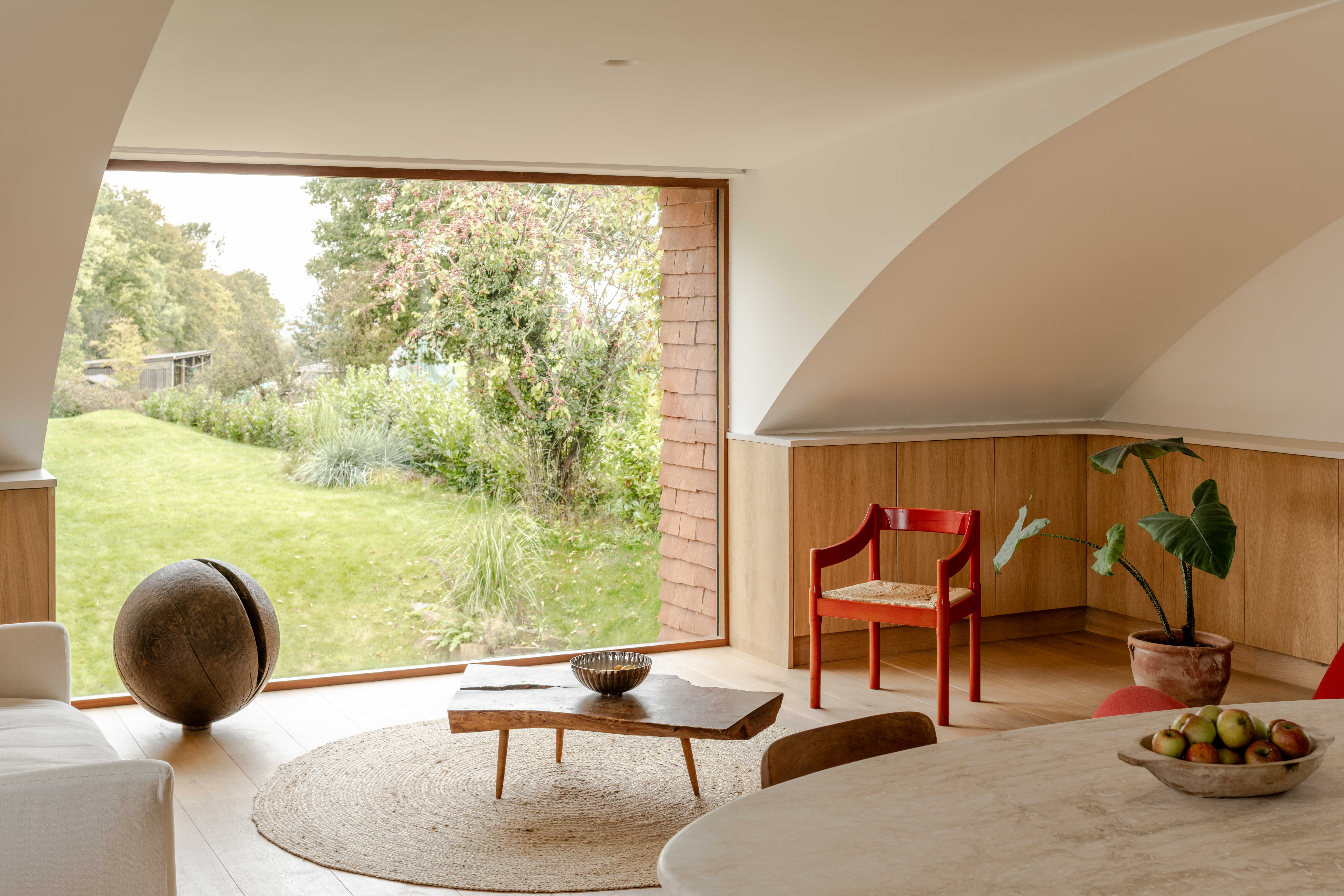
Internally, the architecture is shaped by light, flow and tactility. Curves introduced by the roof geometry are echoed throughout the interiors, lending softness and continuity. A curved, CNC-cut staircase finished in lime plaster draws visitors upwards to the main living spaces, while lime-plastered walls, exposed timber elements and stone floors establish a restrained and tactile material palette. Deep sapele timber window reveals frame views of the surrounding countryside, reinforcing the close relationship between inside and out.
The interiors are further enriched by carefully curated furnishings and fixtures, guided by Jessica Templeton Ford’s background in antiques and decorative arts. Bespoke joinery sits alongside sourced pieces, creating a layered domestic environment that balances craftsmanship with lived-in comfort.
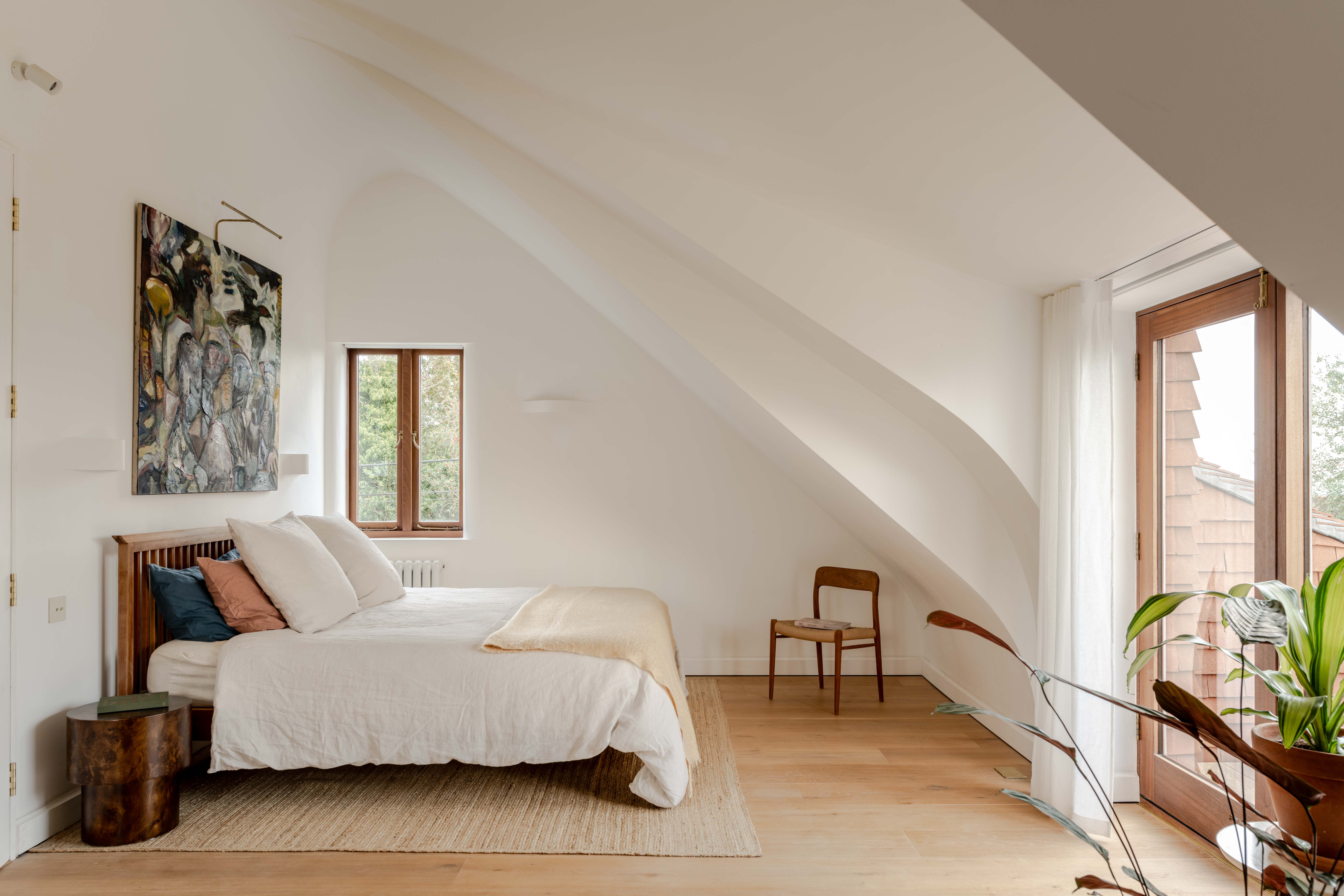
Environmental performance was integral to both form and detailing. The house is oriented to optimise solar gain and shading, with a deep south-facing window admitting low winter sun while limiting summer overheating. Operable east-west openings encourage cross-ventilation, while a central stair atrium acts as a thermal chimney, drawing warm air upwards to regulate internal temperatures. An air source heat pump, high levels of insulation and double glazing further support the building’s low-energy strategy, while reclaimed kitchen and utility fittings, along with on-site reuse of timber off-cuts, reduced material waste.
Designed to adapt to changing needs over time, Clay Rise incorporates services and layouts that allow spaces to be reconfigured with minimal intervention. The principal bedroom can be subdivided to form an additional room, while the ground-floor apartment can function independently for extended family, guests, carers or home working.
At once modest and expressive, Clay Rise presents a contemporary interpretation of local vernacular, grounded in material honesty and careful making. Through its close engagement with brick, timber, plaster and surface finishes, Templeton Ford has created a home that belongs unmistakably to its setting, while offering flexibility and durability for long-term living.