

News: Alabaster in Motion

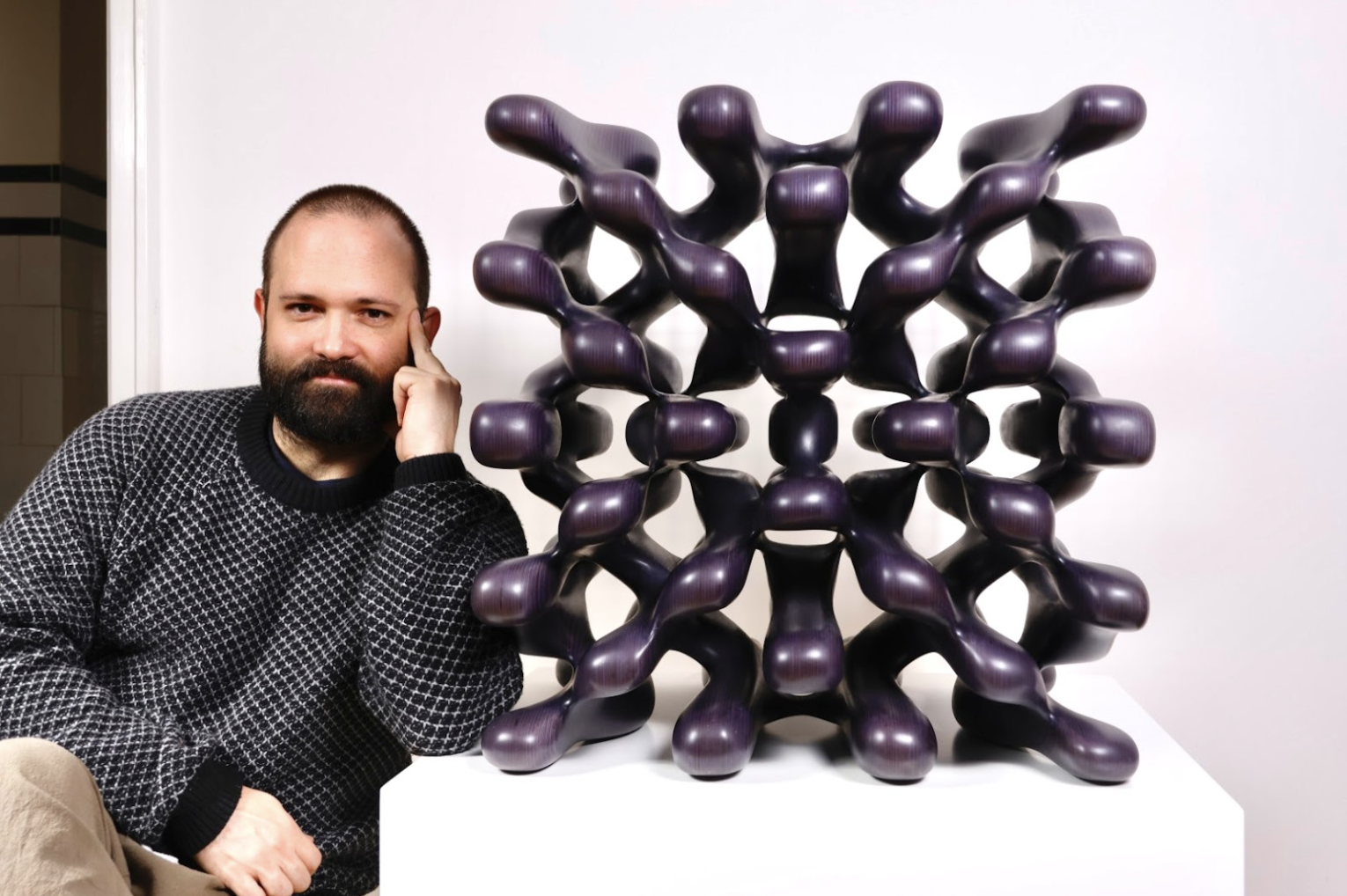
Sculptor Ricardo Mondragon is developing a sculpture that brings together science, material heritage and contemporary form. Working with English alabaster, he is using the stone’s physical and optical qualities as an active part of the work’s meaning, shaping a piece that explores movement, vibration and pattern.
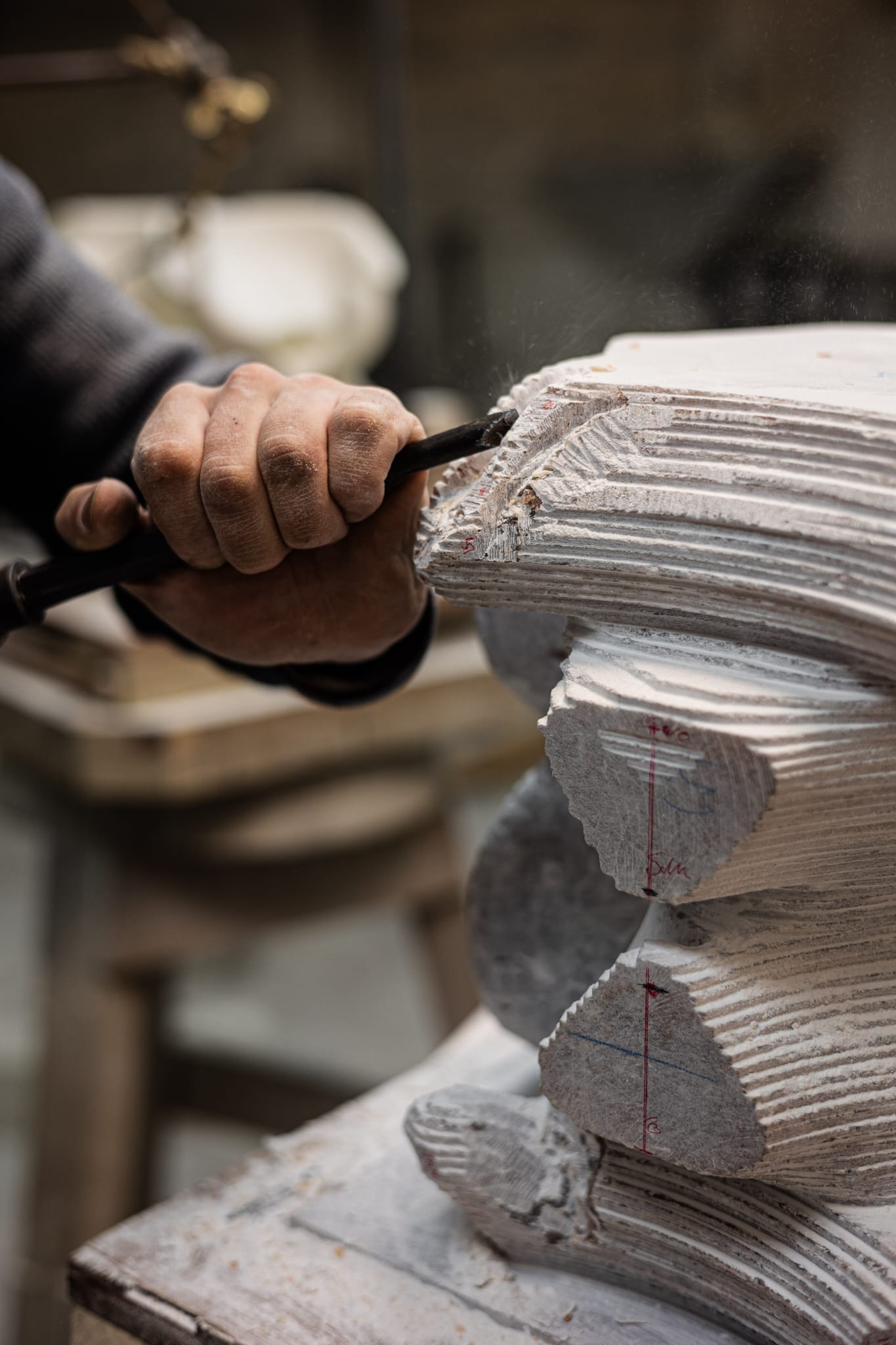
“My interest in English alabaster is rooted in both its material properties and its historical context,” Mondragon says. That dual focus underpins the project, which takes its conceptual lead from 17th-century scientist Robert Hooke and his experiments into wave behaviour. “This work focuses on undulation and vibration, taking as a conceptual reference Robert Hooke’s seventeenth-century observations of wave behaviour,” he explains. “These studies demonstrated how vibration can organise matter into ordered geometric patterns, an idea that directly informs the form of the sculpture.”
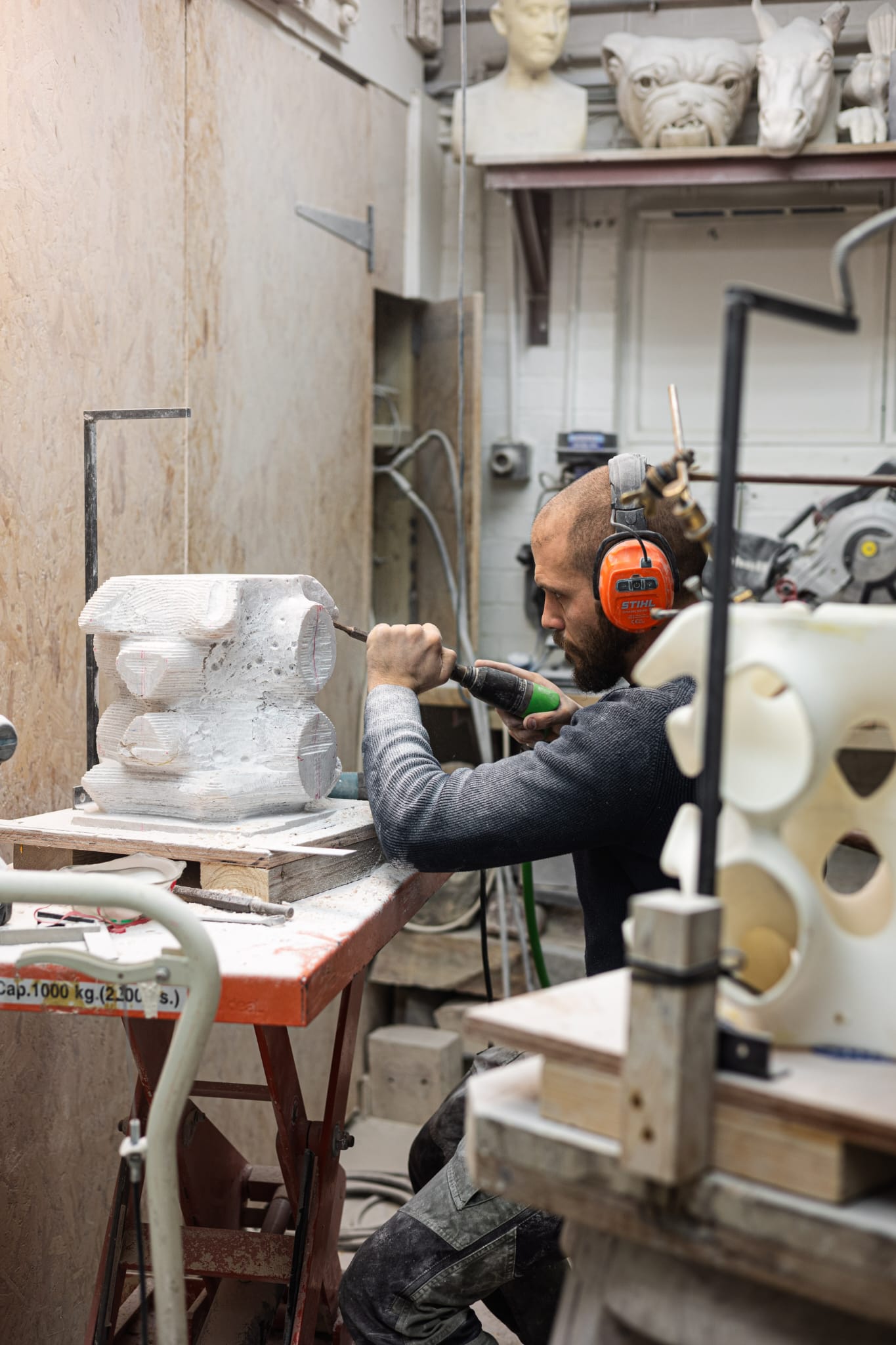
The piece is still in progress, with Mondragon refining its contours through a close, hands-on relationship with the stone at London Stone Carvers. As the form emerges, the surface appears to ripple and pulse, its carved undulations catching and diffusing light. Alabaster is central to that effect: its relative softness allows for finely modulated carving, while its translucency introduces depth and a subtle internal glow.
Mondragon is also conscious of the long lineage he is engaging with. “English alabaster has a long-established history of use, particularly from the Middle Ages onward,” he notes. “Its translucency and relative softness made it especially suitable for finely carved ecclesiastical and architectural sculpture.” By choosing alabaster today, he places his work in dialogue with that tradition while approaching it through a contemporary, abstract framework.
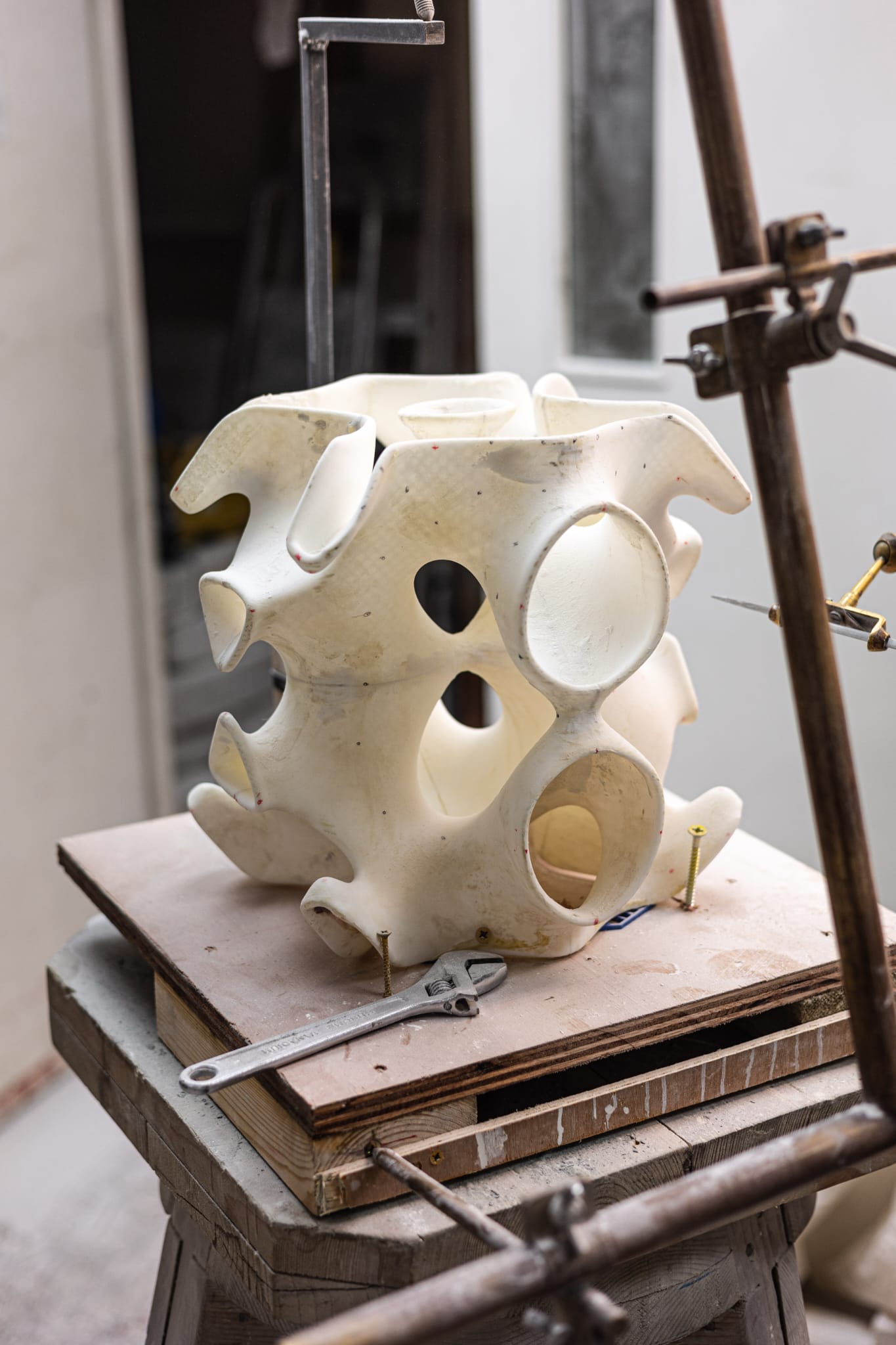
There is a further layer of material specificity in the choice of stone. “Alabaster from sites such as Fauld is now comparatively rare, as extraction has significantly declined, adding a further layer of material specificity without overstating issues of availability,” Mondragon says.
For him, the sculpture is a meeting point between disciplines and timescales. The piece shows how a historic English material can still be used to speak fluently in a contemporary sculptural language, where light, movement and matter quietly converge.