

News: Immersive Installation Comes to Life With Stone at Its Heart

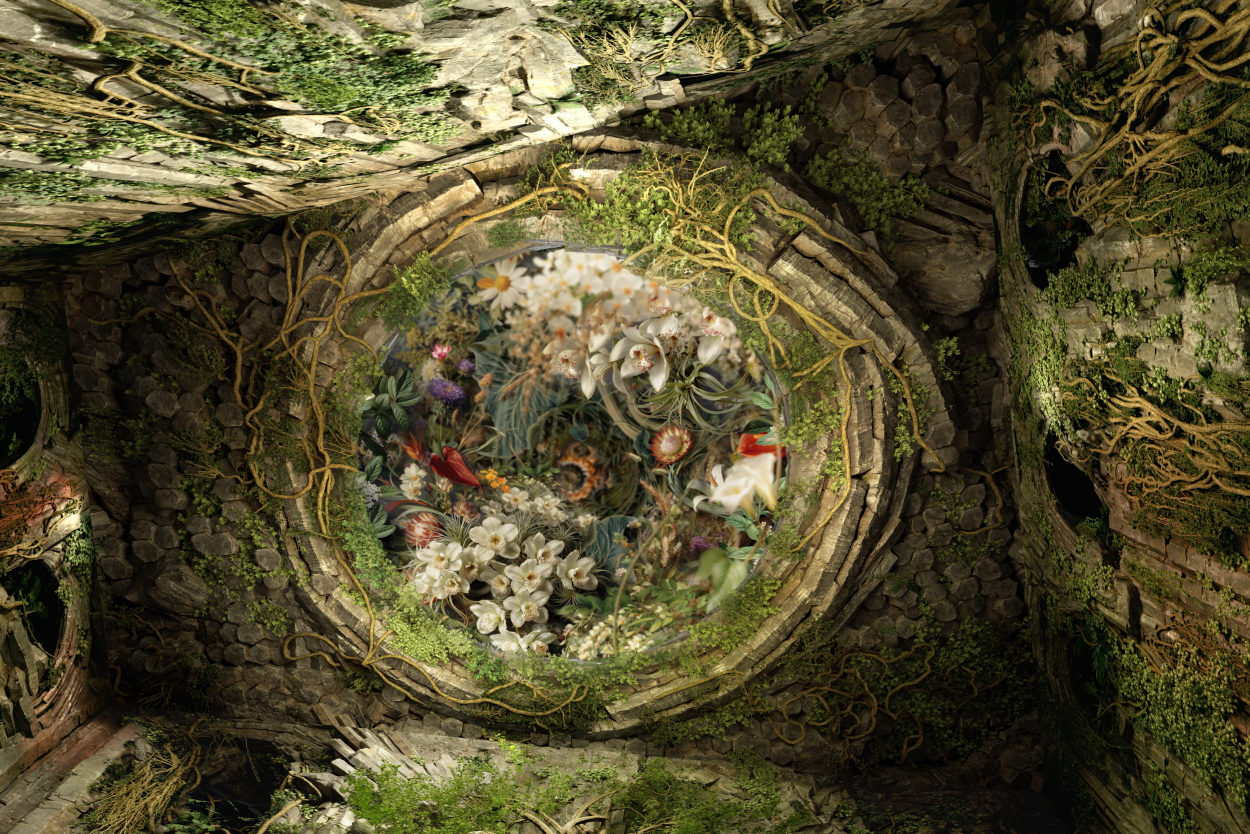
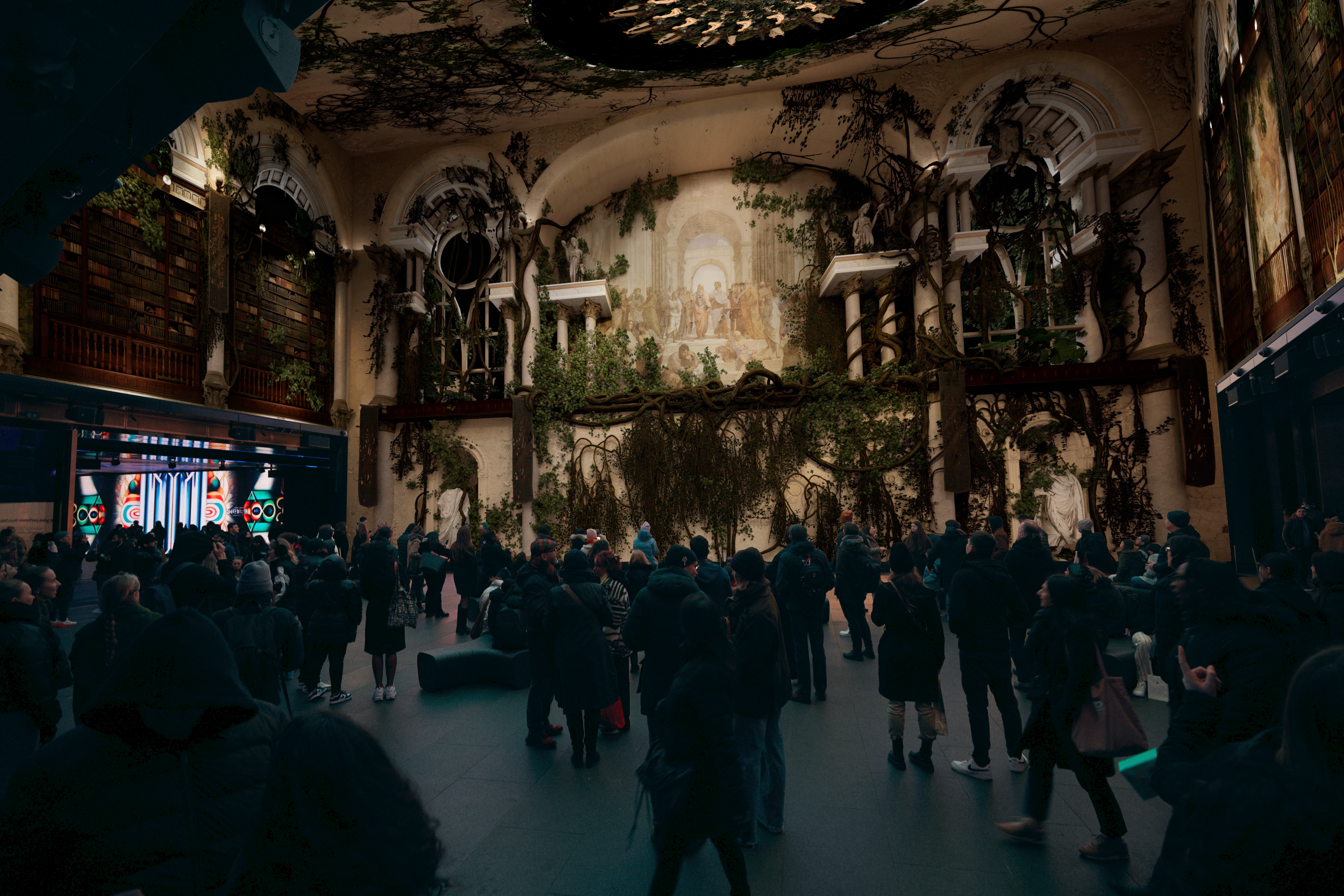
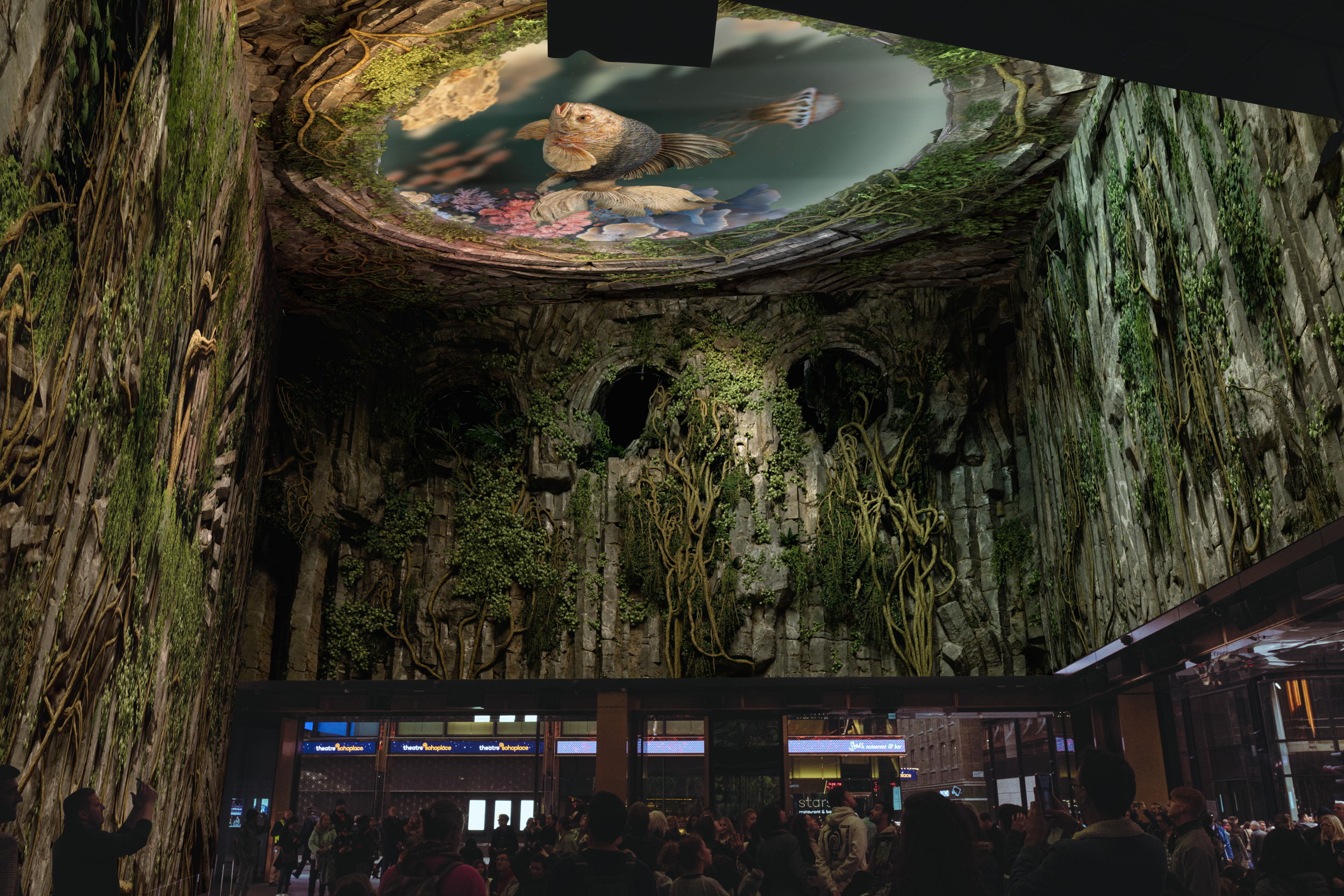
Outernet London has launched The Intelligence Garden, a new large-scale immersive installation by creative technology studio GLASSEYE, transforming one of the capital’s most advanced digital environments into an exploration of intelligence, materiality and human evolution. Unveiled on 12 February, the work occupies the four-storey-high LED screens of The Now Building and will run throughout 2026, with free public access.
Conceived and produced by GLASSEYE under the creative direction of Agustín Vidal Saavedra, The Intelligence Garden uses architectural-scale imagery to trace a journey from early geological processes to human consciousness. Although entirely digital, the installation places material thinking at the centre of its narrative, treating stone, texture and surface as conceptual anchors rather than visual backdrops.
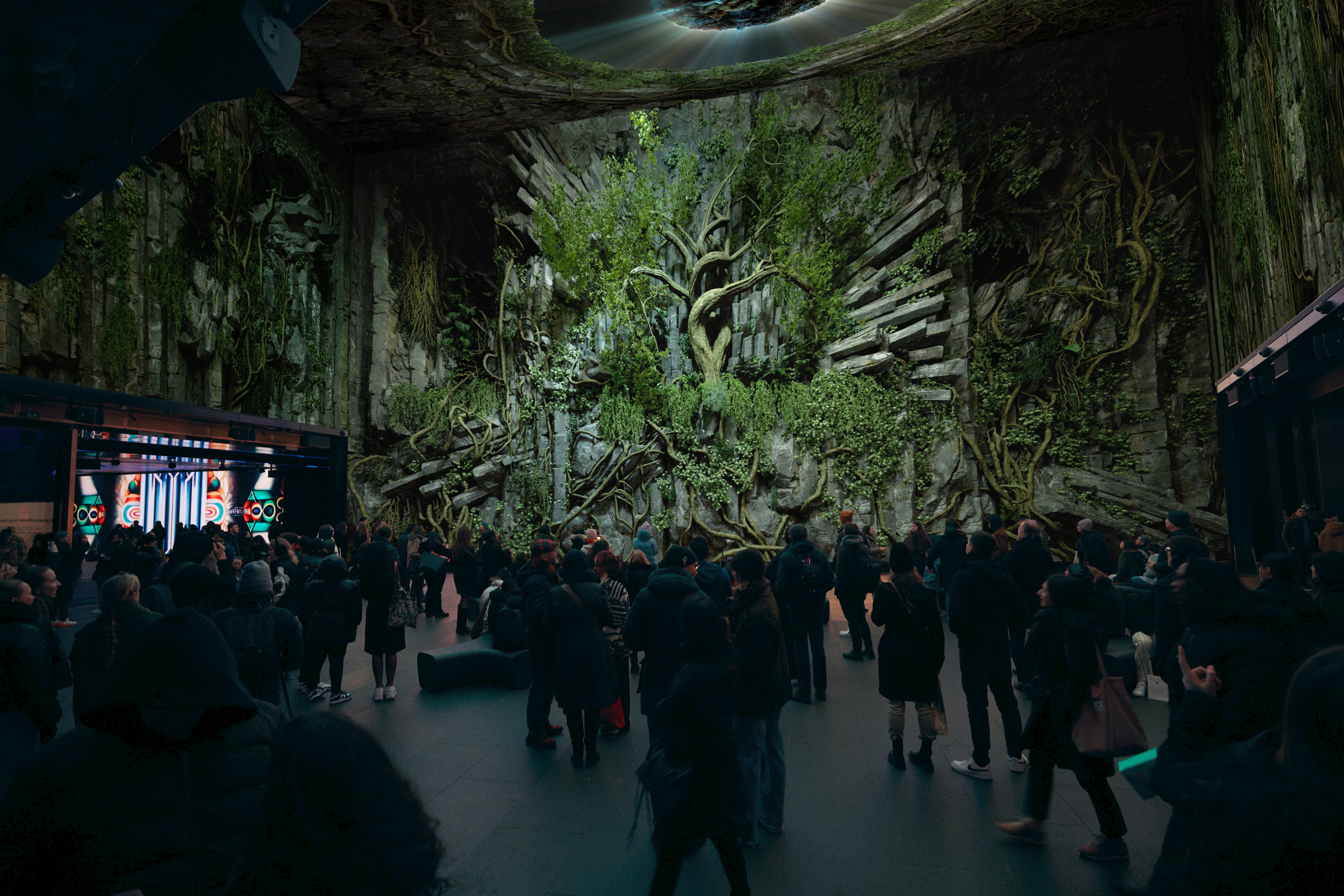
“One of the earliest creative decisions in The Intelligence Garden was the choice of materials, as they needed to feel narratively meaningful while holding visual weight at architectural scale,” says Saavedra. For the opening cave sequence, the studio deliberately selected basalt stone as a primary reference. “Basalt is a volcanic rock formed through primary geological processes over thousands of years, and it carries a strong sense of geological memory. Its naturally ordered, almost architectural structure feels elemental – like the Earth’s first built environment – which closely aligns with the work’s exploration of intelligence emerging through connection, environment and time.”
The choice of basalt also introduces a geographical and cultural resonance. “As a studio with roots in Ireland, the formations of the Giant’s Causeway became an important visual reference,” Saavedra explains. “A landscape that feels ancient, monumental and strangely constructed, despite being entirely natural.” In this way, stone is used not simply as an image, but as a carrier of deep time and collective memory.
The cave-like basalt environment also allows the installation to reach further back into human history. “It allowed us to reference early human expression, particularly the hand stencils of the Cave of the Hands in Argentina — some of the earliest recorded gestures of human presence,” says Saavedra. “By evoking this imagery, the installation places a contemporary digital experience within a much longer human timeline, connecting the first symbolic marks made on stone to today’s technological forms of expression.”
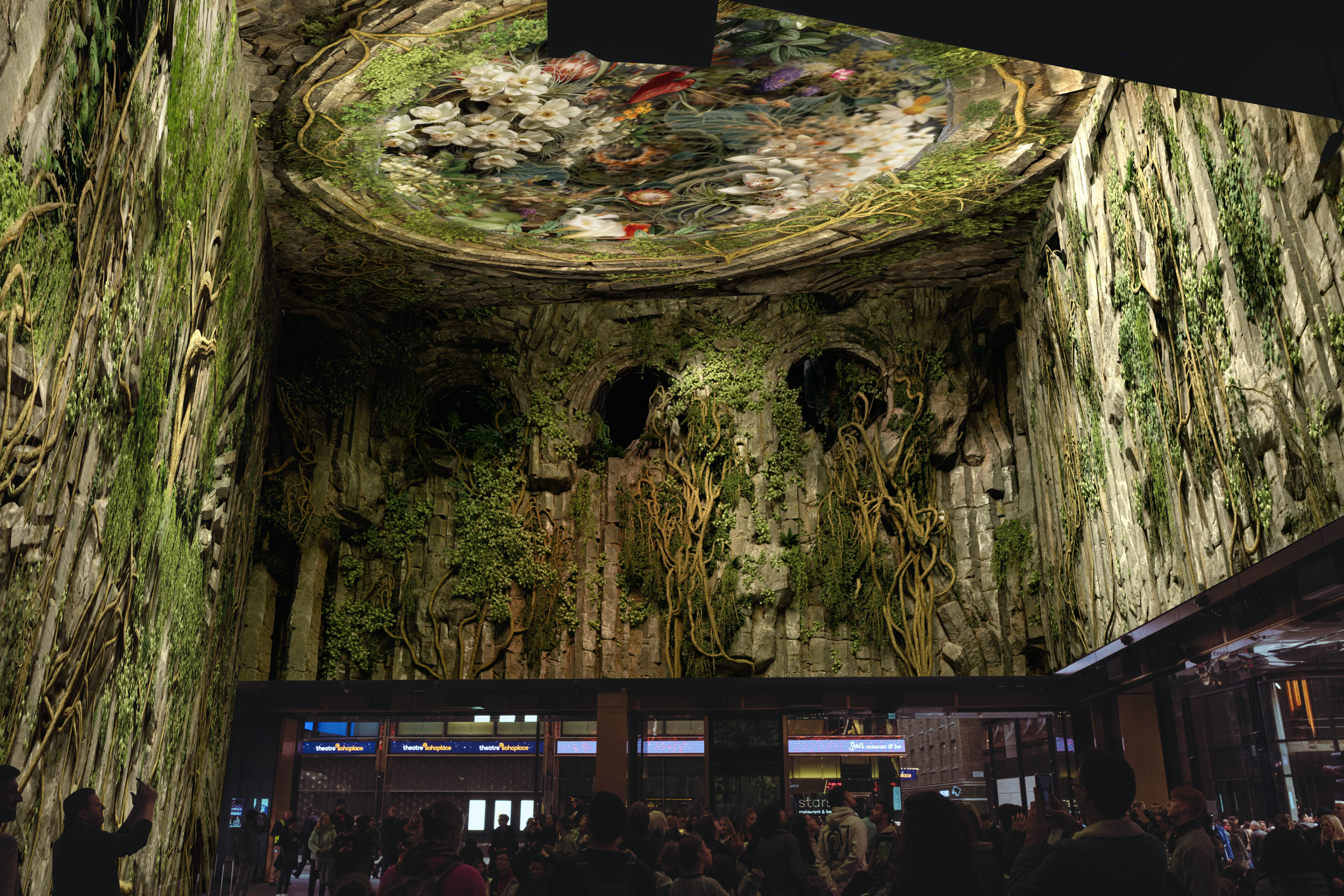
While the material references are ancient, the means of presentation are resolutely contemporary. The Intelligence Garden is produced using a hybrid creative pipeline that combines real-time, game-engine-based systems with cinematic animation, particle simulations and spatialised sound. This deliberate contrast is central to how the work is read. “Presenting these ancient, tactile materials through a digital, immersive medium creates a deliberate juxtaposition,” Saavedra notes. “Audiences encounter textures and forms that feel primordial and familiar, yet they are rendered through real-time technology at monumental scale.”
Rather than distancing viewers from material history, the digital medium is intended to reframe it. “This tension between the geological and the digital reinforces one of the central ideas of the work: that intelligence, creativity and expression are not fixed in a moment in time, but are continuously evolving through new environments and tools,” Saavedra continues. “The digital medium doesn’t distance us from these materials; instead, it reframes them, allowing viewers to experience deep human and natural history through a contemporary technological lens.”
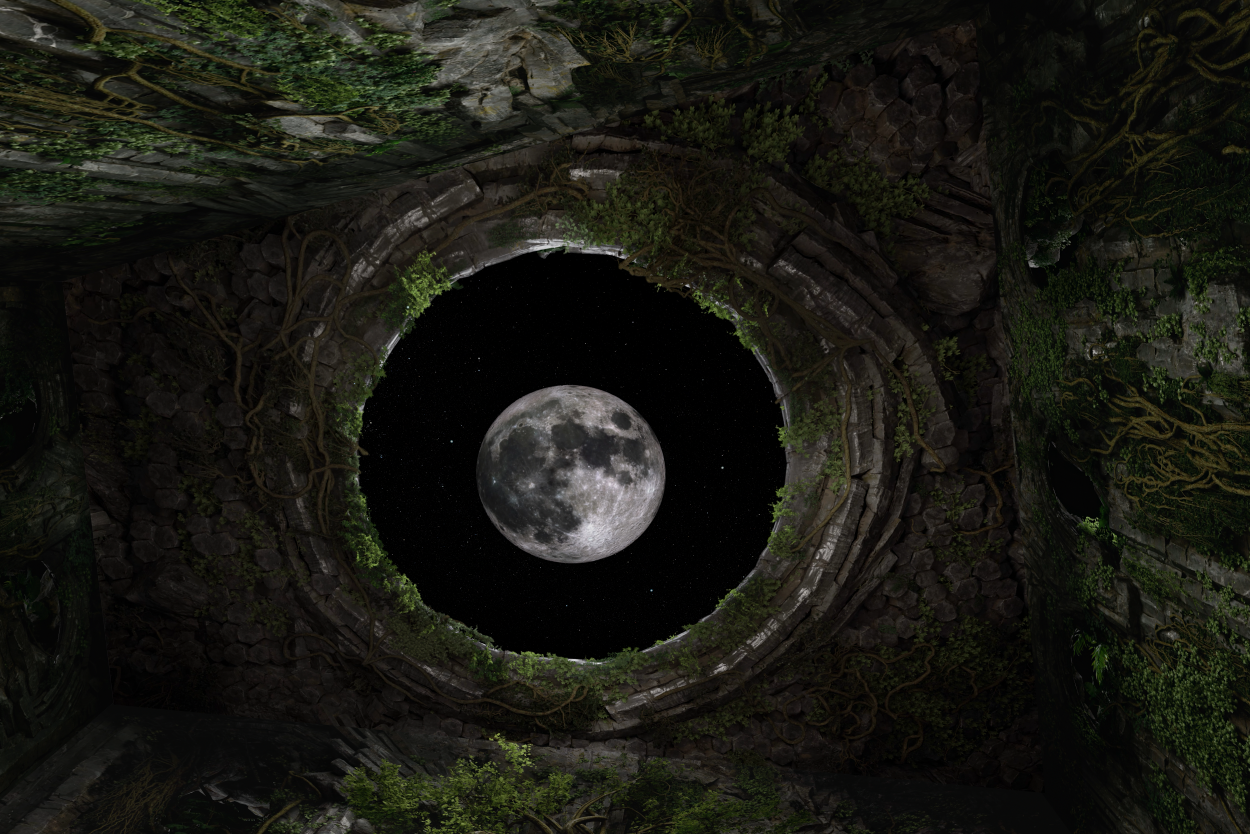
Commissioned specifically for Outernet London’s 360-degree LED environment, The Intelligence Garden demonstrates how immersive digital installations are increasingly operating with the conceptual weight of architecture. By foregrounding stone and geological processes within a cutting-edge digital context, the project positions material memory as a vital part of contemporary cultural production — and suggests new ways in which ancient materials can continue to shape how we understand human creativity today.