

Profile: Biomaterials Library

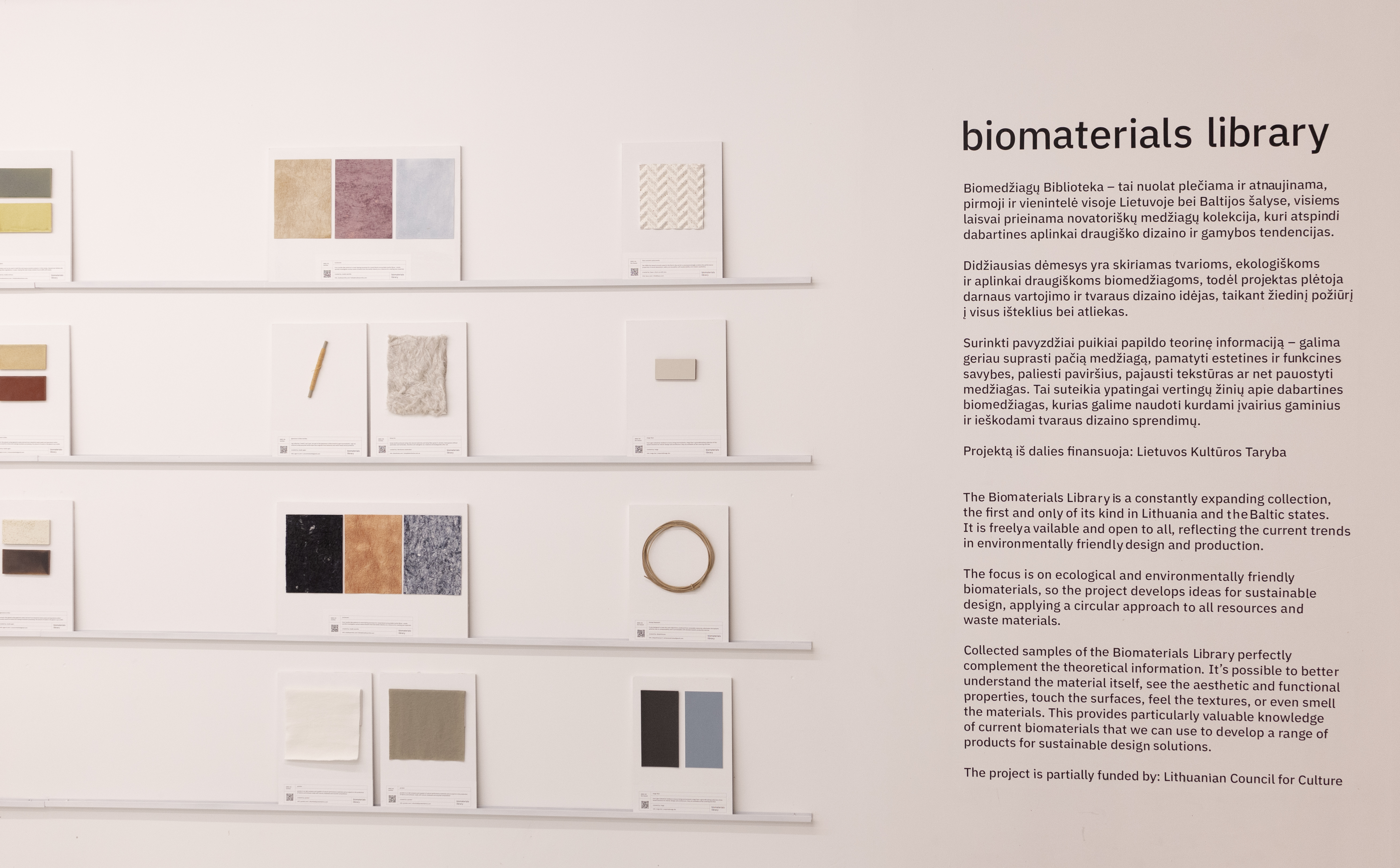
As architects and designers look beyond familiar construction and finishing materials, interest in bio-based alternatives is growing. Renewable resources, agricultural by-products and industrial waste are becoming the starting points for experiments in everything from surface finishes and textiles to acoustic panels and interior objects. But moving these materials from the laboratory or designer’s studio into wider use requires more than a promising sample. It calls for shared knowledge, testing, dialogue, and a clearer understanding of how materials are made, what they can do, and what happens to them at the end of their useful life.
That is the territory occupied by Biomaterials Library, a publicly accessible collection and research platform established in Vilnius, Lithuania, in 2023 by creative researcher and biomaterial designer Austėja Platūkytė. Based at the SODAS 2123 cultural centre, it is the first physical collection of its kind in the Baltic States, bringing together material samples, experimental processes and design objects from Lithuania, the wider Baltic region and beyond. An expanding online resource extends its reach beyond the physical archive.
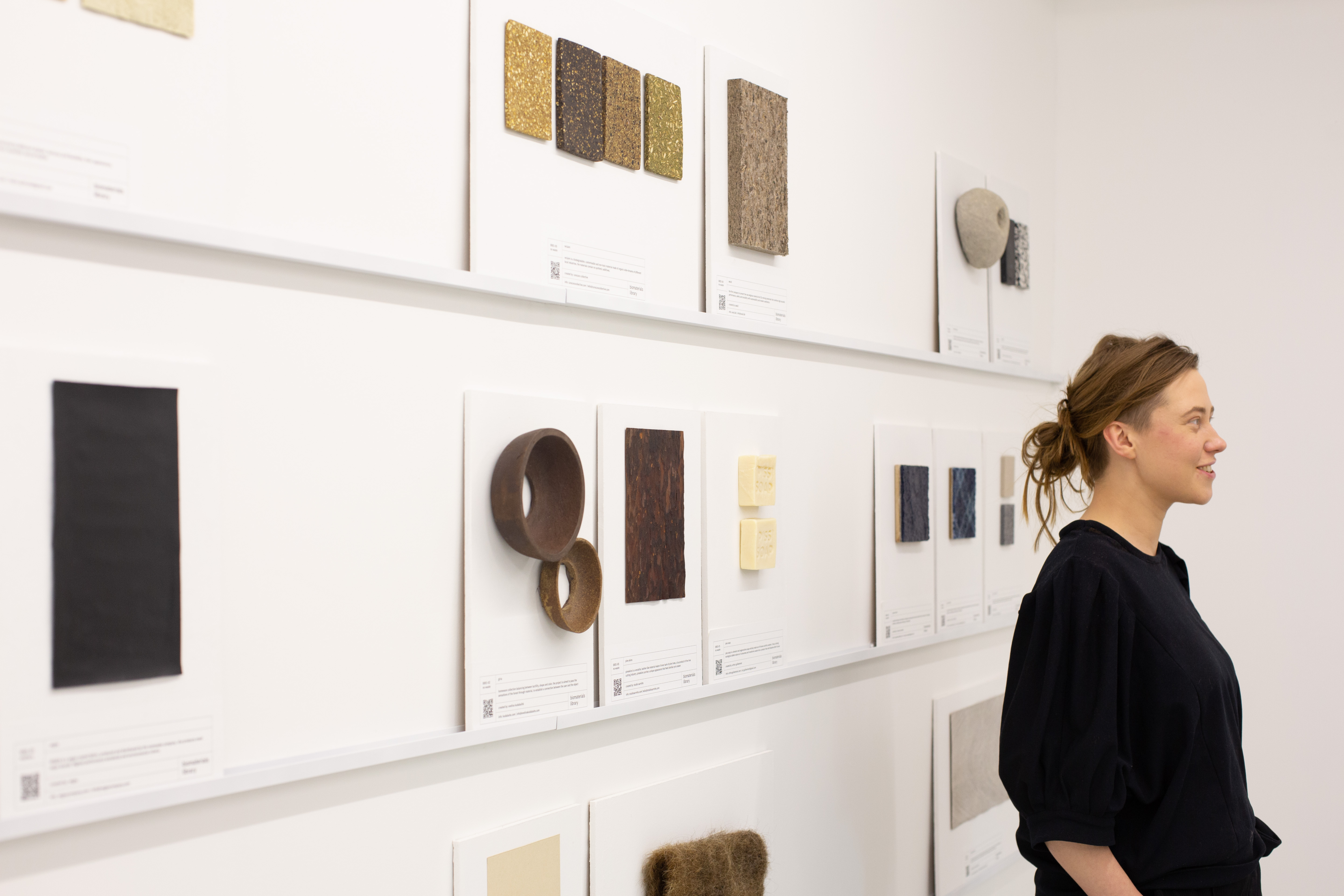
Image © Gustė Grigaliūtė
The idea emerged from Platūkytė’s recognition that material libraries are often housed within universities and specialist institutions, leaving their contents relatively inaccessible to the wider public. She wanted to create a place where people could encounter unfamiliar materials directly, rather than simply read about them. “My idea for Biomaterials Library was to exhibit not just biomaterials such as clay or seaweed, but to show how designers engage with these materials and what they create from them,” she has previously explained.
For Platūkytė, the Library is also a way of connecting individual research with a broader design culture. Her own practice spans material design, science, technology and craft, with projects investigating how biological resources and local waste streams might be transformed into new materials. Her experimental packaging made from algae-based ingredients, for example, explores a compostable alternative to conventional synthetic packaging, while other work has examined the potential of organic waste as a material resource.
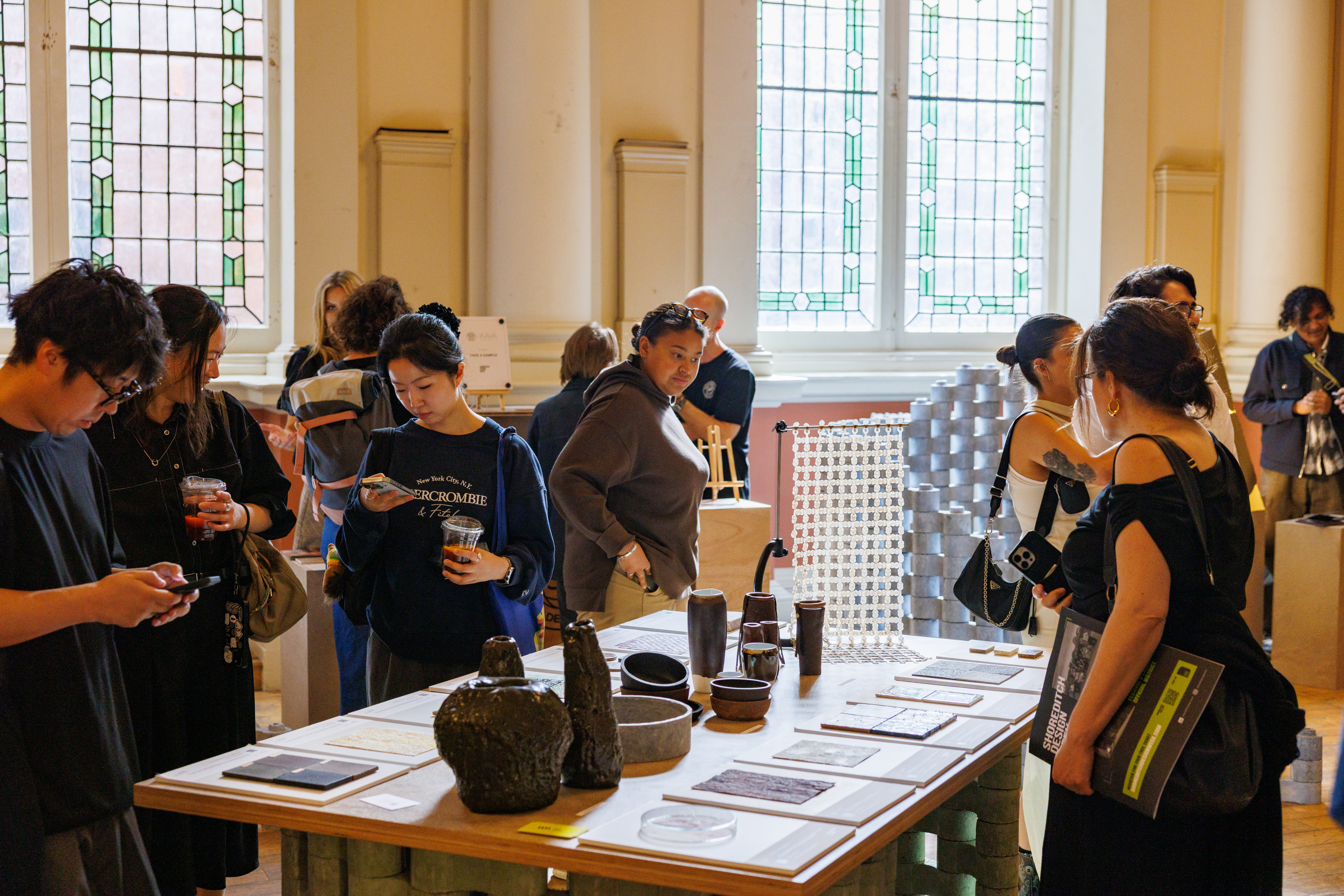
Image © Sam Frost
Some examples within the library are early experiments; others have progressed into finished objects or more developed applications, but the programme extends beyond collecting samples. Exhibitions, workshops, lectures, open recipes, publications and collaborations create opportunities for designers to share processes and connect with scientists, educators, manufacturers and potential commercial partners. The team regularly presents the collection at design events, including House of ICON during London Design Festival and, more recently, Dutch Design Week.
Among the participating creators are Agnė Kučerenkaitė, Austėja Platūkytė, Dijuota Žilytė, Evelina Kudabaitė, INDI, Indrė Butkų, Indrė Spitrytė-Mikuckė, Sarmite Polakova, Viltė Adomavičiūtė and Waste Matters Studio. Their work demonstrates how varied the sources and approaches can be, from reclaimed production materials to plant fibres and biological growth.
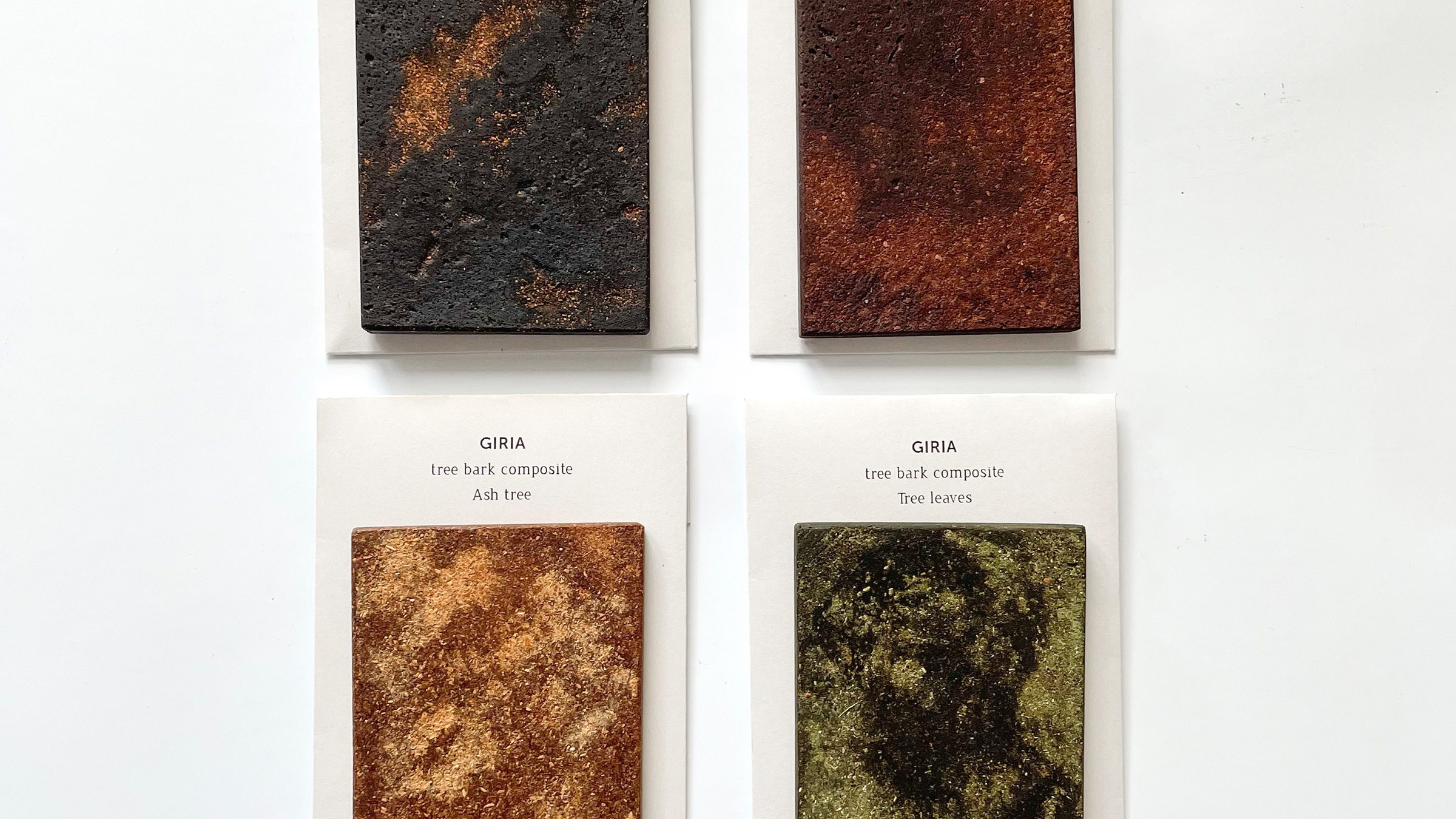
Image © Evelina Kudabaitė
Evelina Kudabaitė’s ever-expanding GIRIA collection considers how the by-products of wood processing can be given another purpose. Mixing waste generated from the lumber industry, notably tree bark dust, with organic binders, she has developed a series of surfaces and vessels. While the earthy tones and rich variations of the surface move the aesthetic far from it, the process is not unlike that used to manufacture MDF, only here the outcome is toxin-free and true to its organic origins.
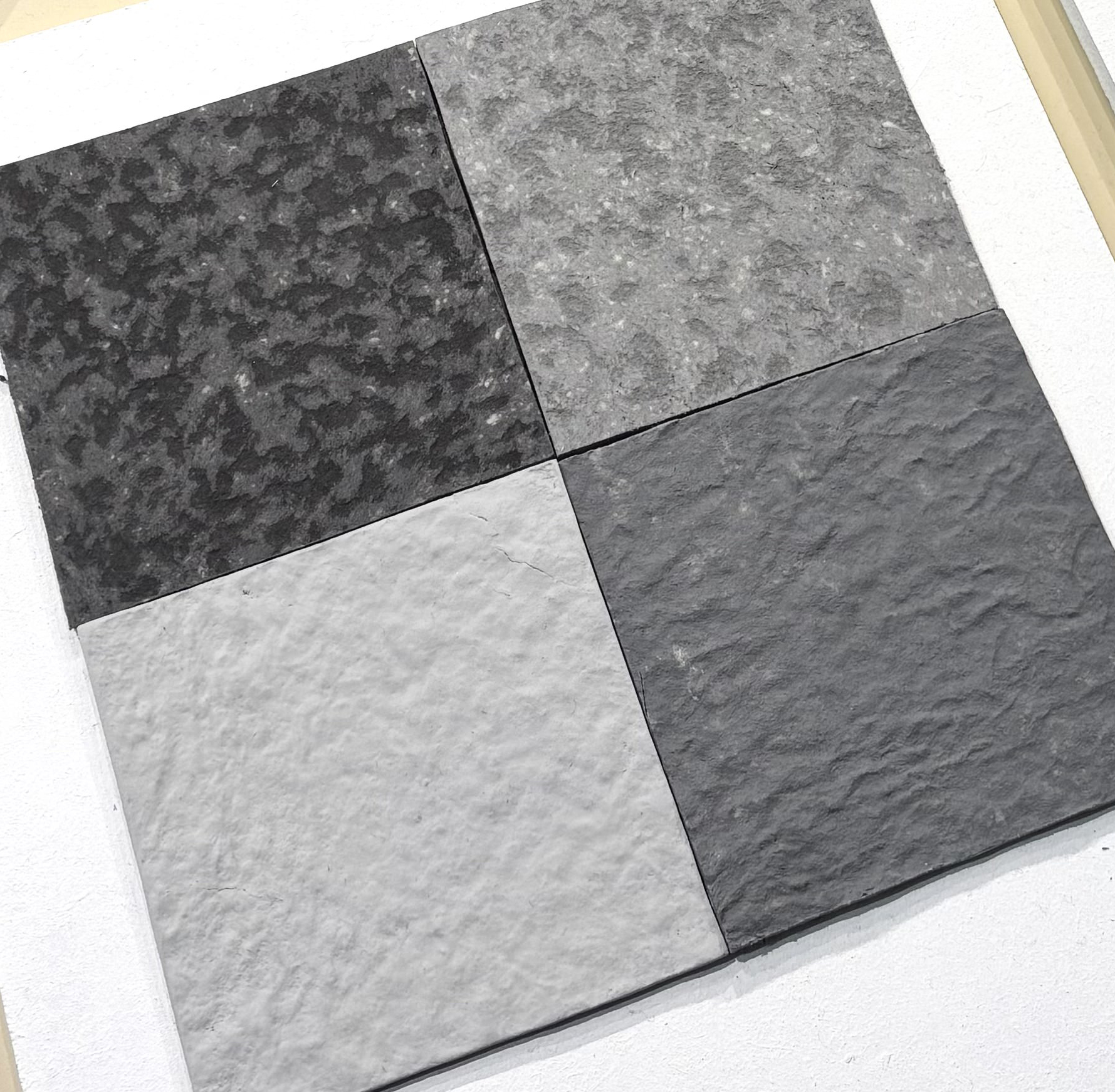
Image © Indi
Lithuanian design brand INDI, founded by Simonas Tarvydas, uses another form of recycling through its REPAPER technology. Using paper derived from waste, the process produces interior surfaces and objects that can appear like another less-than-reputable material cousin, concrete, but without the environmental damage of the ubiquitous substance. Aesthetically, the outcomes appear substantial but offer a lightweight alternative, which has seen it used as tiles as well as lighting and interior objects. What’s more, the pieces are designed within a circular production model, with the material able to be recycled and used again in future objects.
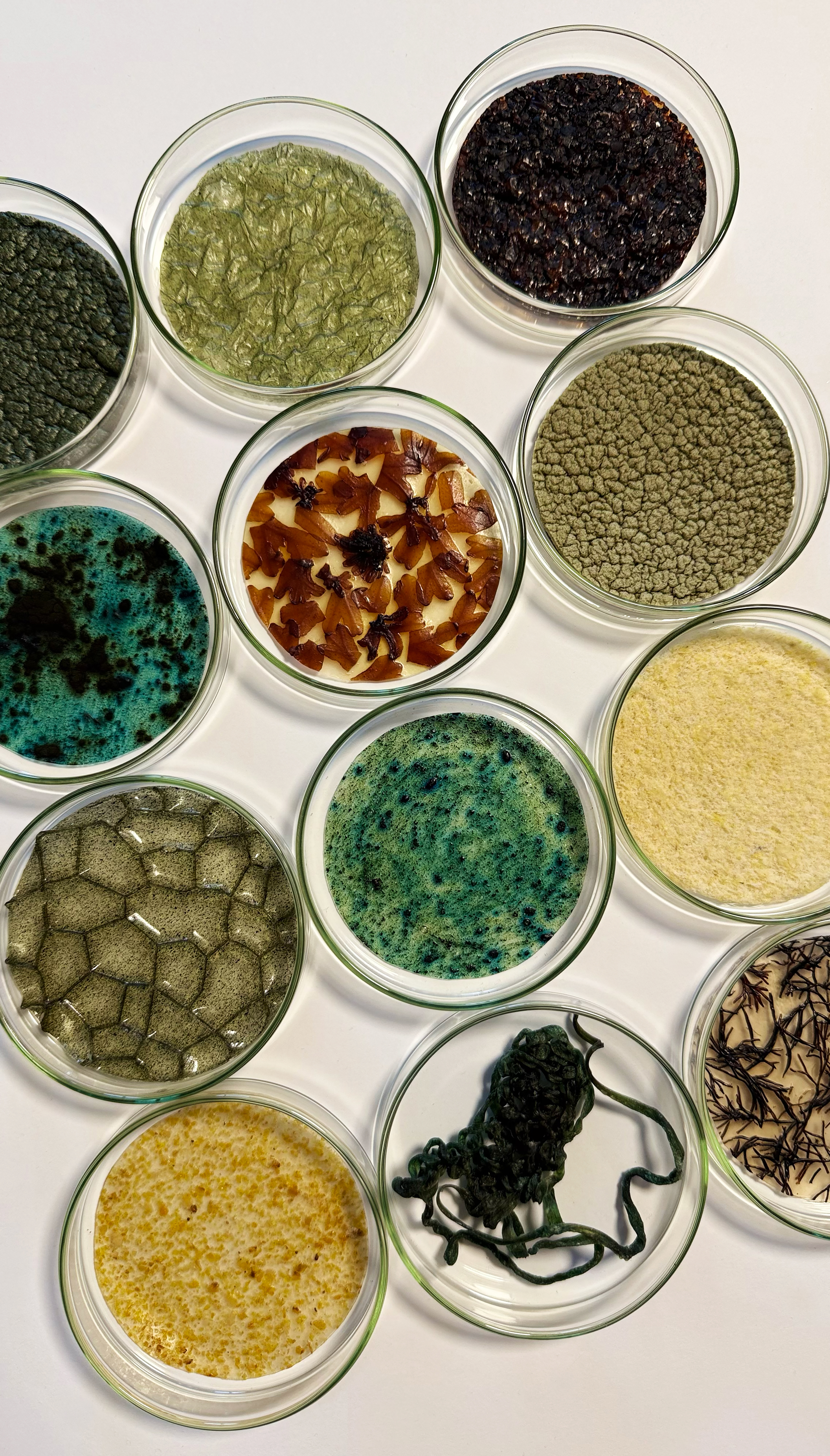
Image © Indrė Spitrytė-Mikuckė
Indrė Spitrytė-Mikuckė’s research moves towards the softer side of materiality, creating textiles and leather alternatives created from algae and bacteria. Her beguiling surfaces carry the appearance of having clearly been grown in a lab, and her scientific approach is opening exciting new biologically derived materials that address the material demands and waste associated with fashion and textile production.
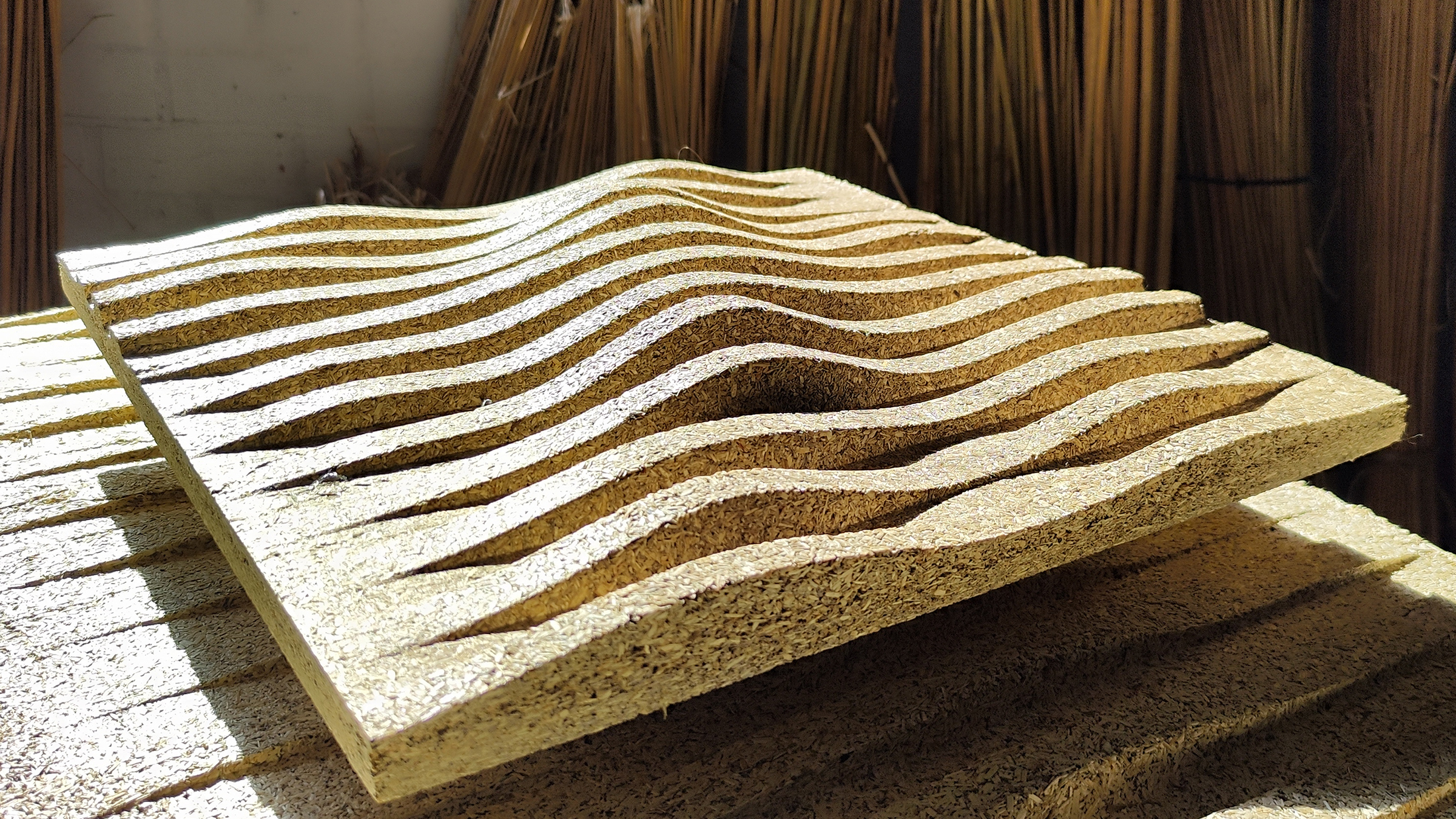
Image © Viltė Adomavičiūtė
Viltė Adomavičiūtė is investigating the potential of industrial hemp, particularly the woody inner core of the plant, known as hemp shives, with a particular interest in its sound-absorbing possibilities. Combined with binders, the biocomposite can be formed into 3-dimensional surfaces and objects. Her ongoing Hempforma project is exploring how such undulating surfaces can positively maximise the acoustic qualities of interior spaces, while minimising environmental impact in their production.
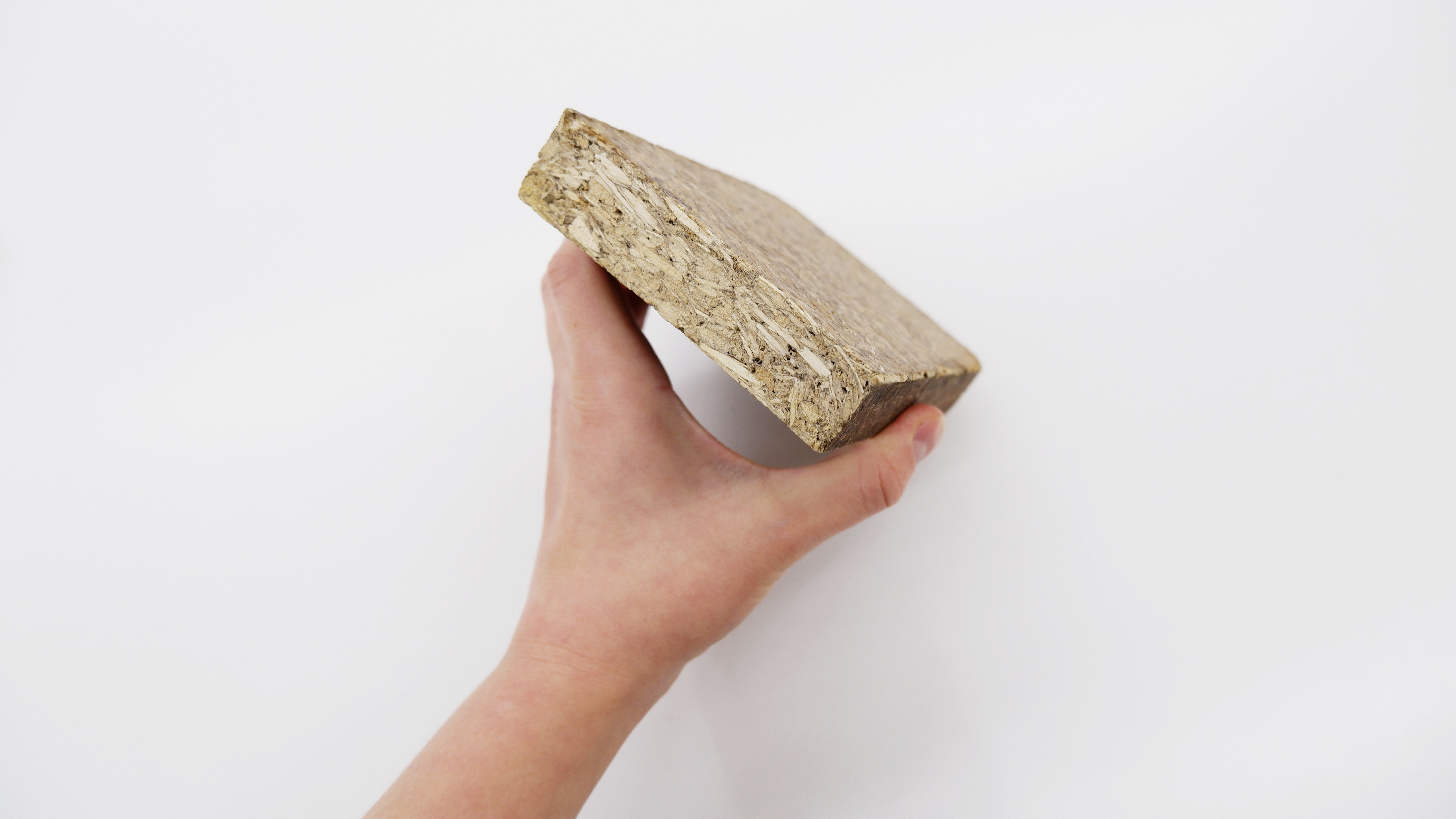
Image © Austėja Platūkytė
Platūkytė’s own experiments sit alongside these practices, including her own research into algae-based materials, acoustic solutions, and notably bio-based alternatives that are eco-friendly, non-toxic and sustainable. Projects include decorative eco-boards, made in collaboration with Strato Homes, that use formaldehyde-free binders and natural-derived buckwheat hulls and hemp stems, as well as her own alternative to leather derived from the sea, and a cellulose-based bioplastic that is mixed with charcoal and applied to natural hemp.
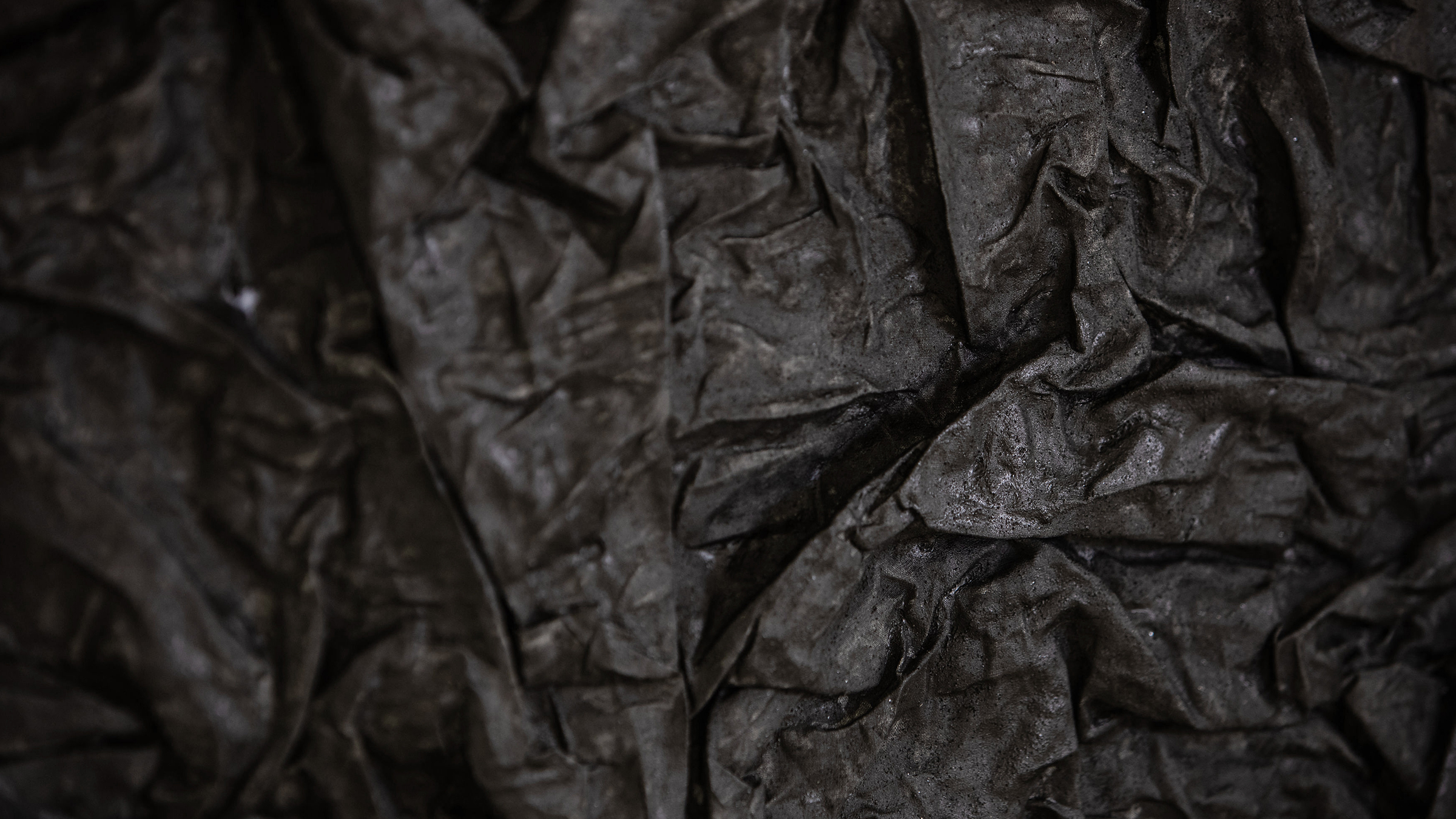
Image © Austėja Platūkytė
Together, the projects show that bio-based design is not a single material category or a ready-made solution. It is a developing field shaped by local resources, making processes and the particular requirements of each application. By bringing these investigations into a shared, accessible setting, Biomaterials Library gives emerging work a place to be examined, questioned and developed. It is both a reference collection and an active meeting point, with the ambition to help material knowledge travel further than the studios and laboratories where it begins.
Organised by NGO Medžiagotyra and supported by the Lithuanian Council for Culture, the collection can be explored at biomaterialslibrary.com