

Case Study: The Cabrach Distillery

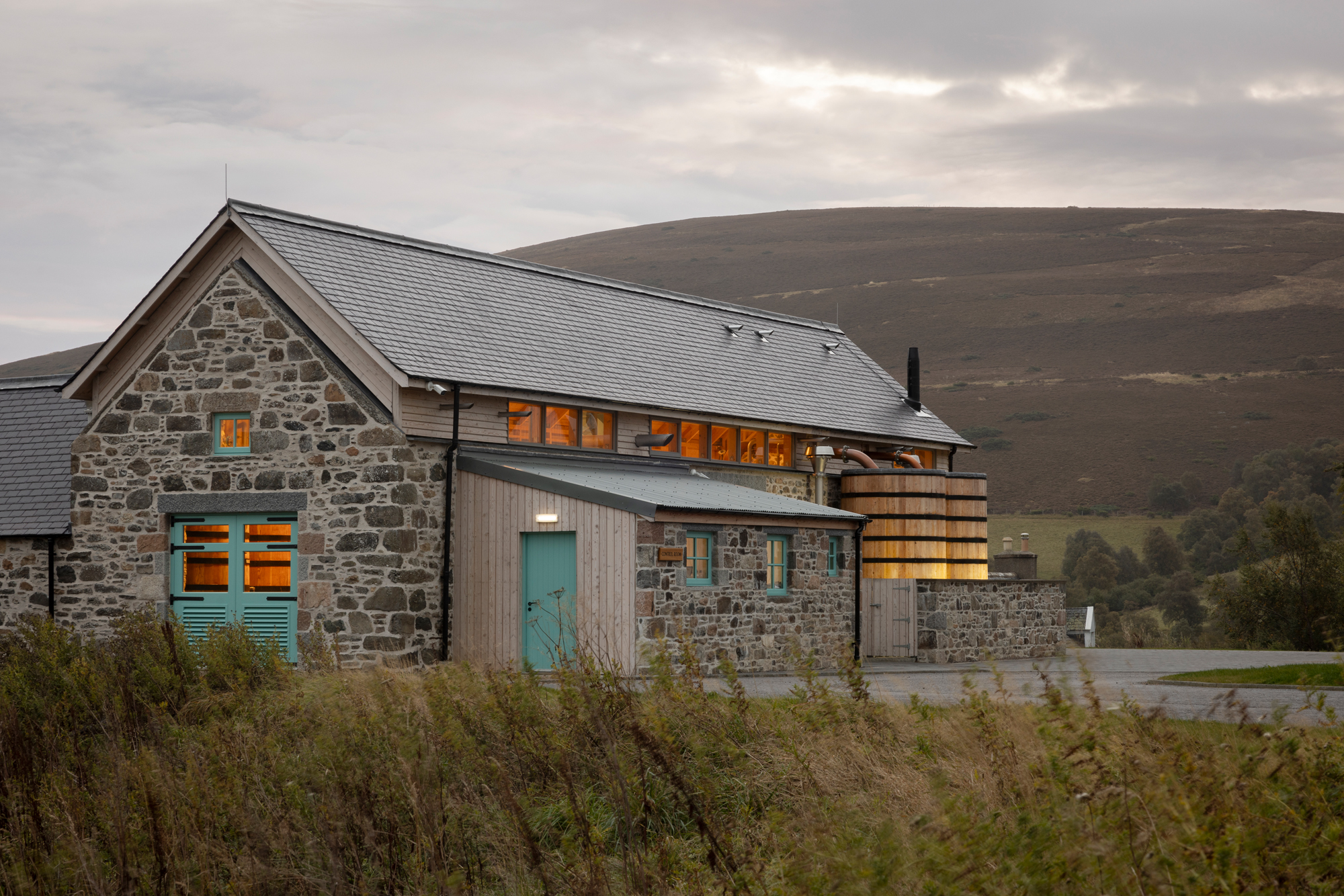
Once home to more than 1,000 people, The Cabrach’s population has dwindled to less than 100 today. Located on the high boundary between West Aberdeenshire and Speyside, at the heart of Historic Banffshire, the rural estate has experienced decades of decline.
But one recently completed architectural project represents a visual indicator of change in the area, led by a group of passionate local residents. Having come together in 2013 to create The Cabrach Trust, the team has produced a portfolio of projects including cultural events, nature recovery initiatives, rural skills and wellbeing workshops, as well as employing the services of Scottish practice Collective Architecture to design The Cabrach Distillery.
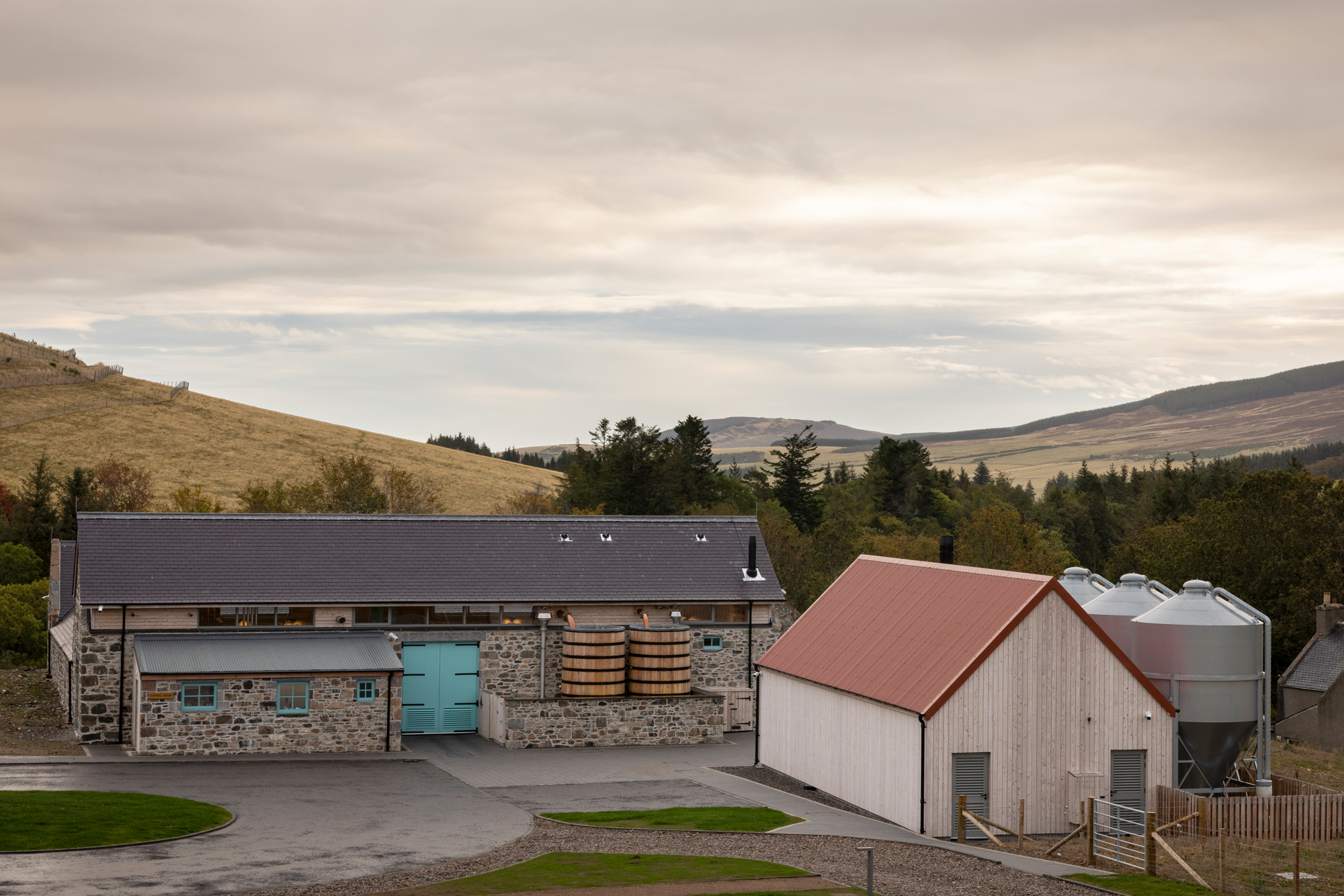
The development transforms the ruined 1849 steadings at Inverharroch Farm into a working single-malt whisky distillery — the first legal whisky production in the area for more than 170 years. Nestled on the edge of the Cairngorms National Park, the area was once a hotbed of Jacobite rebels and smugglers, as well as local farmers, many of whom sought to supplement their minimal livelihoods by producing ‘Uisge Beatha’, or ‘ Water of Life’...also known as Whisky.
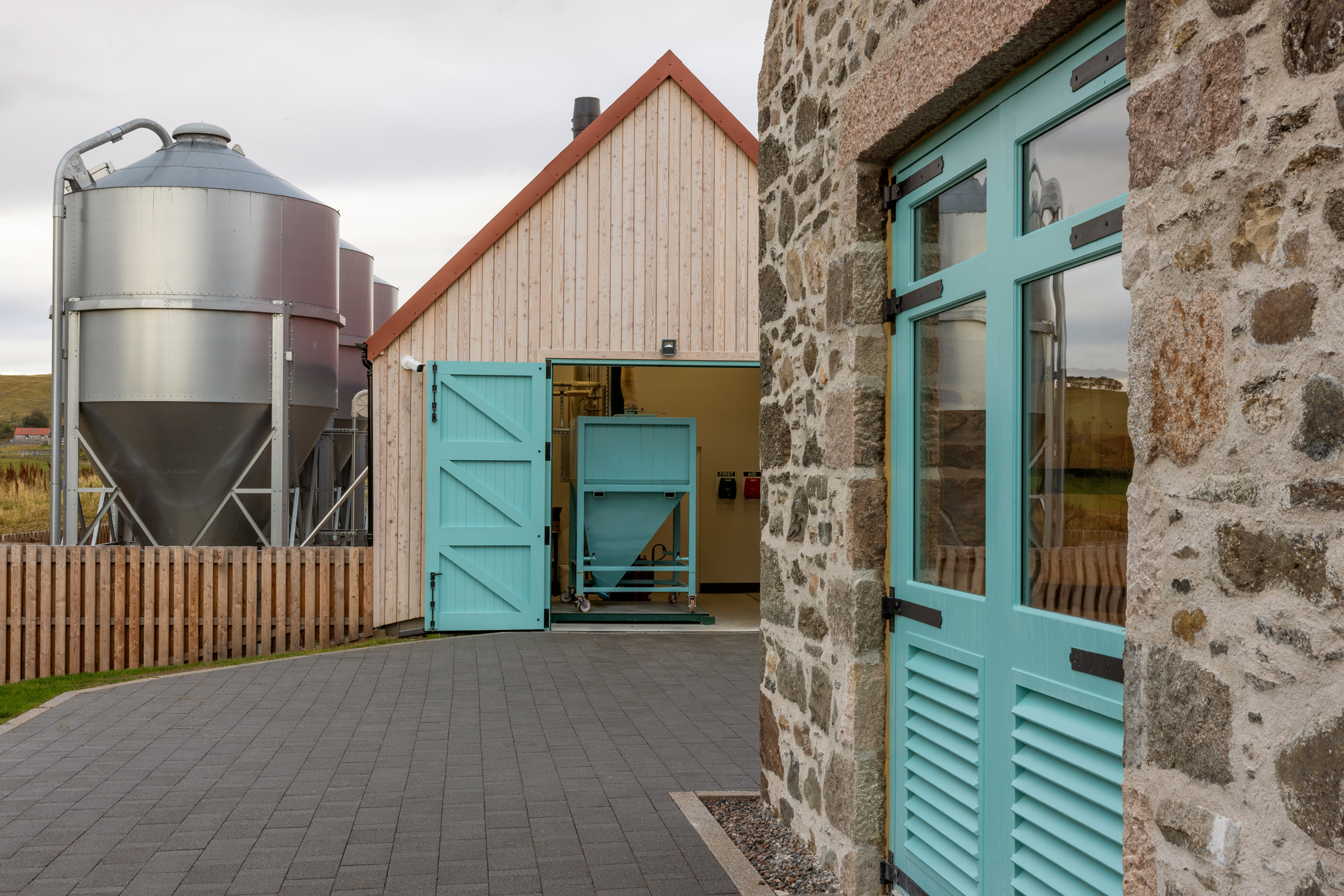
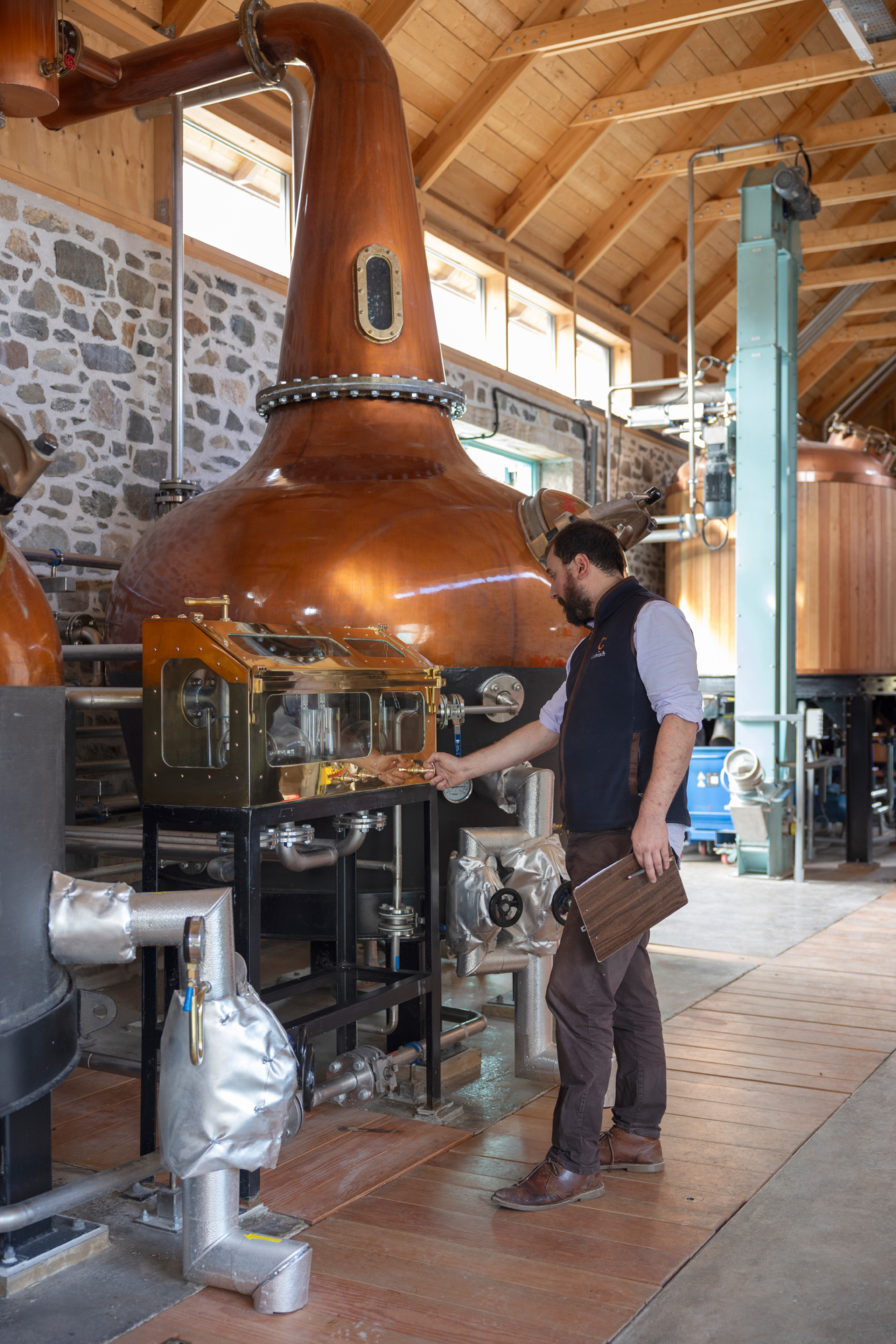
Rather than operating solely as a visitor attraction, the distillery forms the economic centrepiece of a long-term strategy to stabilise and repopulate this remote Highland community. The architectural approach begins with repair rather than replacement. Existing stone steadings, deeply embedded in the agricultural history of the landscape, were carefully retained and adapted, allowing the project to grow directly from the site’s inherited fabric. Weathered masonry walls were consolidated and reused wherever possible, maintaining the character and layout of the original farm buildings while accommodating contemporary production requirements.
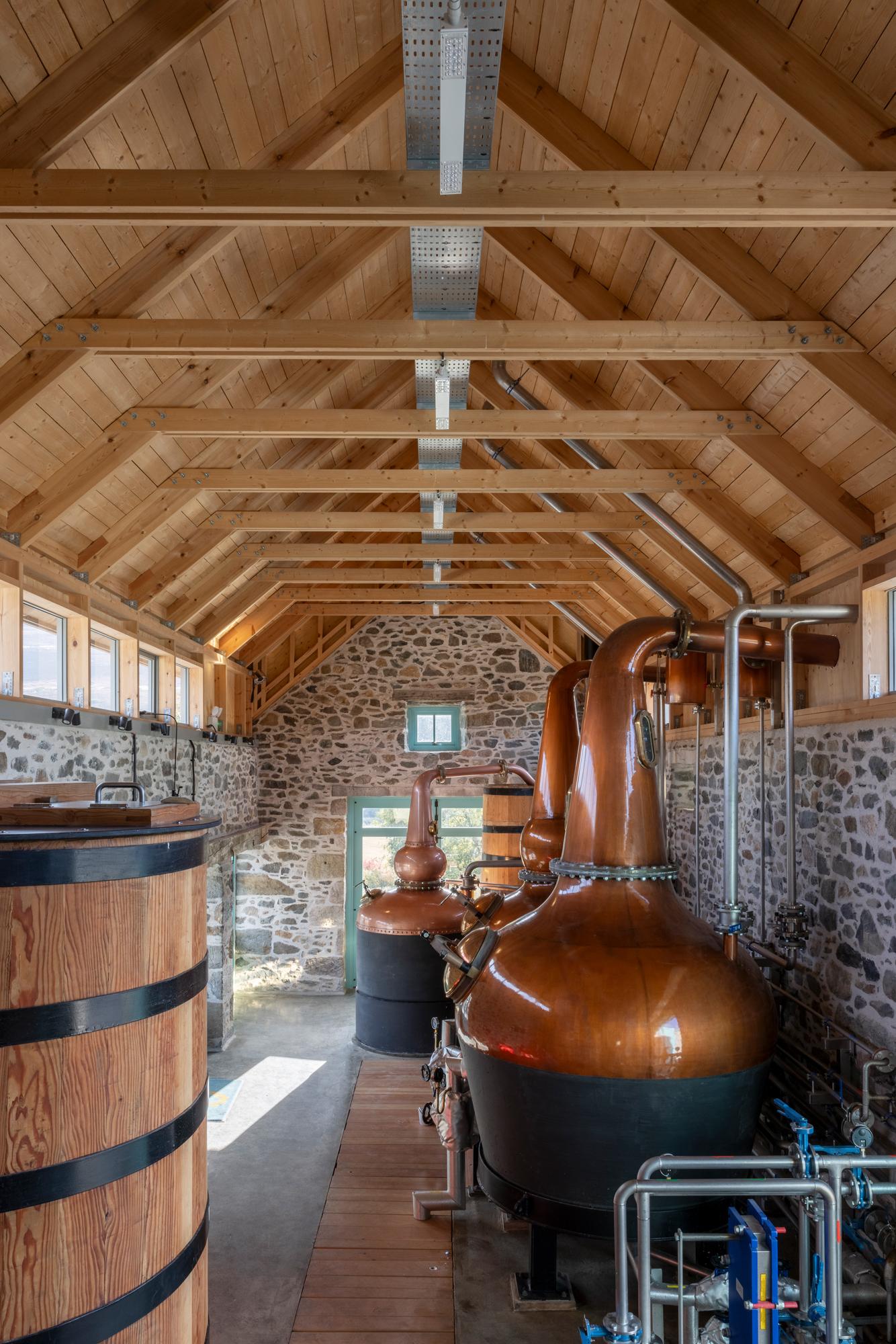
Reclaimed stone from nearby derelict structures supplements retained masonry, which provides thermal stability well-suited to distilling and maturation processes. But the decision is an aesthetic one too, ensuring continuity of colour and texture, which visually anchors the distillery within the surrounding landscape. Sustainable timber sourced from local forests complements the stone construction, reinforcing an approach rooted in local resources and traditional building knowledge rather than imported systems. The resulting architecture feels grounded, its mass and permanence responding naturally to the exposed Highland environment.
Operated as a community-owned social enterprise, the distillery reinvests future revenues into local housing, employment opportunities and environmental initiatives, ensuring the building functions as long-term infrastructure rather than a singular architectural gesture. What’s more, extensive landscape works, tree planting and new walking routes extend the project beyond the building itself, positioning the distillery as part of a wider ecological and social regeneration effort.
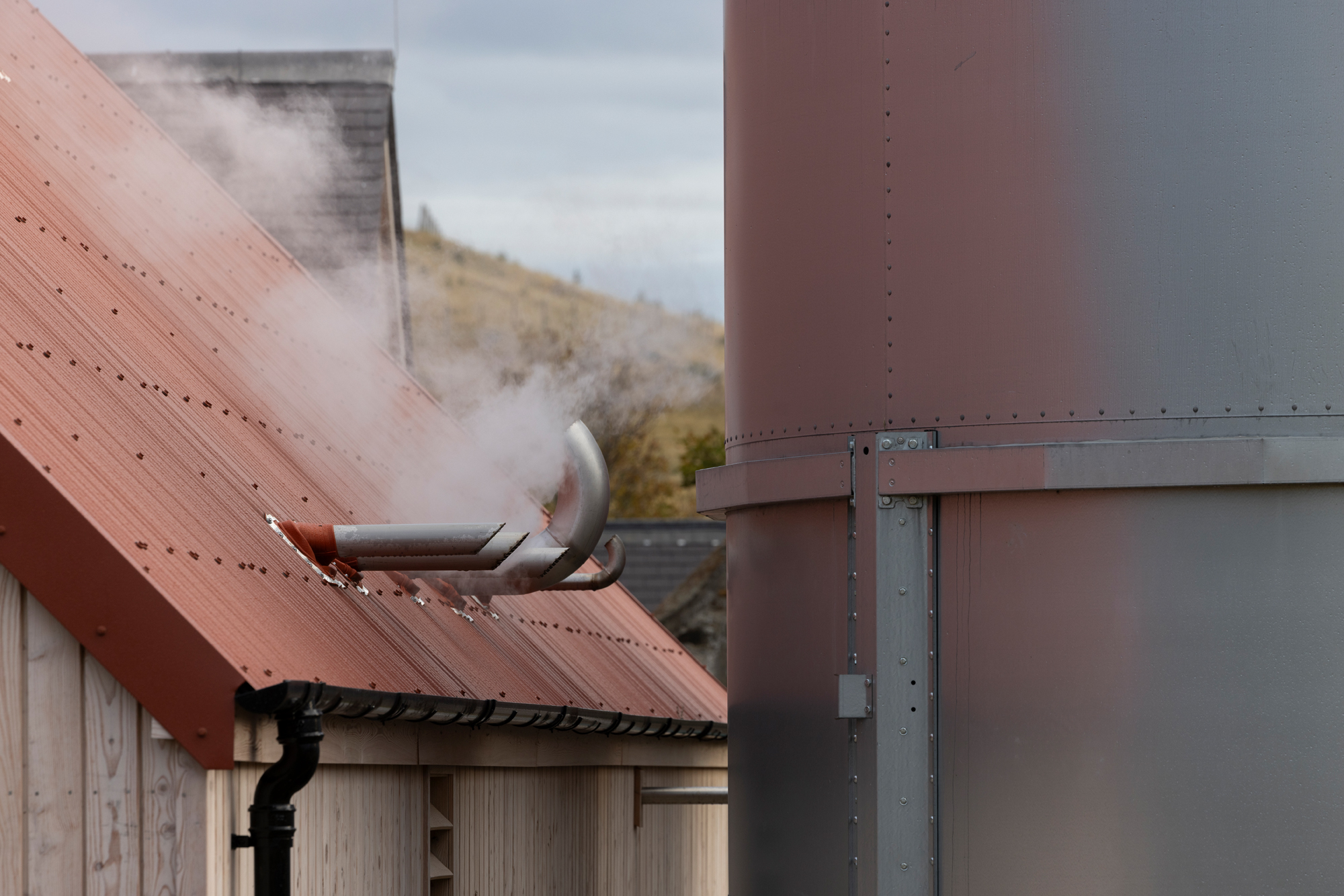
The Cabrach has a long association with whisky production, both legal and illicit, and re-establishing whisky making in the area, therefore, reconnects the community to its cultural history rather than introducing an entirely new industry. Jonathan Christie, Chief Executive of The Cabrach Trust, describes the emotive impact: “The idea of a Single Malt Scotch Whisky distillery, operated as a social enterprise, housed within a once ruinous historic steading, anchoring the regeneration of a proud rural community, is an idea that’s easy to get misty eyed about.”
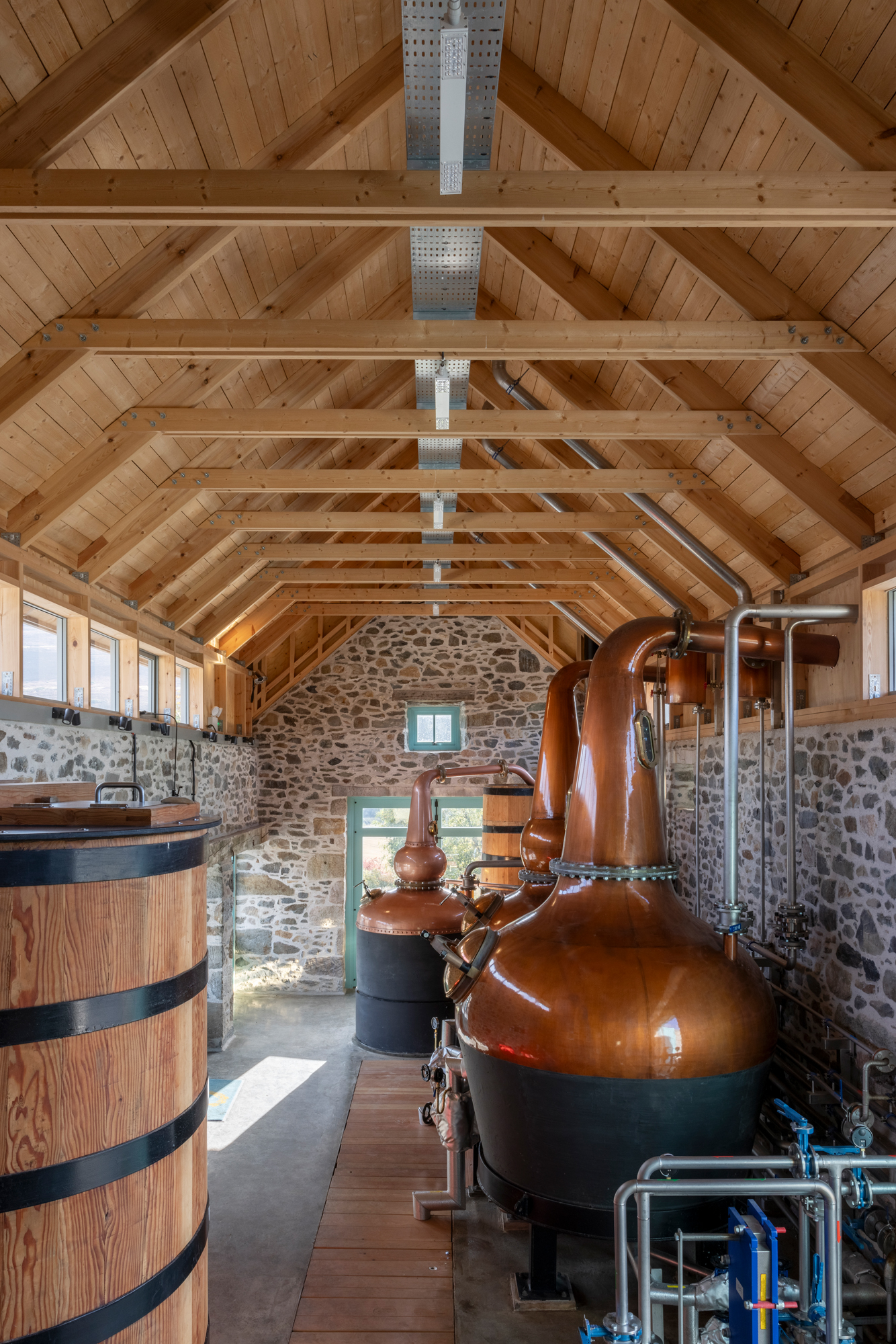
For Collective Architecture, the project demonstrates how reuse-led construction can support both environmental responsibility and social resilience. Working within an existing stone framework allowed the architects to prioritise longevity, repair and material continuity over novelty. The architecture avoids spectacle, instead achieving presence through restraint: repaired masonry, robust agricultural forms and carefully judged contemporary interventions.
Further phases, including a heritage centre and café, will expand the site’s public role, but the distillery already illustrates a wider lesson for the industry. Low-carbon construction is often less about new materials than about recognising the value of those already in place. At The Cabrach, stone functions simultaneously as structure, memory and future investment — a material capable of carrying both history and community forward. Slàinte to that!
All images © Susie Lowe