

Case Study: House Of Porphyry, Mosley Thorold

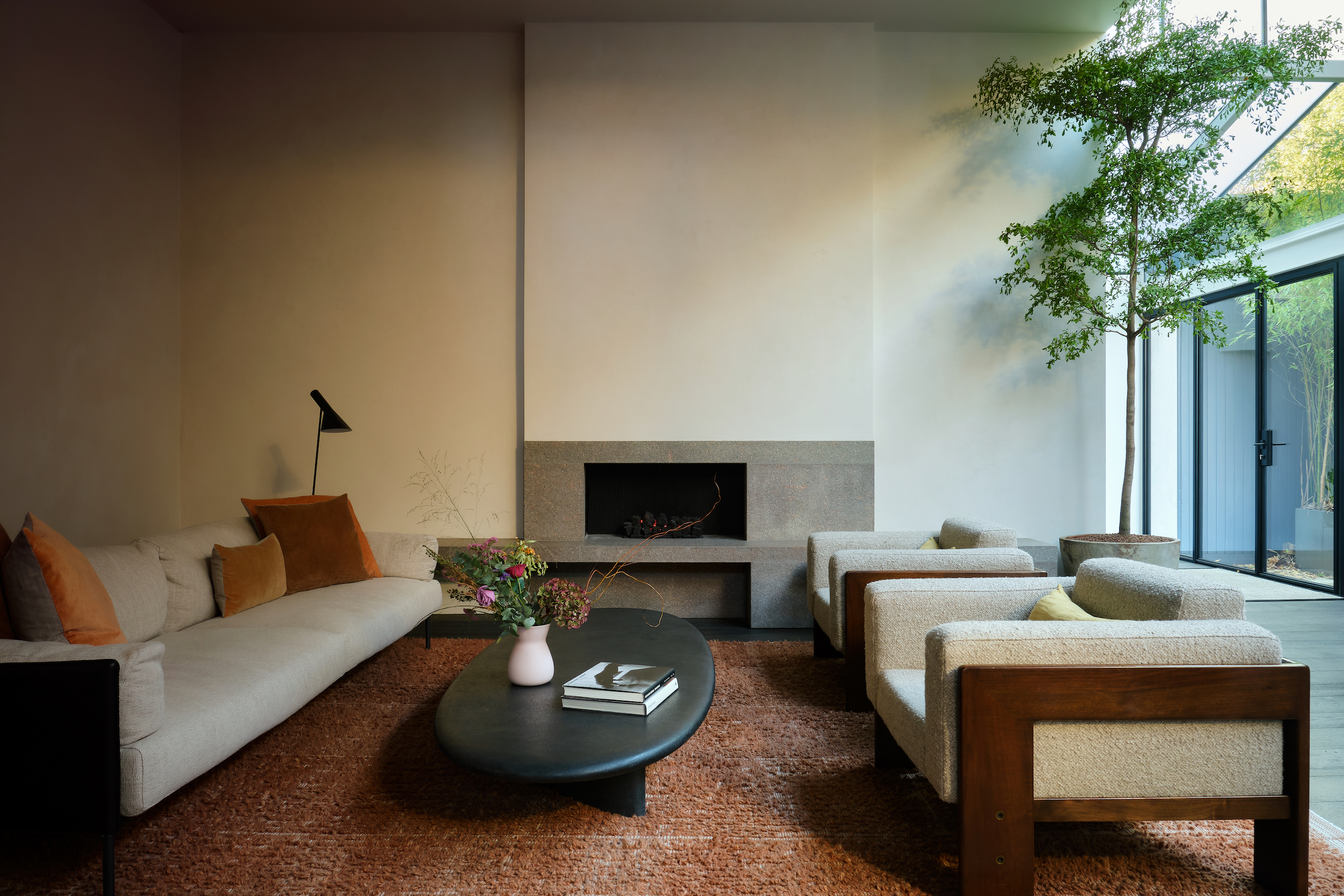
London-based architectural practice Mosley Thorold has transformed a Victorian villa in Highgate into a materially rich family home, placing stone at the heart of the design.
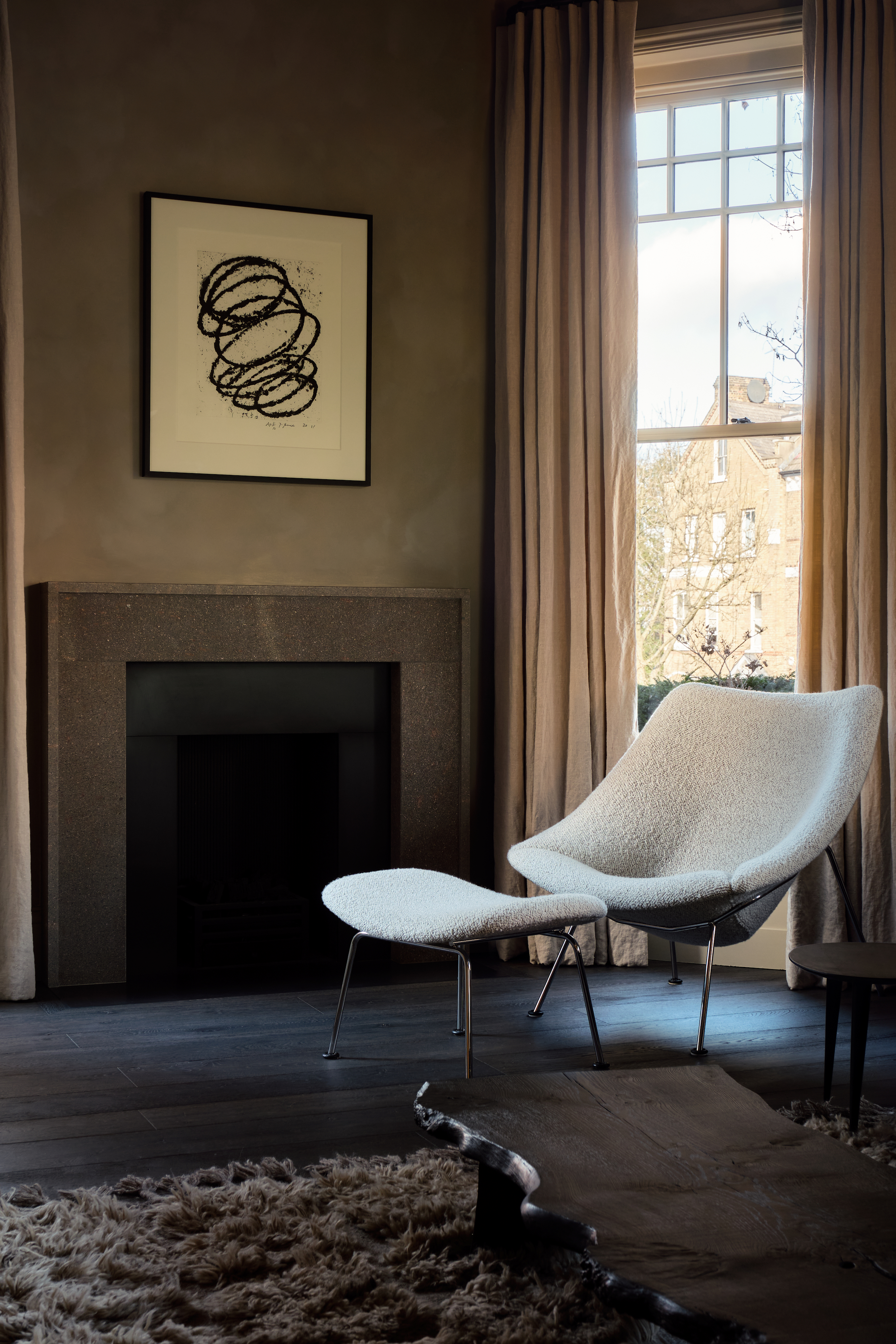
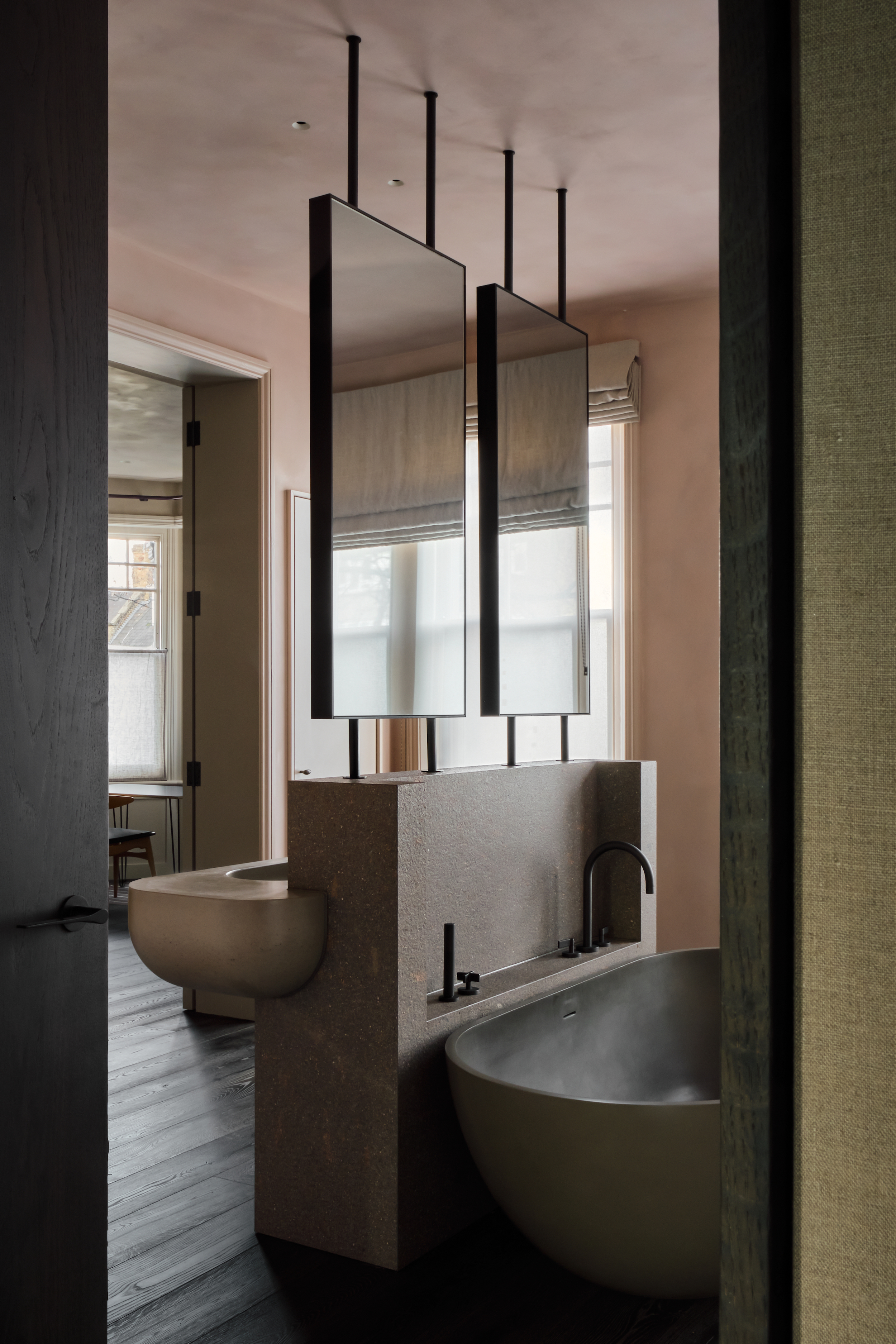
Titled House of Porphyry, the project’s name reflects the prominent use of porphyry stone, which appears in two fireplaces and the principal bathroom, where large blocks form a dramatic feature wall paired with a cast-concrete basin and bespoke brass mirrors. “We wanted materials that felt robust and enduring, that would ground the interiors and bring a sense of calm and longevity to the spaces,” says Henry Thorold, founding director at Mosley Thorold. “The porphyry gives the rooms a depth and richness that evolves with light and use.”
Formed by Nathaniel Mosley and Henry Thorold in 2017, the practice is known for its material-led approach, using surfaces and finishes as a central driver of spatial and sensory experience. Across their projects, they combine careful attention to craft, texture and durability with a focus on how buildings are used and experienced over time.
The house had previously been remodelled in the 1990s as a flamboyant party home, leaving a series of awkward circulation routes and fragmented spaces. A poorly detailed mezzanine walkway cut through the double-height volumes and disrupted visual connections to the rear garden, making the plan disjointed and impractical for everyday living. “Through a series of careful interventions – sometimes stripping away unnecessary accretions, other times judiciously adding key features – we transformed the circulation and flow of the house,” Thorold says. “Our aim was to restore something of the original spirit of the building, while updating it to create greater visual connection and sociability.”
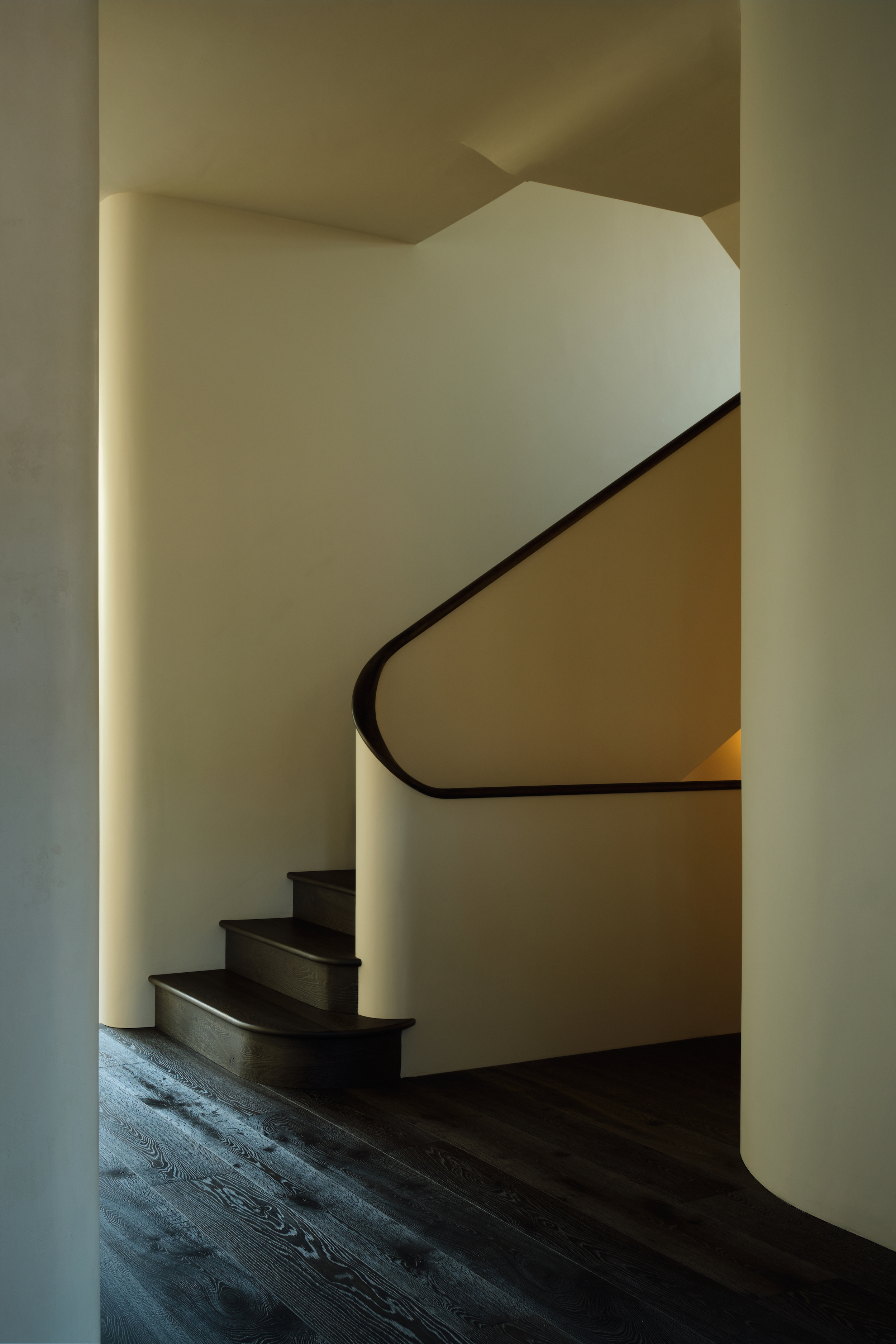
At the centre of the transformation is a reconfigured staircase. The original spiral stair, which obstructed both movement and light, was removed and replaced with a new stair that forms the architectural and spatial heart of the home. Drawing daylight deep into the plan, it establishes a clear vertical connection across three levels and links a sequence of interconnecting spaces, including the kitchen and dining area at the core, a living room opening onto the garden, and upper floors reorganised for clarity, balance and privacy.
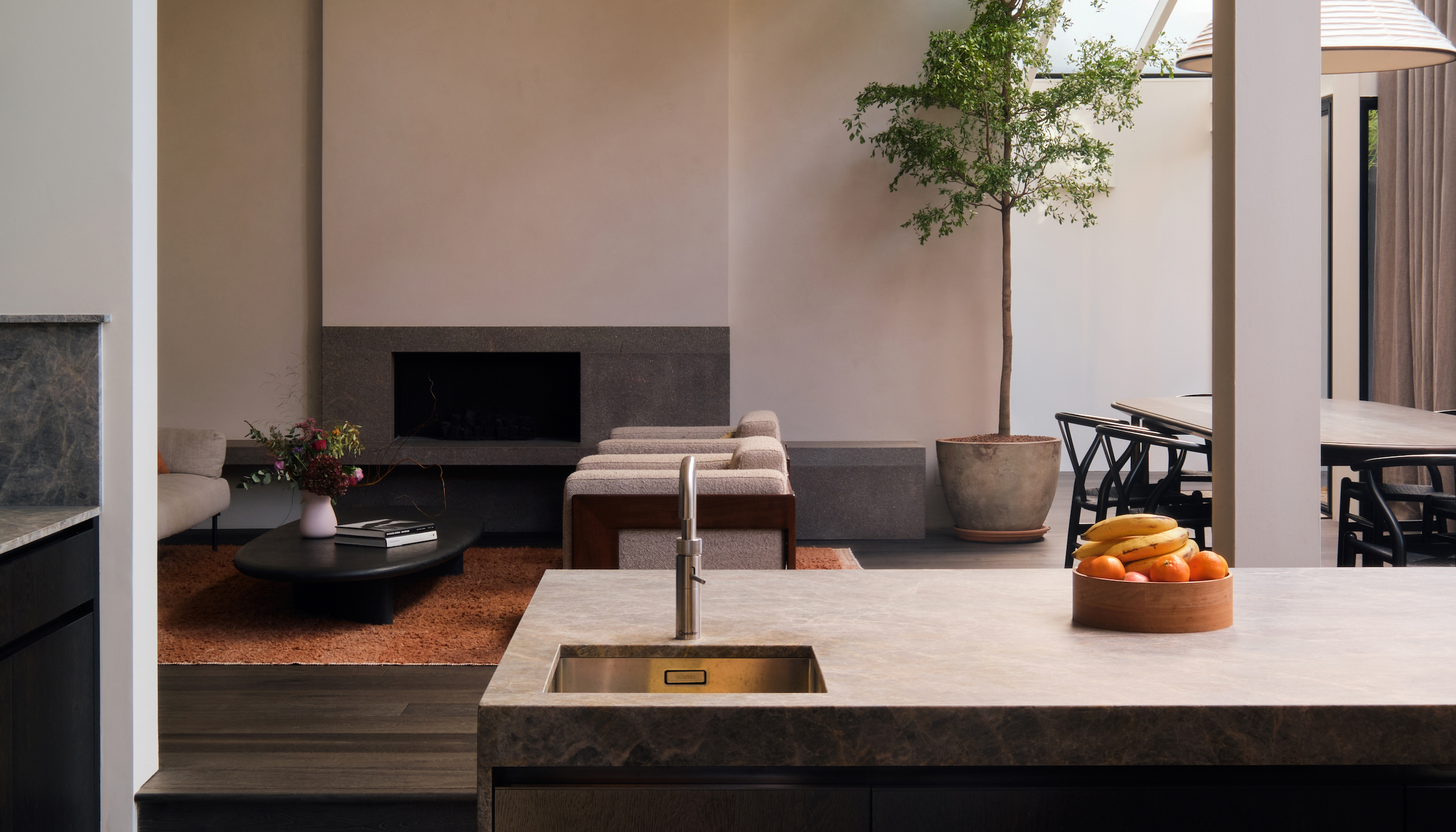
In addition to the use of porphyry stone, the material palette is carefully balanced. Dark oak boards, oak doors and bespoke joinery provide rhythm and cohesion, while a curved plaster balustrade and sculptural solid timber handrail soften the stair core. Patinated bronze ironmongery introduces subtle tactility, selected to age gracefully with everyday use. Together, these elements form a layered and restrained palette, designed to withstand the demands of family life while rewarding close engagement.
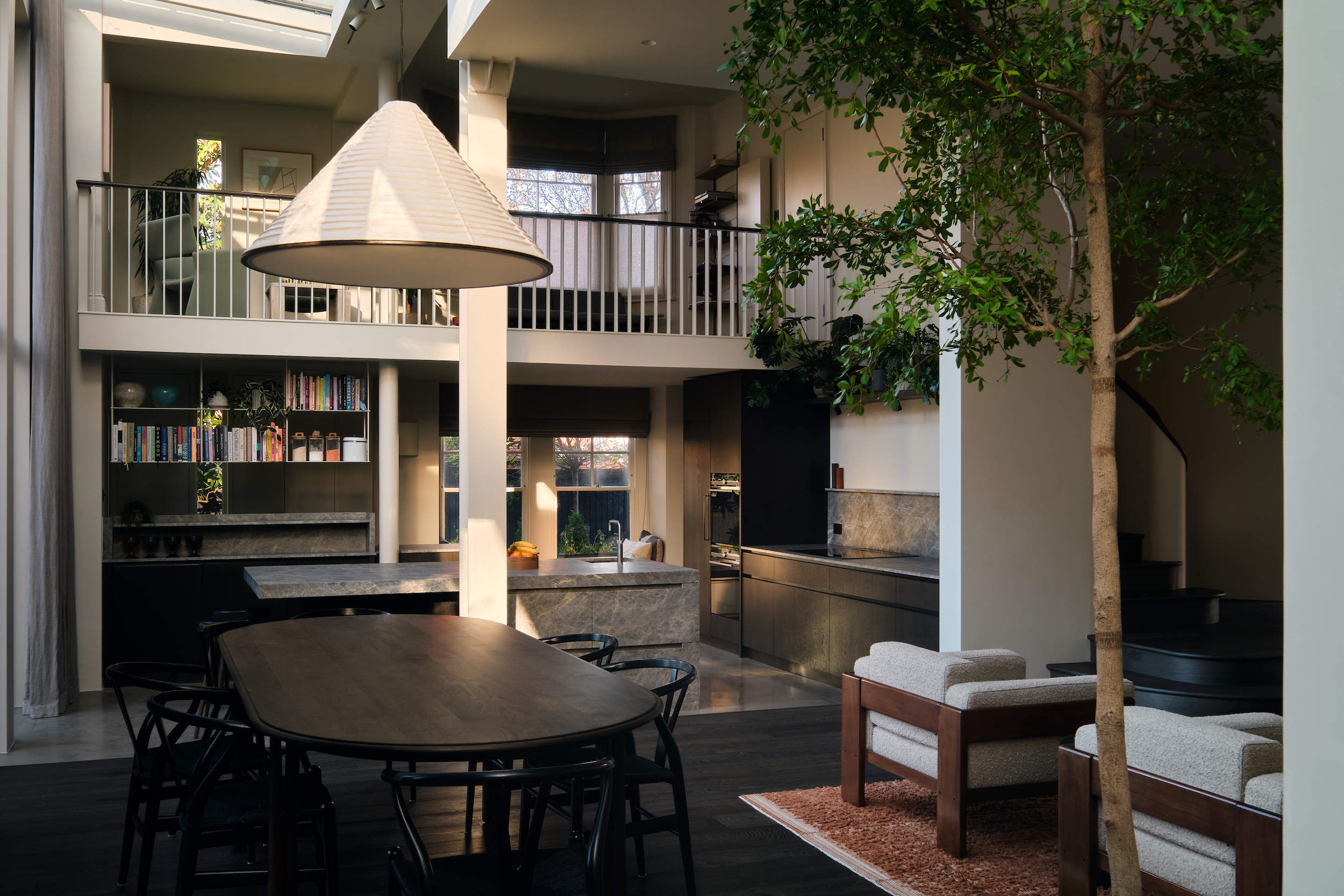
At ground floor level, the kitchen and dining area now function as the nucleus of the home. Previously isolated by awkward partitions and the former staircase, the space has been opened up for fluid movement and improved daylight. It acts as a daily gathering point, while the living room establishes a strong connection to the garden beyond.
These spaces strike a balance between openness and intimacy, reflecting a shift away from spectacle towards comfort, practicality and a refined atmosphere.
All images © Ollie Tomlinson