

Case Study: Pyramid House, Khan Bonshek

The retrofit of the Pyramid House in Milton Keynes by Khan Bonshek revisits one of the experimental homes built for the 1981 Homeworld Expo, updating a postmodern architectural curiosity for contemporary living while retaining the spatial character that defined its original ambition.
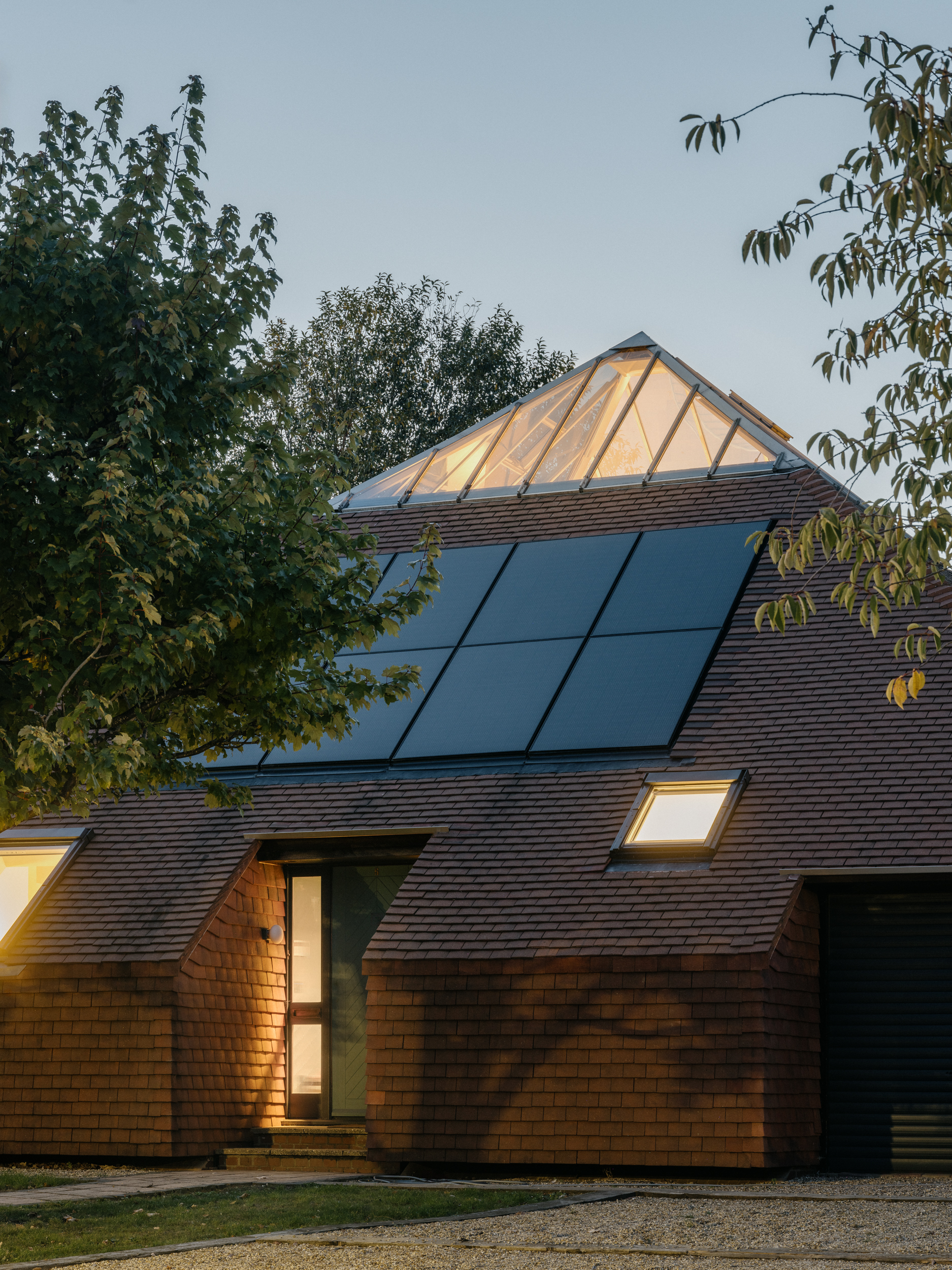
Constructed as part of a group of 36 prototype houses commissioned by the Milton Keynes Development Corporation to explore future models of domestic life, the Pyramid House represents a period when housing innovation was closely tied to technological optimism. More than four decades later, the challenge lay not in reinvention, but in adapting an unconventional geometry to present-day patterns of occupation and energy performance.
The project began with a modest brief to improve usability within the tightly constrained eaves. However, the architects quickly identified wider opportunities to rethink circulation and spatial relationships throughout the three-storey house. The triangular plan, defined by tapering walls and sloping roofs, required careful recalibration to balance functionality with the playful postmodern identity of the building.
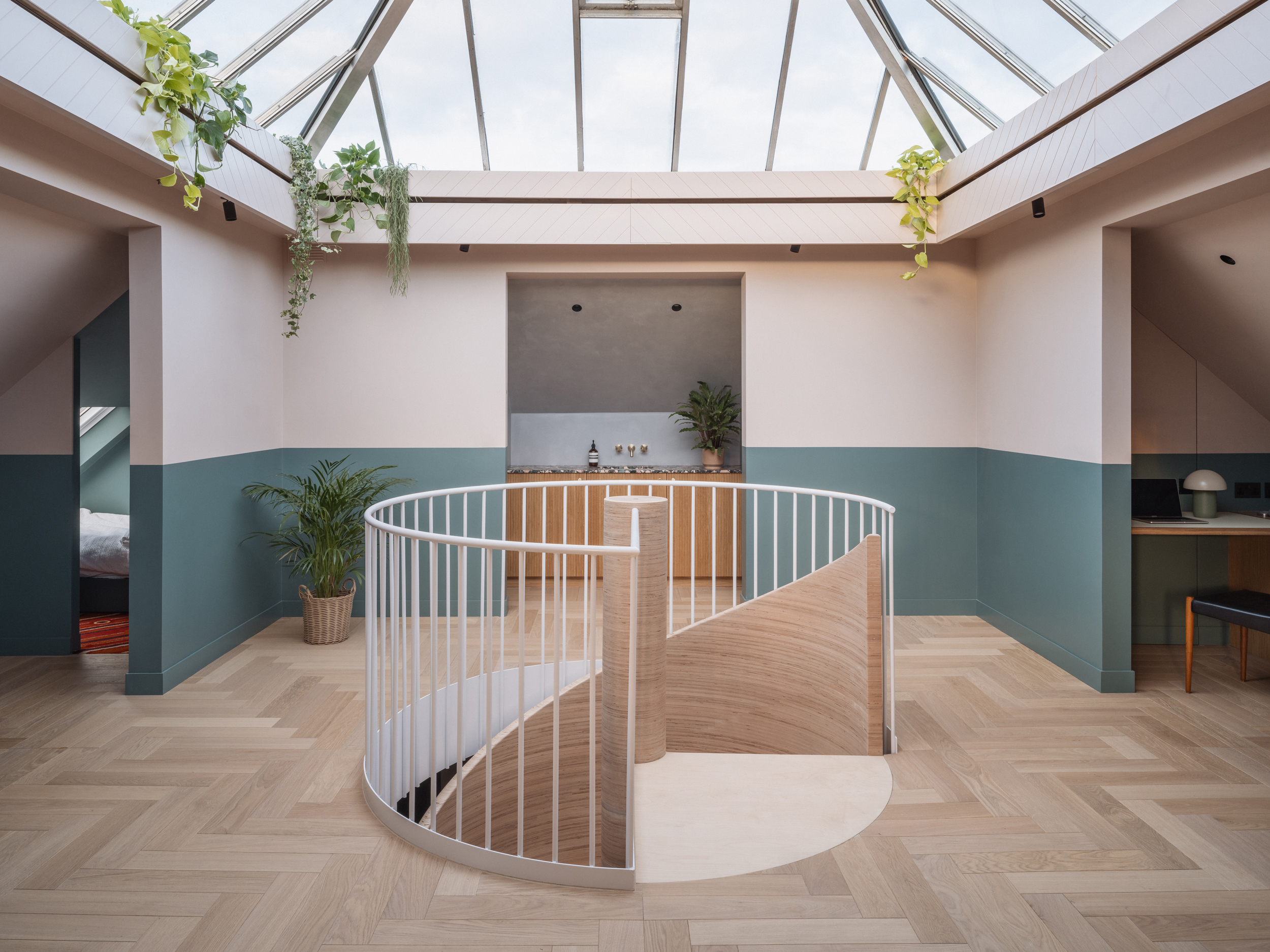
Central to the intervention is a reorganisation of movement through the home. Previously fragmented rooms connected more as a sequence of set pieces than a cohesive dwelling. By removing partitions and restructuring the plan around a clear vertical axis, the architects established a more legible internal hierarchy organised broadly into working, living and resting zones.
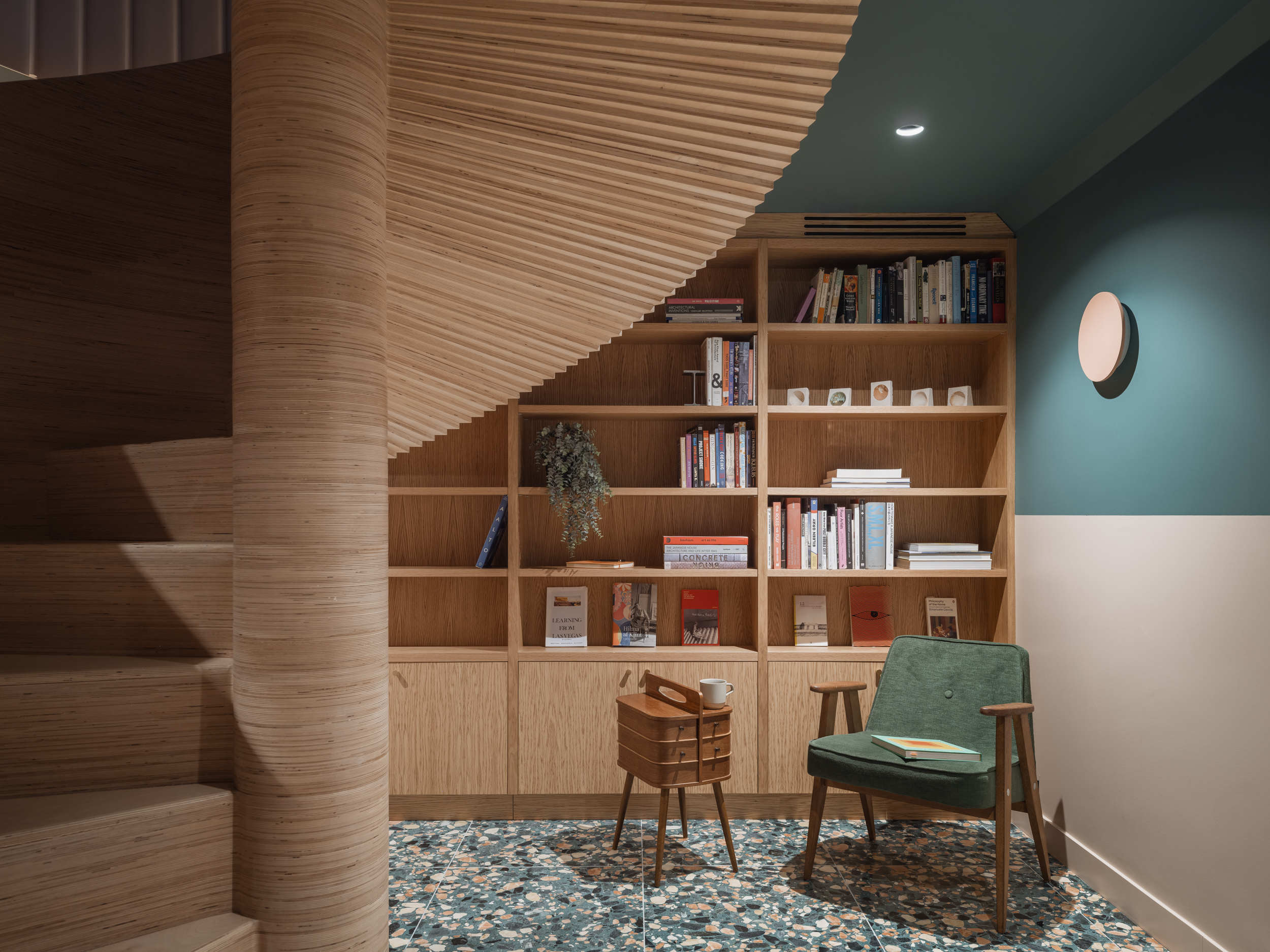
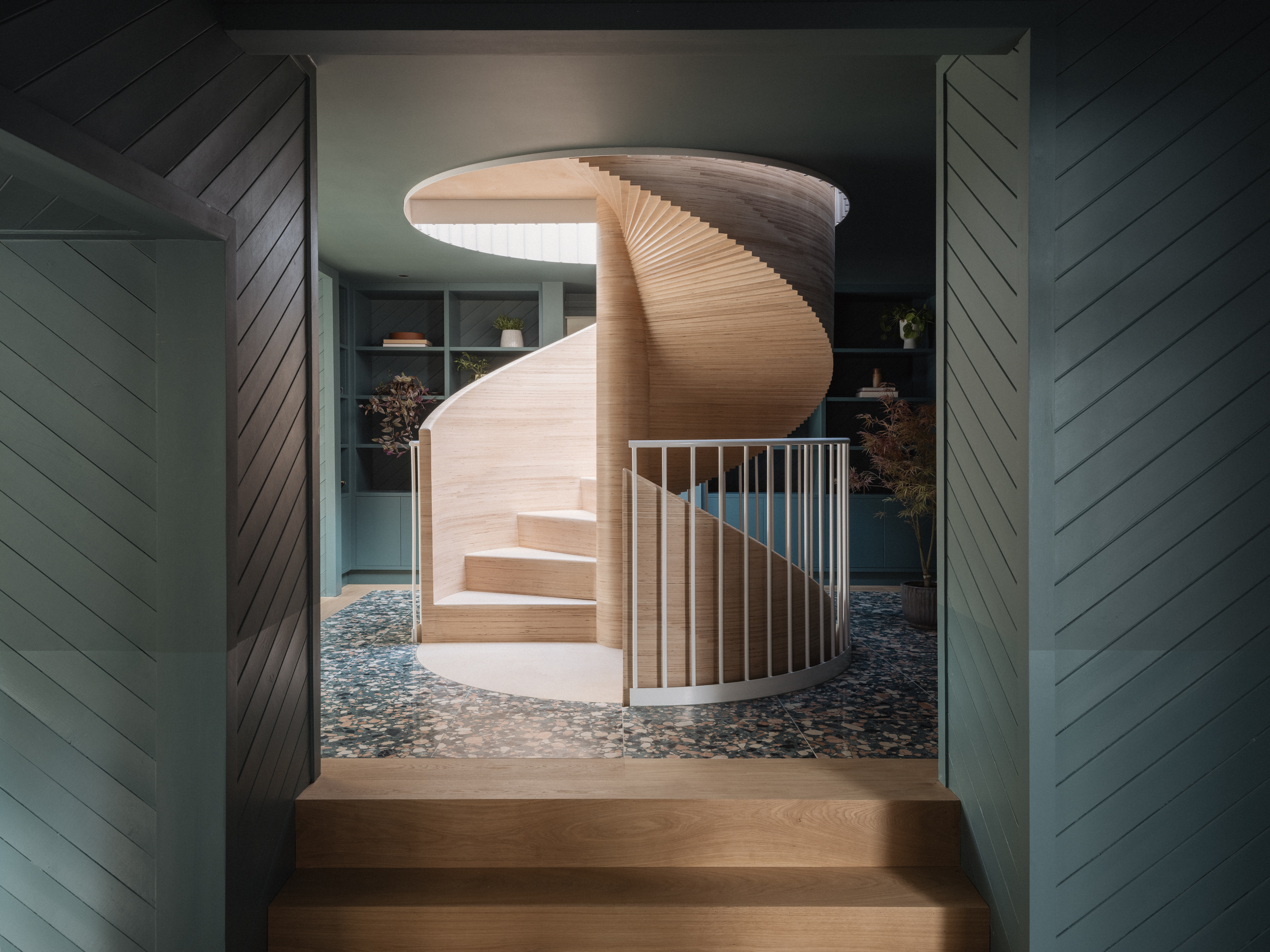
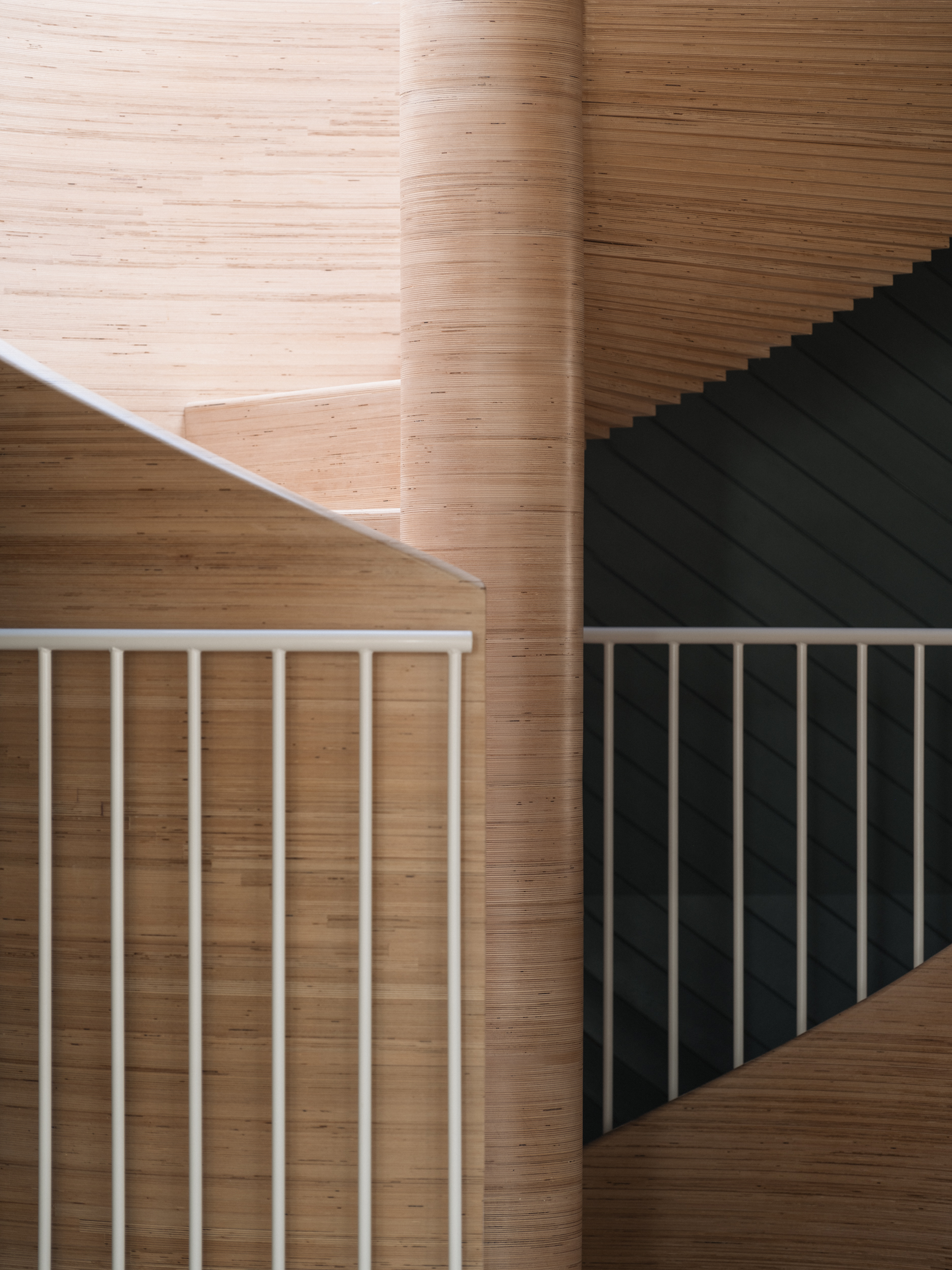
The stairwell became the primary architectural device. A new sculptural spiral staircase, fabricated from stacked birch plywood and prefabricated by Landmark Joinery, acts as both circulation and lightwell. Rising through the building’s full height beneath an apex lantern skylight, the stair draws daylight deep into the plan, visually linking floors while reinforcing the spatial drama inherent to the pyramid form.
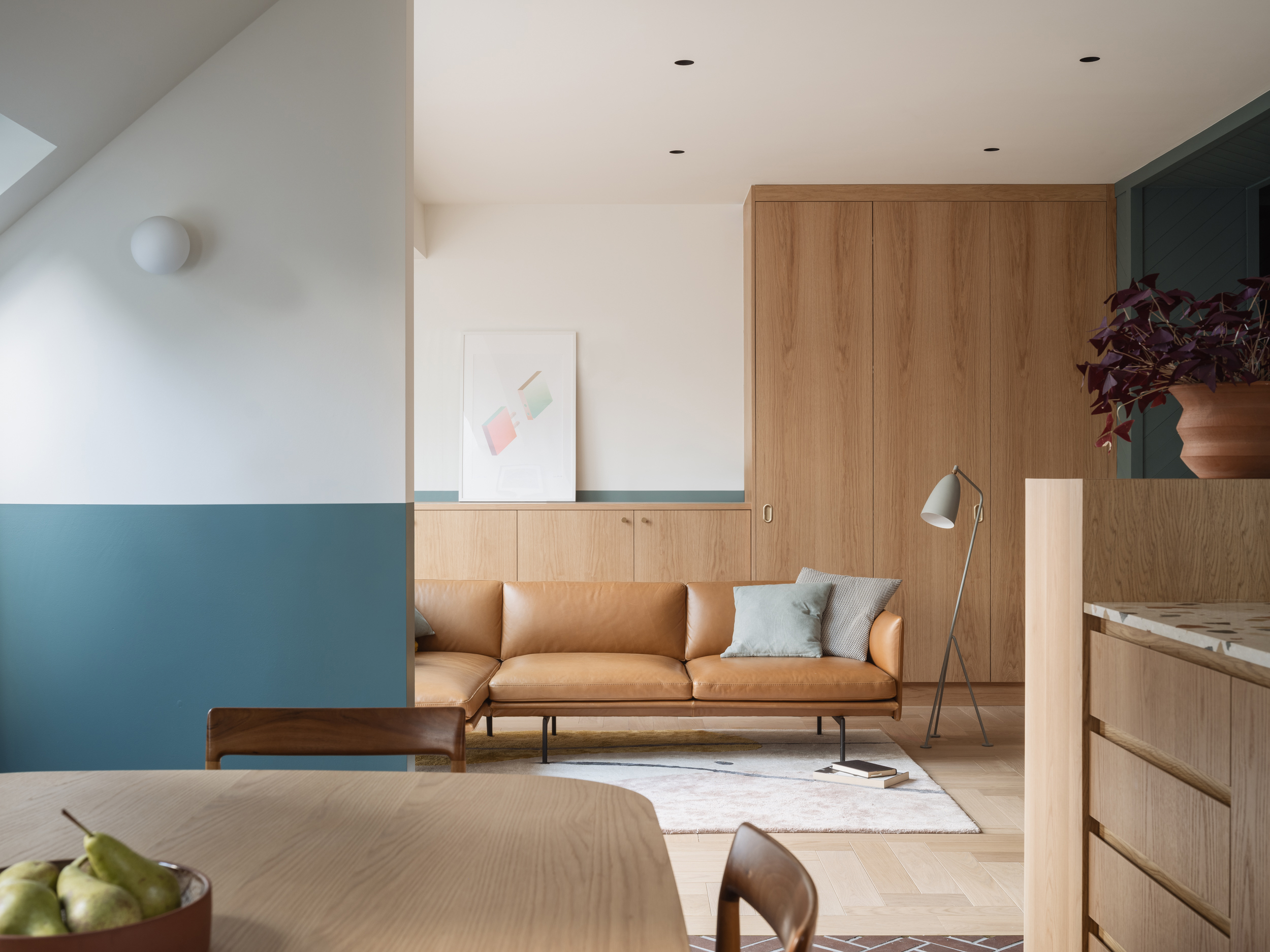
Material decisions play a significant role in unifying the interior. A restrained palette combines light oak panelling with natural terrazzo surfaces that anchor the main living areas. Rather than competing with the building’s geometry, these finishes provide continuity, allowing subtle tonal shifts to distinguish daytime social spaces from quieter areas located higher within the eaves. Smaller volumes created by the sloping envelope are used intentionally to form intimate reading corners, guest sleeping pods and a bespoke sauna, demonstrating how constraints can generate spatial character.
Alongside spatial reconfiguration, the project addresses long-term performance. Two ground source heat pumps, improved insulation and enhanced airtightness significantly reduce operational energy demand, allowing the experimental house of the early 1980s to meet contemporary expectations for environmental efficiency.
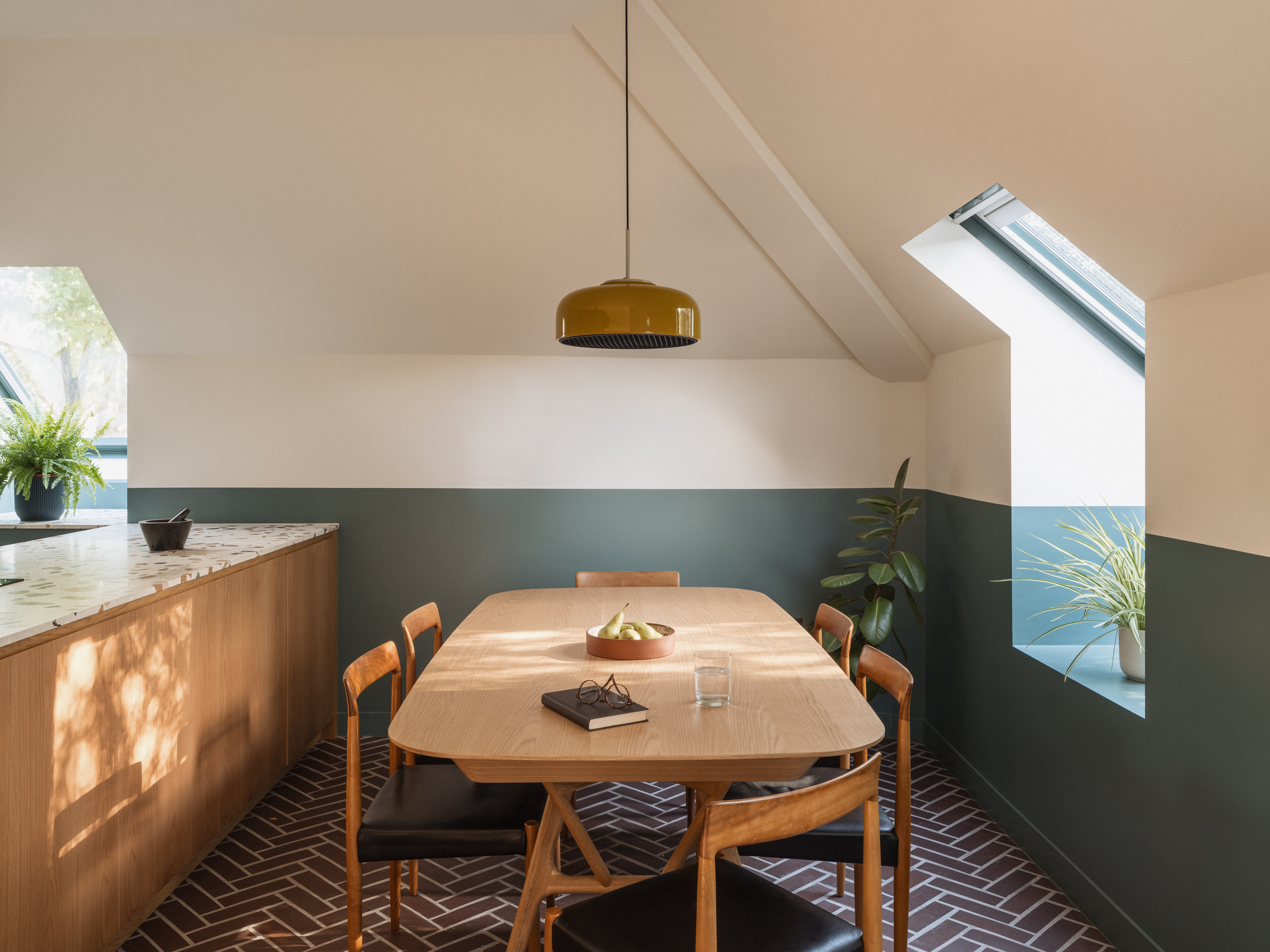
The result is less a restoration than a careful recalibration. By working with, rather than against, the building’s unusual form, Khan Bonshek demonstrates how architecturally distinctive housing can be adapted for modern occupation without erasing its origins. The Pyramid House now operates as a viable long-term home, illustrating how retrofit can extend the life of late-20th-century domestic experimentation while aligning it with current priorities around comfort, sustainability and material longevity.
All Images © James Reteif