

Case Study: St Mary’s Townhouse and Mews House, Mosley Thorold

A shared garden connects two very different buildings in Kensington, where Mosley Thorold has refurbished a listed Georgian townhouse and rebuilt its adjoining mews house. Rather than attempting to reconcile their differences, the architects have used them as the starting point for a project in which historic proportions and contemporary scale, traditional fabric and expressive new materials, each retain their own character.
Designed for a gallerist and their family, St Mary’s Townhouse and Mews House began as a relatively modest refurbishment of the townhouse. As the architects explored the site, however, the opportunity emerged to treat both properties as a single architectural undertaking. The townhouse was restored with a light touch, preserving its late Georgian proportions and original structural elements, while the three-storey mews house was rebuilt from the ground up, with a new basement and considerably greater spatial freedom.
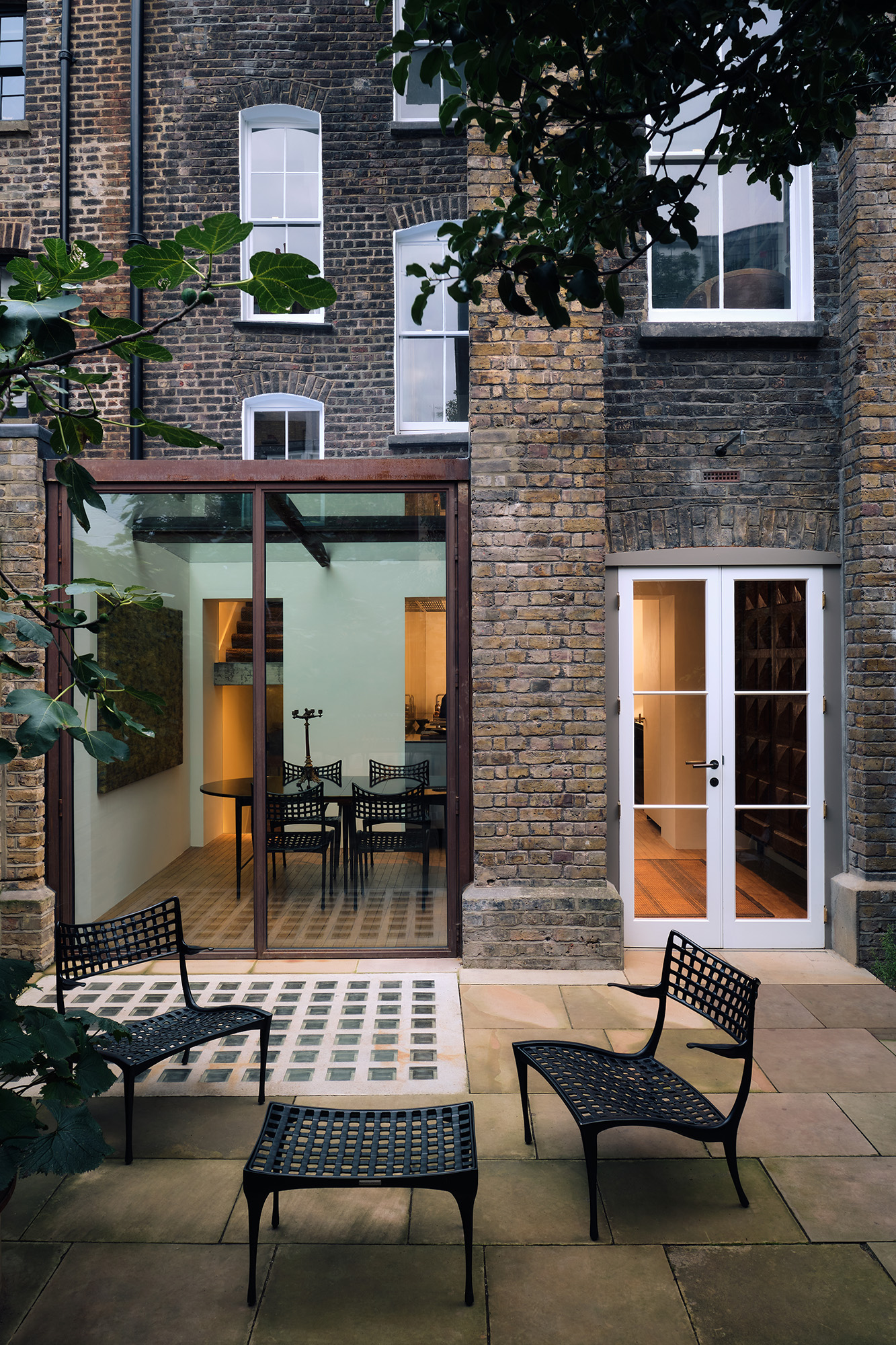
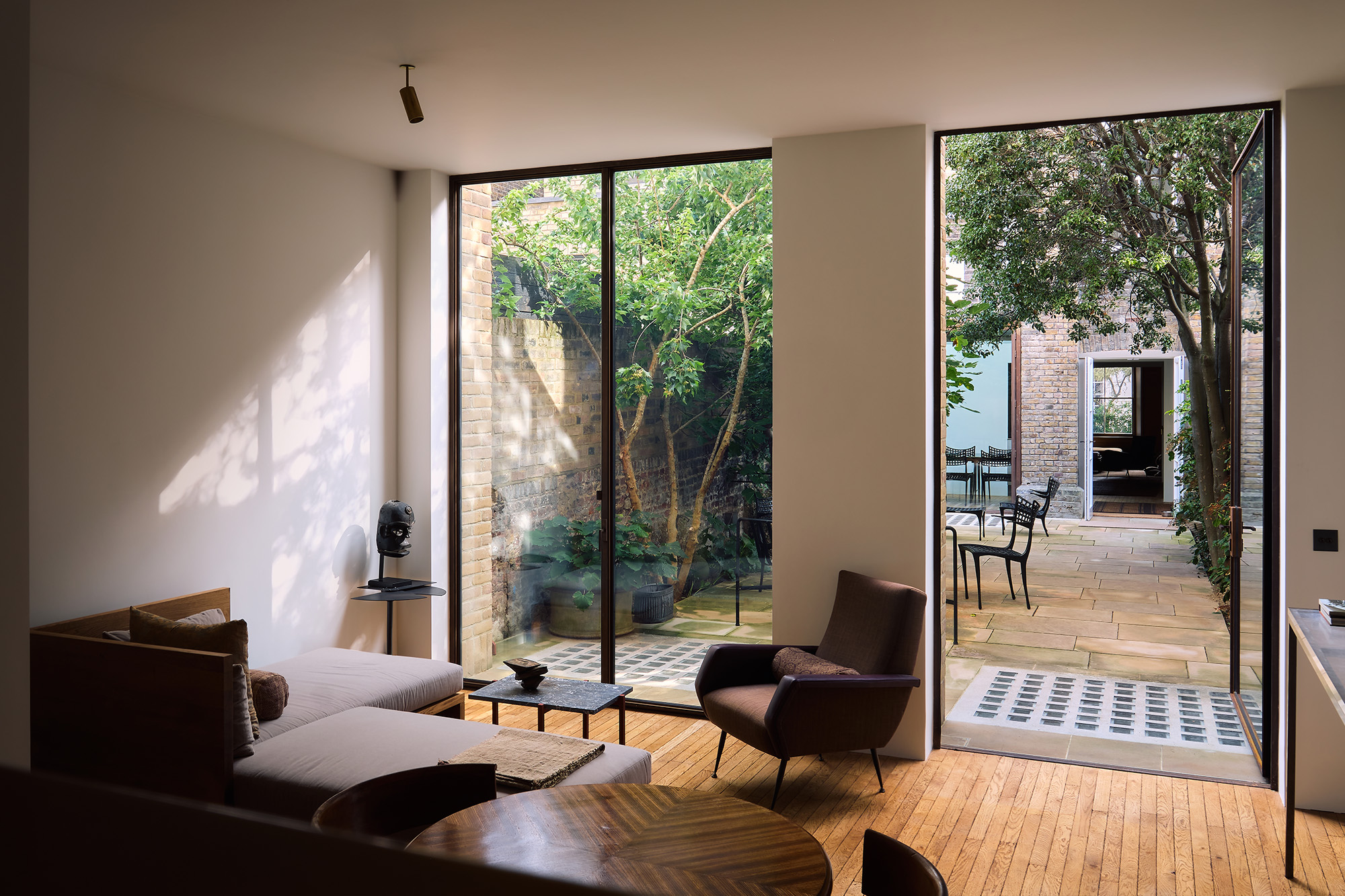
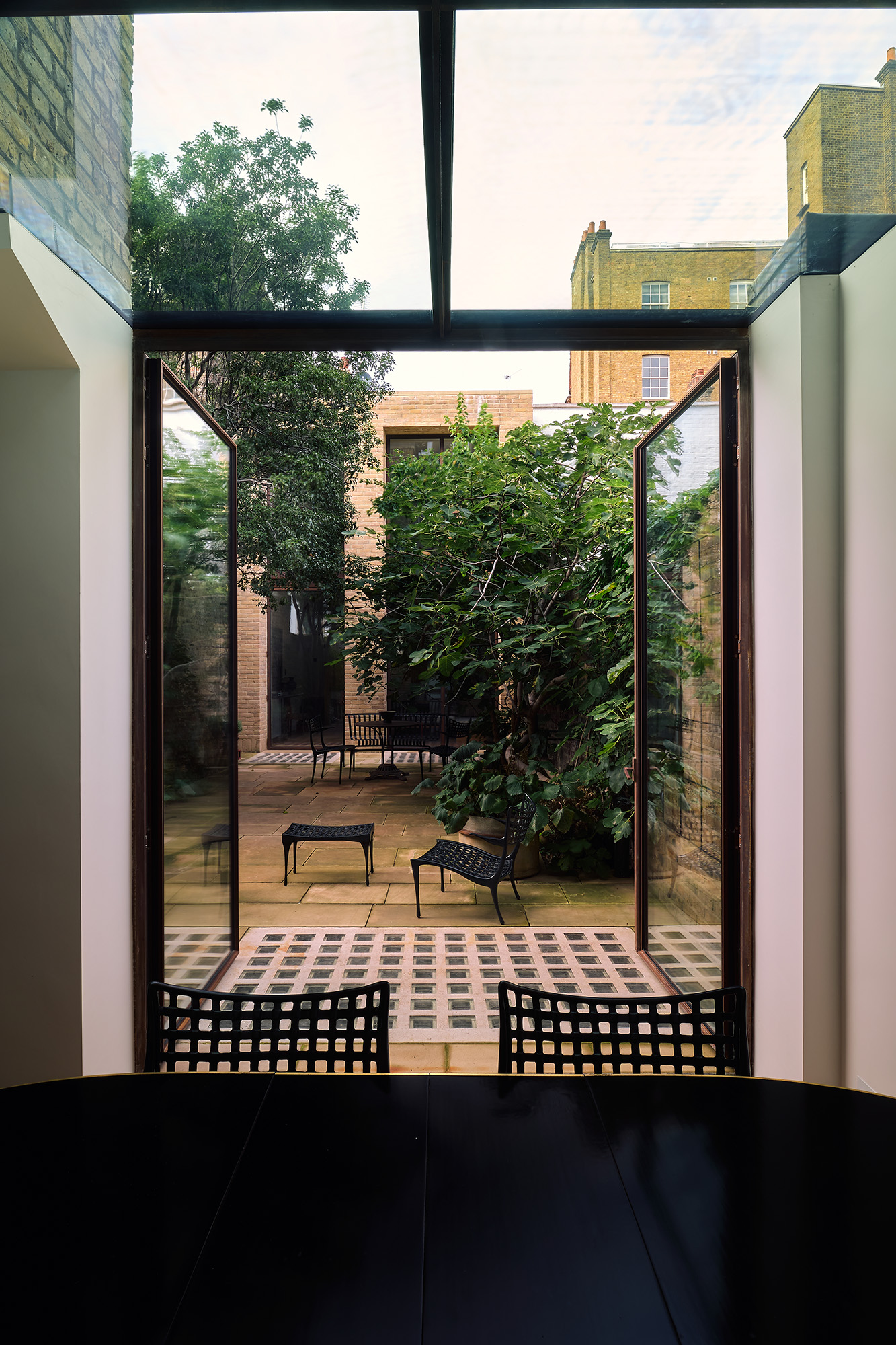
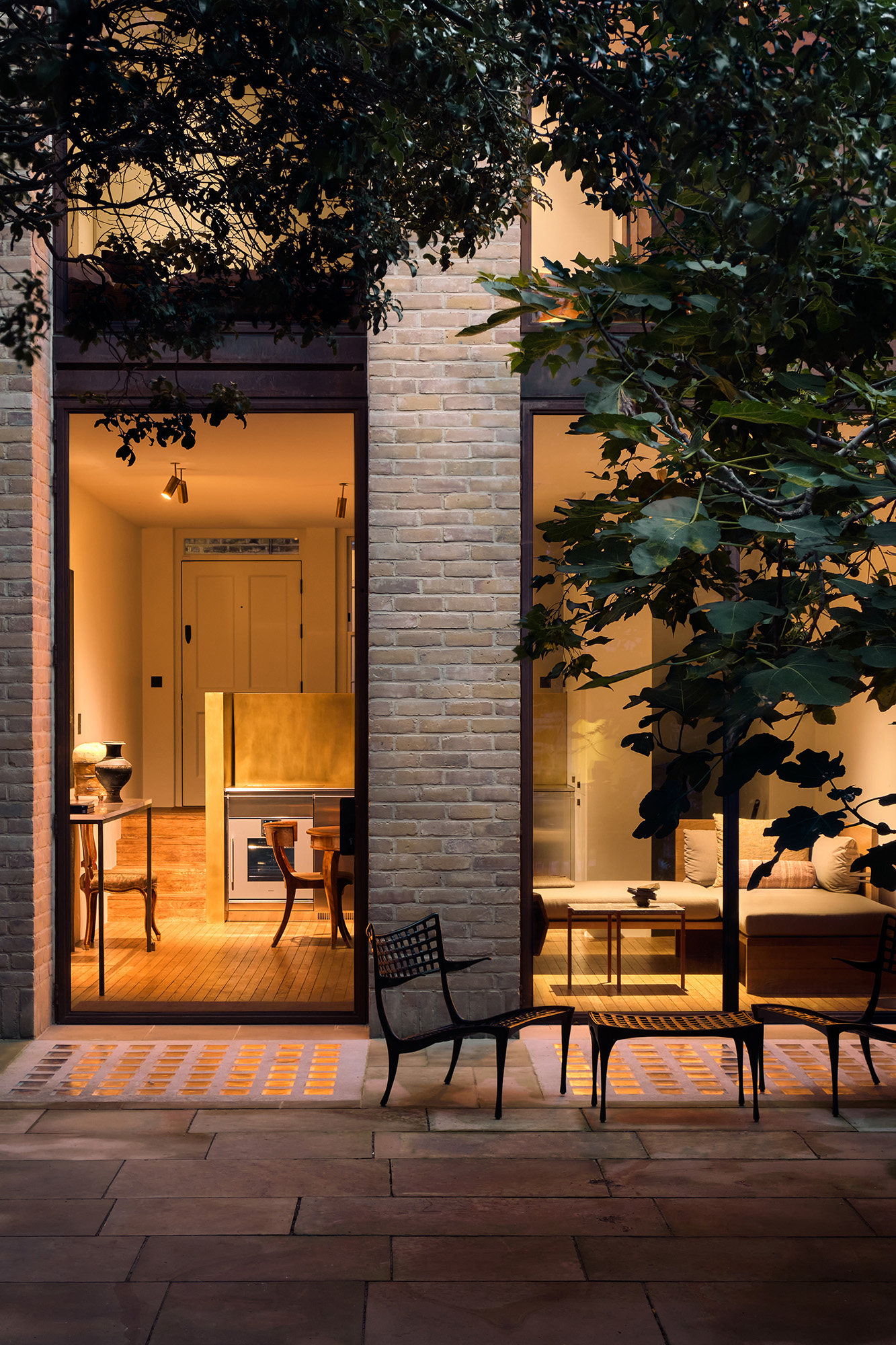
The relationship between the two is most apparent across the central garden. From the kitchen and seating area of the mews house, the view runs through the courtyard towards the conservatory dining room of the townhouse. The garden is more than a gap between buildings; it establishes a visual connection that allows each residence to register the presence of the other.
The architecture of the existing townhouse also provided a cue for the new work. Two substantial brick piers rise along its rear elevation, establishing a strong vertical rhythm. Mosley Thorold responded with a series of monumental columns framing the rebuilt mews façade. The repetition creates a connection between the buildings without requiring the new architecture to imitate the old.
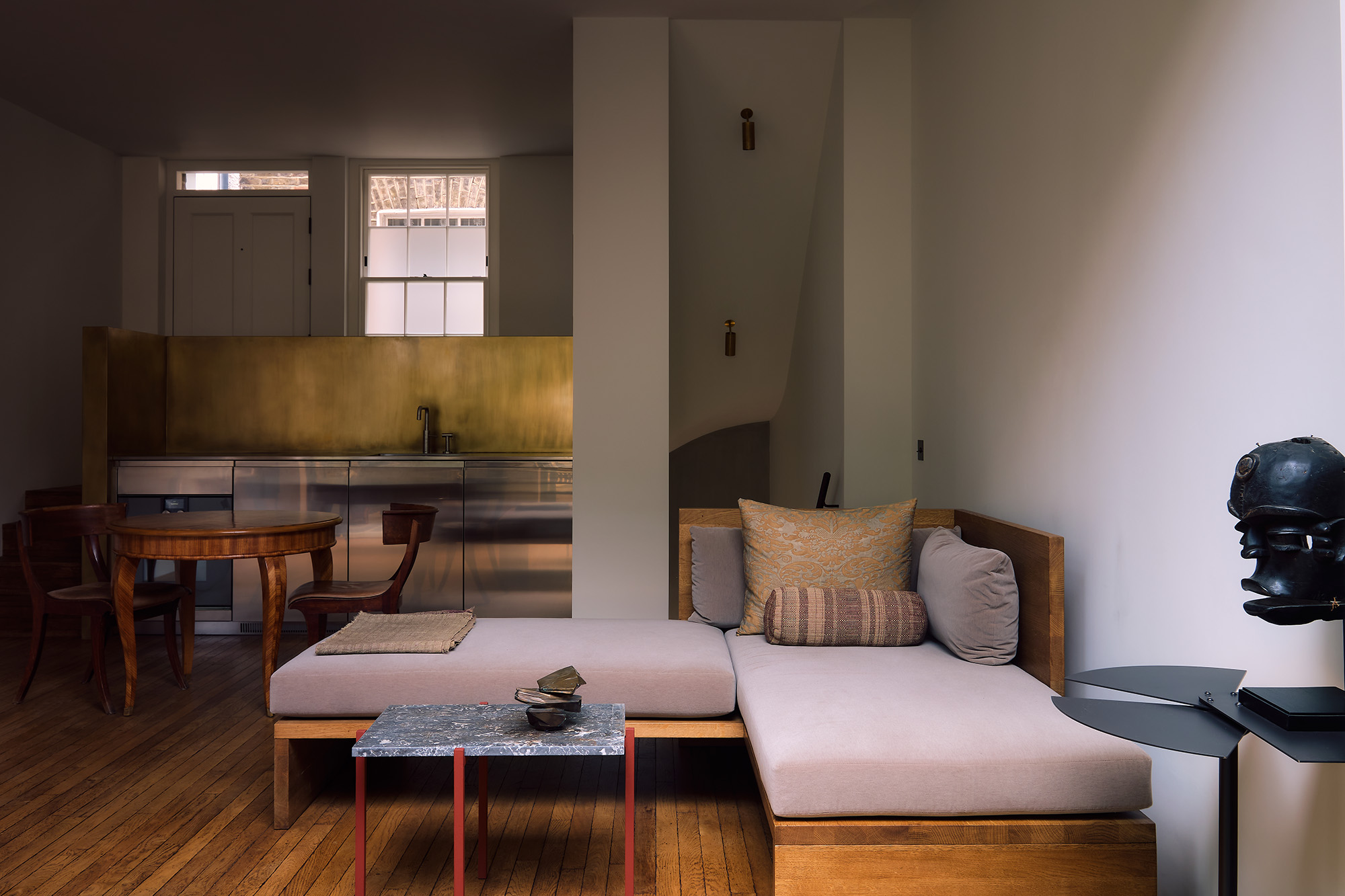
Inside the townhouse, the retained proportions provide a measured backdrop for a more individual collection of materials and furnishings. A stainless-steel and brass kitchen introduces a crisp metallic counterpoint to the historic fabric, while handmade Belgian tiles, sourced by the client from a specialist dealer, bring texture underfoot. Their surface offers a more tactile register than the polished metalwork, allowing contrasting finishes to sit alongside one another without competing for attention.
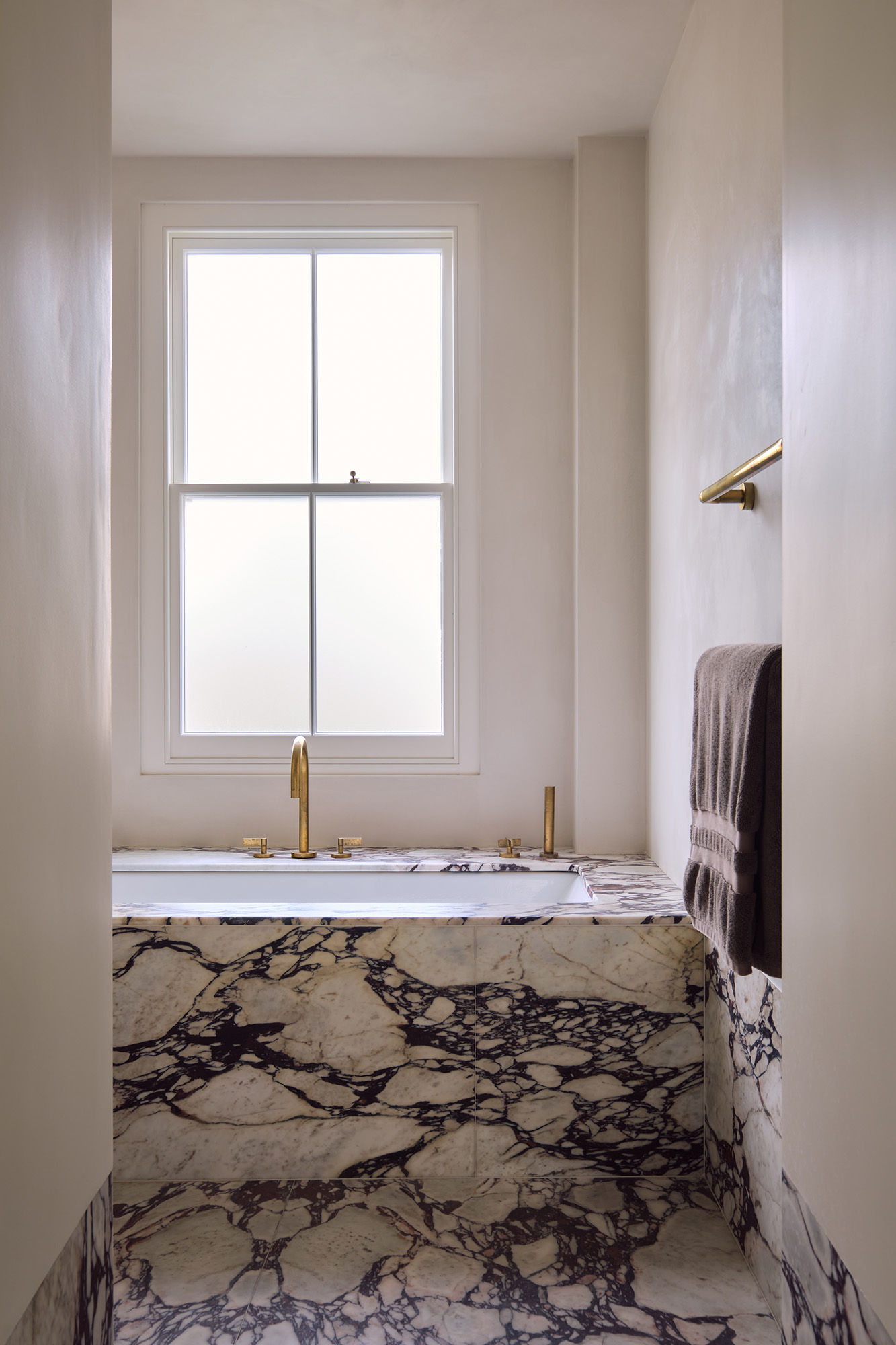
The interiors also draw on the reuse of existing objects. Antique Italian doors have been converted into a bespoke cabinet for tableware, carrying their ornament into a new function. Alongside tapestries, wingback chairs and vintage pieces, the cabinet contributes to an interior shaped as much by accumulated objects as by architectural intervention.
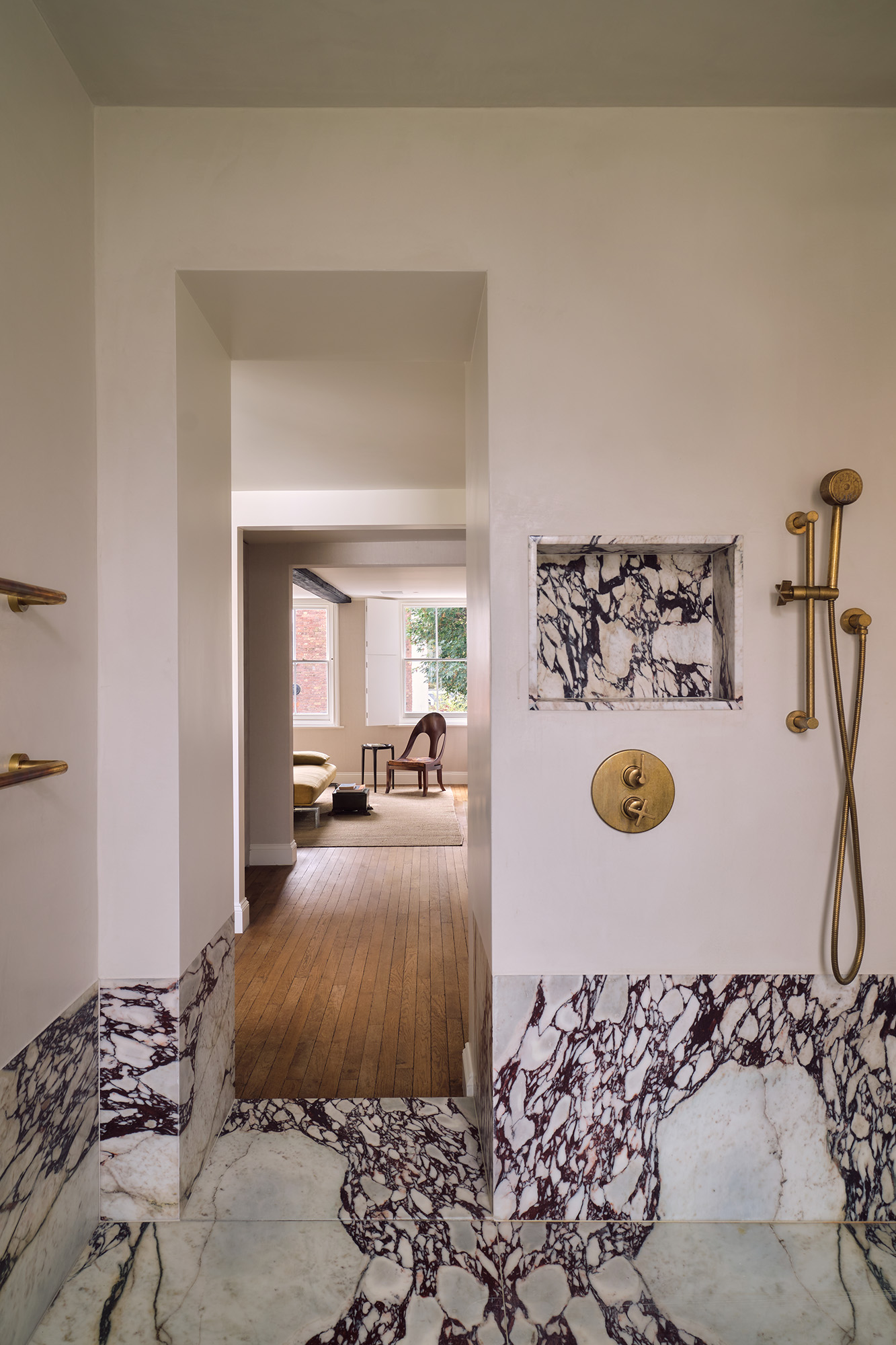
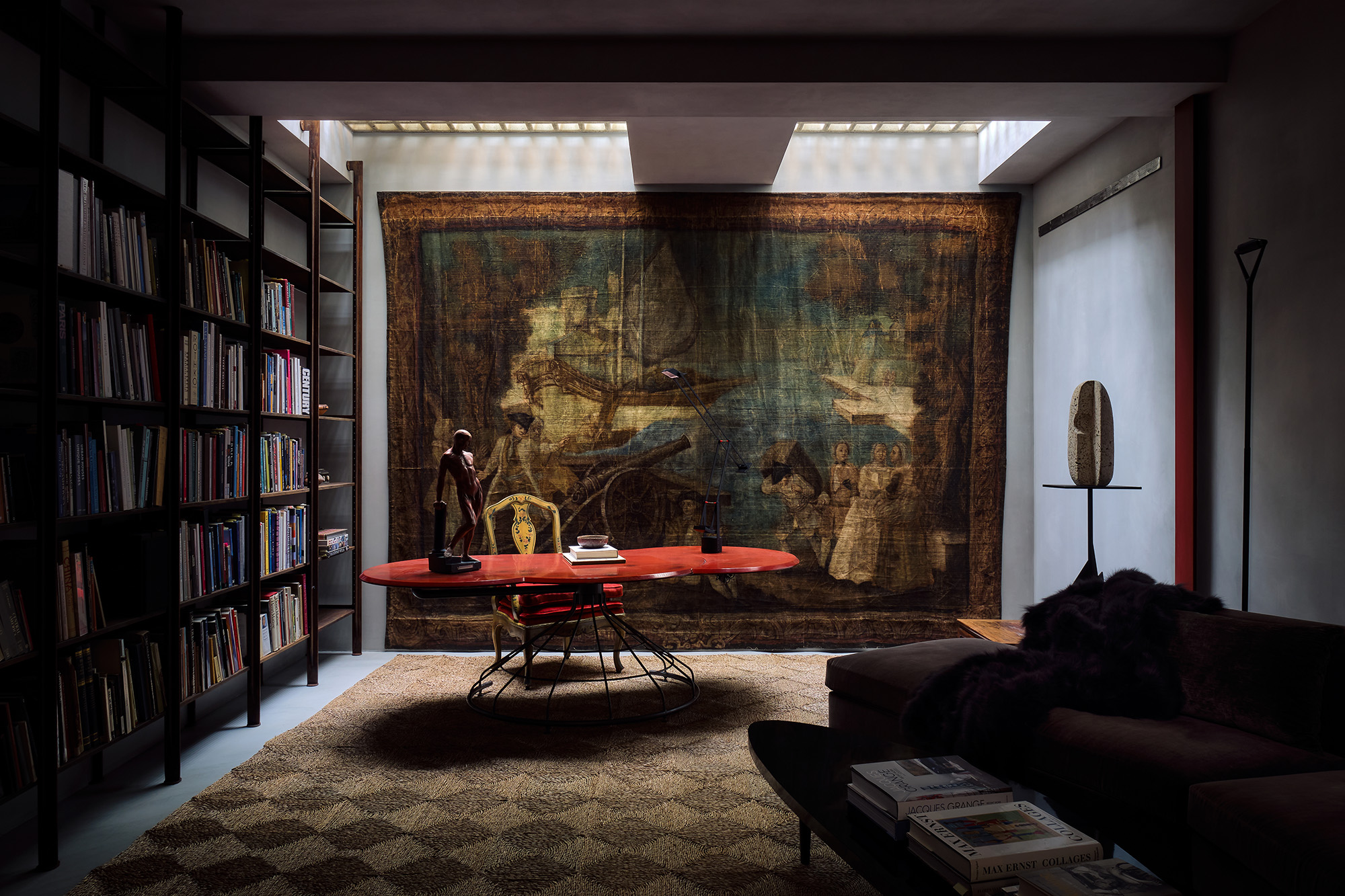
The rebuilt mews house takes a different approach. Its higher ceilings and more generous volumes accommodate stronger gestures, including bespoke corten steel shelving in the basement. The metal’s weathered appearance gives it a depth and texture distinct from the stainless steel and brass used in the townhouse, while its substantial presence suits the larger scale of the new interiors. Custom metalwork throughout both properties was developed with specialist craftspeople, sometimes from detailed architectural drawings and sometimes through direct collaboration between the makers and client.
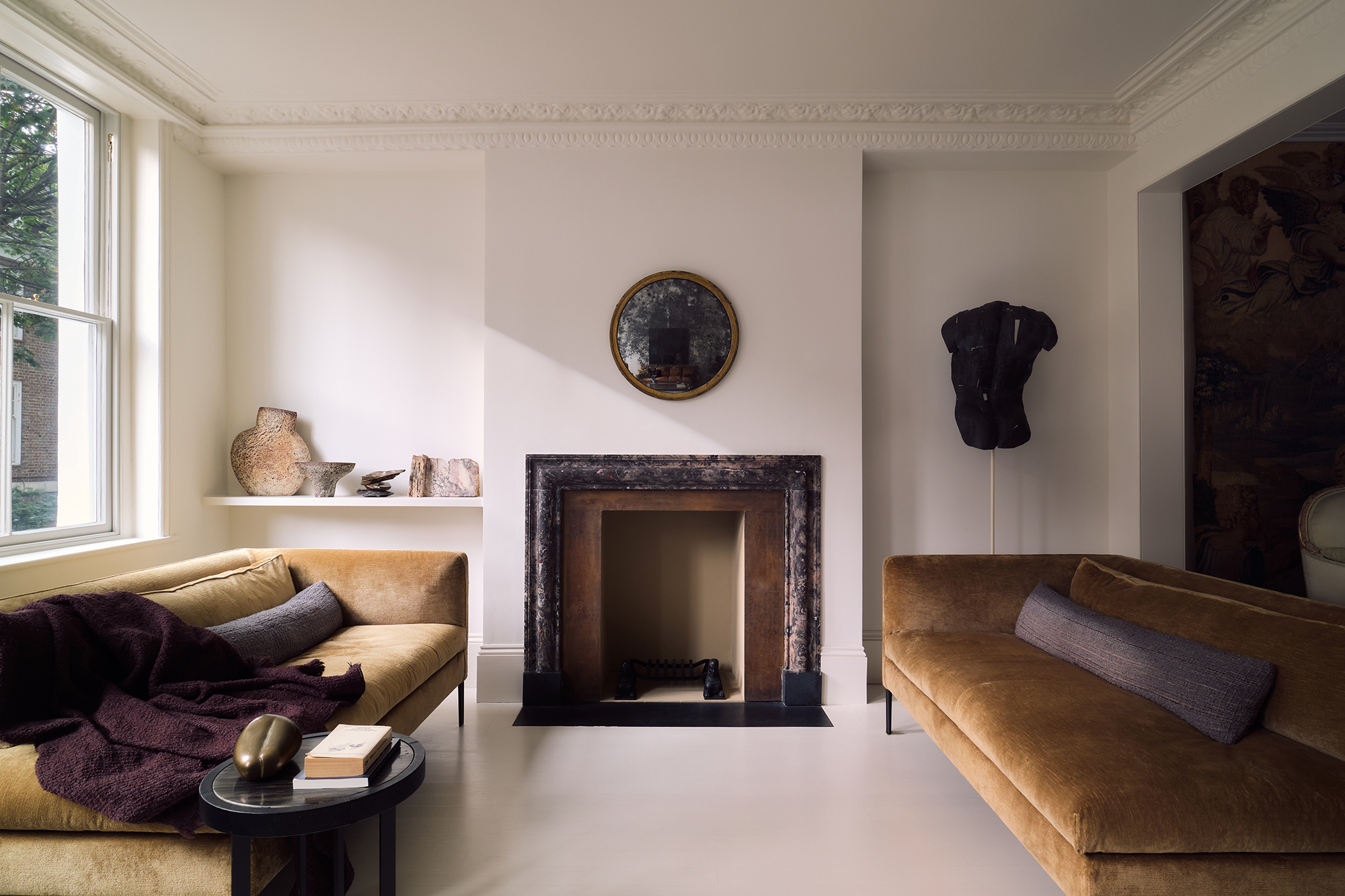
For Mosley Thorold, the challenge was to give these varied materials a coherent setting without imposing a uniform palette across the two buildings. As founding director Henry Thorold explains: “The materials carried a natural weight and confidence - steel, brass, deep colours - and we focused on giving them a coherent architectural structure so they could fully sing.”
The project demonstrates how refurbishment and new construction can work together without erasing the distinctions between them. In St Mary’s Townhouse and Mews House, the architecture provides a framework for material contrast, allowing old fabric, reclaimed objects and contemporary metalwork (along with the all-important art on the walls) to establish their own identities within a connected whole.
All images: © Ollie Tomlinson