

Case Study: West London House

While having only formed some seven years ago, Goldstein Heather has already established itself as a studio built on timeless design and enduring forms.
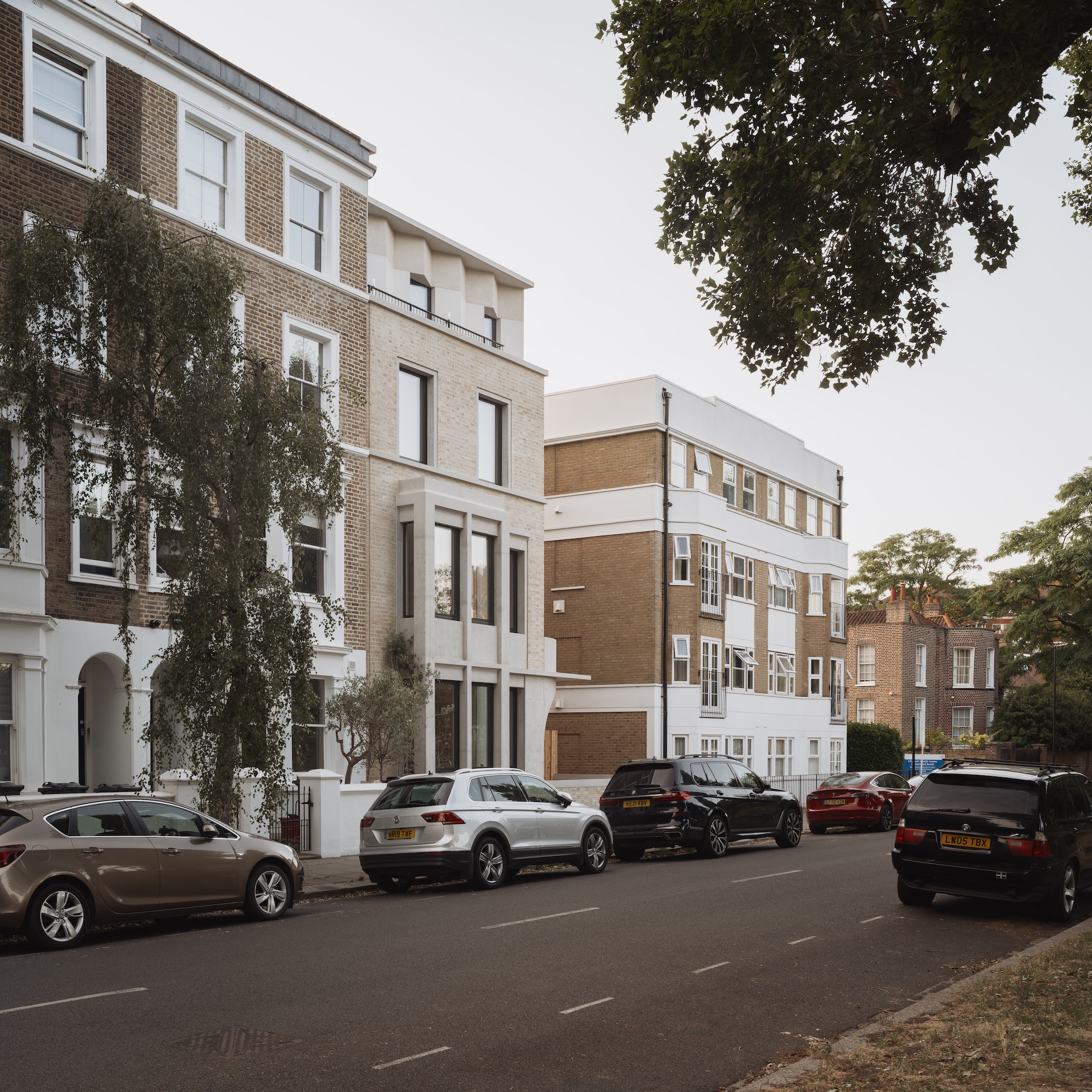
In Stamford Brook, their recently completed project, West London House, once again galvanises this status. Reworking a narrow end-of-terrace Victorian property through a substantial lateral extension, they have combined restored brick fabric with a contemporary masonry with an elegance and attention to detail in keeping with the properties surroundings.
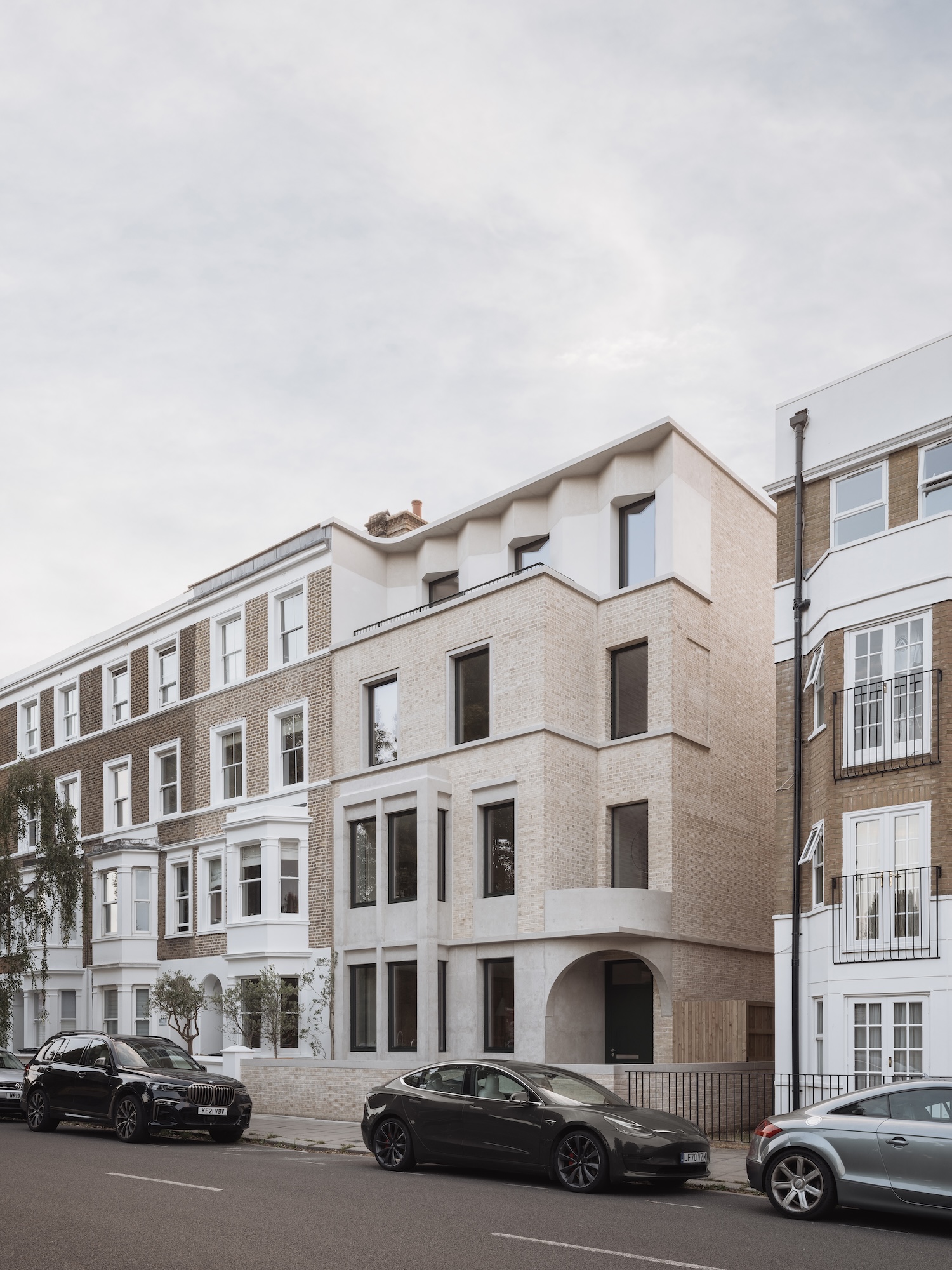
Having bought the original house a decade ago, owners Rowan and Angelina Bamford seized upon the chance to purchase the neighbouring Expedition House, a former 1930s Territorial Army building. This offered the rare opportunity in London of allowing the architects to extend the original house sideways. What began as a refurbishment evolved into a four-storey intervention that almost doubles the usable footprint, creating nearly 500m² of internal space across old and new structures.
For the clients, the move was driven as much by spatial quality as by family dynamics. Not only did the original house’s tight plan and fragmented layout limit daylight, but the multigenerational household were finding that social interaction was being hindered too. The answer: a new extension that reorganises the plan around volume, light and material continuity.
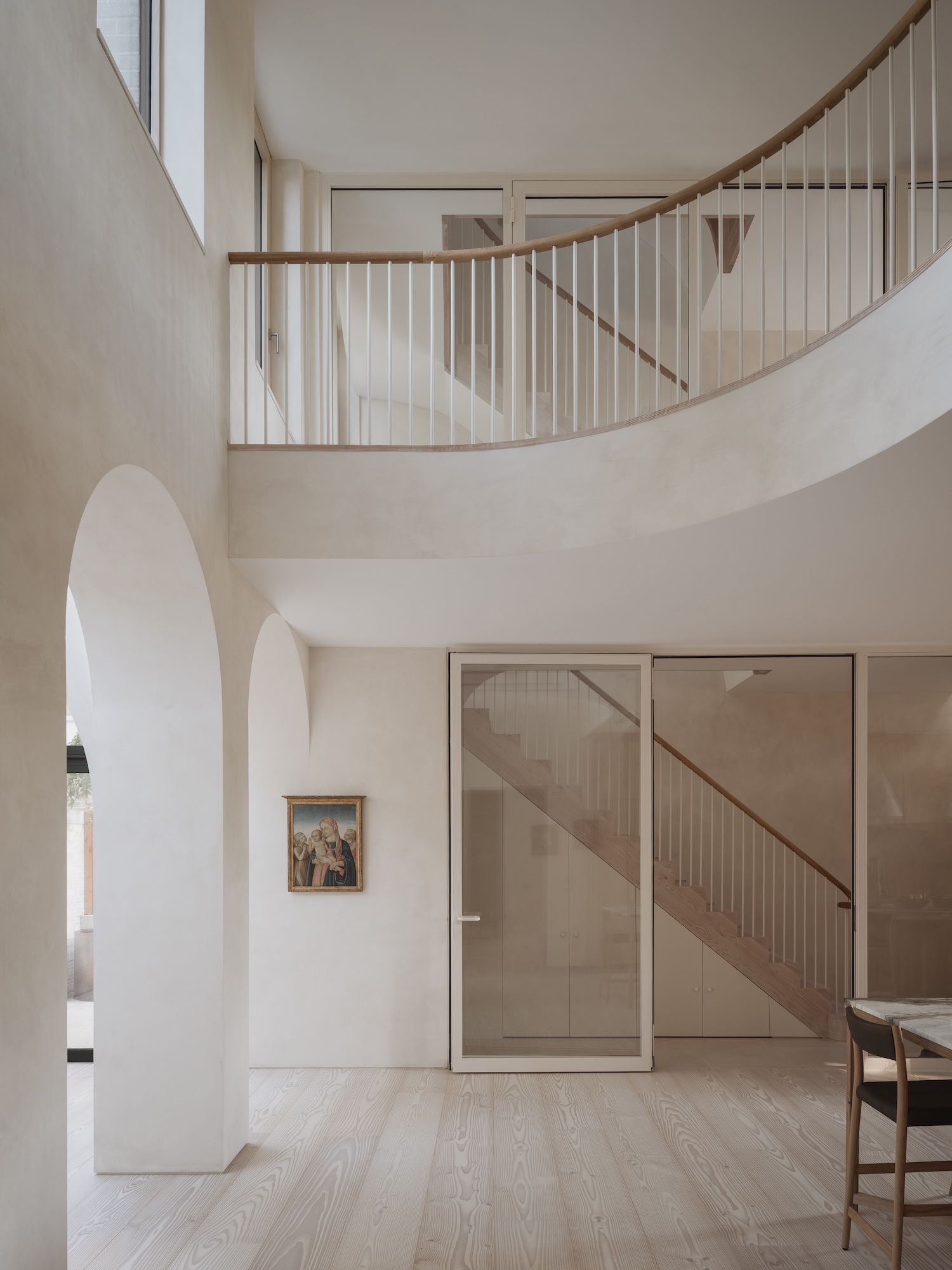
At the heart of the scheme is a double-height space that draws daylight deep into the interior, supported by an east–west orientation and a green outlook to the front. Openings are carefully positioned to frame views of the street, treetops and rear garden, while maintaining a sense of enclosure. The result is a sequence of interconnected spaces that balance openness with domestic scale.
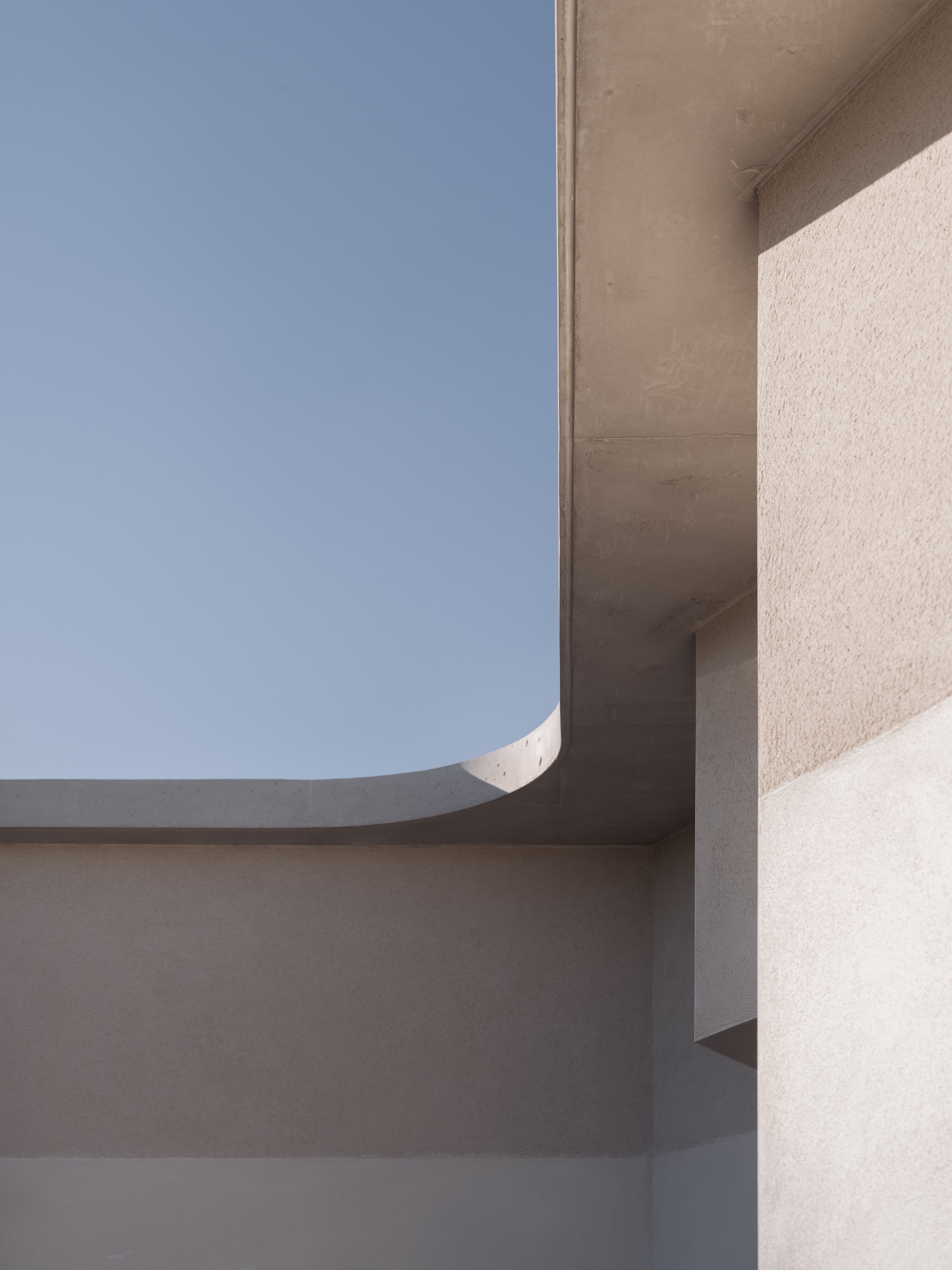
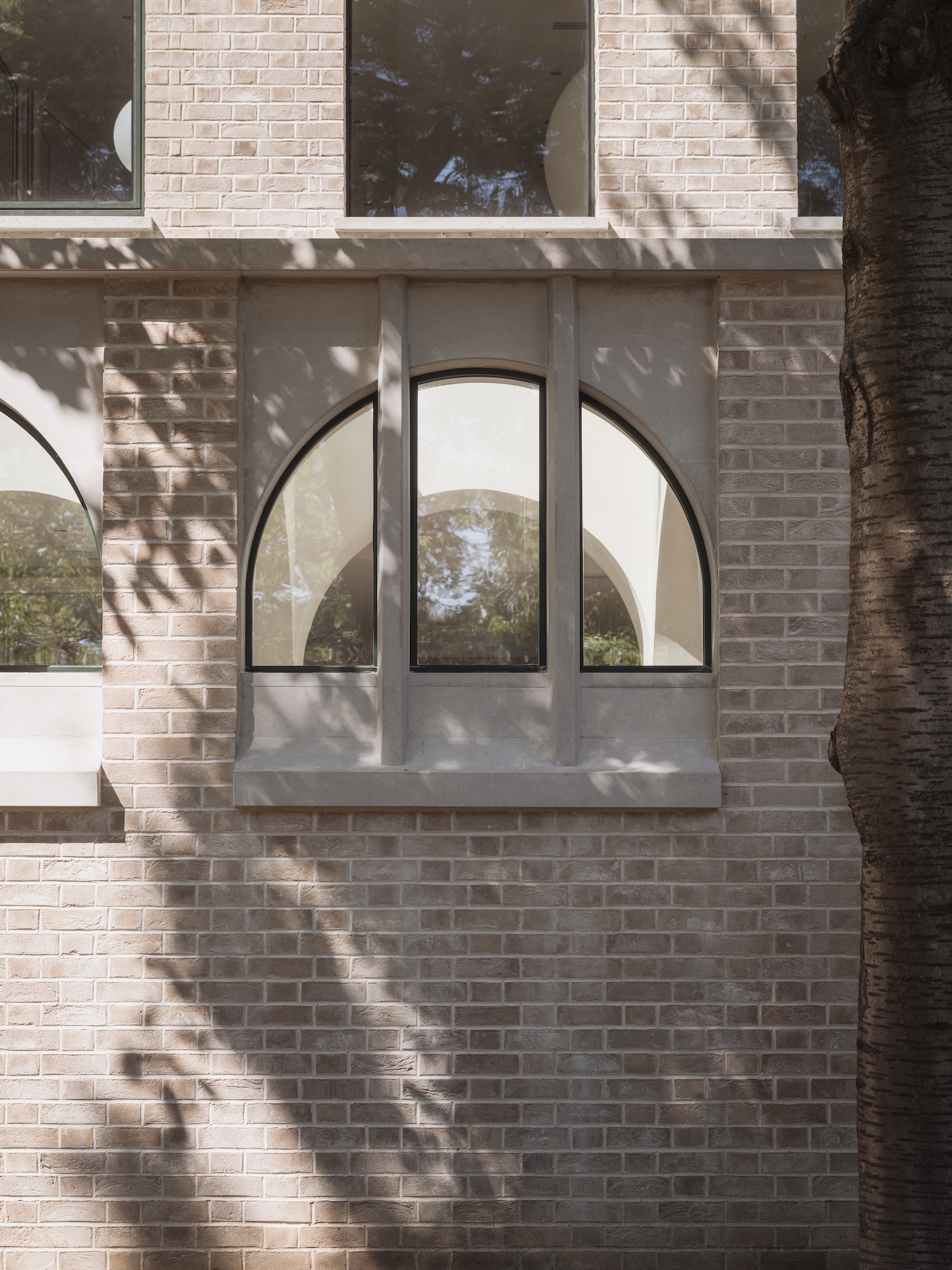
In terms of materials, the project juxtaposes the restored Victorian fabric with a fresh and contemporary palette that emphasises permanence and tactility. The original façade has been stripped back and repaired, with brickwork repointed and historic details reinstated. In contrast, the extension adopts a lighter-toned yellow brick and lime-based render, establishing a distinct but complementary identity.
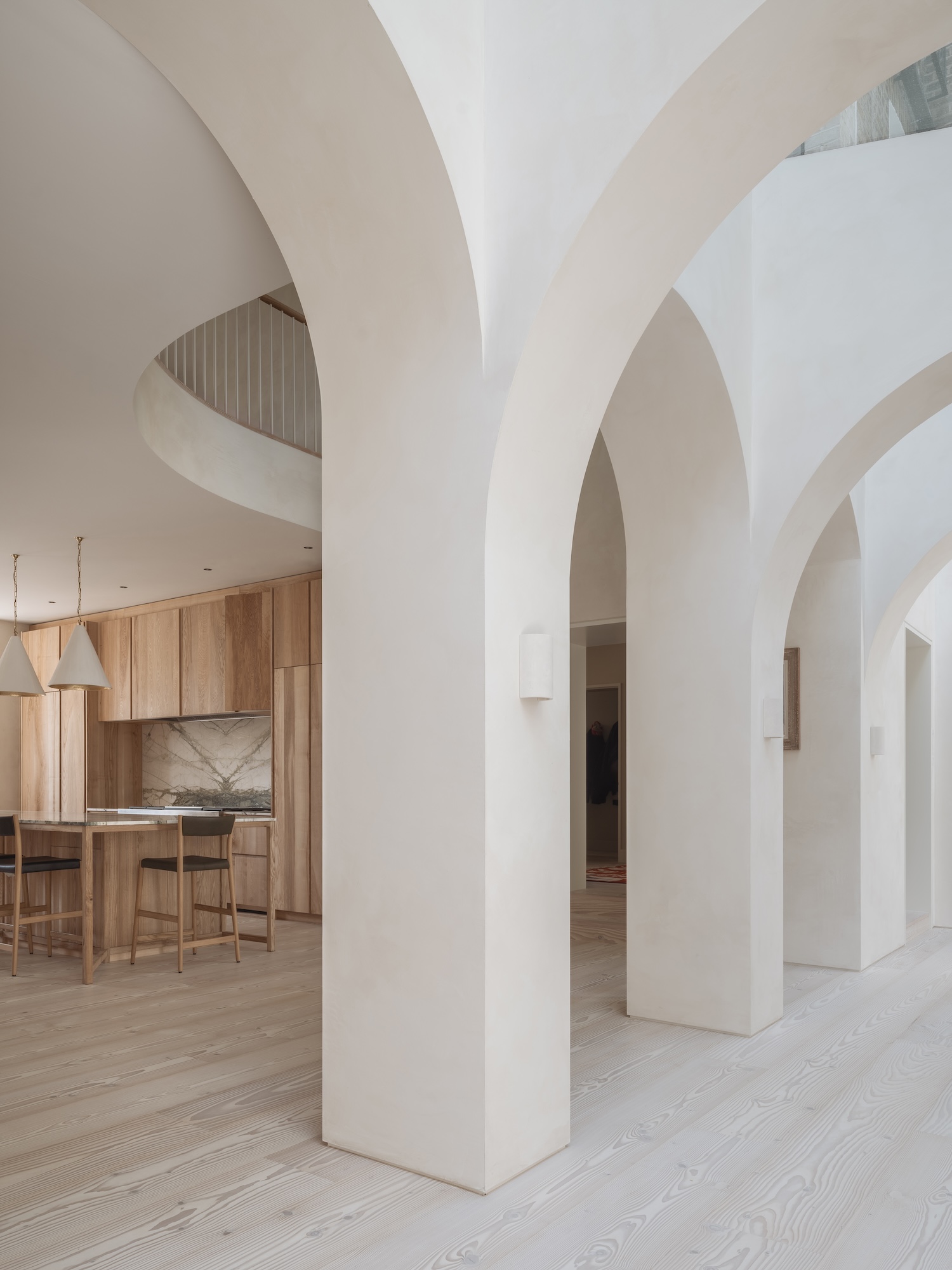
Tasteful curved masonry forms are a defining feature throughout, appearing both externally and internally. Arched openings and sculpted surfaces catch light and soften transitions between spaces, lending the building a sense of weight and continuity. The upper level includes an accordion-like façade, which juxtaposes the smooth arcs, yet still manages to subtly soften the exterior through fractured light patterns.
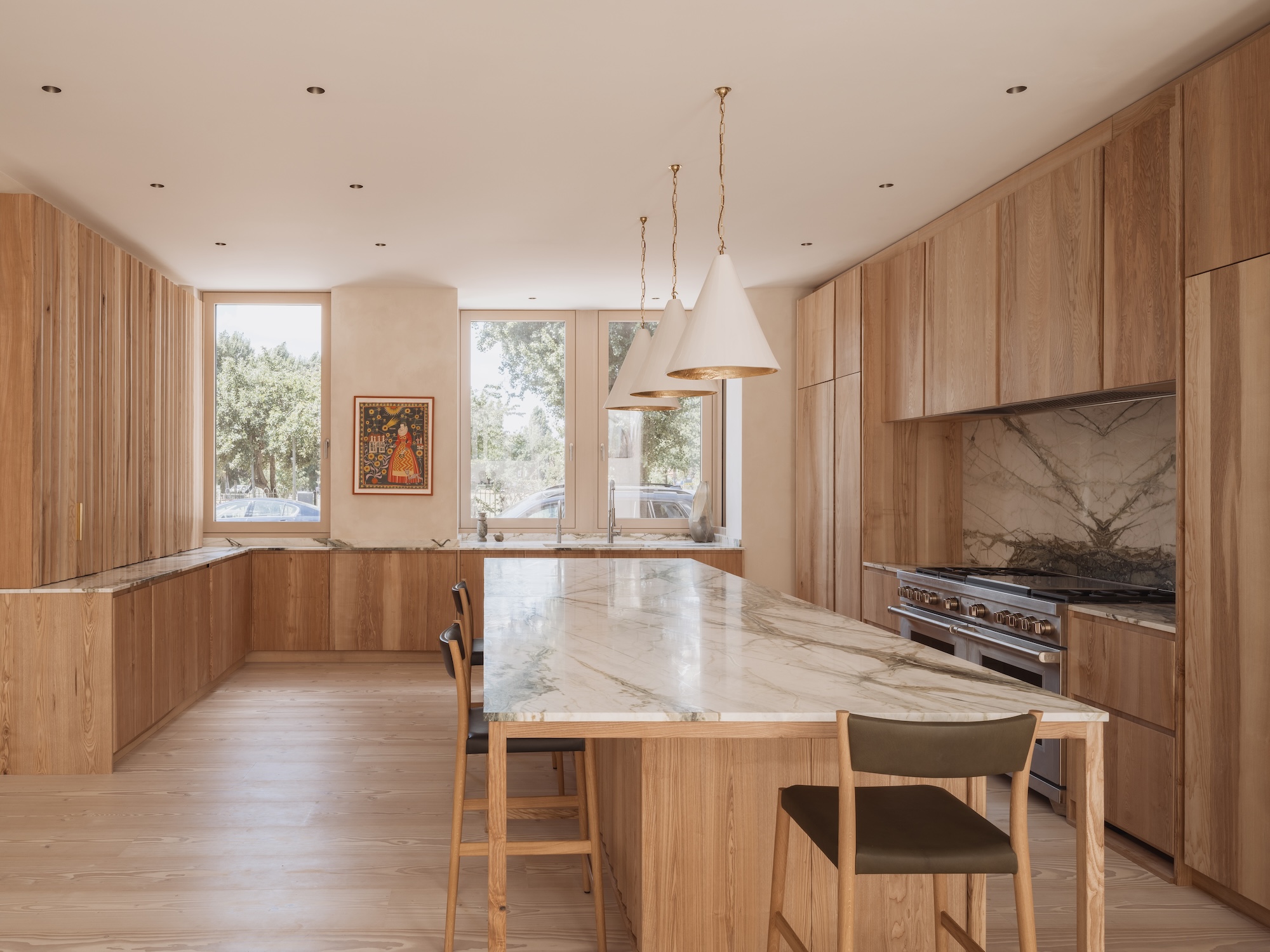
Inside, natural materials continue to shape the spatial experience. A long marble island with pronounced green veining anchors the kitchen, paired with bespoke ash joinery by Sebastian Cox. The detailing extends to cabinetry with a textured finish that echoes the articulation of the upper-storey façade, reinforcing a consistent architectural language.
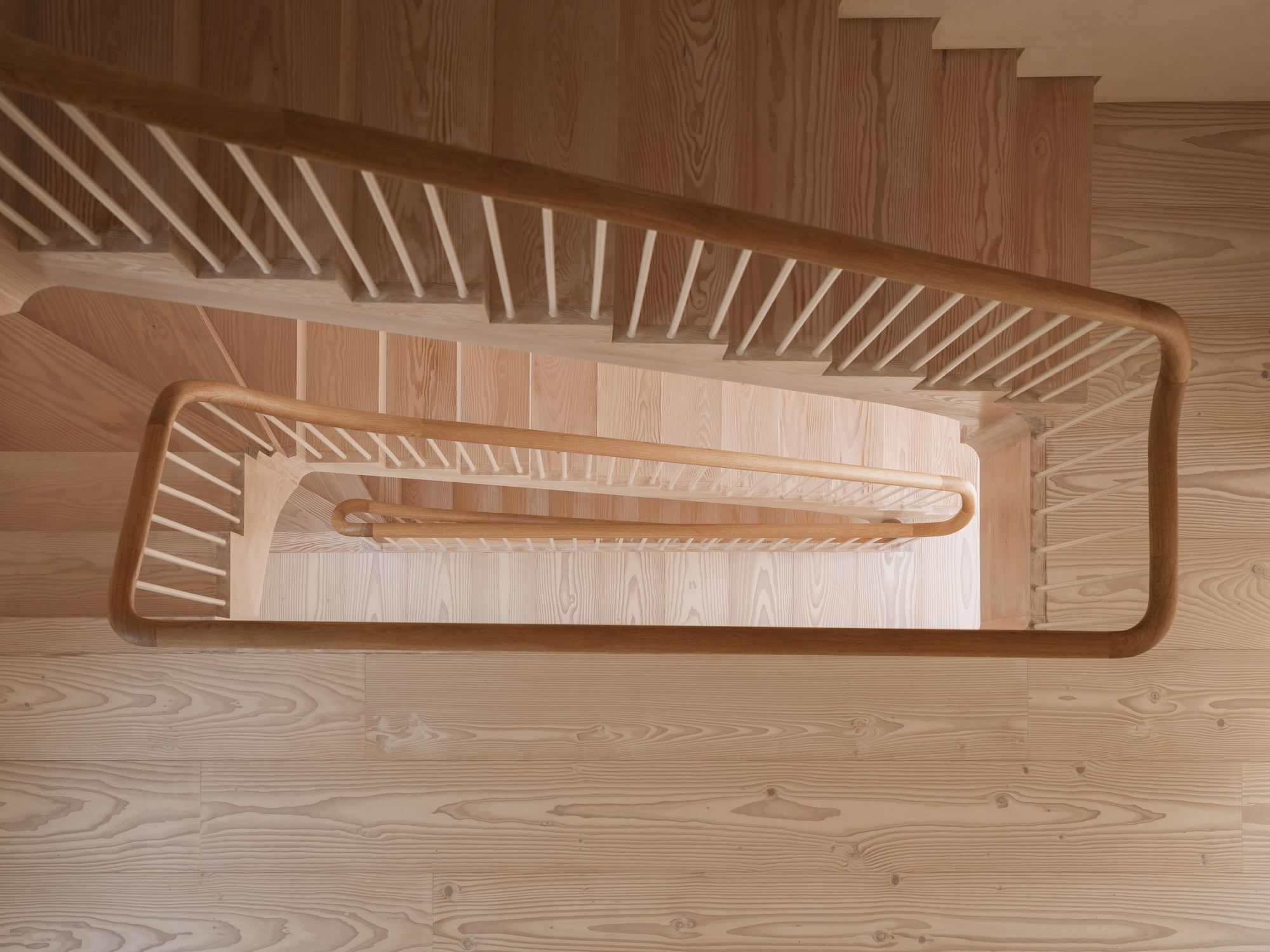
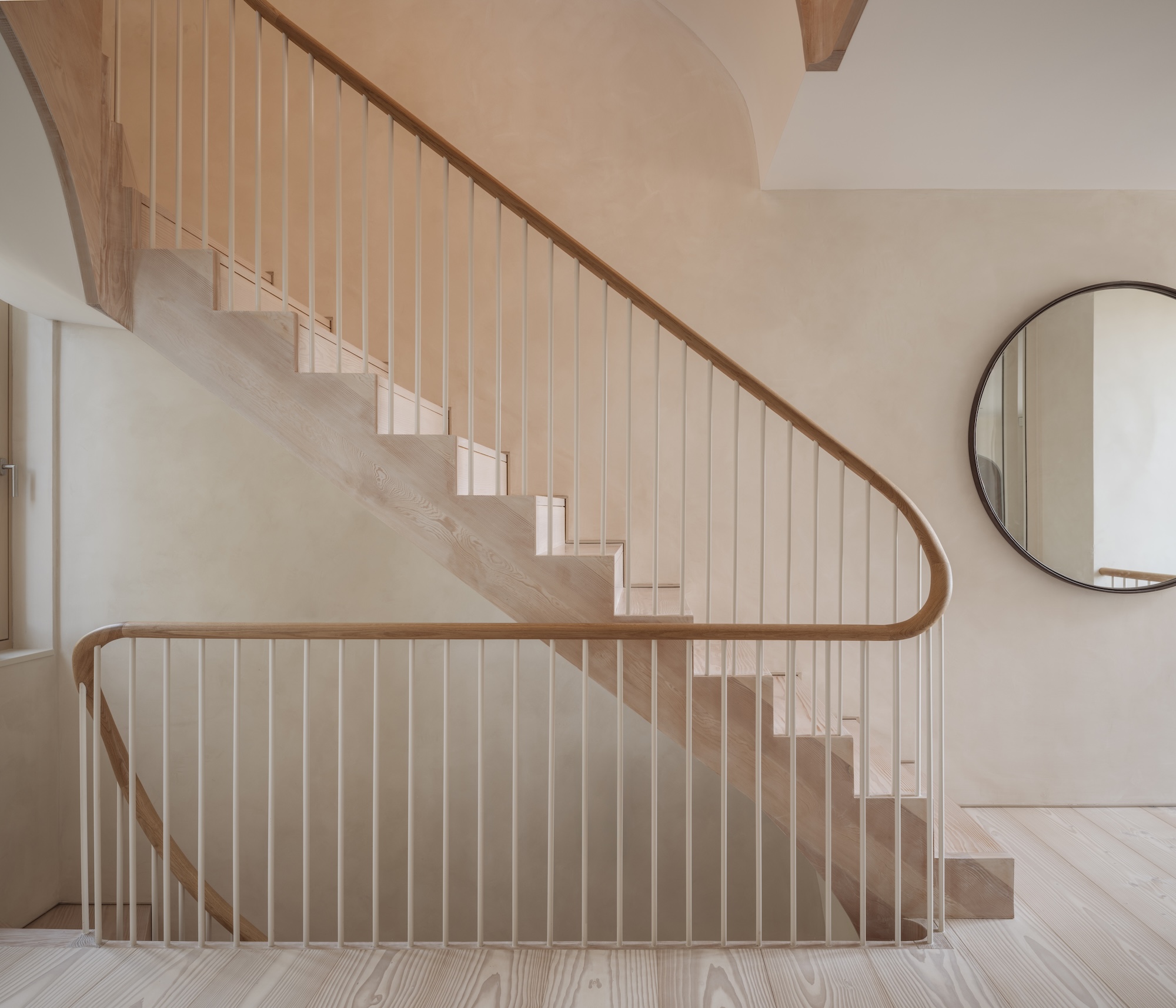
The all-important circulation is organised around a curving timber staircase that widens as it rises, increasing the sense of openness and access to daylight on upper levels. The layout accommodates both shared and private uses, with interconnected children’s rooms spanning old and new sections of the house, and a more secluded top-floor suite.
Client Rowan Bamford highlights the social transformation of the house: “We were able to create a light-filled, connected home that suits the way our family lives… a space designed with the future in mind.”
From a construction perspective, the project integrates a number of low-impact strategies, including high levels of insulation, hemp-based building materials and solar panels, contributing to reduced operational energy demand and near carbon-neutral performance during summer months.
For the architects, the scheme represents a consolidation of their design approach. “The West London House crystallises the design ethos of our studio,” says director Giles Heather. “The geometrical forms that articulate the exterior continue through to the interior, where intimate spaces connect with more expansive communal areas, filled with light from both east and west.”
All Images James Retief