

Insights: The price of shipping stone: Thickness, not area

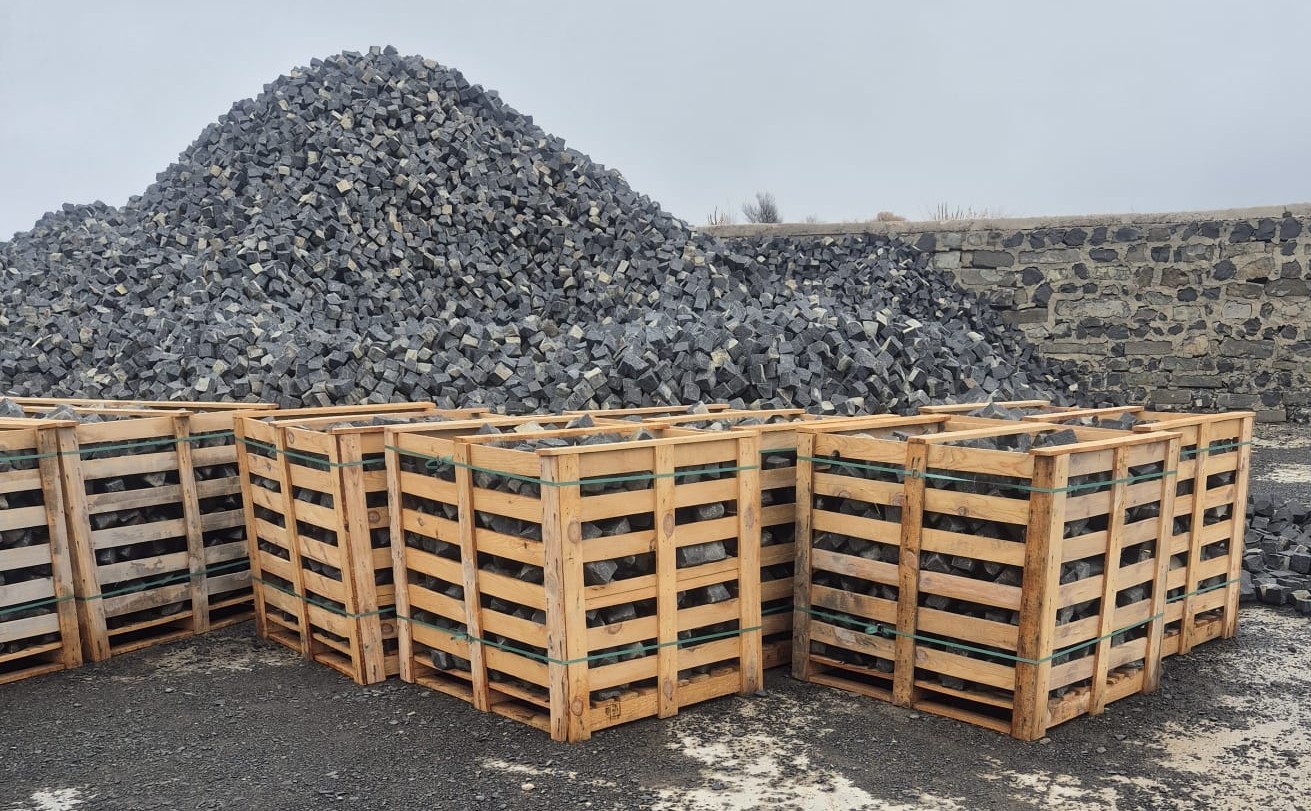
A container of stone may be priced by the square metre, but it is weight that ultimately determines how much material reaches the UK. In this Insights article, Meric Karpat of Karpat Trading Ltd looks beyond the headline m² figure to examine how thickness, density, freight and usable yield affect the real cost of imported stone. The calculations are practical rather than theoretical, with the central message straightforward: quotations need to be compared on a like-for-like basis before a price can be judged.
“Stone is quoted per square metre but shipped by the tonne. Compare two quotations at different thicknesses on their m² price alone and you are comparing two different things.
Two quotations for travertine paving land on a merchant’s desk: £28 a square metre and £34 a square metre. The first looks like the better buy, but the second is for 30 mm stone and the first is for 20 mm. That one difference changes how many square metres fit in the container, what the freight adds to each of them and what the stone itself costs. The m² price shows none of this.
On paper, a 20 ft container can carry about 28 tonnes of cargo. In practice, shipping-line limits and UK road haulage hold a stone load lower: typically 22–25 tonnes once crates and A-frames are allowed for. Loads above about 24 tonnes usually need a tri-axle trailer for delivery. The figures here assume 24.5 tonnes of stone.
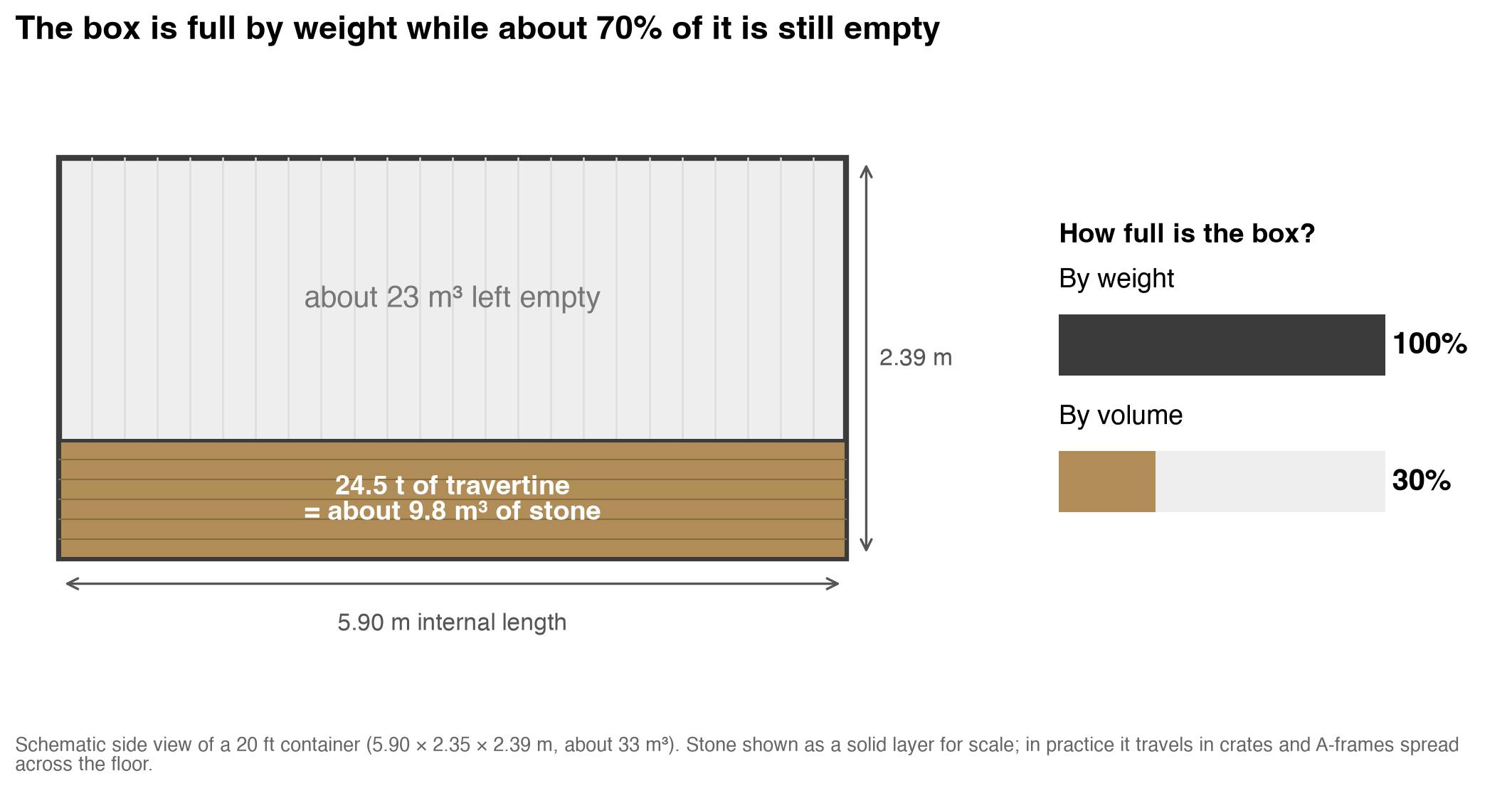
Stone reaches that weight long before the box is full. At 24.5 tonnes, travertine occupies less than 10 m³ in a container of about 33 m³. For a fixed weight of stone, the area received therefore depends on its density and average thickness.
At 12 mm, a 24.5-tonne load gives approximately 820 m² of travertine; at 20 mm, about 490 m²; at 30 mm, about 330 m²; and at 40 mm, about 250 m². At 50 mm the figure falls to around 200 m², while 100 mm walling gives roughly 100 m². Marble, at around 2.7 t/m³, gives less area at each thickness, while lighter sandstone gives more. Actual density varies by quarry, so these are working figures rather than guarantees.
The important point is that moving from 20 mm to 30 mm cuts the area in the box by about a third, while the freight bill stays the same or may rise if heavier haulage is required. A bigger box does not necessarily help. A 40 ft container is usually plated to the same maximum gross weight as a 20 ft and weighs more empty, so it can carry no more stone, and sometimes slightly less, while costing more to ship.
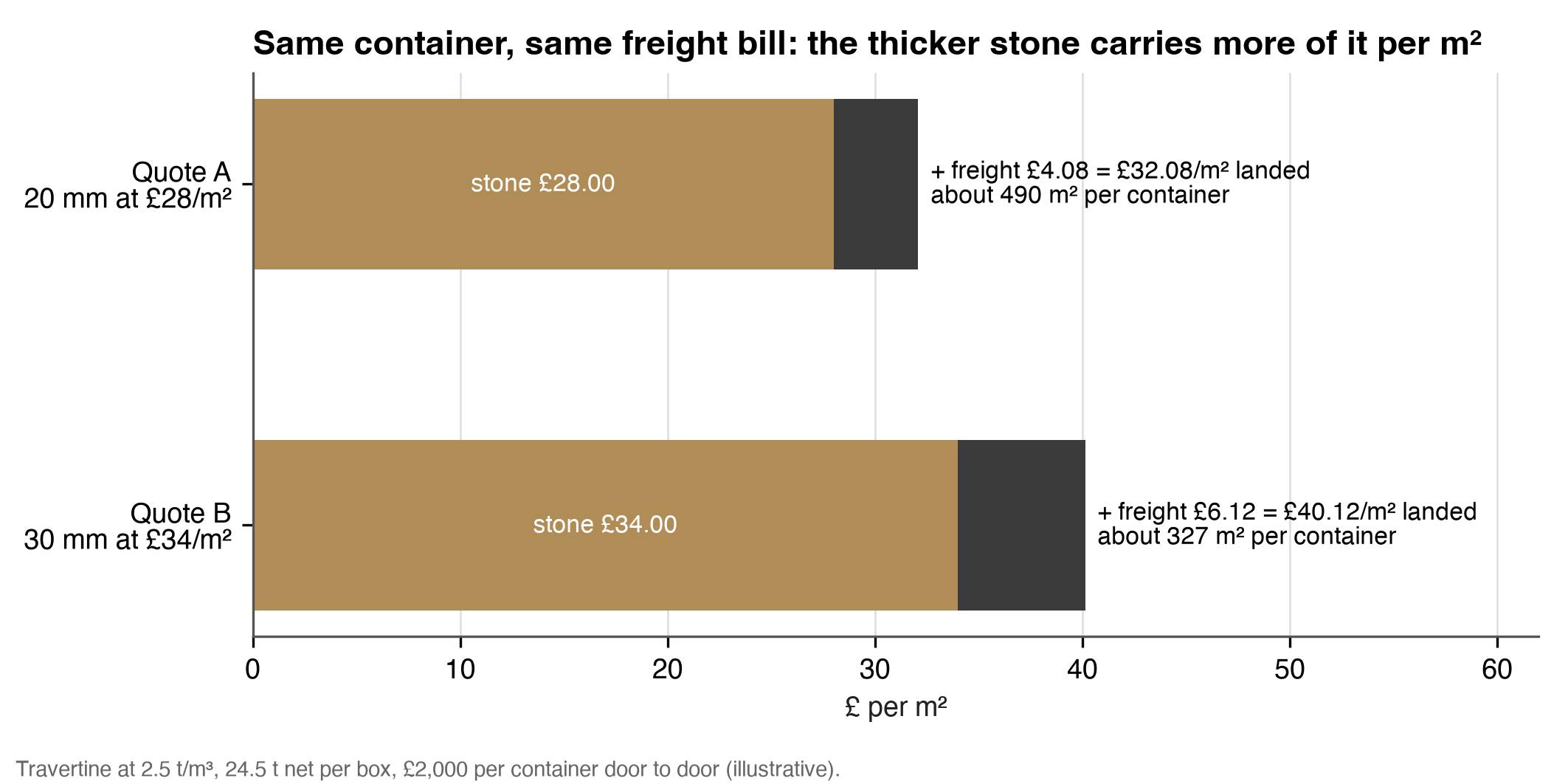
Return to the two quotations. Assume each is for a full 20 ft container at an illustrative £2,000 door-to-door.
Quote A is 20 mm stone at £28/m². At approximately 490 m² per container, the freight adds £4.08/m², giving a landed figure of £32.08/m². Quote B is 30 mm stone at £34/m². At approximately 327 m², freight adds £6.12/m², giving £40.12/m².
But compare the same prices by weight and the picture changes. At 20 mm, each square metre weighs about 50 kg, making Quote A approximately £560 per tonne. At 30 mm, each square metre weighs about 75 kg, making Quote B approximately £453 per tonne. Per tonne, B is about a fifth cheaper.
That does not make B the better producer. Sawing, calibrating and finishing are charged per square metre, not per tonne, so thinner stone usually costs more per tonne. The per-tonne figure is a useful check, but not a verdict. Pro rata by weight, A at 30 mm would be about £42/m² and B at 20 mm about £23/m². The actual requotes will fall somewhere between those figures and the original prices, and only the producers can say where.
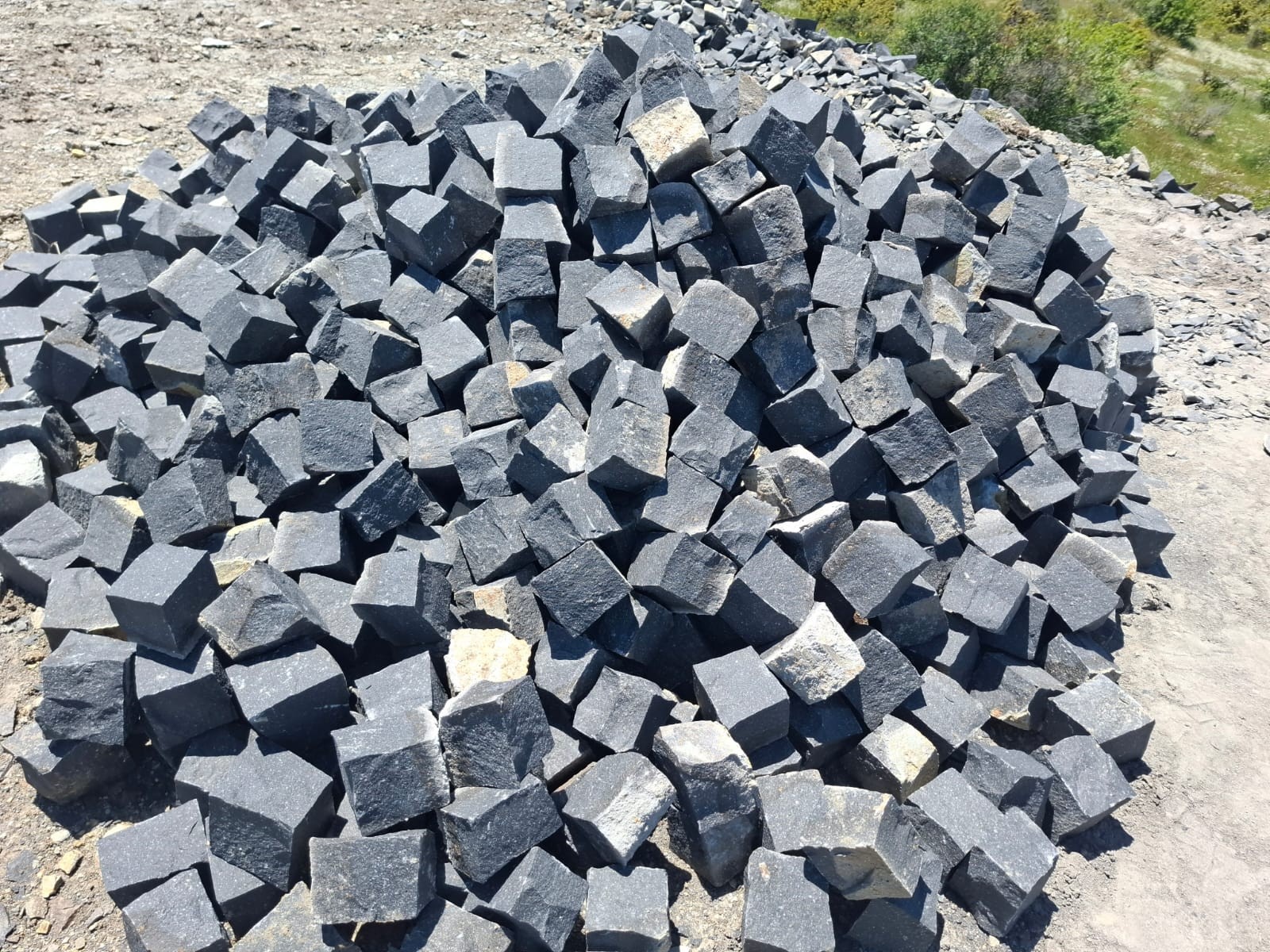
The practical answer is to ask every producer to quote the same specification and thickness. When we buy, we ask for a base price at one thickness and a stated adder for each step up, so quotations from different quarries line up.
Four other factors affect the real cost per usable square metre. Thickness tolerance matters: a 30 mm slab at ±3 mm can weigh significantly more or less than nominal, while calibrated stone holds its thickness. Breakage and cutting waste also need to be allowed for. Most FOB quotations are in dollars or euros, so the sterling cost can move with the exchange rate. Finally, haulage from port to yard is priced by weight too, and a heavy load may require a tri-axle trailer.
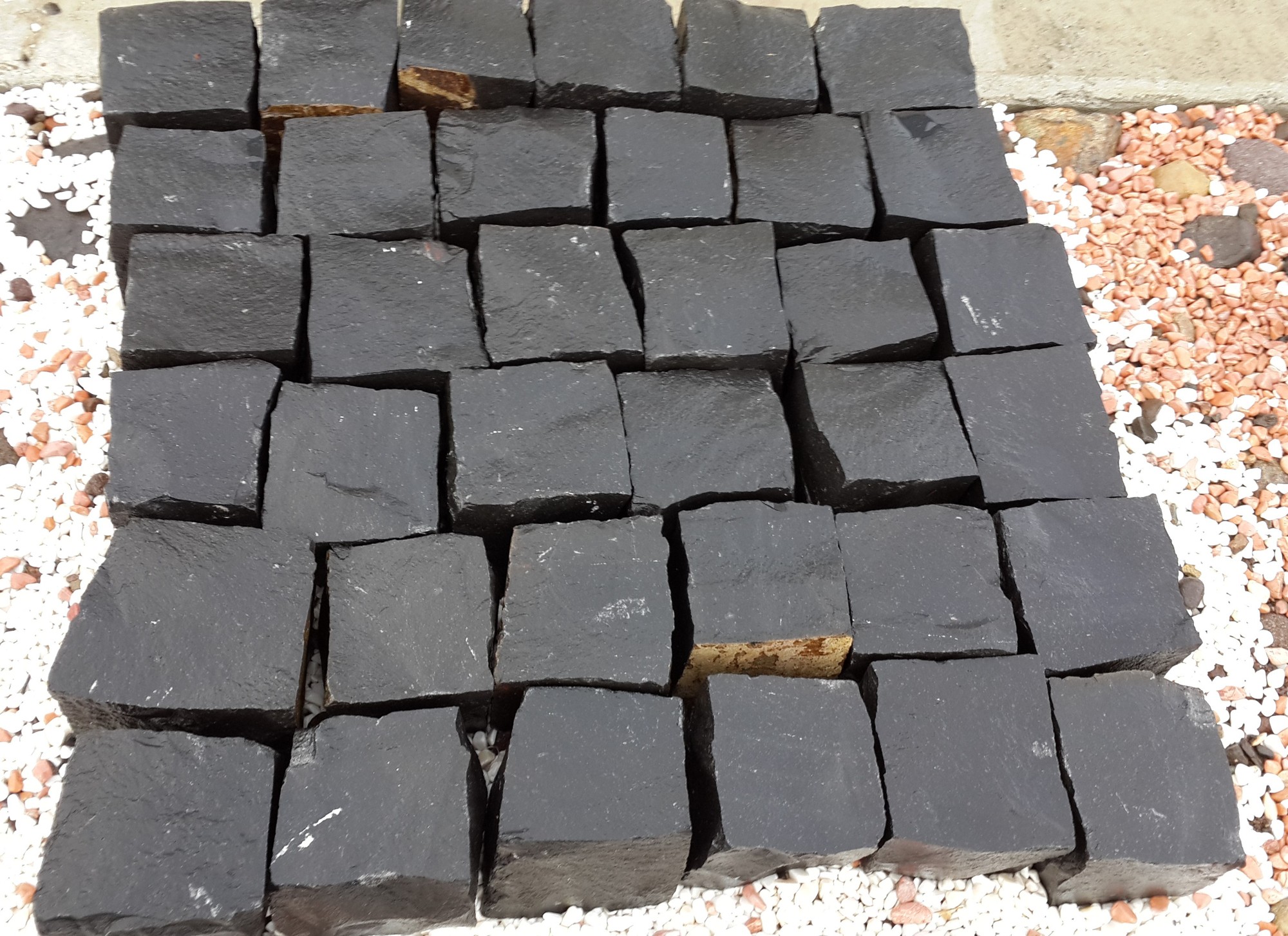
The effect is sharpest in walling. Walling stone is commonly laid with a bed depth of 100 mm or more, so each square metre of wall face carries roughly a quarter of a tonne of stone. A producer quoting walling per m² is therefore really working from a tonne price, and the m² figure means little until the bed depth is known.
Ask what bed depth the price is based on. Pieces sold as ‘walling’ at 40–80 mm are closer to thin facing or veneer stone and are priced and laid differently. It is also important to establish whether the beds are sawn or split: sawn beds build truer and faster, while split beds require more skill and mortar to course. Finally, ask how many square metres of wall face a full container provides and whether the figure allows for joints. At 100 mm, the stone itself covers about 90–110 m² depending on density.
Getting the price right is only half the job because natural stone varies from block to block. Before an order is confirmed, agree a sample or range of samples fixing colour, finish and thickness tolerance. Ask for a slab or crate list for the allocated lot and check its m² against the weight. Six hundred square metres of 30 mm travertine, for example, would weigh about 45 tonnes and cannot be in one 20 ft box.
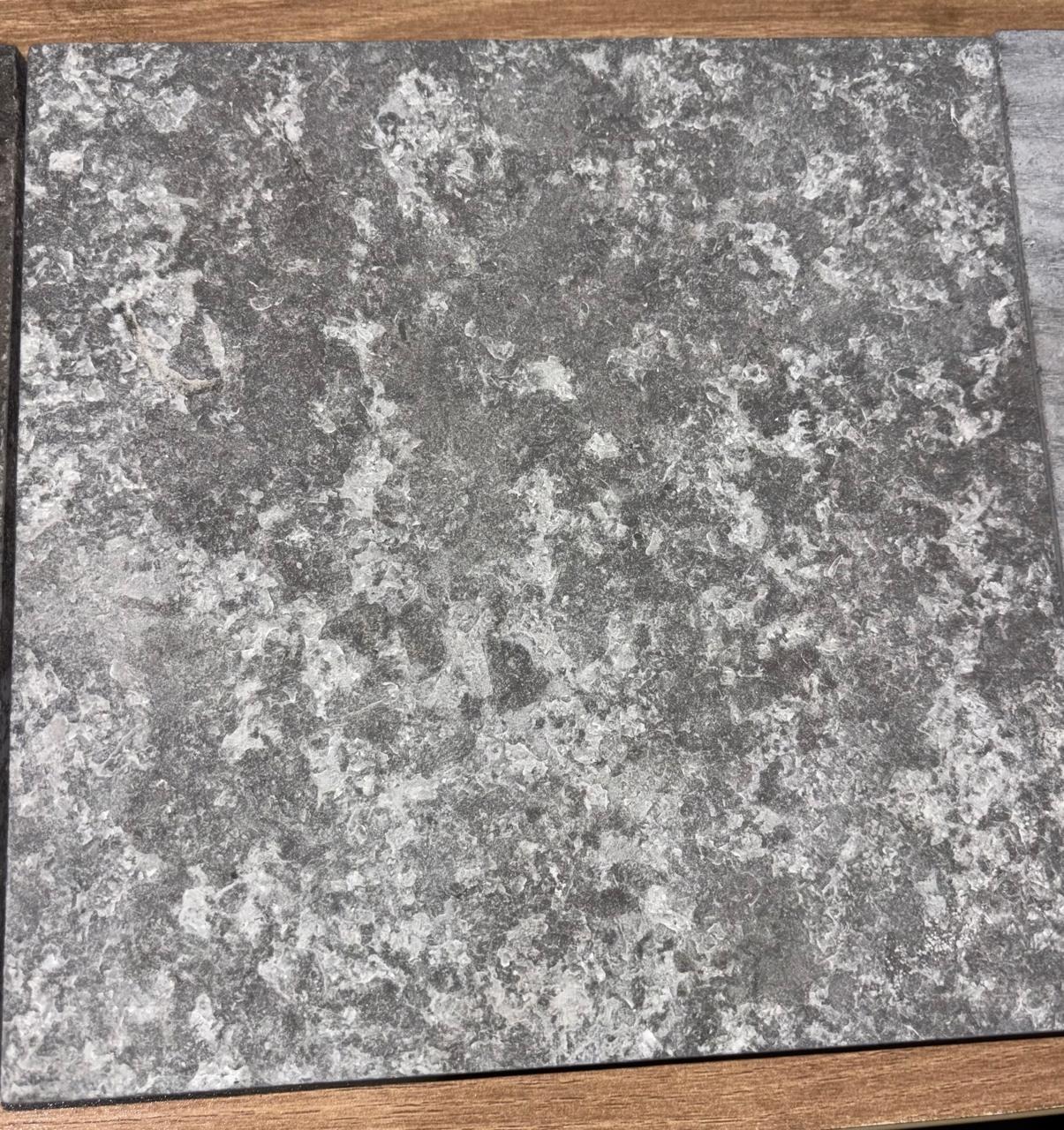
Photographs of the actual production before loading provide a useful record of what was packed. Where the specification calls for test data, such as BS EN 1341 for paving, BS EN 12371 for frost resistance or a slip value to BS 7976, ask for it for the stone and finish being supplied, rather than relying on a generic sheet.
The short version is simple. A 20 ft container fills by weight, at about 22–25 tonnes of stone, and thickness determines the square metres received. Freight per square metre rises with thickness. Get quotations at the same thickness, or ask for thickness adders, and use price per tonne as a check rather than a verdict. For walling, ask for the bed depth behind every m² price. Most importantly, approve the lot, not the brochure.
Before you compare a single price, ask for the thickness, the tonnage and the bed depth.”
Meric Karpat is the director of Karpat Trading Ltd, a UK importer of natural stone that supplies merchants, wholesalers and landscapers by the container.