

Insights: The true cost of stone

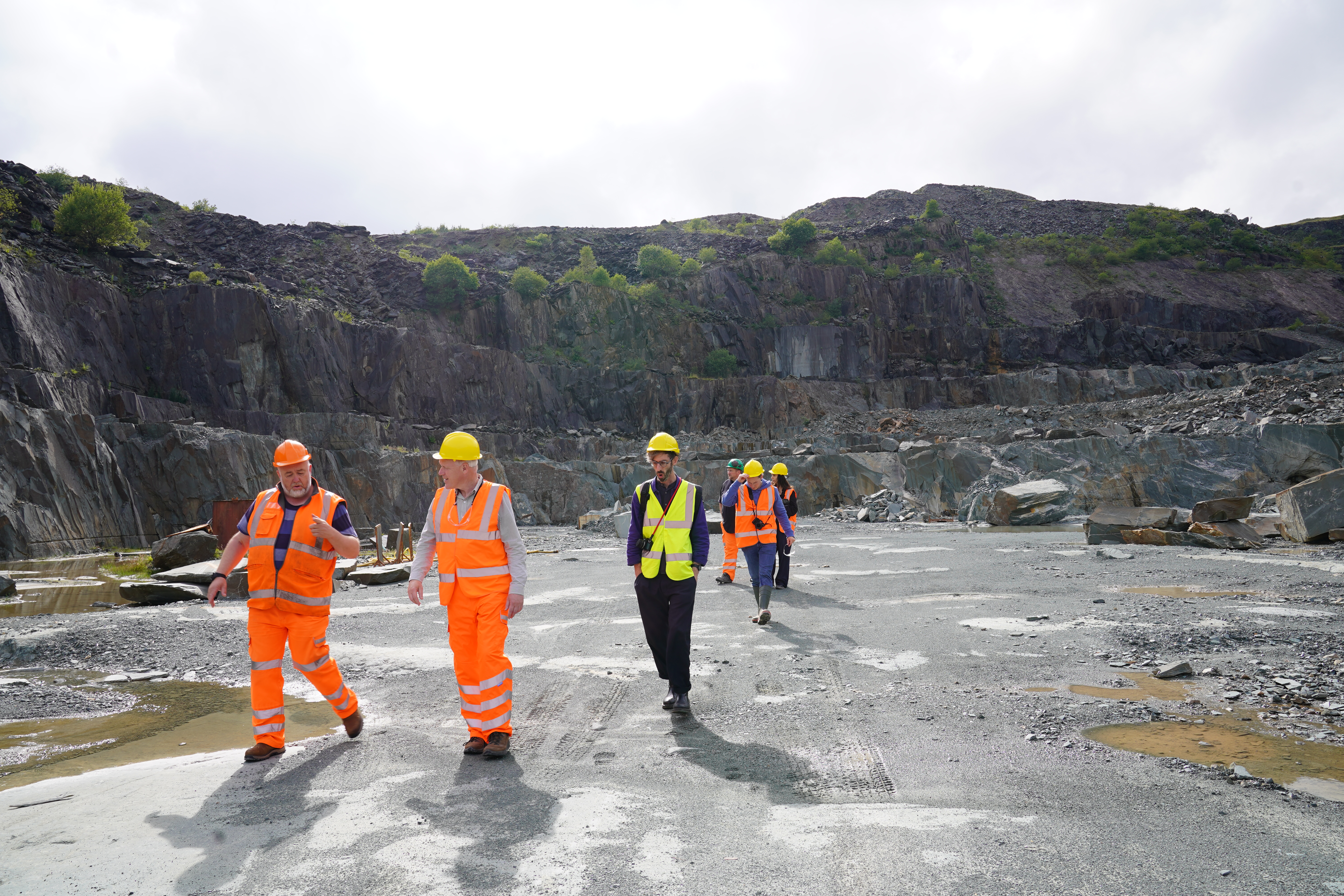
What if the cost of stone depends on how we choose to use it?
One of the perceptions that continues to limit the wider adoption of indigenous stone in contemporary construction is that it is simply too expensive. But what if the cost of stone depends, in part, on how we choose to use it?
The economics of stone are more complicated than the price of a finished product. Processing, yield, specification, waste, transport and scale can all influence cost, while the structural and long-term value of stone can be overlooked when it is compared with other materials on a product-by-product basis.
In this final insight, Giulliana Giorgi looks at the true cost of stone, and asks whether changing the way we specify, produce and use indigenous stone could make it a more viable material for contemporary construction.
“One of the perceptions that continues to limit the wider adoption of indigenous stone in contemporary construction is that it is simply too expensive. Concrete, steel and other ubiquitous materials have established markets, standardised products and decades of cost data behind them. Stone, by comparison, can appear unfamiliar and therefore risky.
Yet contemporary projects suggest that the assumption is not so straightforward. In Mallorca, the Balearic Islands Housing Institute (IBAVI) has used locally sourced marès sandstone in social housing, testing the economic and constructive feasibility of local materials. In France, Gilles Perraudin has developed structural stone projects around large blocks and simple construction systems. In the UK, Groupwork’s Clerkenwell Close demonstrated that a load-bearing stone exoskeleton could be more economical than a conventional structure with stone cladding. These projects differ in context, material and procurement, but they raise a common question: is stone inherently expensive or have we developed an expensive way of using it?
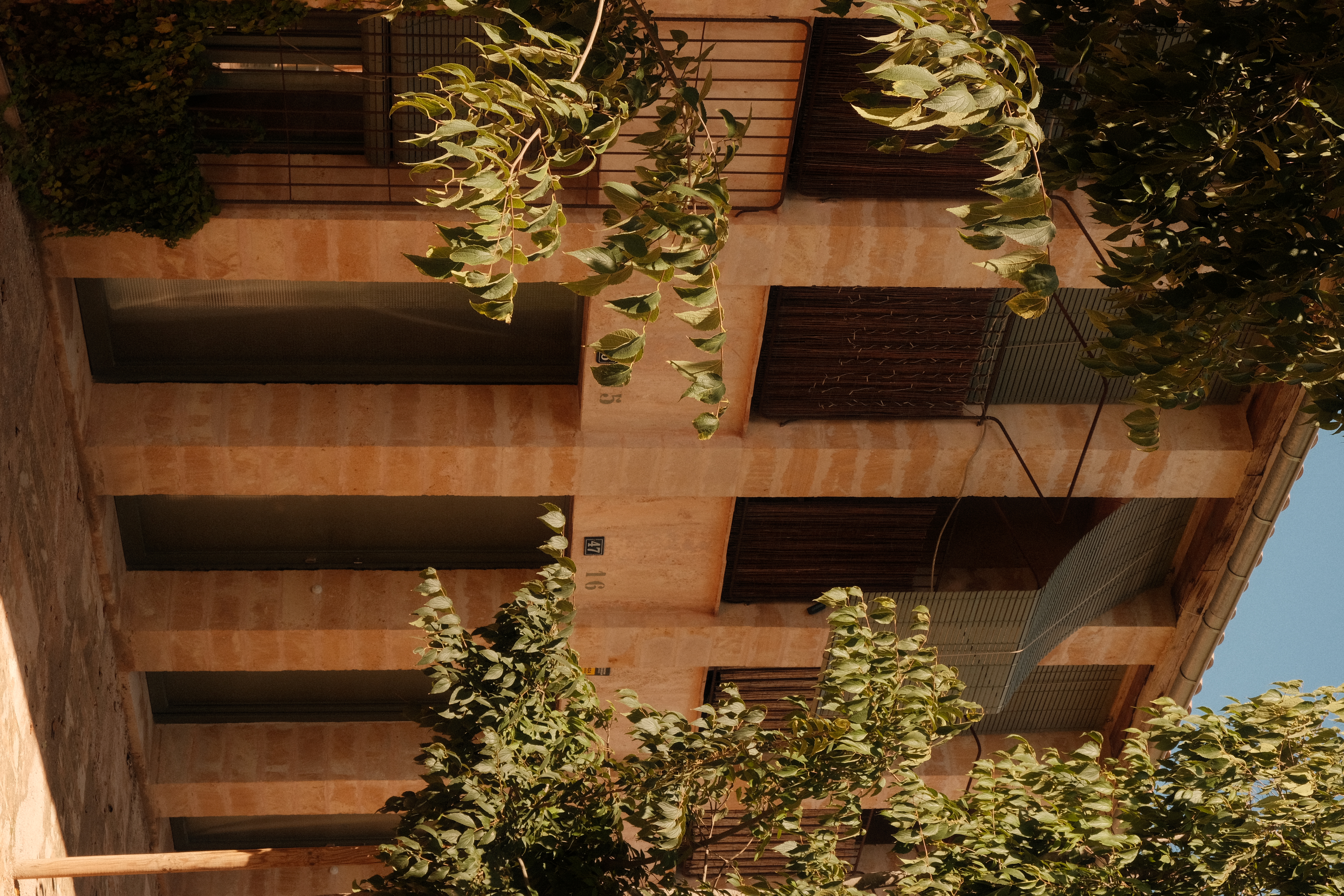
During our research, we repeatedly encountered uncertainty around costing stone projects. Contemporary structural stone remains unusual enough that there are relatively few comparable projects from which cost consultants, contractors and clients can build reliable benchmarks. The absence of familiarity can itself become a risk, and risk has an economic value.
There is also a problem with how we compare costs. A stone brick facade cannot simply be measured against a clay fired brick facade by swapping the price of one product for another. Stone can potentially act as both structure and finish, reducing the number of materials, components and trades. Its structural capacity can reduce the need for some secondary elements, while thermal mass may contribute to operational performance depending on the properties of the stone. At the end of a building's life, stone can also retain value through reuse. These factors disappear when we compare individual products rather than the building systems they form part of.
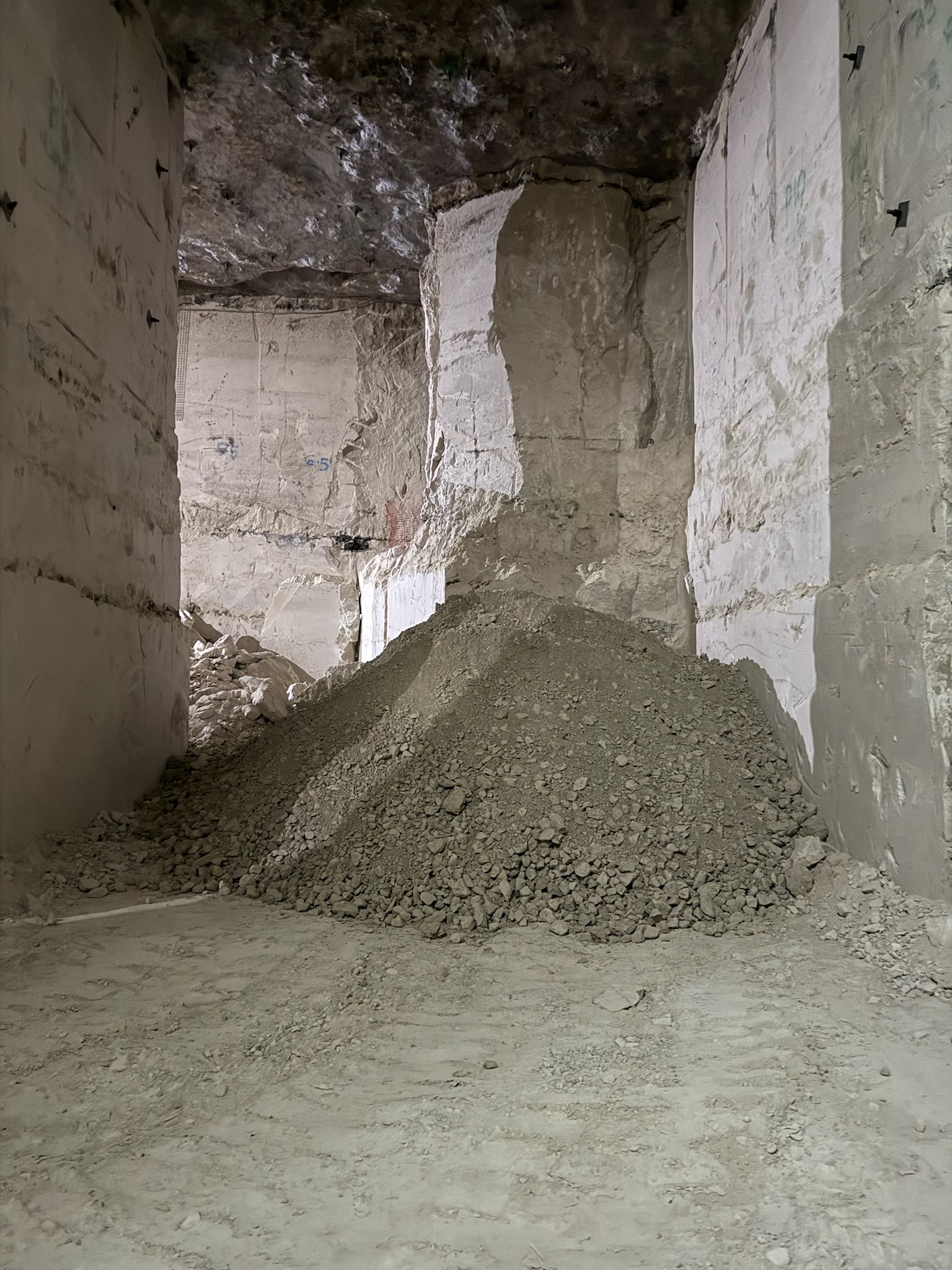
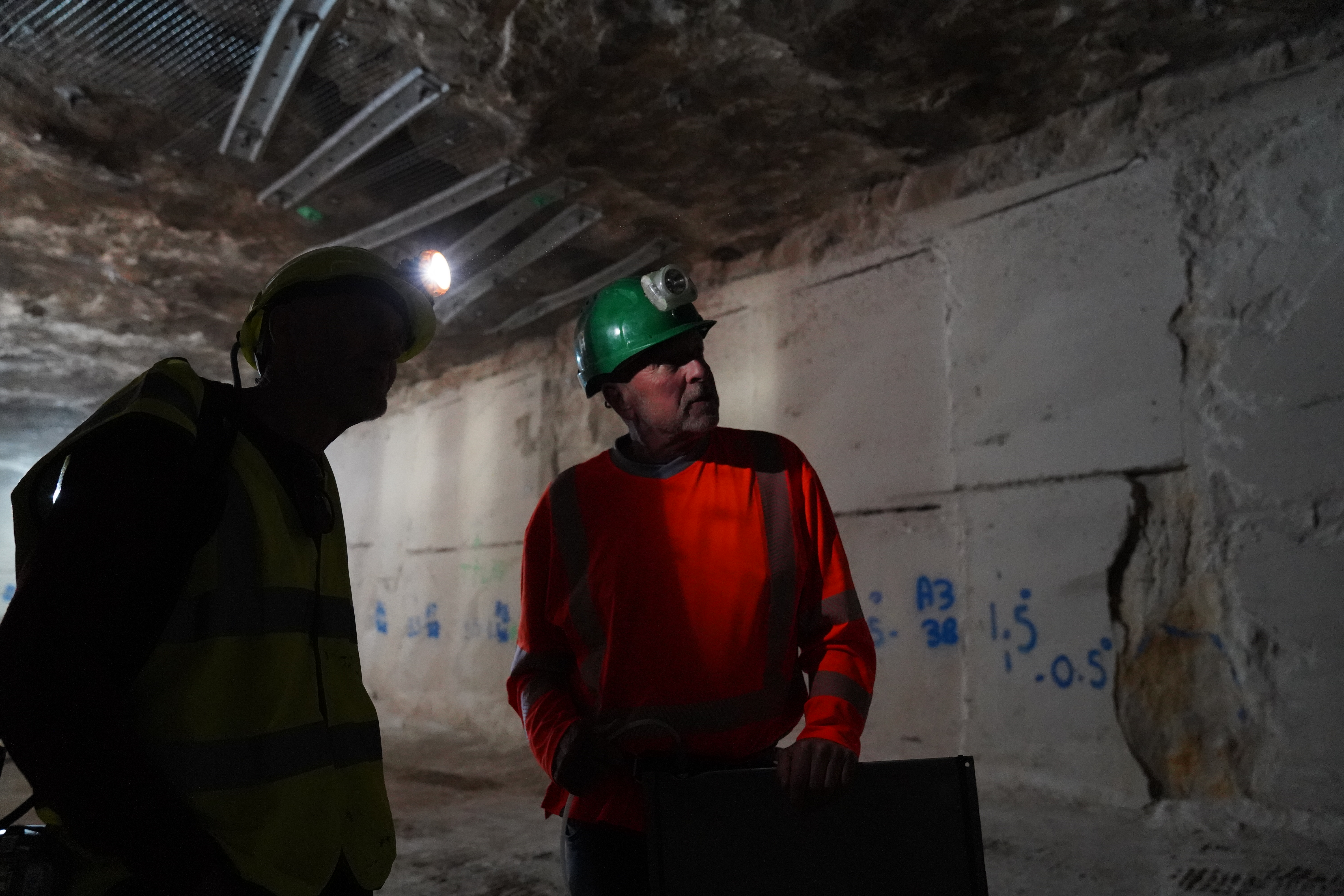
Looking further upstream moreover, revealed that the cost of stone is highly dependent on what we ask the quarry to produce. A large quarry block can be considerably cheaper than a thin, highly finished slab. The difference is not simply the amount of stone, but the processing required. A block may require relatively little intervention before becoming part of a building, whereas a slab can involve repeated cutting, handling, finishing and strict selection. Every cut removes material through the thickness of the blade, while tighter tolerances and demanding visual specifications can result in further rejection. The stone that leaves the quarry is therefore not necessarily the stone that gets used in the building.
Our fieldwork revealed how significant this relationship between specification and yield can be. The characteristics of each quarry determine what it can efficiently produce, while requirements for colour, dimensions, finish and appearance determine how much of that material is ultimately accepted. Perhaps we need to learn again how to celebrate stone’s natural variability rather than treating it as a defect.
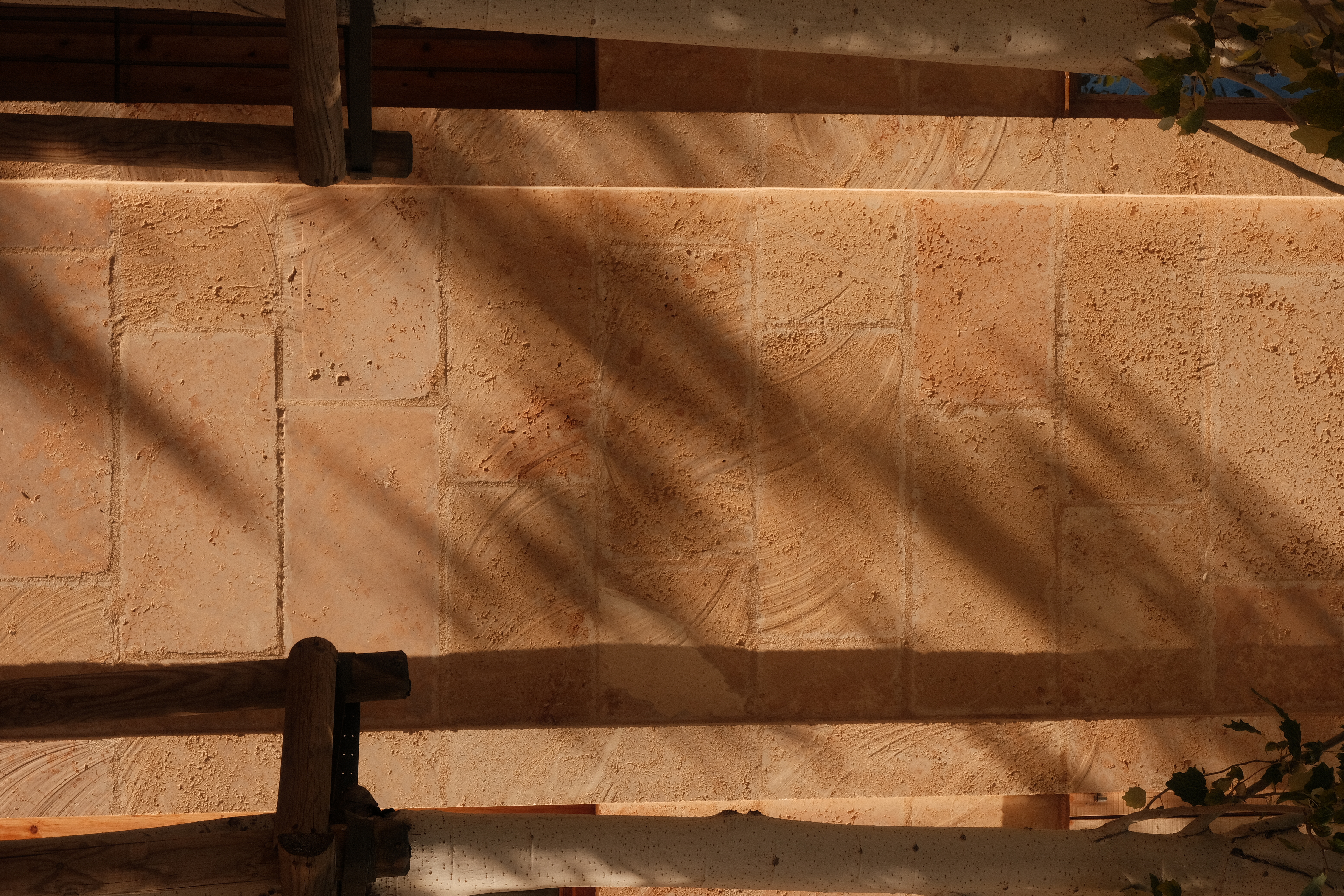
A workshop in Edinburgh with Carles Oliver Barceló offered one possible approach. Working with imperfect ashlar - accepting chipped blocks, iron spotting, variations in colour and dimension, and allowing wider mortar joints - allows more of the material to be used directly, with less selection and processing. The result need not be a compromise. Over time, many so-called imperfections become part of a wall’s character, allowing it to weather and change rather than making every mark appear as a fault.
Perhaps making stone more economical means accepting more of its natural characteristics, rather than pushing a natural material to look and behave like a manufactured one. But changing specification is only part of the equation. Scale matters too.
During our research, we developed a simple costing scenario to ask what might happen if stone production were connected to a much larger and more predictable market. Taking a typical home and assuming approximately 20m³ of stone - around 12,000 bricks - a programme of 300,000 homes, a fifth of the Government's 1.5 million-home target, would generate demand for approximately 3.6 billion bricks. Under existing production arrangements, meeting this demand would be difficult. But if several quarries could dedicate capacity to producing a repeatable component, supported by guaranteed supply contracts, the economics begin to change. Under such a dedicated production model, our scenario suggests that a stone brick could potentially be produced for around £1 per unit.
The £1 figure is, rather than a market price, a thought experiment developed with UK quarry producers, exploring what might become possible when design, production and procurement are considered together. And more importantly it suggests that scale could provide something the stone industry currently lacks: the certainty of demand needed to invest in production capacity, machinery and skills.
This is already beginning to happen in different ways. From IBAVI's use of local marès in social housing, to Barrault Pressacco's Parisian housing, to Archiplein and Perraudin's large-scale stone housing in Geneva, architects and clients are demonstrating that stone can be structural, economical and contemporary. Archiplein's work in Hermance goes further, experimenting with limited local quarry resources and developing construction methods around the material that is actually available.
Perhaps this is where the real opportunity lies. We do not need to wait for stone to become a mainstream construction material before we begin designing differently with it. The leading projects are already here. What is needed now is to connect them: the quarries with the architects, the projects with the demand, and the material with the places from which it comes.
The future of stone is not simply about making it cheaper. It is about making better use of what we already have and recognising that the next generation of architecture can be built not against the particularities of its natural materials, but precisely because of them we might be able to create a more humane and integrated build environment.”