

Interview: Conversations in Stone

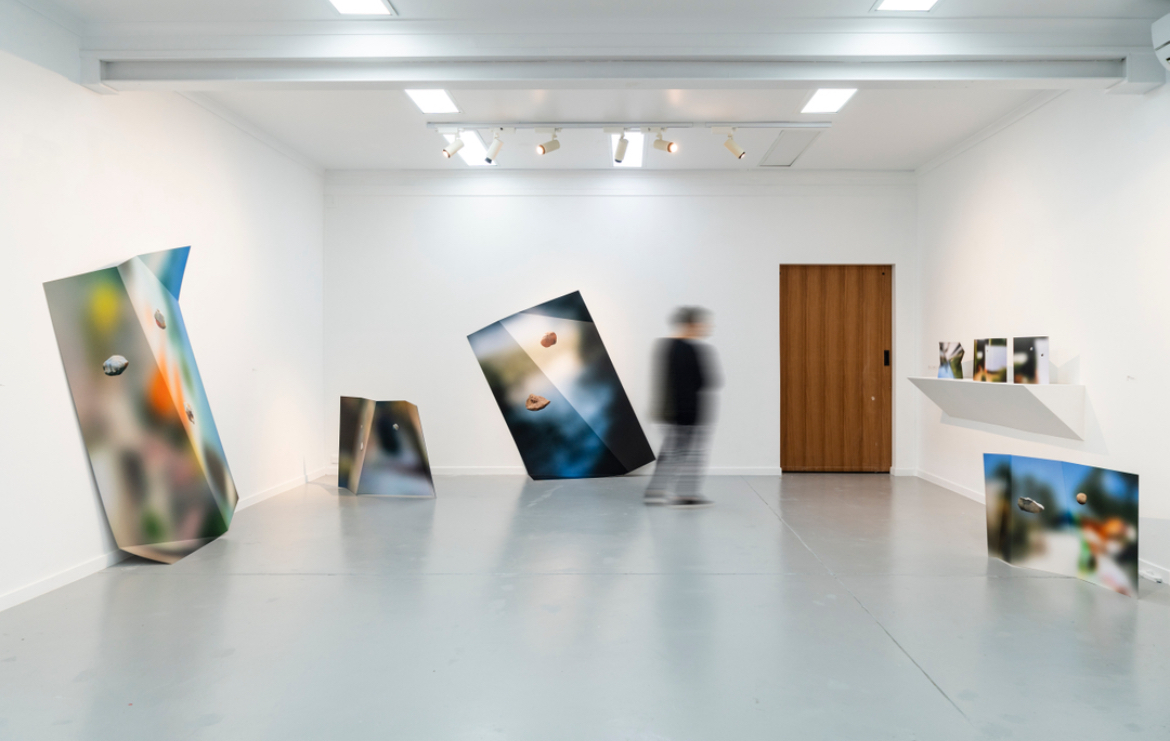
As we recently reported, What Lasts Doesn’t Always Hold Shape places stone, time and endurance firmly in the frame, setting out a clear conceptual framework for how material, architecture and cultural memory might be re-examined in the present moment.
Announced by Hypha Studios and art and architecture platform recessed.space, the exhibition opens today as part of Hypha’s year-long programme at James Stirling’s landmark No.1 Poultry, one of London’s most distinctive postmodern buildings. Curated by Rebecca Jak and Taylor Hall, whose joint practice is rooted in the overlap between art and architectural culture, the exhibition frames materiality as an act of empathy.
We spoke to the duo about why stone matters now, how architecture and art can open new conversations around sustainability, and what it means to treat material not as backdrop, but as a co-collaborator.
JB: Congratulations on a great exhibition; it feels like a really interesting perspective at a time when stone is being reexamined in the built environment. But I’m intrigued by your motivations - Why this, and why now?
RJ: We live in a time of extremes. On one side, we are surrounded by a surplus of material objects. On the other hand, much of our lives are lived in digital, immaterial spaces. We operate at the tail ends of material excess and material loss. It's easy to become desensitised to the nuance, character, and depth that natural materials like stone hold. Design thinking, for example, has become dominated by efficiency, performance metrics, and numbers-driven sustainability frameworks that often fail to meaningfully engage with craft or context.
OZRUH
TH: Stone demands a certain slowness and attention. Poorly executed stone has a way of revealing itself immediately, while structural stone carries a visceral presence. It is felt as well as seen.
As co-curators from architecture and artistic backgrounds, our exhibition shares a point of practice where, despite rapid technological change, stone retains immense logical and physical gravitas. We trust it to build, house, and preserve civilizations. We continue to sculpt the human figure from it. We travel across continents to encounter sites such as Stonehenge, whose meaning is inseparable from its cosmological presence.
Stone is also inevitable. However much we excavate, cut, and manipulate it, it will far outlast us. We took this expansive lifespan as a challenge, inviting stone into the exhibition as a co-collaborator alongside ourselves, the artists, and the building that houses the exhibition, No. 1 Poultry. In this sense, adaptation and interaction are not just conceptual gestures, but practical conditions for working with stone today.
Irina Razumovskaya
JB: Can you give a little more insight into your reasoning for selection and the details of the works chosen?
RJ: All of the works in the exhibition were selected or commissioned through close dialogue between us as co-curators and the exhibiting artists. This process allowed the exhibition to function not as a final statement, but as the opening of a conversation between practices, disciplines, and materials.
Stone is often associated with hardness and permanence. Yet it is profoundly malleable. Humans have mastered control over stone for millennia. The question is how this mastery is exercised today, and to what ends.
Jobe Burns
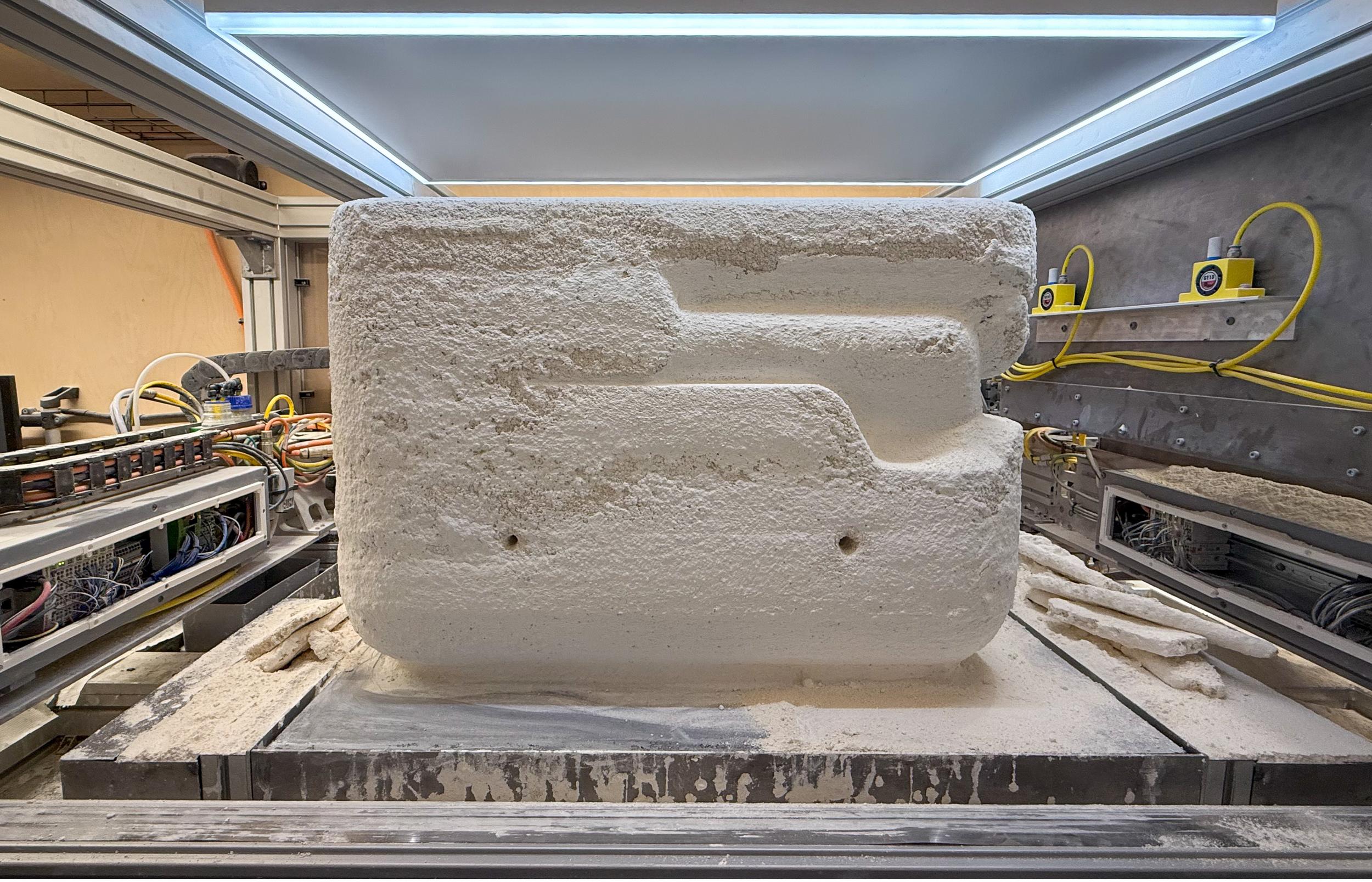
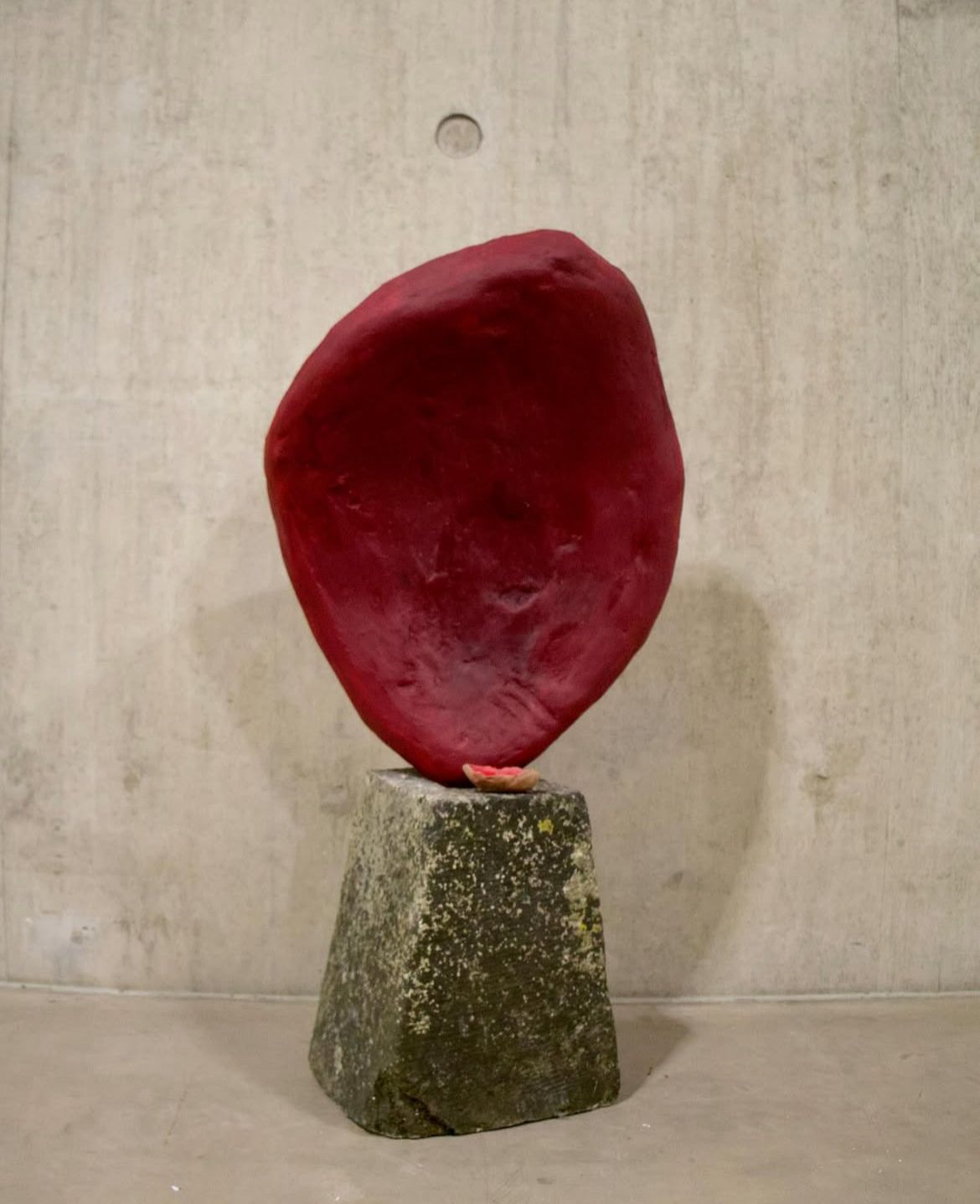
TH: Across the exhibition, stone appears in radically different practices and value systems. Marian Drew addresses the distance between digital production and physical materiality, highlighting how the loss of tactile engagement weakens our relationship to matter. Irina Razumovskaya’s experimental ceramics reject material prescriptions, treating clay as a mineral condition in transit. Her work aligns bodily aging with architectural erosion and geological time, framing exposure and vulnerability as acts of care rather than damage. Jobe Burns draws on the legacy of stone and metal craftsmanship rooted in England’s Black Country, treating each material within its own character and agency. Levent Ozruh's works trace stone from quarry to dust to reconstituted structure, demonstrating how architectural possibilities emerge through iteration and adaptation rather than fixed outcomes. By placing divergent approaches in dialogue, the exhibition presents stone not as a fixed idea but as a material shaped by its context.
JB: And can you tell me a little more about the linkage to the site of the exhibition itself?
RJ: This conversation is anchored in space through original archive material from architect James Stirling’s collection, revealing the journey of No. 1 Poultry’s stone facade. Excavated in Australia, transported to England, and assembled with open joints on a concrete frame, the stone declares its cosmetic value while carrying weight, labour, and history. This archive illuminates what is removed, what remains, and what continues to circulate, emphasising stone’s life beyond its initial unearthing.
Choosing artists who fundamentally challenge how stone is used and understood was essential. We were not seeking consensus, but dialogue. The junctures, tensions, and overlaps are where the idea of “what lasts” truly takes shape.
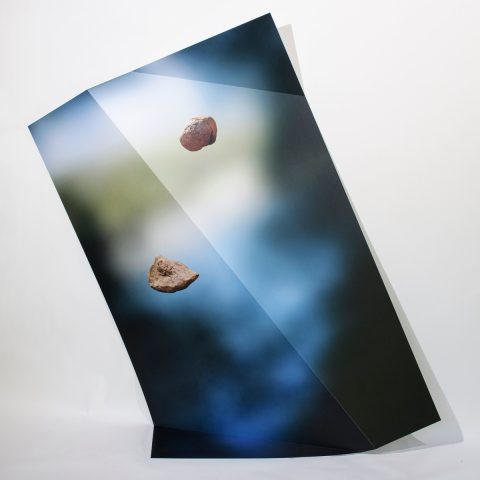
Marian Drew
JB: Can you expand on how you "view the climate crisis through the lens of culture"? How do you feel stone fits into the sustainability puzzle?
TH: The climate crisis and culture are inseparable. Sustainability is often reduced to numbers, metrics, and scientific exercises. Stone is shaped by the climate of eons past, but what receives far less attention is what our attitudes toward climate reveal about us as a society.
Stone brings these questions into sharp focus. It exposes an ancient culture of building, relationships between developer and architect, and the collaboration between architect and craftsperson. There was a time when the physics of stone and stonemasons shaped design itself, and architects were trusted by developers. These links have eroded. Multi-disciplinary practice seems a novel term now, yet it is centuries old.
Working with stone shifts sustainability from abstraction to lived responsibility. It demands care, long-term thinking, and accountability. Sustainability becomes stewardship rather than optimisation.
JB: What can people expect from the public program, not least the Stone Collective event?
RJ: The exhibition is accompanied by a public program that expands on its themes and activates the gallery as a platform for dialogue. The Stone Collective event reframes stone not as a symbol of permanence, but as a material shaped by human use, reuse, and misuse. What lasts doesn’t always hold shape links endurance, adaptation, and material memory to real architectural practices within its own curatorial framework. It asks how stone’s lasting quality depends not on durability alone, but on ethics, stewardship, and circular thinking in the built environment.