

News: Connecting stone to place and craft

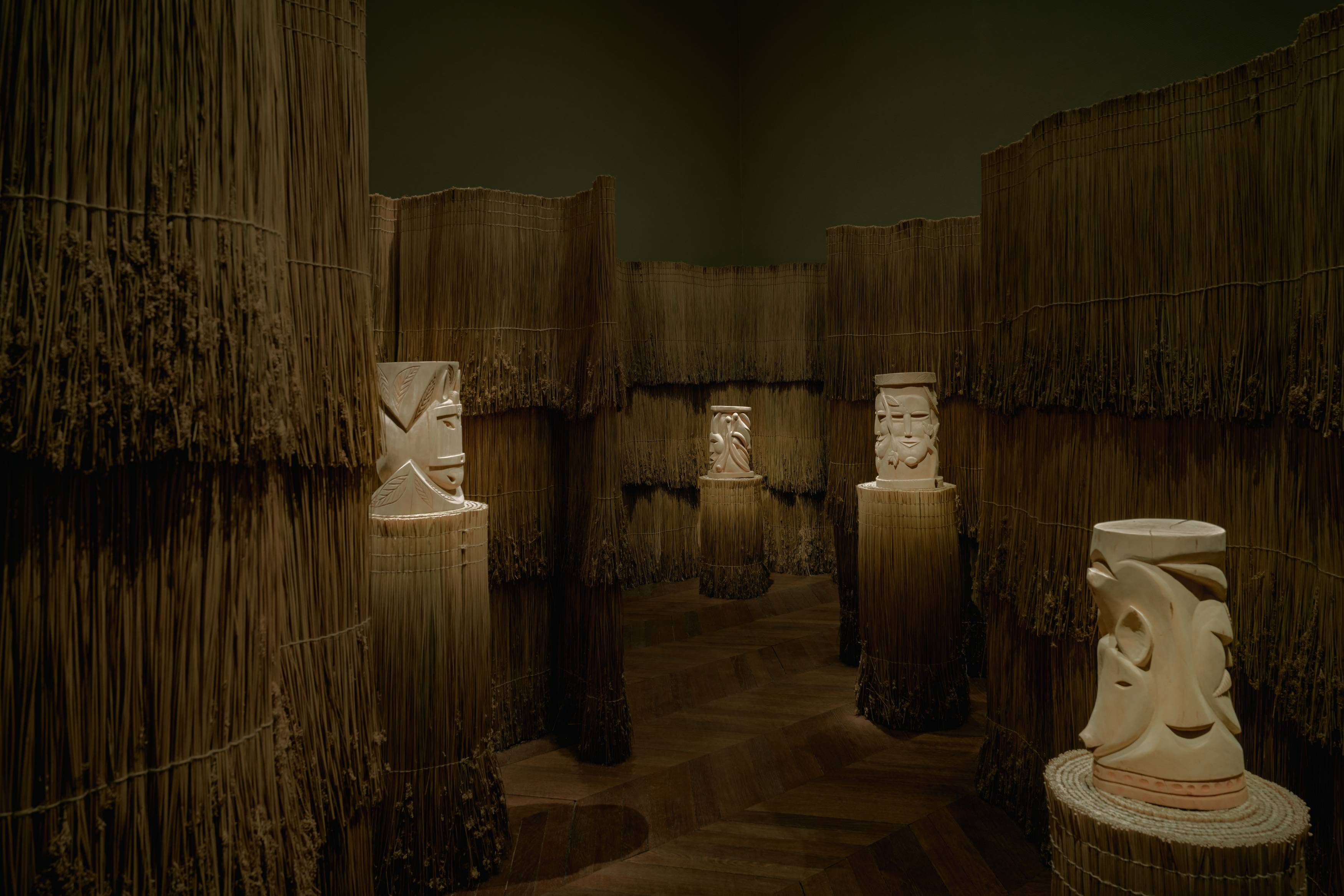
As we regularly report, stone is rarely just a surface. Its geological origins, the history of its extraction, and the knowledge required to work it all contribute to the character of a finished object. In Made in Situ, French designer Noé Duchaufour-Lawrance explores these connections through a series of collections developed with local craftspeople, using materials and processes rooted in the landscapes where they are found.
The project began after Duchaufour-Lawrance moved to Portugal in 2017. Rather than starting with a defined brief, he spent time exploring the country's geology, culture and industries, meeting the people whose work sustains local craft traditions. The resulting collections encompass ceramics, cork, wood, bronze, beeswax, tiles and stone, with each emerging from exchanges between the designer, makers and local producers. The full project is on display at the Galerie des Gobelins in Paris, in an exhibition running from 9 October to 29 November 2026, organised by Made in Situ in partnership with Mobilier National.
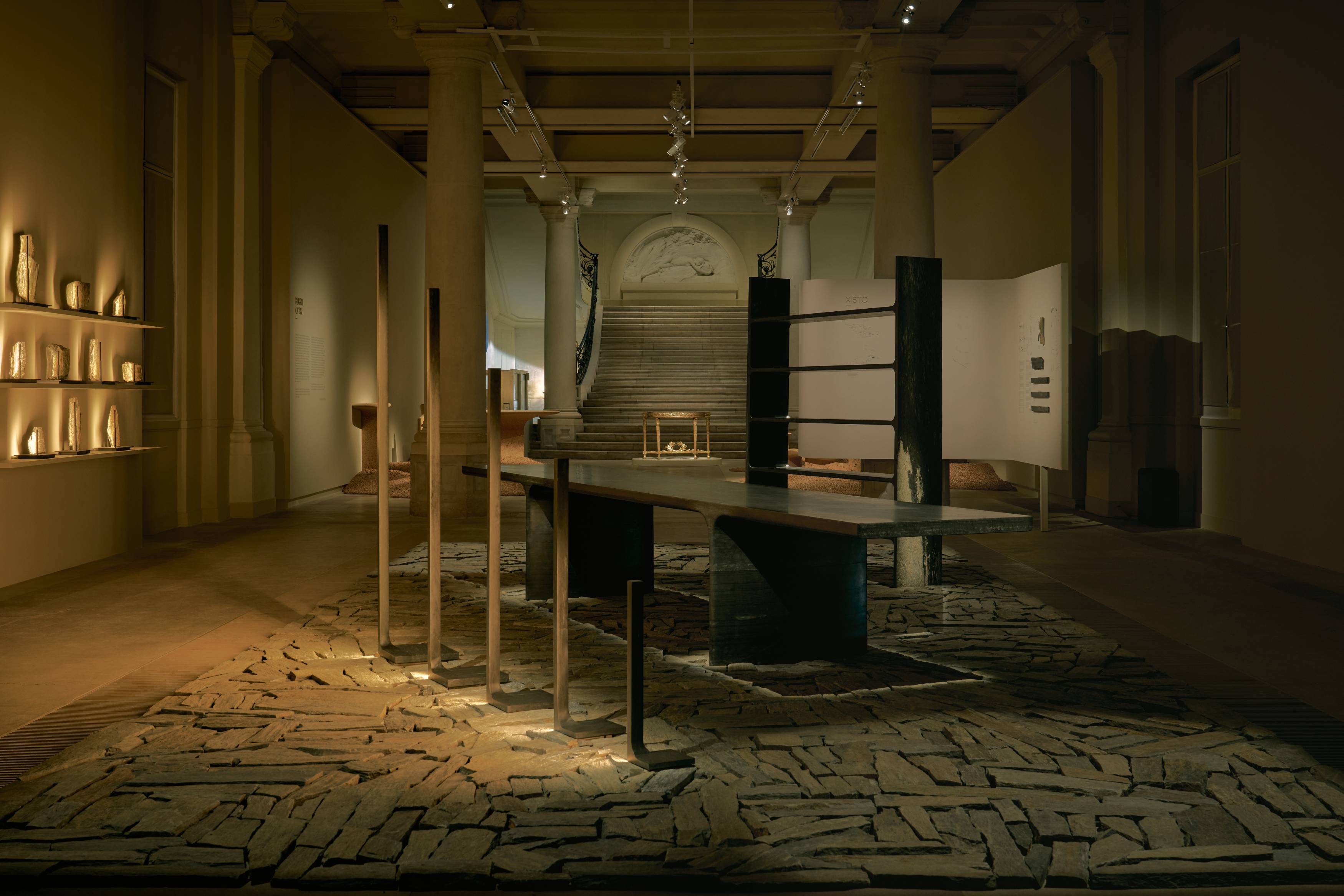
Stone is particularly prominent in Xisto, a collection inspired by the schist-rich landscape around the Côa River in north-eastern Portugal. Here, the material carries traces of different periods of human activity, from prehistoric engravings cut into rock to terraced vineyards and the remains of an abandoned dam project. Duchaufour-Lawrance developed the collection in dialogue with this layered history, working with geologist and quarry technical director Mauro Burcio of Solicel, based in Vila Nova de Foz Côa.
The collection includes lamps, tables, side tables and shelving. Rather than treating schist as a decorative finish detached from its origins, the work uses it to establish a relationship between the object and its geological setting. The designer describes the collection as a way of bearing witness to different timescales, from geological formation to human intervention and the accelerating pace of industrial change. The stone becomes a record of these overlapping histories, as well as a material for contemporary furniture.
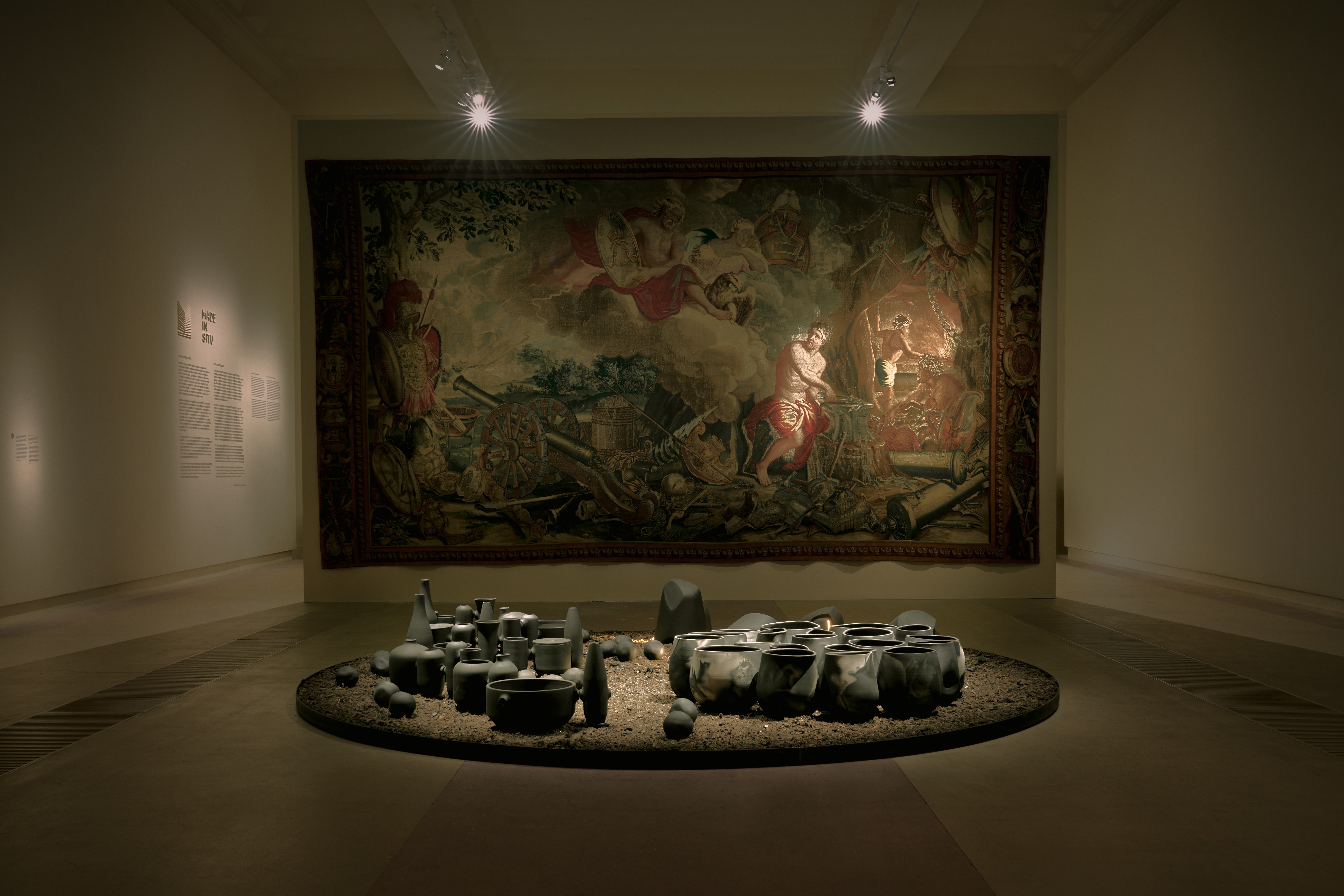
The exhibition has also placed Xisto in dialogue with a 19th-century example of Florentine hard-stone marquetry from the Mobilier national collection. This intricate technique uses carefully selected, thin pieces of stone to build up images through variations in colour and mineral appearance. Displayed alongside the contemporary collection, it offers a contrast between two approaches to stone: one concerned with the natural character and landscape associations of schist, the other with the precise selection and arrangement of minerals to create a composed image.
This dialogue between inherited skill and contemporary design runs throughout Made in Situ. In Chêne & Liège, developed in France's Massif des Maures, timber from dead trees is combined with cork bark harvested from healthy trees. The wood is sawn locally using a mobile sawmill, then assembled to leave much of its natural character visible, with elaborate cork-bark marquetry applied to one face. The collection brings together farmers, cork producers, sawyers, joiners and cabinetmakers, connecting the fate of the material to the people and processes involved in its transformation.
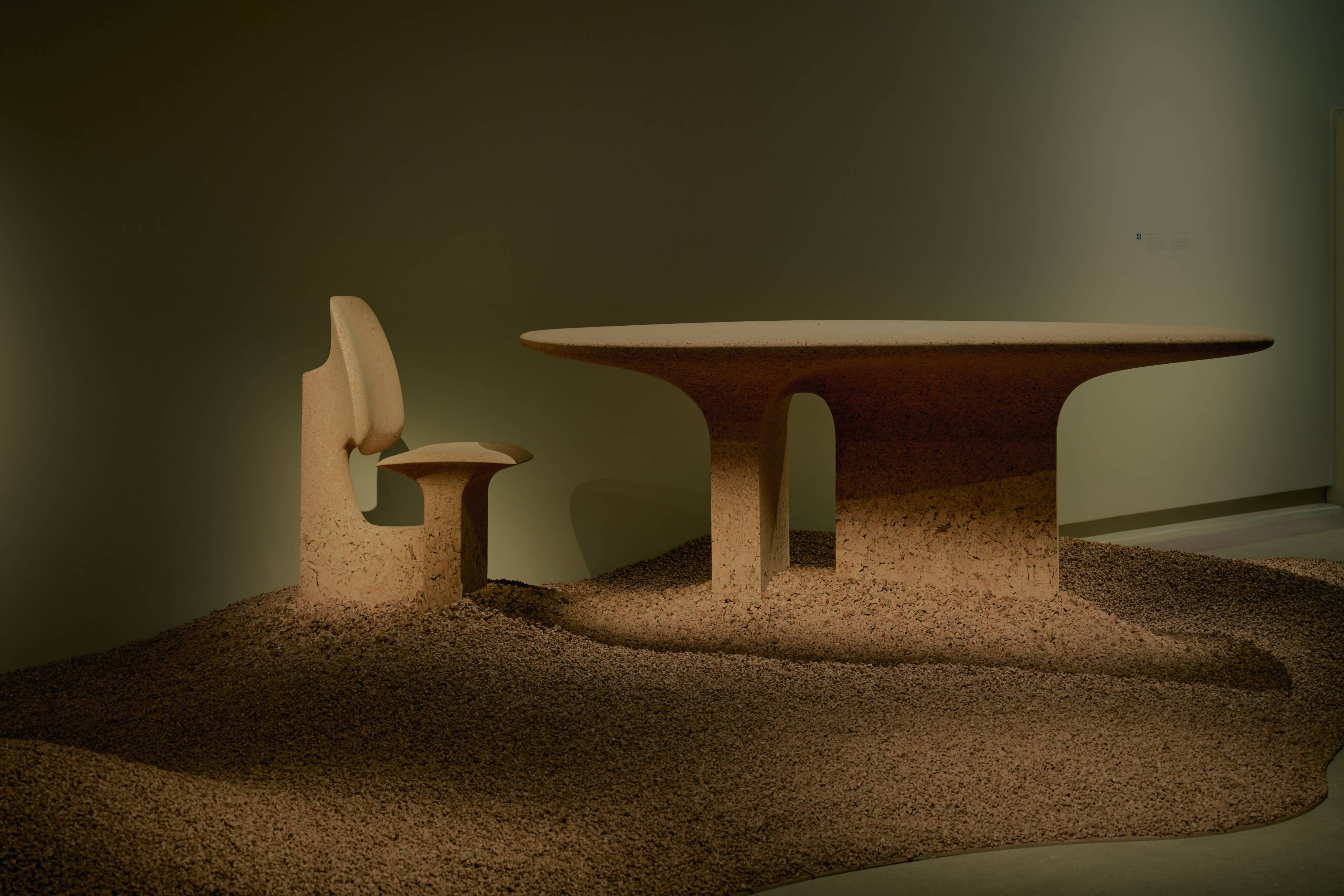
Other collections similarly reconsider overlooked resources and materials. Burnt Cork uses cork particles from fire-damaged trees, which are often rejected by the conventional cork industry, combining them with healthy cork. In Bronze & Beeswax, cast bronze and natural beeswax are brought together through candlesticks whose appearance changes through use, as melted wax flows into channels in the metal and hardens. Across these works, the material is not neutralised to fit a predetermined form; its behaviour helps determine the design.
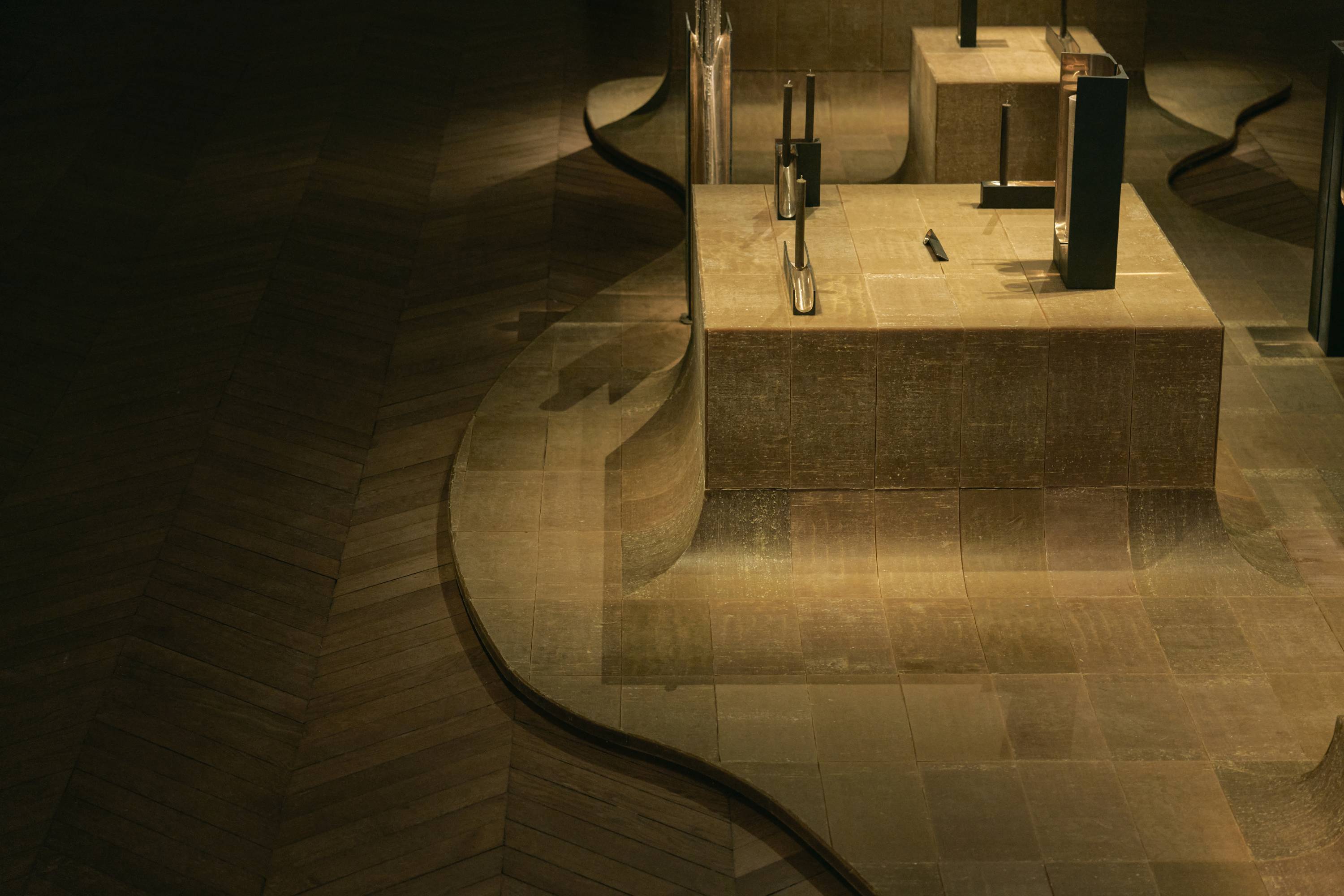
Designed by Duchaufour-Lawrance with scenographer Clémence Farrell, the exhibition uses raw materials and restrained supports rather than conventional plinths, placing objects close to the ground in settings that recall their places of origin. Drawings, maps, manufacturing diagrams, photographs and samples documented the research behind each collection. Film, sound and scent extend the experience beyond the visual, while historic objects from the Mobilier National provide a further point of comparison.
These displays have made the process behind the finished work visible. For stone in particular, this matters: the material's value lies not only in its appearance, but also in its formation, provenance and the skills through which it becomes part of an object. Made in Situ proposes a model of design in which those connections are not hidden once production begins, but remain integral to the outcome.
All images © Benjamin Colombel