

News: Low Carbon Industrial Introduces Reclaimed Denim Material

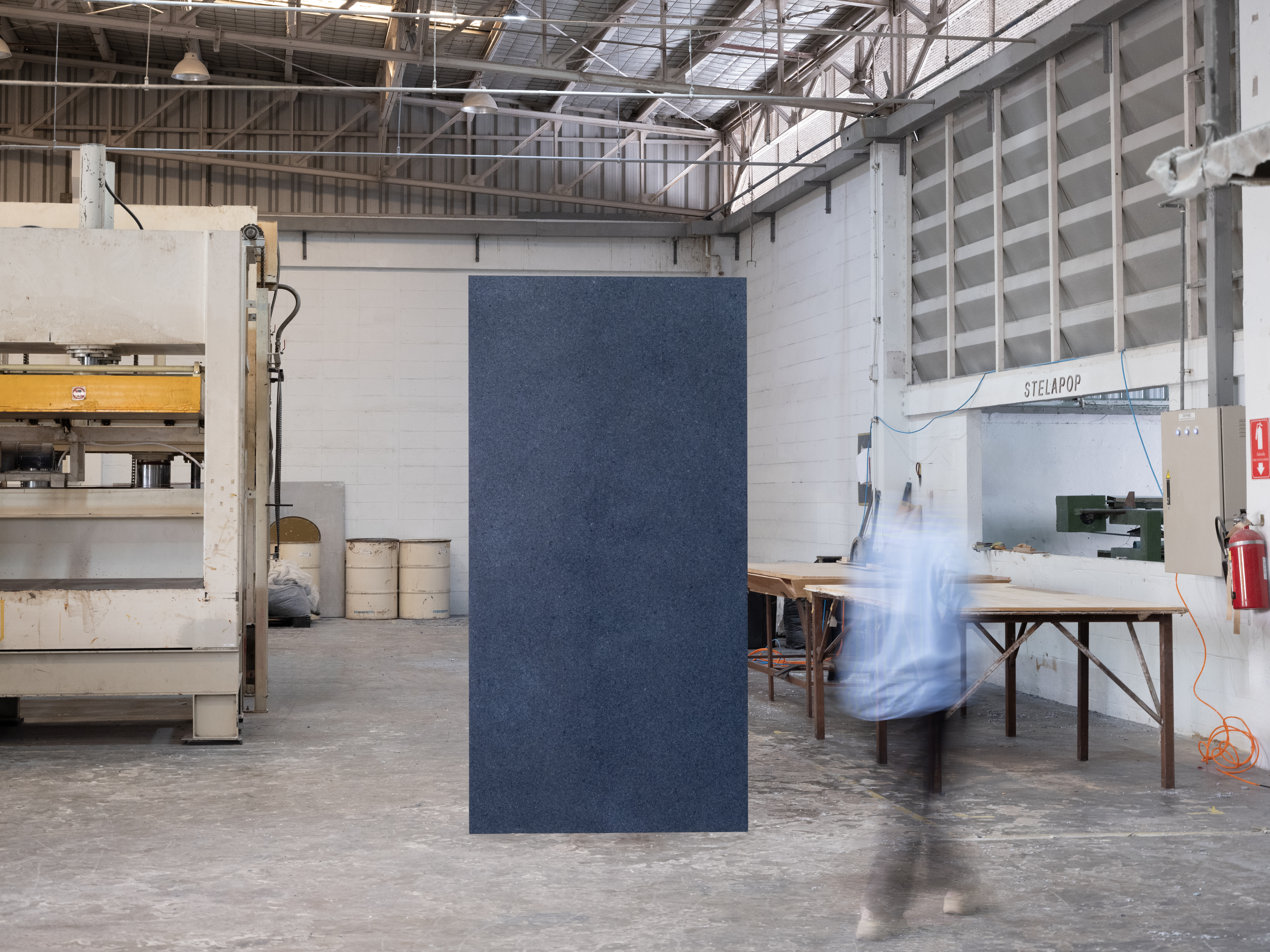
Good news for circularity fans! Low Carbon Industrial has introduced Stelapop to the UK architecture and design market, bringing a circular sheet material manufactured from reclaimed post-industrial denim to architects, interior designers and specifiers.
Developed in partnership with Saitex, one of the world's largest denim manufacturers, Stelapop transforms unavoidable textile waste generated during the production of jeans into a durable interior surface material. While Saitex has spent decades redesigning its manufacturing processes around circularity, cutting and finishing fabric inevitably produces offcuts, and a small proportion of garments fail quality control and cannot be repaired. Rather than entering the waste stream, this material is reprocessed into architectural panels.
Each 5mm-thick sheet comprises 70% reclaimed denim, combined with a water-based binder and natural rubber before being finished with a matte protective lacquer. According to the companies, a single panel incorporates around 14kg of textile waste, equivalent to approximately 35 pairs of jeans diverted from landfill.
For Low Carbon Industrial, the launch reflects a broader focus on materials whose value is defined as much by their provenance and manufacture as by their appearance.
"The core of our design philosophy has always been that materials are defined by how they are made and what they are made from," says Conor Taylor of Low Carbon Industrial. "Few materials embody this more than Stelapop, made from unavoidable post-industrial denim waste, and we're delighted to bring it to British architects and designers for the first time."
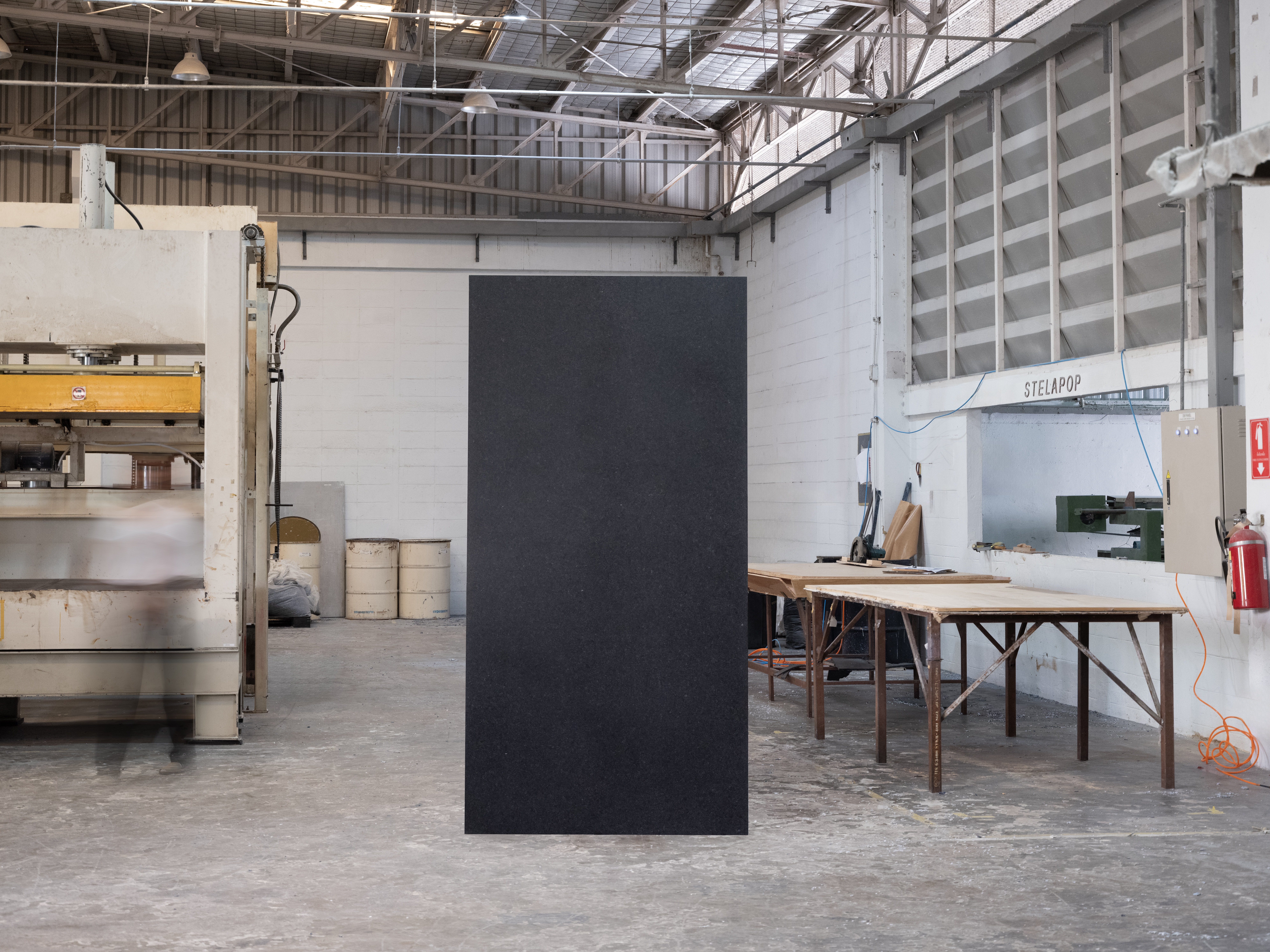
Although derived from textile waste, the panels offer a distinctive visual quality. The reclaimed fibres create subtle variations in tone and texture that shift under changing light, producing a surface with an unexpectedly mineral-like character despite its textile origins. Stelapop is available in six colourways ranging from pale blue-grey through to near black.
Designed for interior applications, the material can be cut, drilled and routed using conventional woodworking equipment, while scoring the reverse of the panel allows it to be gently curved. Potential applications include wall linings, interior cladding, shelving, furniture and bespoke joinery, as well as the manufacture of smaller domestic objects such as trays and homewares.
What’s more, circularity also extends beyond manufacture, for rather than being discarded at the end of its service life, Stelapop panels are intended to be repaired and reused wherever possible, with remanufacture into new panels viewed as a final option once further reuse is no longer practical.
The launch reflects continued interest across the architectural materials sector in finding productive uses for industrial by-products that might otherwise become waste. Products such as Stelapop demonstrate how waste streams from other manufacturing industries are increasingly being reimagined as specification-grade surface materials, broadening the palette available to designers seeking lower-impact interior finishes.