

Surface Spot: From Coffee Grounds to Brick

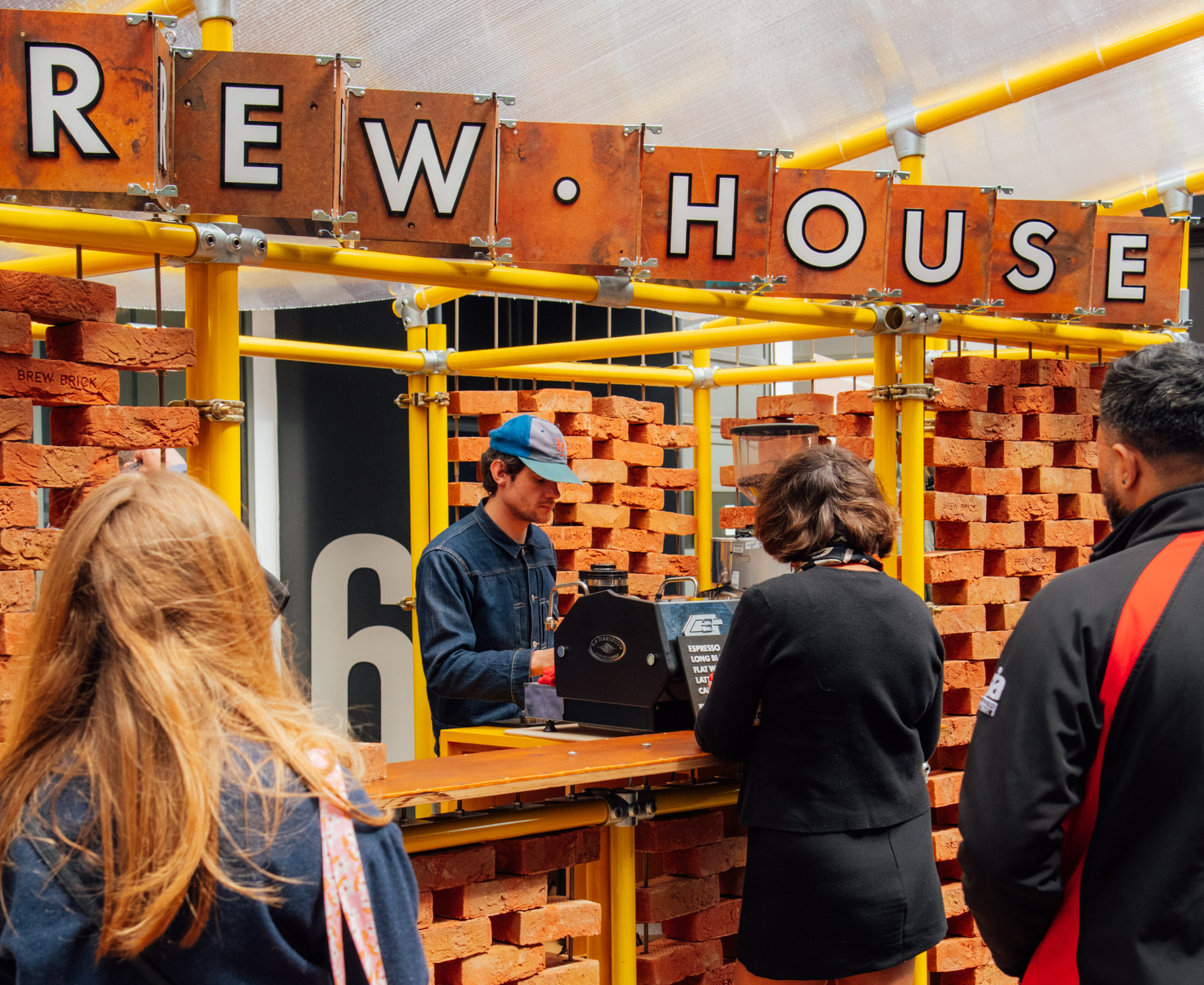
Clerkenwell Design Week clearly has an affinity with bricks. Last year, it was stone bricks used to create Brick From a Stone, while this year, we’ve spotted glass and masonry blocks at E H Smith, along with a very special external installation from Studio Egret West.
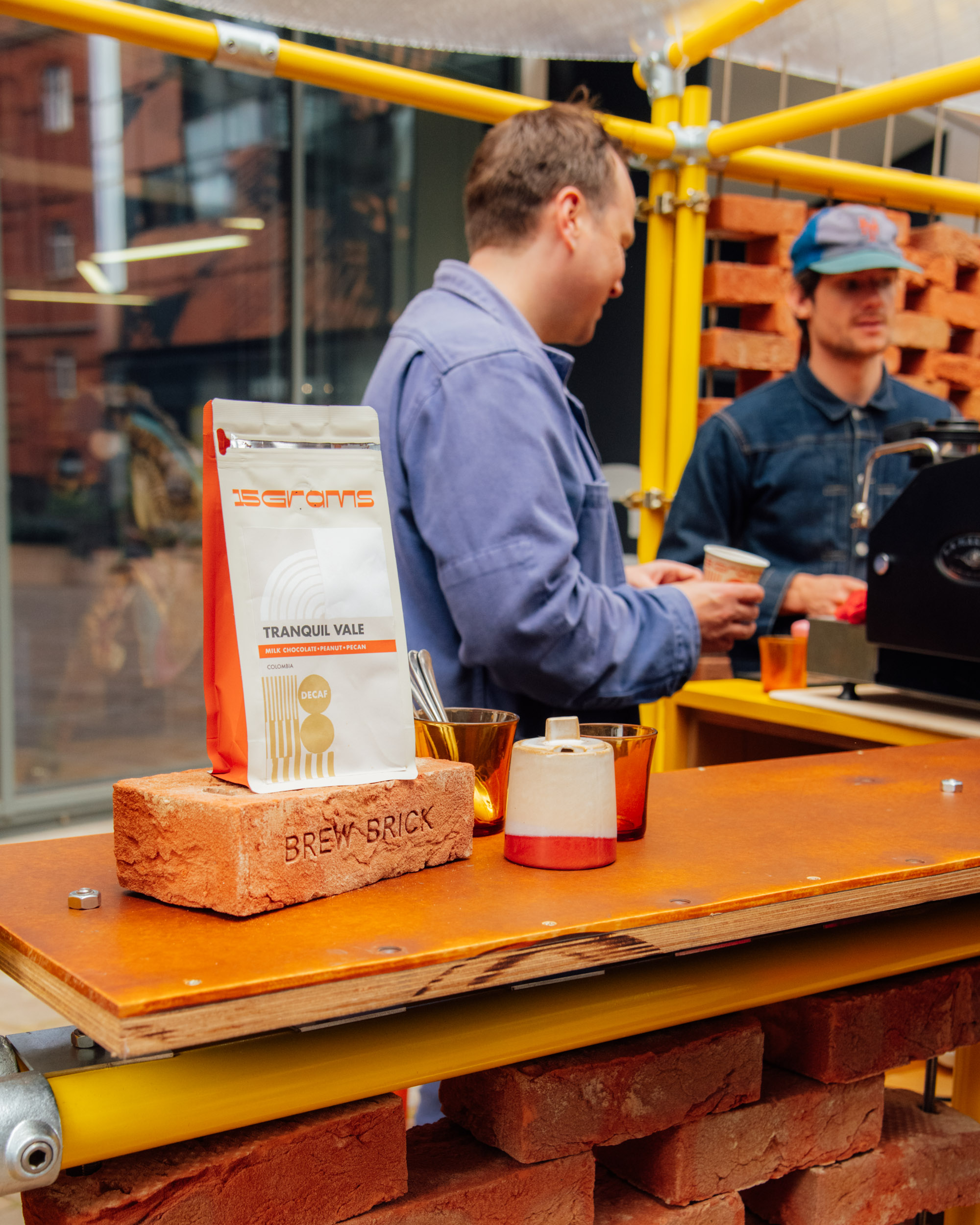
With BREW HOUSE, the team has turned one of the city’s most familiar waste products - coffee grounds - into a speculative construction material, creating a pavilion-cum-coffeeshop built from 600 experimental “BREW BRICKS”. Installed as part of the festival’s wider programme of architectural installations, the project explores how discarded coffee grounds might be diverted from the waste stream and reintroduced into the construction cycle.
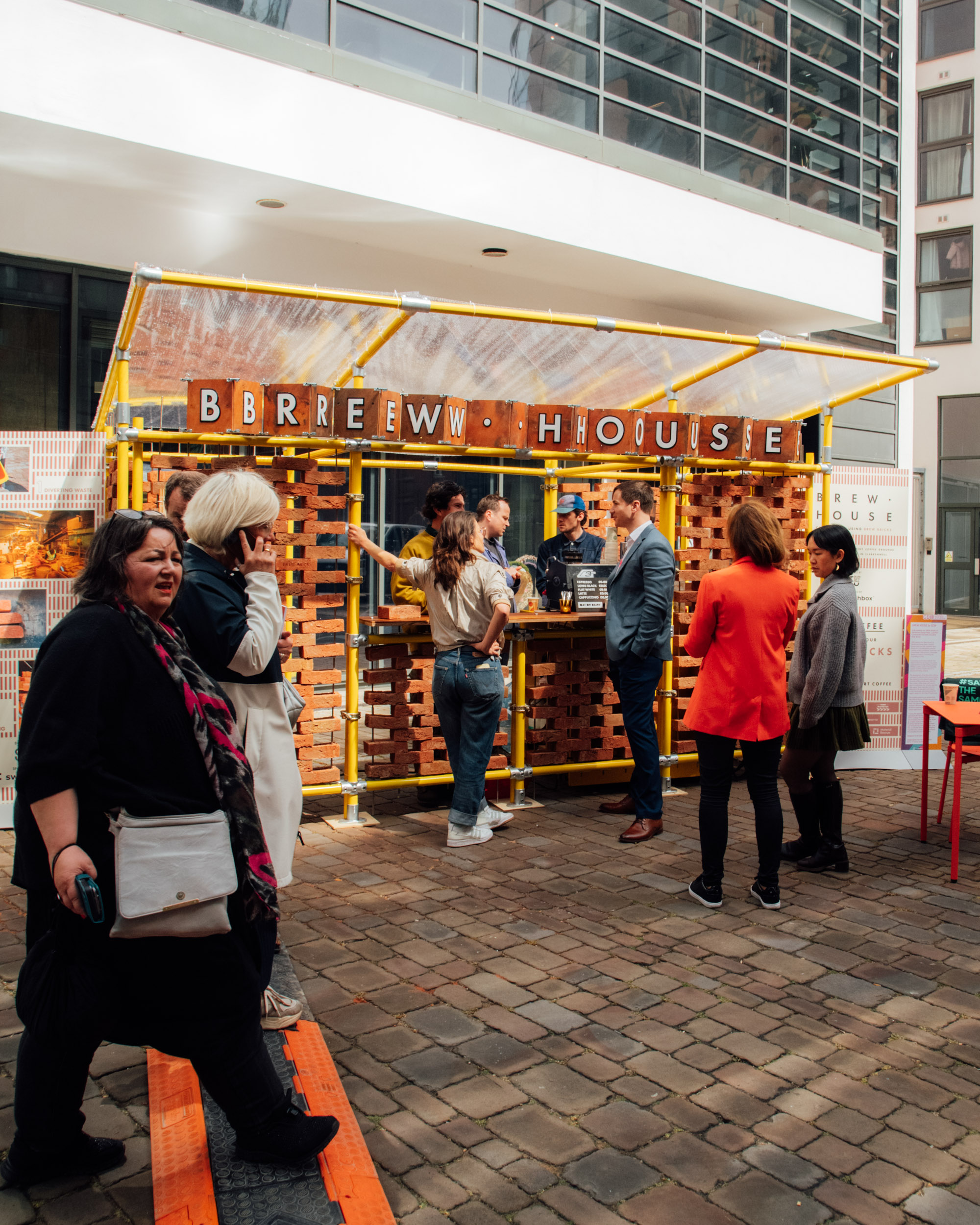
Rooted in circularity, the initiative began with a deceptively simple question posed within the practice: could the by-product of London’s daily coffee culture become a viable building material? From there, the process became highly collective. Over several months, members of the Studio Egret West team gathered approximately 300kg of spent coffee grounds from cafés across the capital, prioritising businesses already separating organic waste.
Those grounds were then passed to York Handmade Brick Company, which integrated the material into its clay firing process. Rather than acting as a superficial additive, the organic waste became part of the brick’s physical makeup. During firing, the coffee particles burn away to create a more aerated structure, reducing the amount of virgin clay required while also producing a lighter unit.
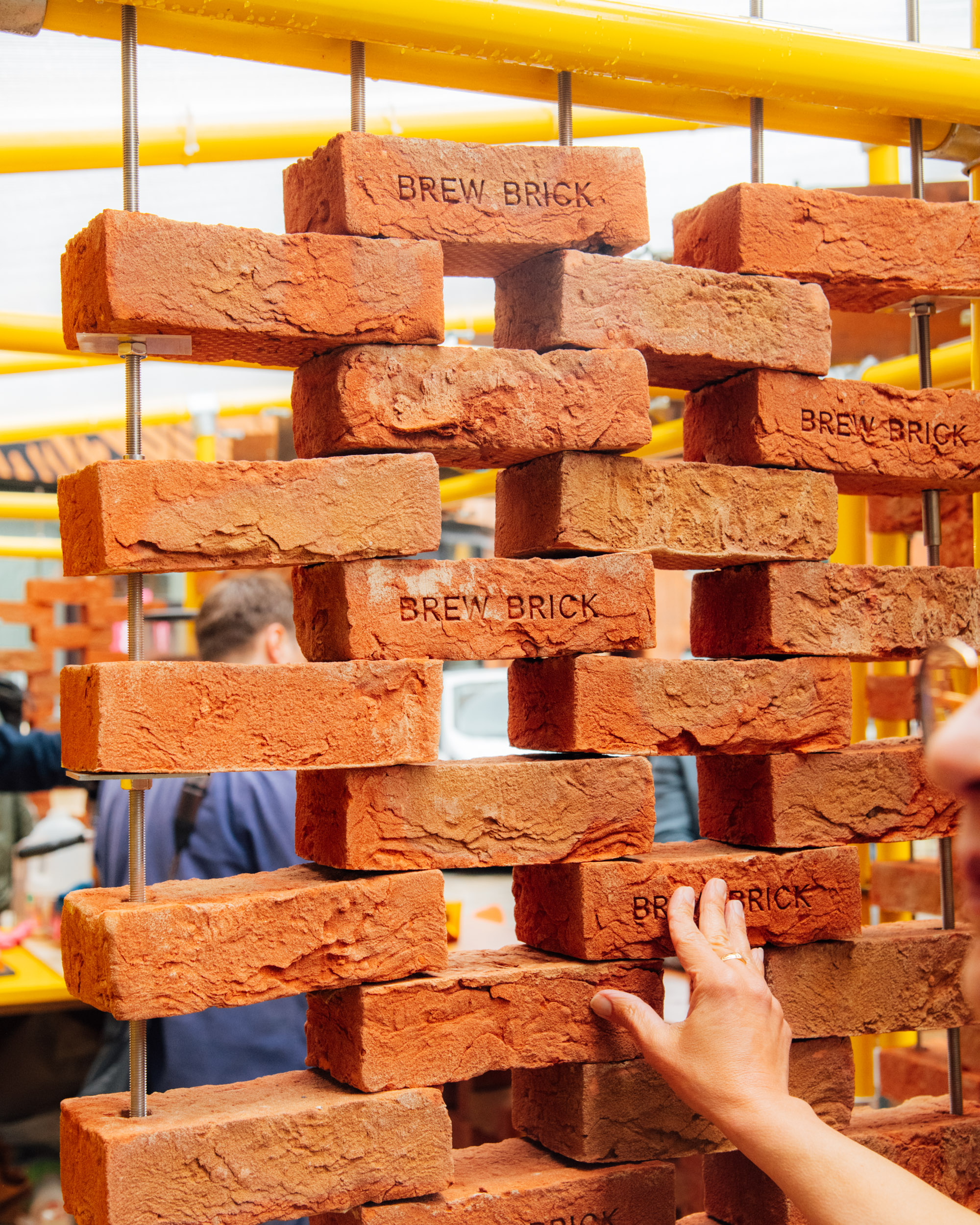
The resulting BREW BRICK uses 10% less finite clay material and is approximately 5% lighter than a conventional brick. While modest on paper, those reductions carry broader implications around transportation, embodied carbon and structural efficiency, particularly in façade applications where cumulative weight has a significant impact on supporting systems.
What’s more, the bricks retain the tactile familiarity of fired clay while carrying a subtly different character. Their slightly lighter composition and textured surface hint at the organic matter embedded within them, reinforcing the idea that waste can leave a visible trace within architecture rather than being concealed from it.
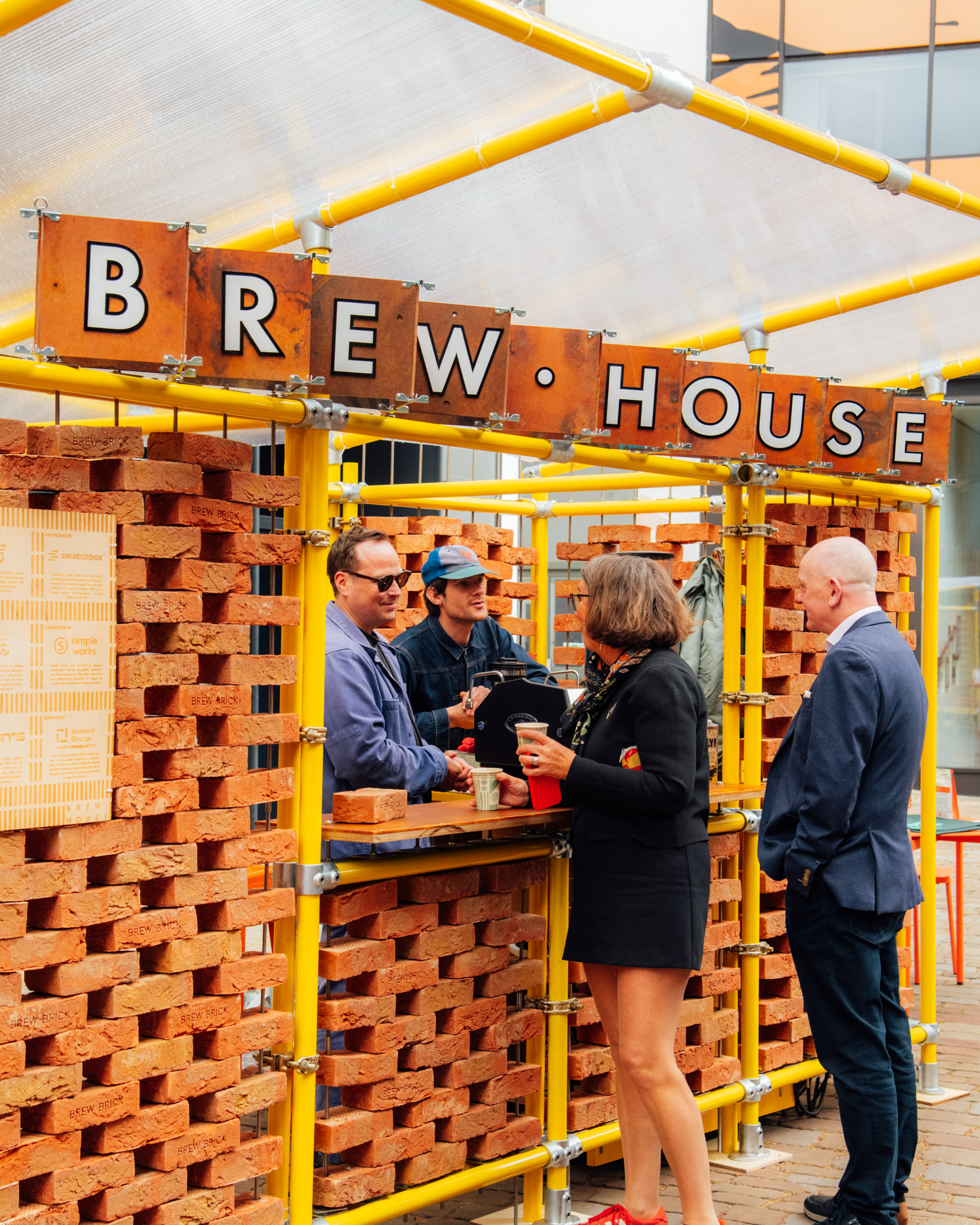
To demonstrate the material beyond the scale of a sample, Studio Egret West collaborated with the engineers at Simple Works to create the BREW HOUSE pavilion itself. The structure acted as a full-scale proof of concept, showing how the bricks could operate as part of a coherent architectural system rather than as an isolated research exercise.
That sense of applied experimentation sits at the centre of the project. Rather than presenting circularity as an abstract sustainability ambition, BREW HOUSE translates it into something immediate and tangible: waste collected locally, processed collaboratively and returned to the built environment as a usable construction material.
For Studio Egret West, a transdisciplinary practice working across architecture, landscape and urbanism, the installation also reflected a wider interest in how material choices contribute to the stories cities tell about themselves. Coffee grounds, often discarded without thought, became a means of examining urban consumption, resource cycles and the hidden systems underpinning everyday routines.
In doing so, BREW HOUSE points towards a broader shift taking place across material design and construction. As pressure grows to reduce reliance on virgin resources, architects, manufacturers and makers are increasingly exploring how waste streams can become part of future material supply chains. What emerges is not simply a substitute for conventional construction products, but new material languages shaped by reuse, locality and circular thinking.