

News: Research Exhibition Puts Indigenous Stone in Focus

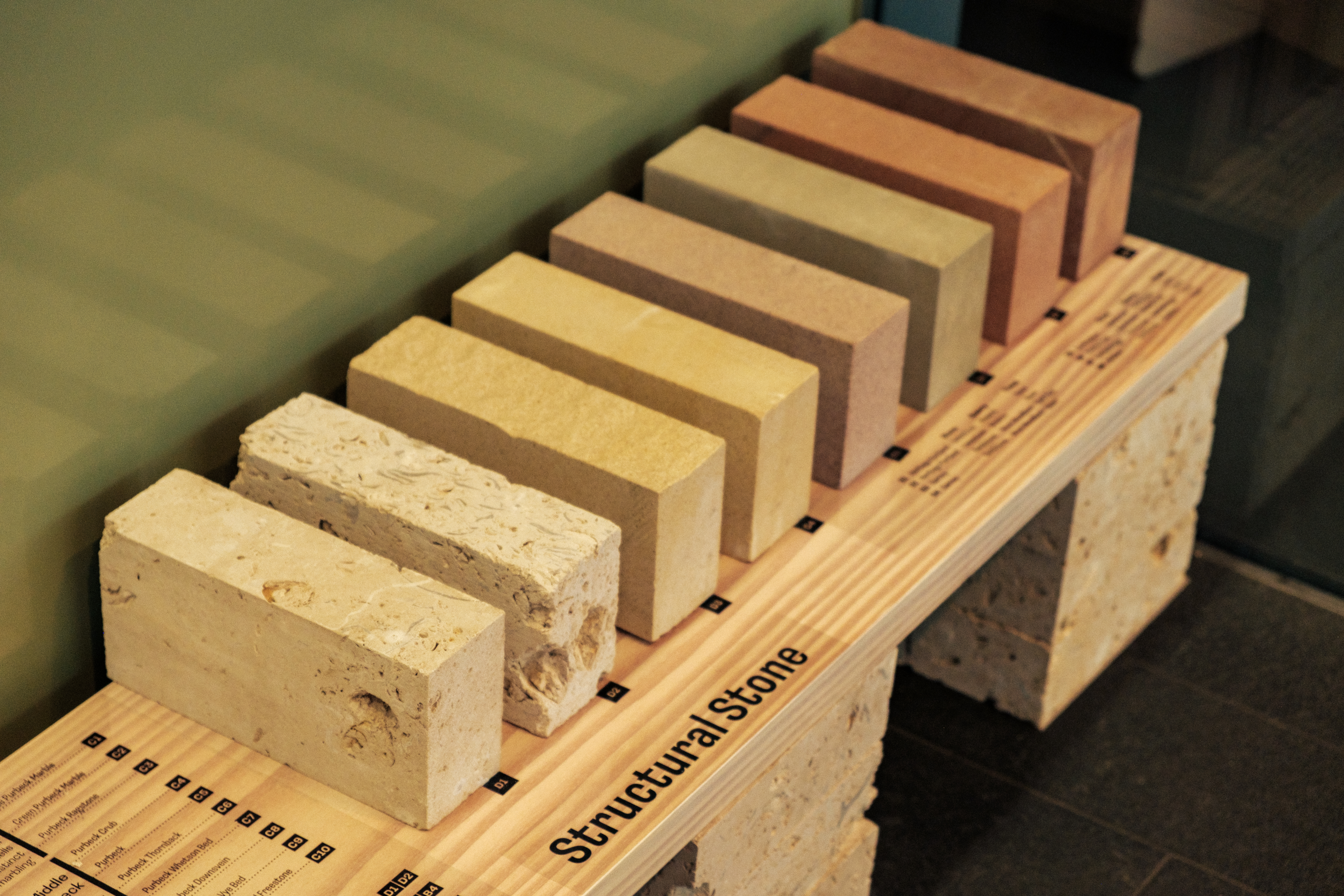
A new exhibition examining the role of indigenous stone in contemporary construction is bringing together research, mapping, film and material installations to explore how Britain's geological resources could contribute to lower-carbon building practices.
Hosted by Allies and Morrison at their London studio, Unlocking UK Stone, is curated by Giulliana Giorgi and stems from the research project Unlocking Indigenous Stone Construction in the UK: A Guide for Sustainable Sourcing. Originally funded through the RIBA Scott Brownrigg Award for Sustainable Development, the project investigates the opportunities and barriers surrounding the wider use of British stone in modern construction.
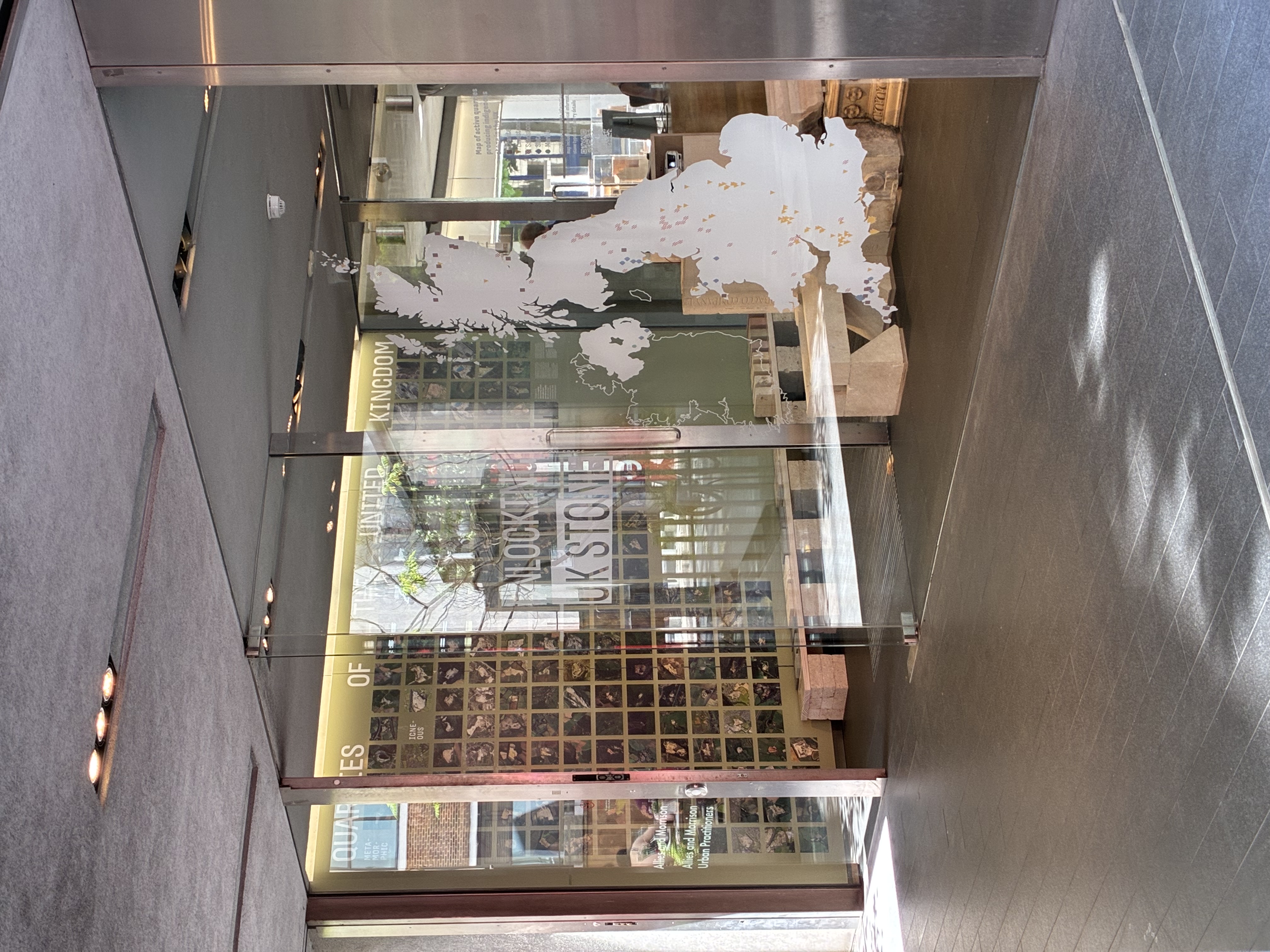
"The United Kingdom is entering a decisive moment in construction," says Giorgi. "As the demand for housing intensifies and the built environment faces mounting pressure to reduce embodied carbon emissions, architecture is being asked to reconsider not only how we build, but what we build with."
At the centre of the exhibition is research into the UK's active stone quarries and the wider supply chain that supports stone extraction, processing and construction. While stone is often associated with heritage projects, the exhibition argues that it should also be considered as a contemporary structural material, particularly as interest grows in reducing embodied carbon within the built environment.
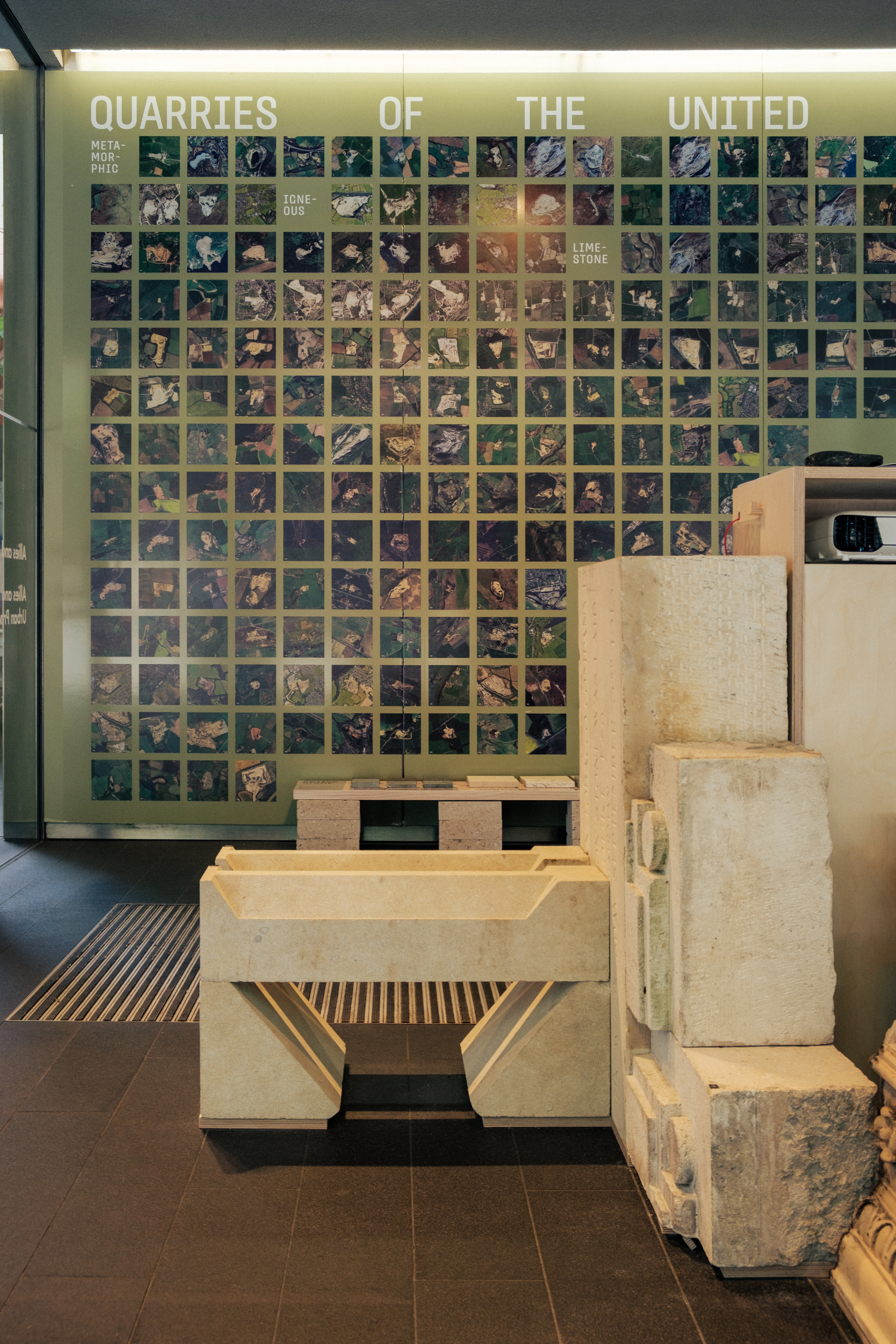
One of the key exhibits is an atlas and mapping installation documenting active stone quarries across the UK. Developed as part of an ongoing research programme, the work highlights the country's geological diversity while revealing how many historic quarries have disappeared from production. The mapping has also informed the creation of a digital platform that allows architects and specifiers to identify local stone resources and better understand the carbon implications of material choices.
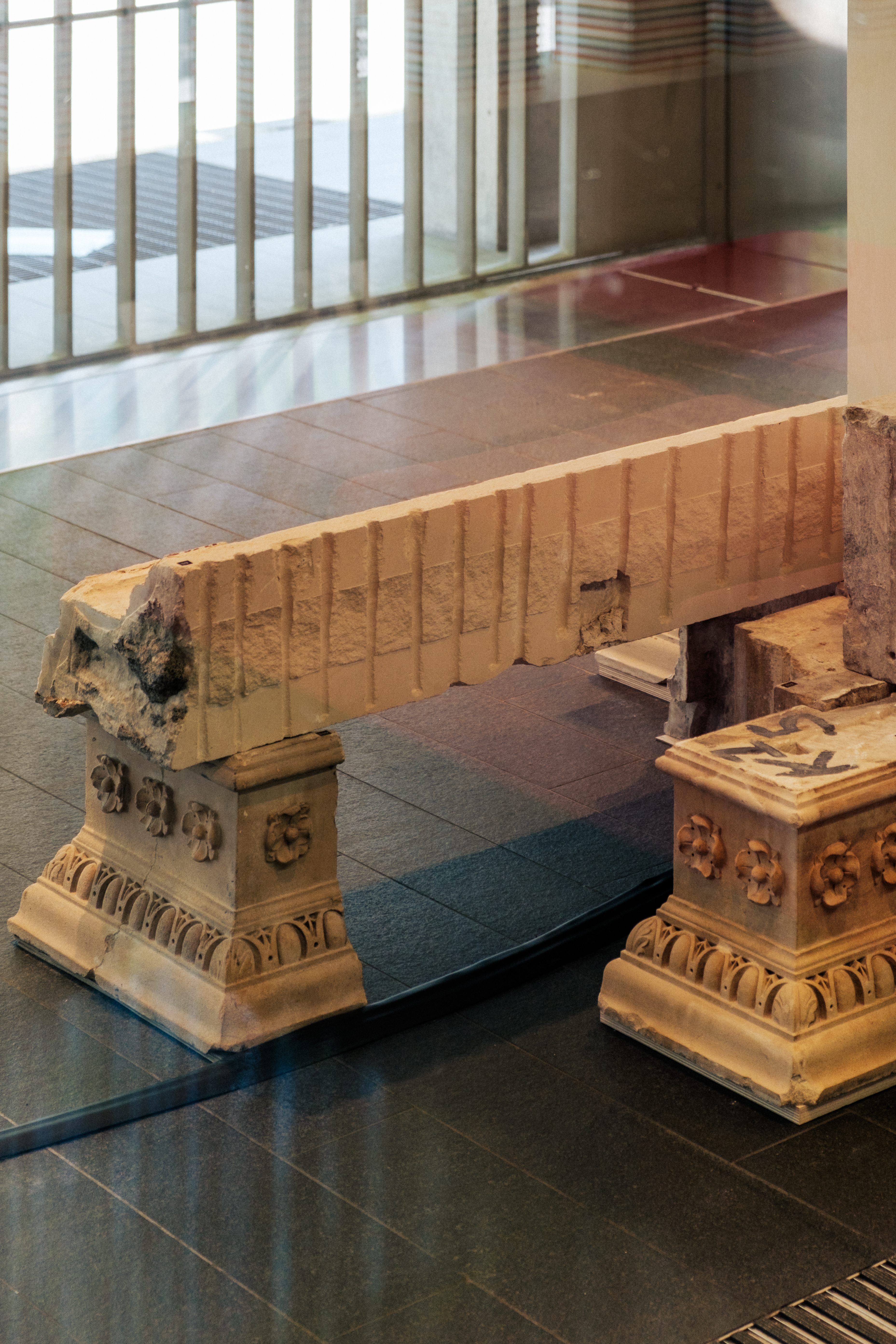
Alongside it, Spolia explores the historical practice of reclaiming and reusing stone. Constructed from reclaimed stone elements and supported by conservation specialist PAYE, the piece functions as both seating and archive. By bringing together fragments from different contexts, it examines stone as a material shaped by cycles of extraction, construction, dismantling and reuse rather than as a permanent, static resource.
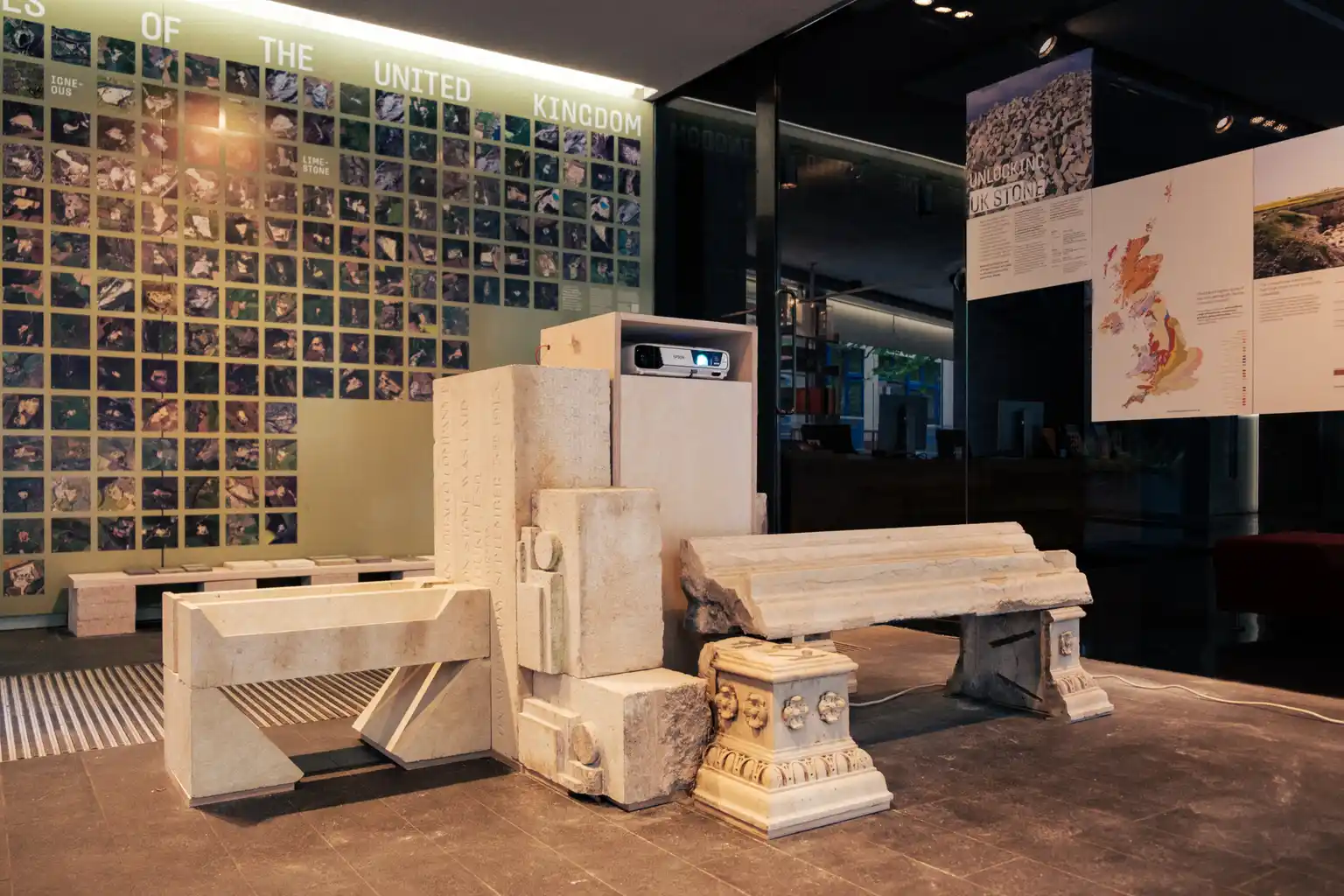
The exhibition also includes Sites of Extraction, a documentary film following stone from quarry to construction site. Featuring contributions from quarry operators, architects, engineers, contractors, conservation specialists and policy experts, the film examines the complex networks that underpin contemporary stone production and highlights the challenges involved in increasing the use of structural stone.
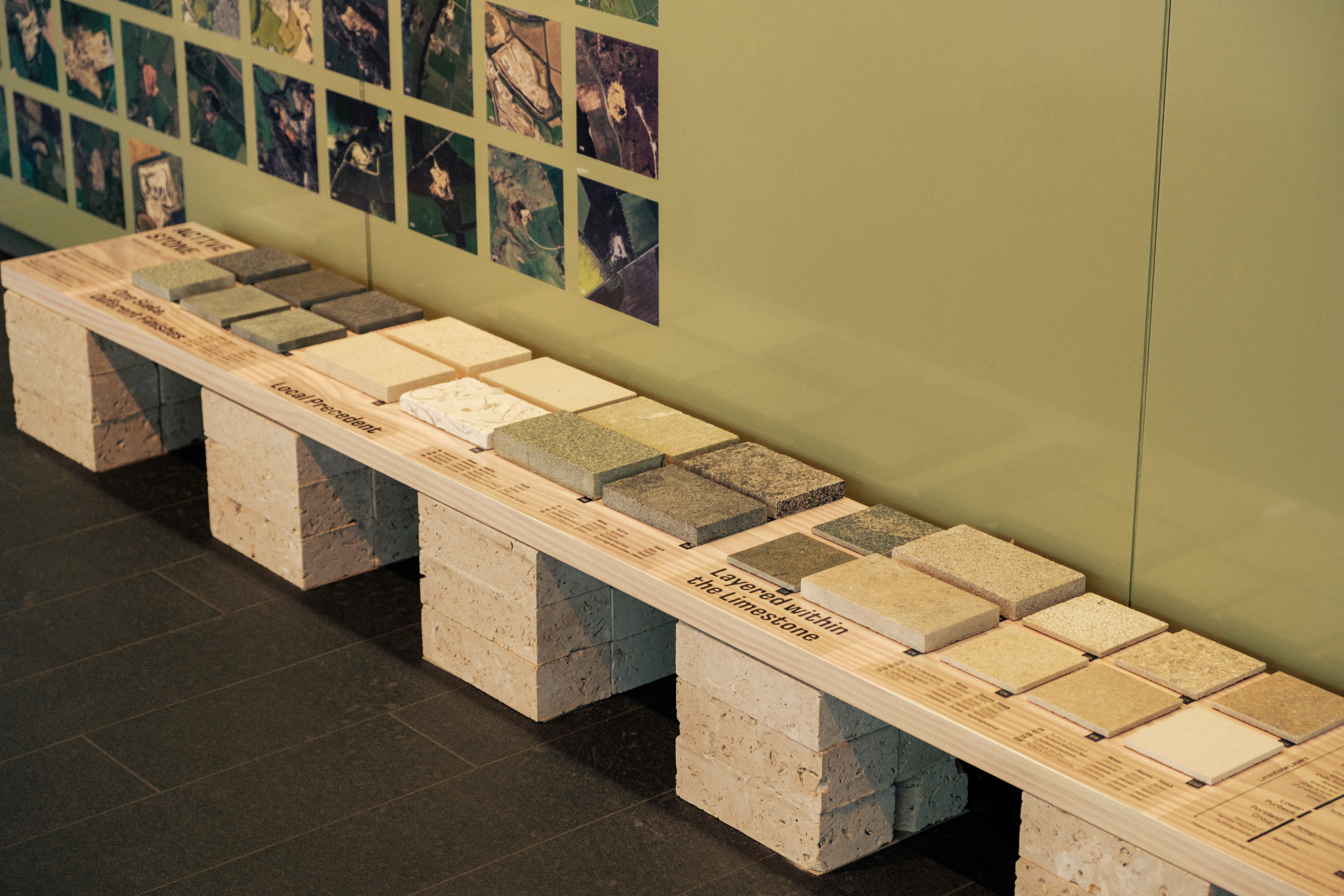
A further display, Building with Stone, presents projects by Allies and Morrison alongside examples from other practices in the UK and Europe. Featured schemes include the practice's work at The Mound in Edinburgh, Cambridge Synagogue and Harlow Bandstand, as well as international projects that demonstrate how local stone can support housing, public buildings and landscape schemes. Together, the projects explore the relationship between regional materials, craft skills, local economies and low-carbon construction.
Rather than presenting stone as a nostalgic return to traditional building methods, Unlocking UK Stone asks how indigenous materials might help shape a more resource-conscious construction culture. Through research, case studies and material investigation, the exhibition seeks to reconnect architecture with the landscapes, supply chains and skills that underpin the built environment.
The exhibition is free to view until 26th June at Allies & Morrison, 85 Southwark Street, London SE1 0HX.
With additional research support provided by Webb Yates and Stone Federation Great Britain.
All images © Roc H Biel