

Surface Spot: Materiality on display in Regents Park

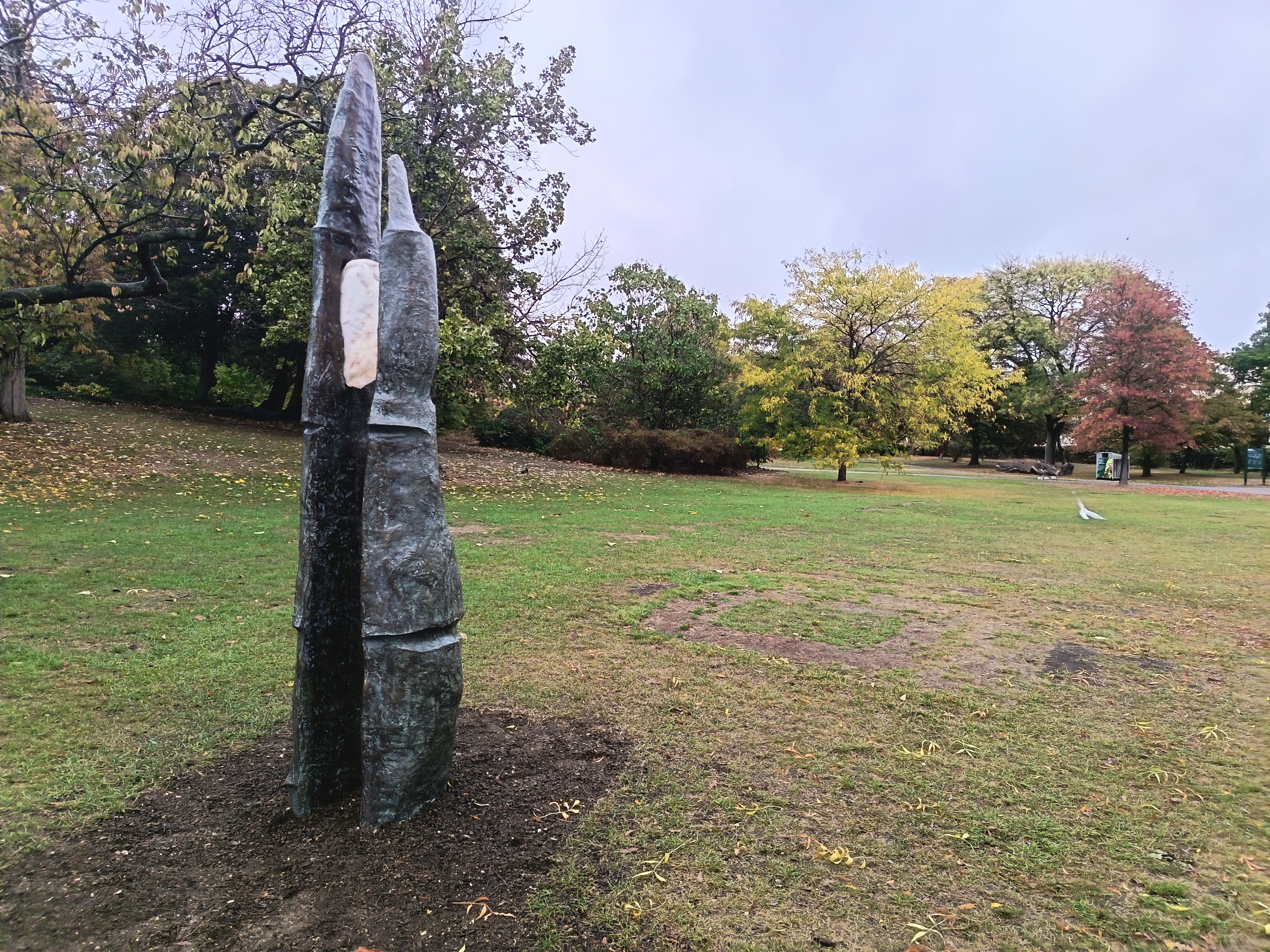
Amid a swath of autumnal colour, from crimson to burnt orange, ochre to moss green, among the squawking parakeets and the copious, rampaging squirrels, there is currently a series of sculptural interventions that punctuate Regent’s Park’s historic English Gardens.
Frieze Sculpture returns for its 14th edition, bringing together 11 artists in a free outdoor exhibition running until 1 November 2026. Curated by Fatoş Üstek, the annual event coincides with Frieze London and Frieze Masters, but its setting in the park offers a different way to encounter contemporary art. Here, the works share their space with established trees, lawns and passing visitors, while the changing light and weather become part of the experience. This year’s selection spans a range of materials and approaches, from traditional sculptural processes to digitally assisted fabrication.
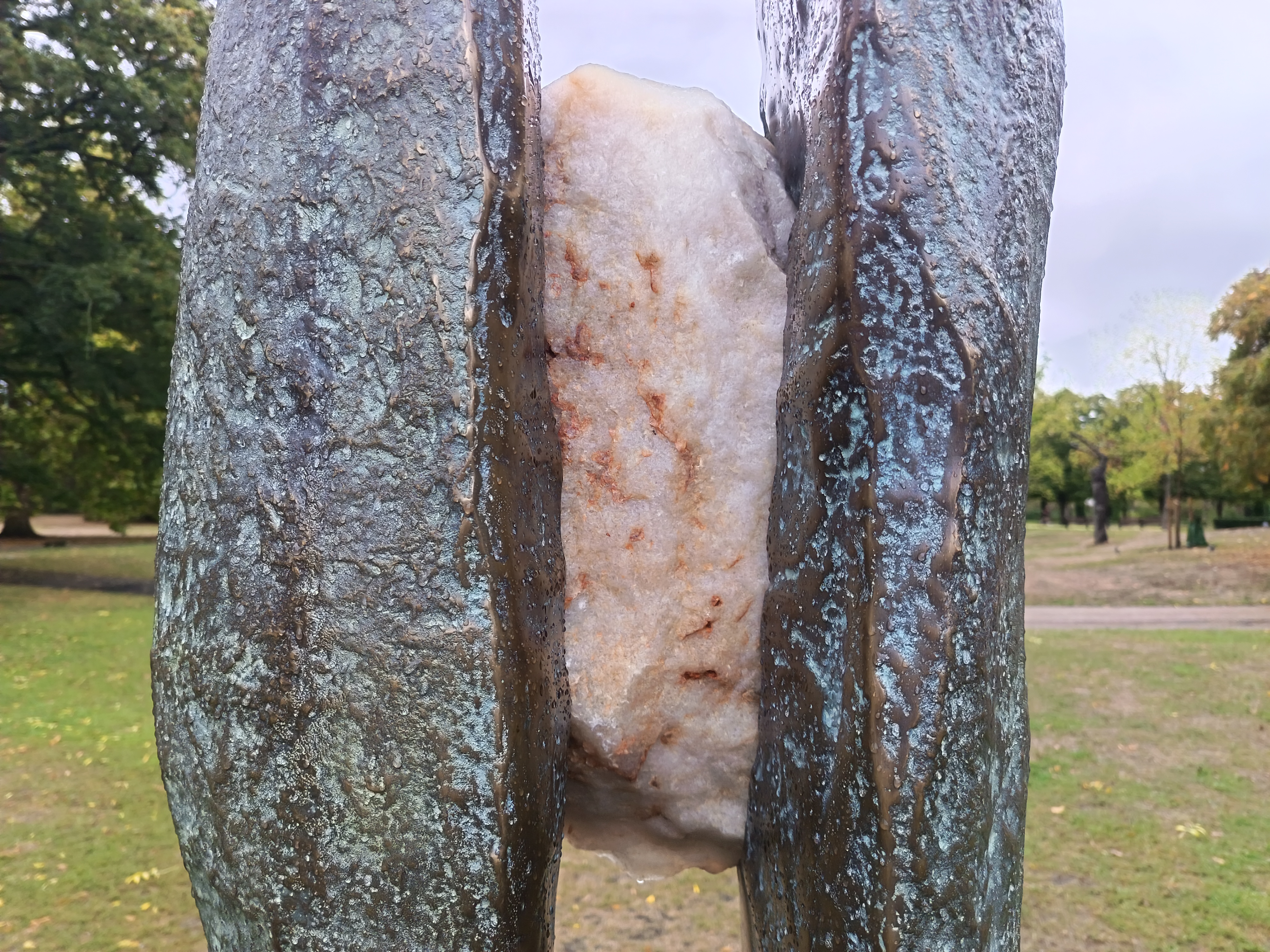
Among the works, Carolina Aguirre’s Held (2026) puts natural stone at the centre of a study in material contrast. Two sections of textured bronze hold a piece of white quartz gathered from the artist’s family home in Uruguay. The arrangement recalls a xenolith, a fragment of rock enclosed within another rock, but the geological reference also has a personal dimension.
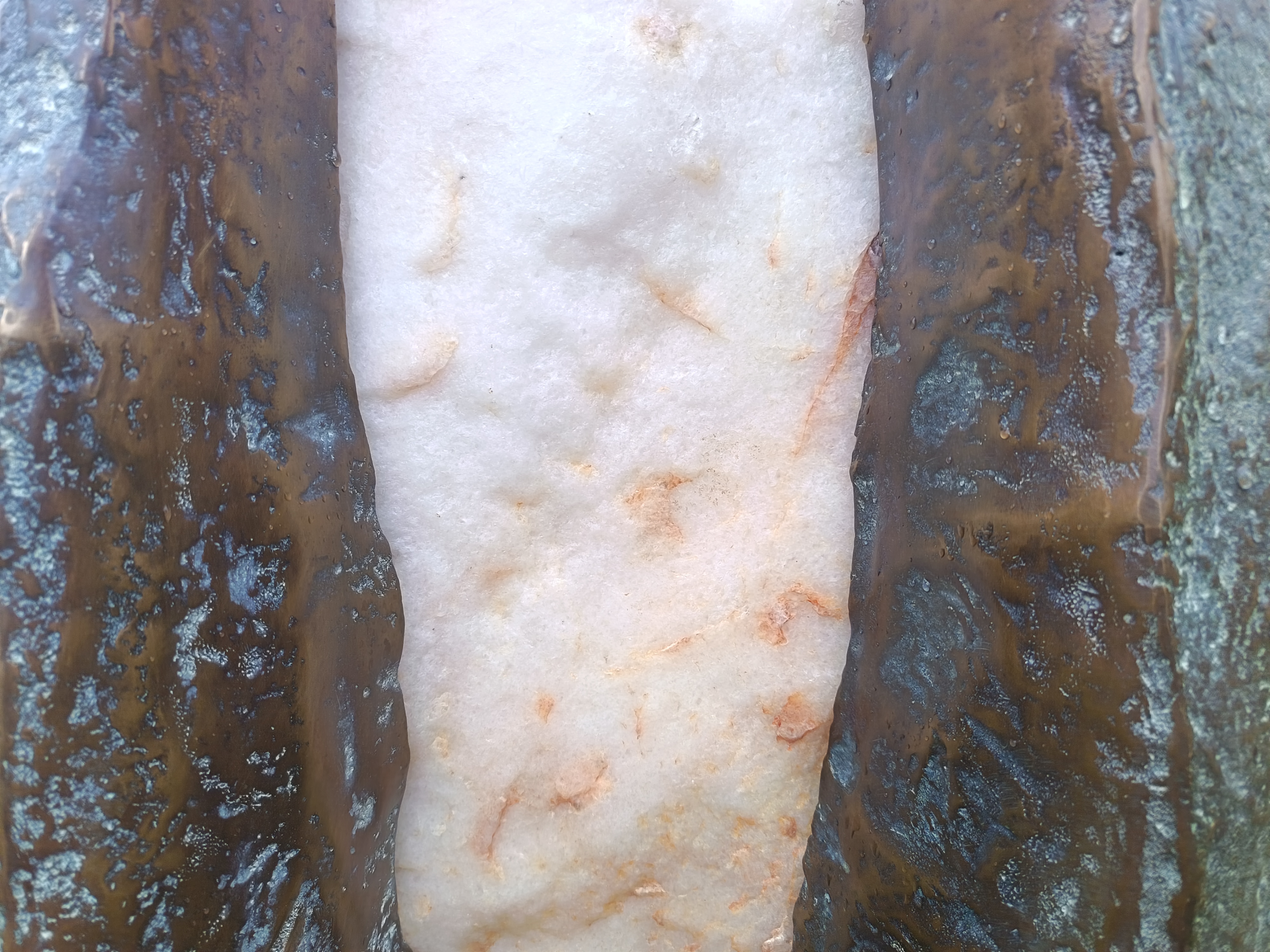
The quartz carries a connection to a place and its history, while its position between the bronze halves makes it appear both sheltered and vulnerable. Suspended between the bronze sections, the quartz appears both protected and precarious: should the halves separate, the stone could fall. While the contrast between a cast metal form and a naturally formed mineral also draws attention to the different histories embodied by each material.
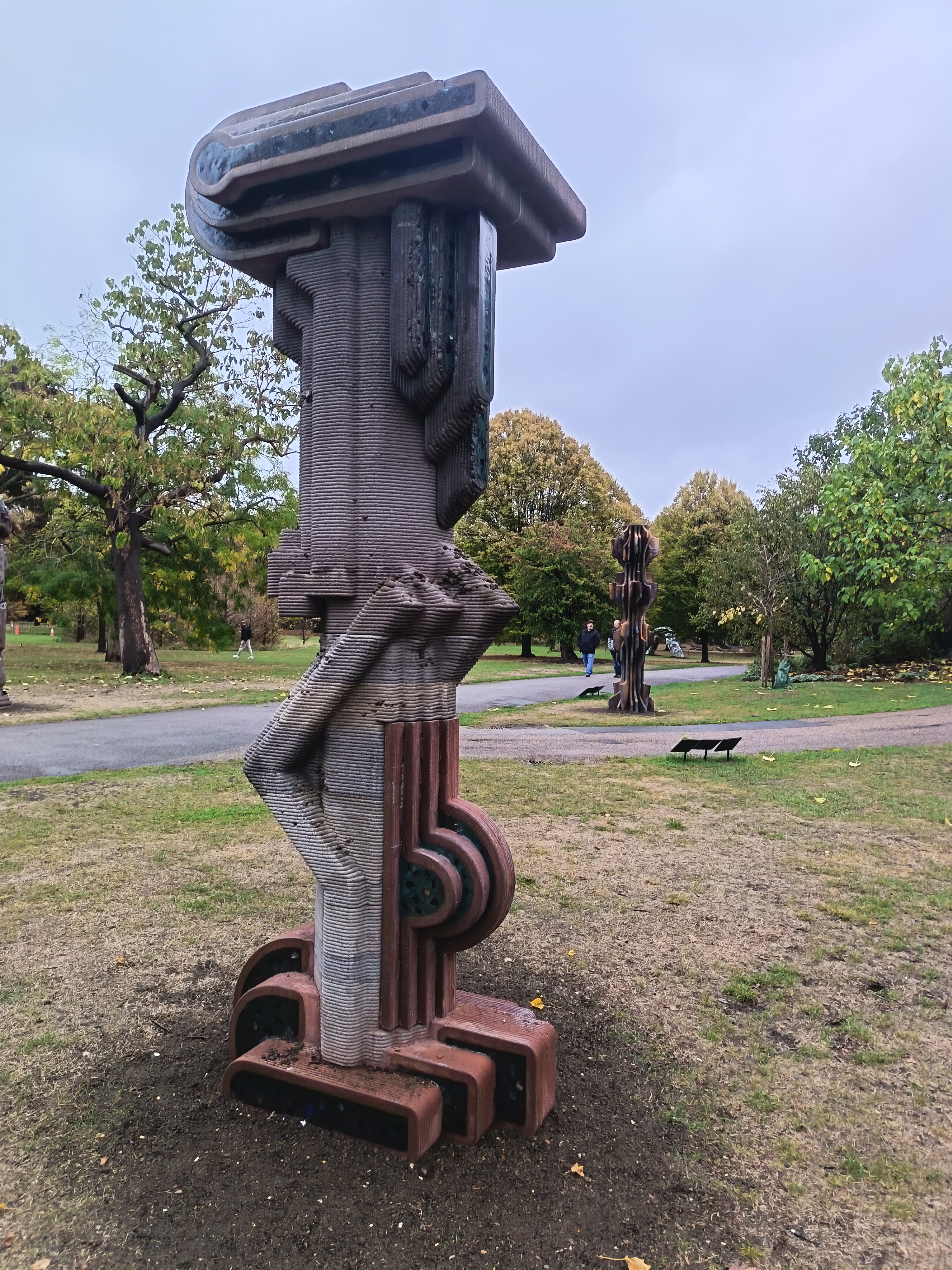
Material experimentation takes another direction in Matyáš Chochola’s METEOR, BRUTALIST and MACE II (2024), presented by The Chemistry Gallery. Developed using 3D concrete-printing technology, the works combine digitally fabricated concrete with other materials, including glass, copper powder, bronze and brass.
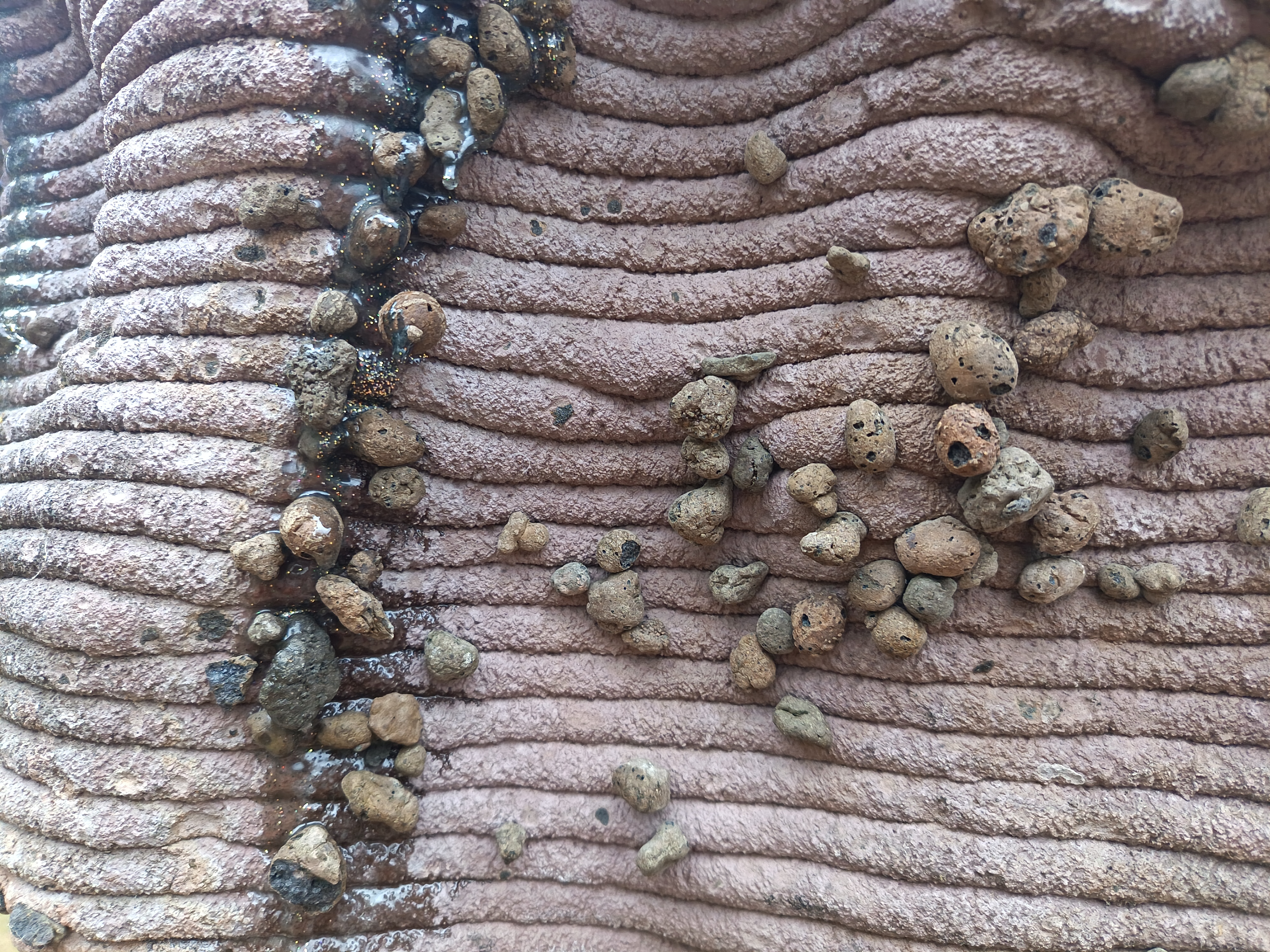
Their varied forms and surfaces bring together references to architecture, historical sculpture and speculative futures. Concrete, often associated with construction and structural mass, becomes a medium for complex sculptural forms, while the additional materials introduce differences in colour, texture and finish.
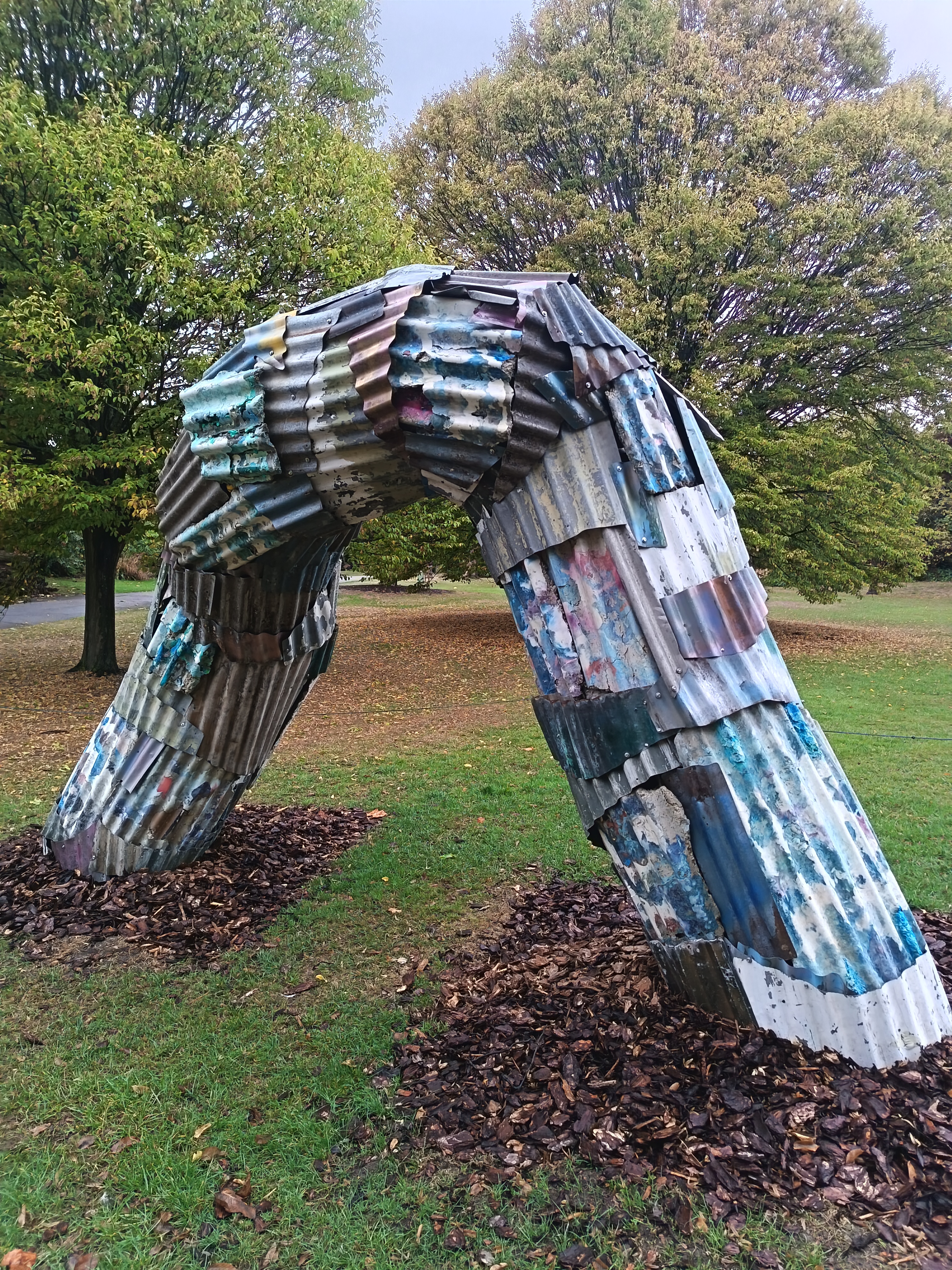
Elsewhere, Catriona Robertson’s WYRM uses papercrete, made from concrete and recycled newspaper pulp, alongside discarded materials including textiles, wood and corrugated roofing. Its large, worm-like forms emerge from the lawn, turning waste into sculptural matter. Tarini Sethi’s The Sun Bathes Its Friends and Neighbours, meanwhile, uses laser-cut stainless steel to create intricate scenes whose appearance changes with reflected light and shadow.
Across the exhibition, materials are more than a means of producing form. Quartz, concrete, recycled paper and stainless steel each bring their own physical properties and associations, demonstrating how the choice of material can shape both the appearance and the meaning of a work.
Frieze Sculpture is free to visit in the English Gardens, Regent’s Park, until 1 November 2026.