

Case Study: St. Raphael's Health & Wellbeing Centre, Adam Richards Architects

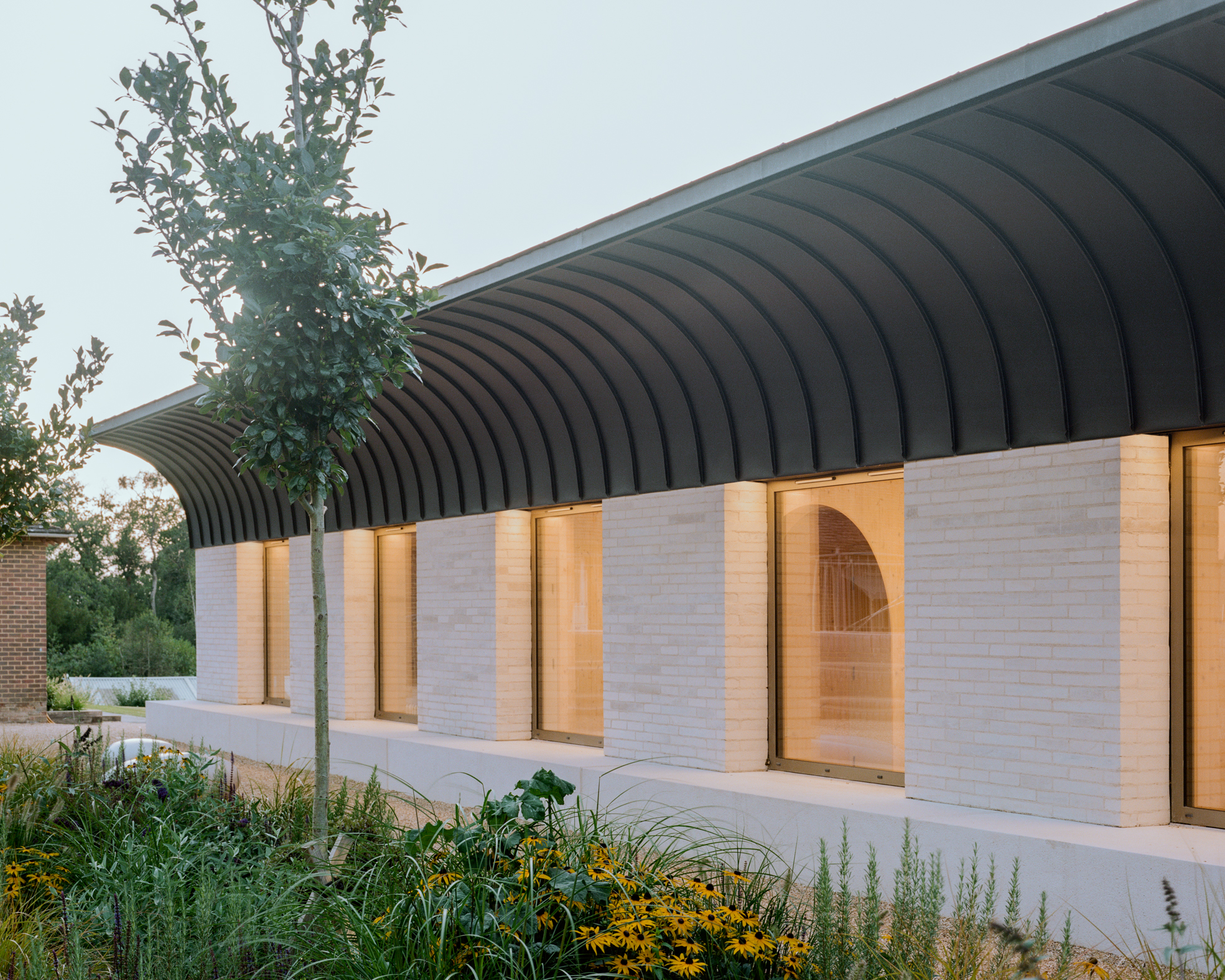
Recently completed St. Raphael's Health & Wellbeing Centre at Mayfield School in East Sussex demonstrates how natural stone can contribute to both the environmental performance and character of contemporary healthcare architecture.
Designed by Adam Richards Architects, the 277m² facility provides dedicated space for medical treatment, counselling, wellbeing support and health education for pupils at the independent Catholic boarding and day school. Fully operational since September 2024, the centre replaces the school's former infirmary and has quickly become an integral part of campus life, serving pupils aged 11-18.
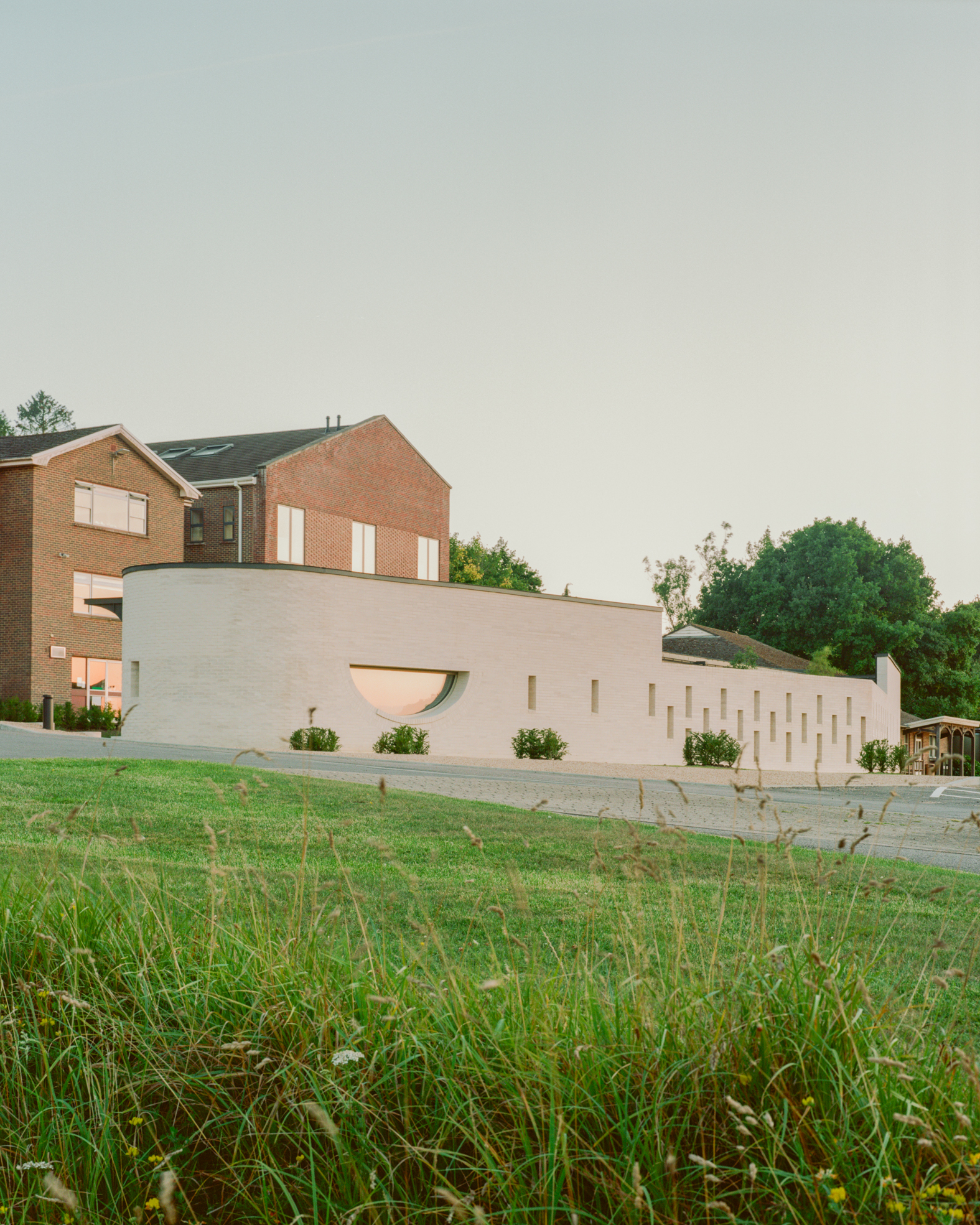
The project is notable for combining a cross-laminated timber (CLT) structure with an outer envelope constructed from natural limestone bricks, believed to be the first new building to use this combination of materials. The approach was driven by a desire to reduce embodied carbon while creating a building that sits comfortably within the historic context of the school.
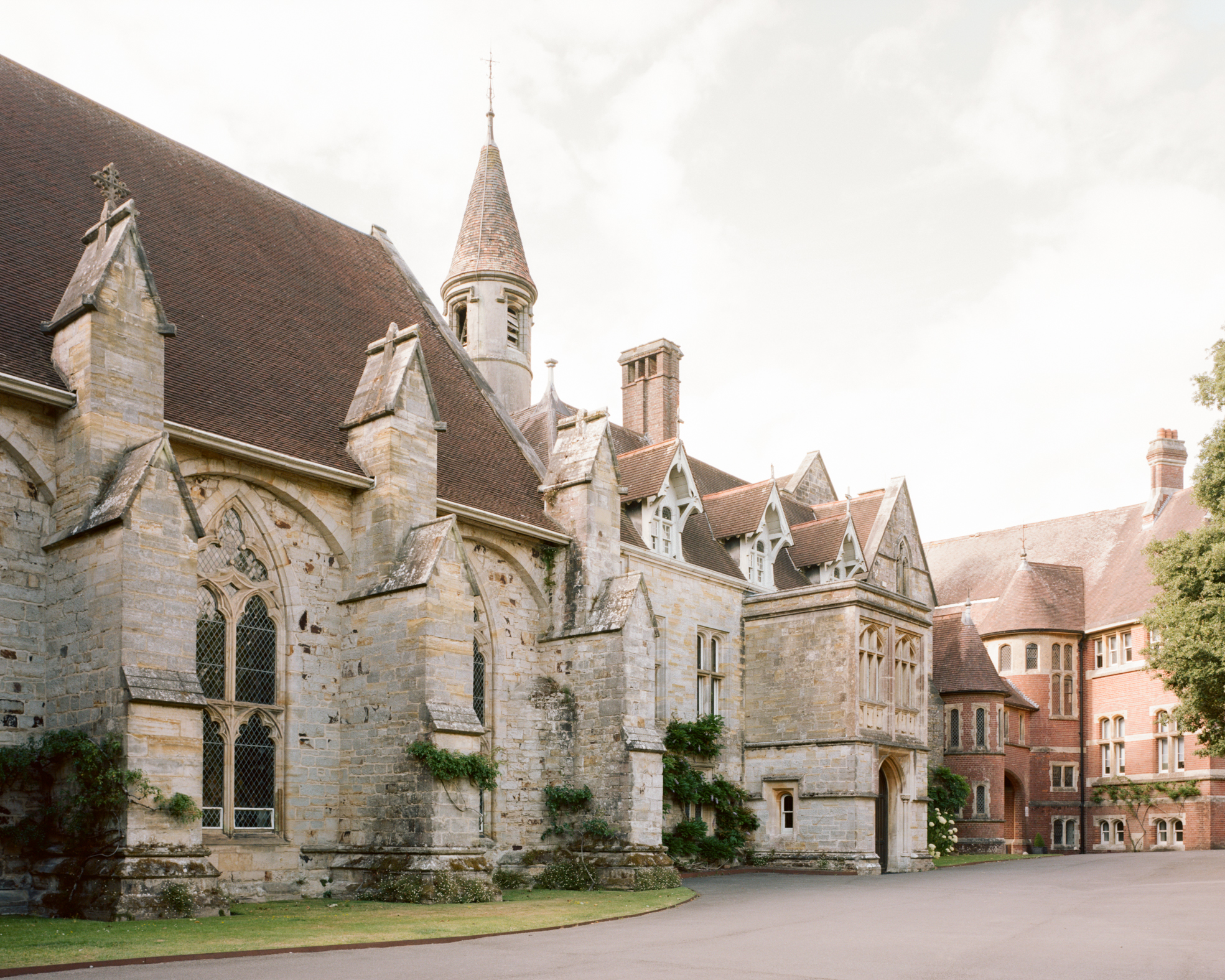
Founded in the 19th century and centred on a restored medieval palace, Mayfield School has long placed pastoral care at the heart of its educational philosophy. The brief called for a purpose-built facility that would support both physical and mental wellbeing in a welcoming, non-institutional environment.
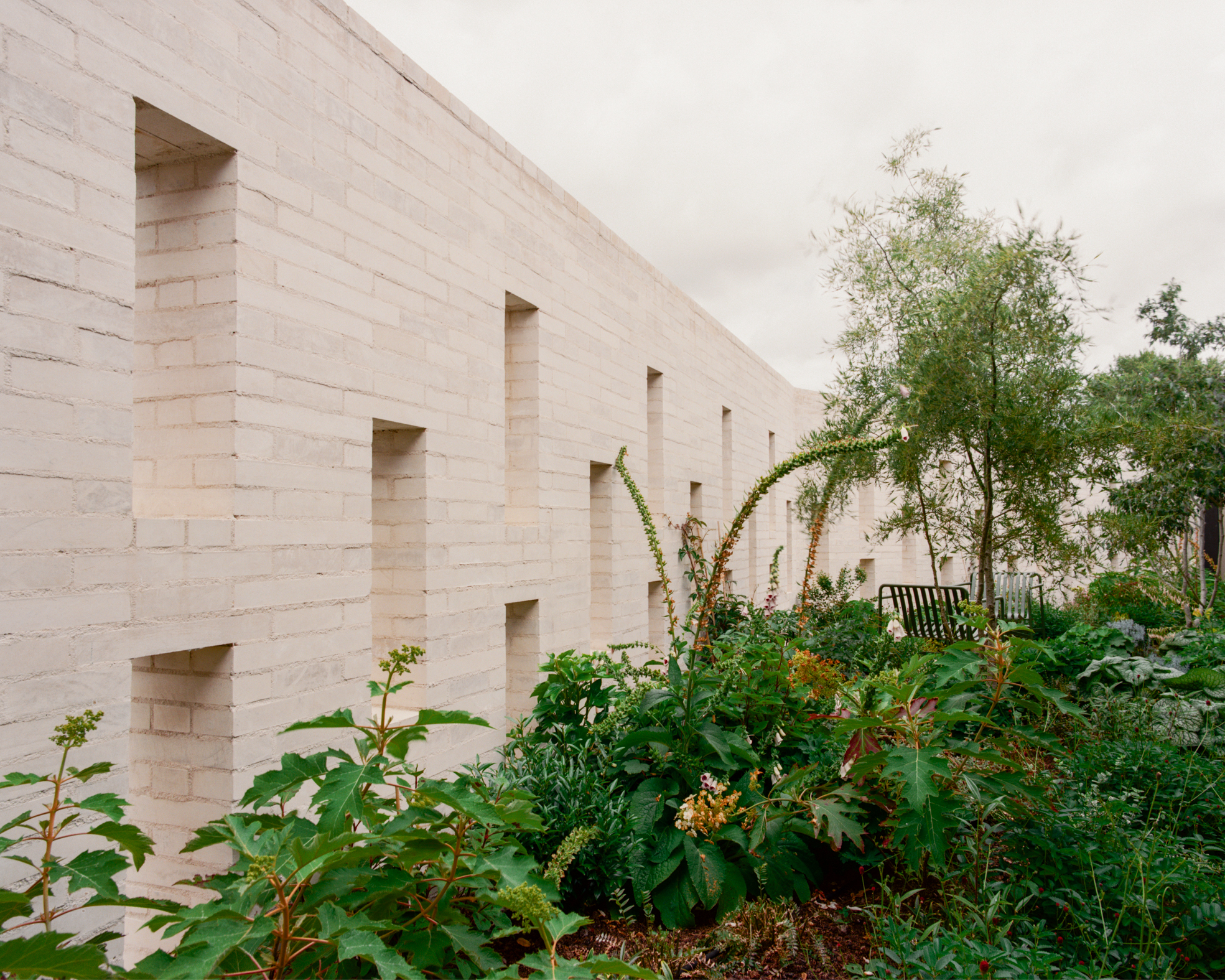
Adam Richards Architects responded with a single-storey building positioned on a previously underused part of the campus. Replacing temporary portacabins and parking, the scheme improves access across the site while preserving the historic core of the school. A limestone wall defines the northern edge of the building and creates a new gateway, while a sheltered courtyard to the south provides a quieter setting connected to treatment and counselling spaces.
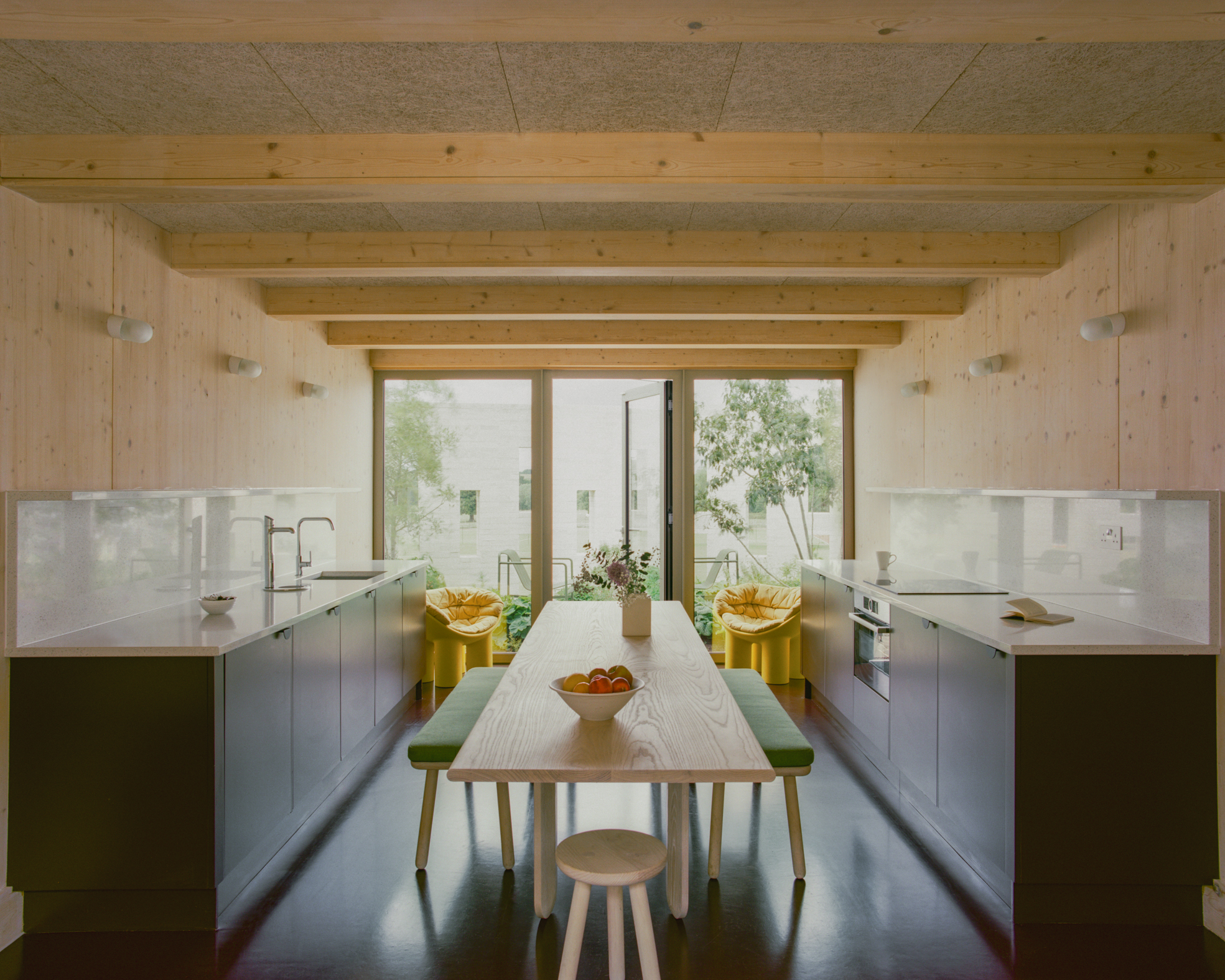
At the centre of the plan is a communal kitchen and gathering space arranged around a long table designed by Adam Richards and crafted by Sussex-based joinery workshop Fisher Morrison. This social hub connects to a secluded garden, which is overlooked by treatment and counselling rooms, bringing natural light and views of greenery into the building while maintaining privacy.
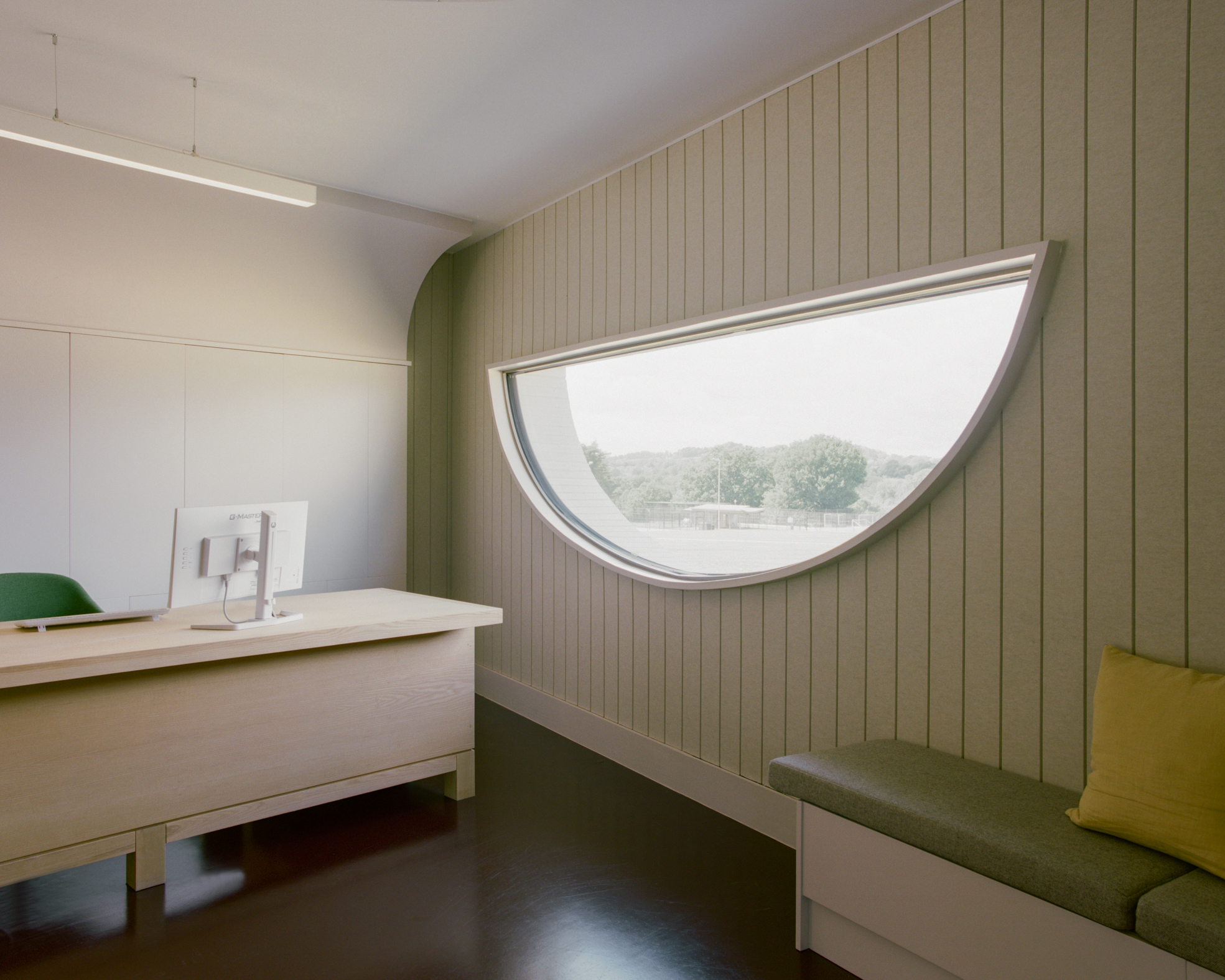
The centre includes counselling rooms, a treatment room, an isolation room and a four-bed dormitory, alongside reception and support spaces. Internally, exposed timber surfaces, soft daylight and carefully considered proportions create an atmosphere more akin to a domestic environment than a conventional healthcare facility.
Natural materials play a central role in the building's environmental strategy. The CLT structure reduces reliance on steel and concrete while storing carbon within the building fabric. Exposed timber internally minimises the need for additional finishes.
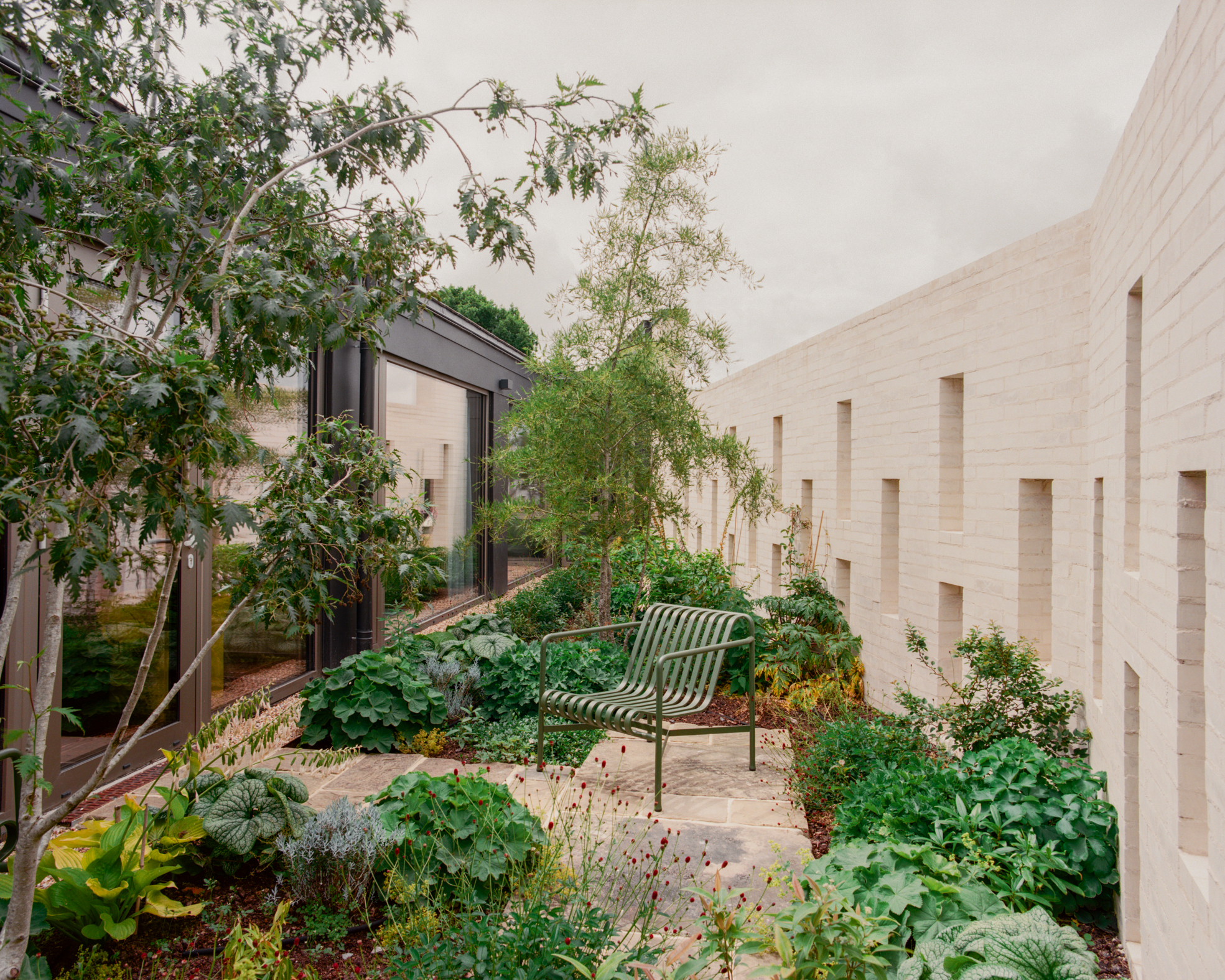
The limestone brick cladding, developed by Polycor, was selected both for its low-carbon credentials and its relationship to the wider campus. Unlike conventional fired clay brick, the stone units require less energy to manufacture and are laid in lime mortar, allowing future disassembly and reuse. Their pale appearance also establishes a visual connection with the school's historic buildings.
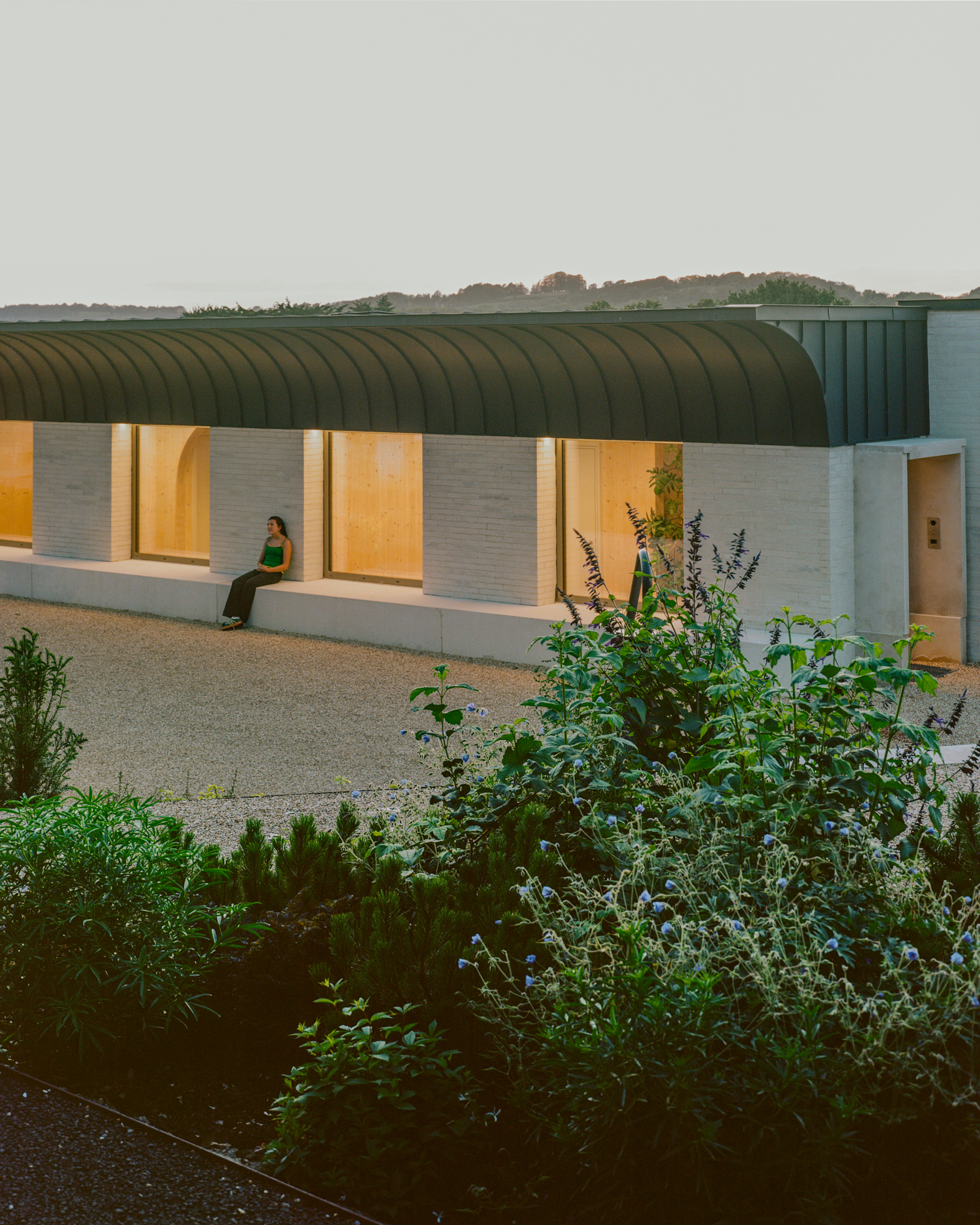
The building is all-electric and incorporates air-source heat pumps and mechanical ventilation with heat recovery. Together with the thermal performance of the stone and timber envelope, these systems contribute to a design life of more than 60 years while helping to reduce operational energy demand.
For the natural stone sector, St. Raphael's offers an example of how stone can move beyond traditional construction and conservation settings to play a significant role in contemporary low-carbon architecture. Rather than being used as merely a decorative finish, the limestone brick forms an integral part of the building's environmental strategy, demonstrating how natural stone can contribute to both performance and longevity in modern educational and healthcare projects.
All images © Lorenzo Zandri