

Insights: Cullifords on Why Natural Stone is Defining the Home Bar

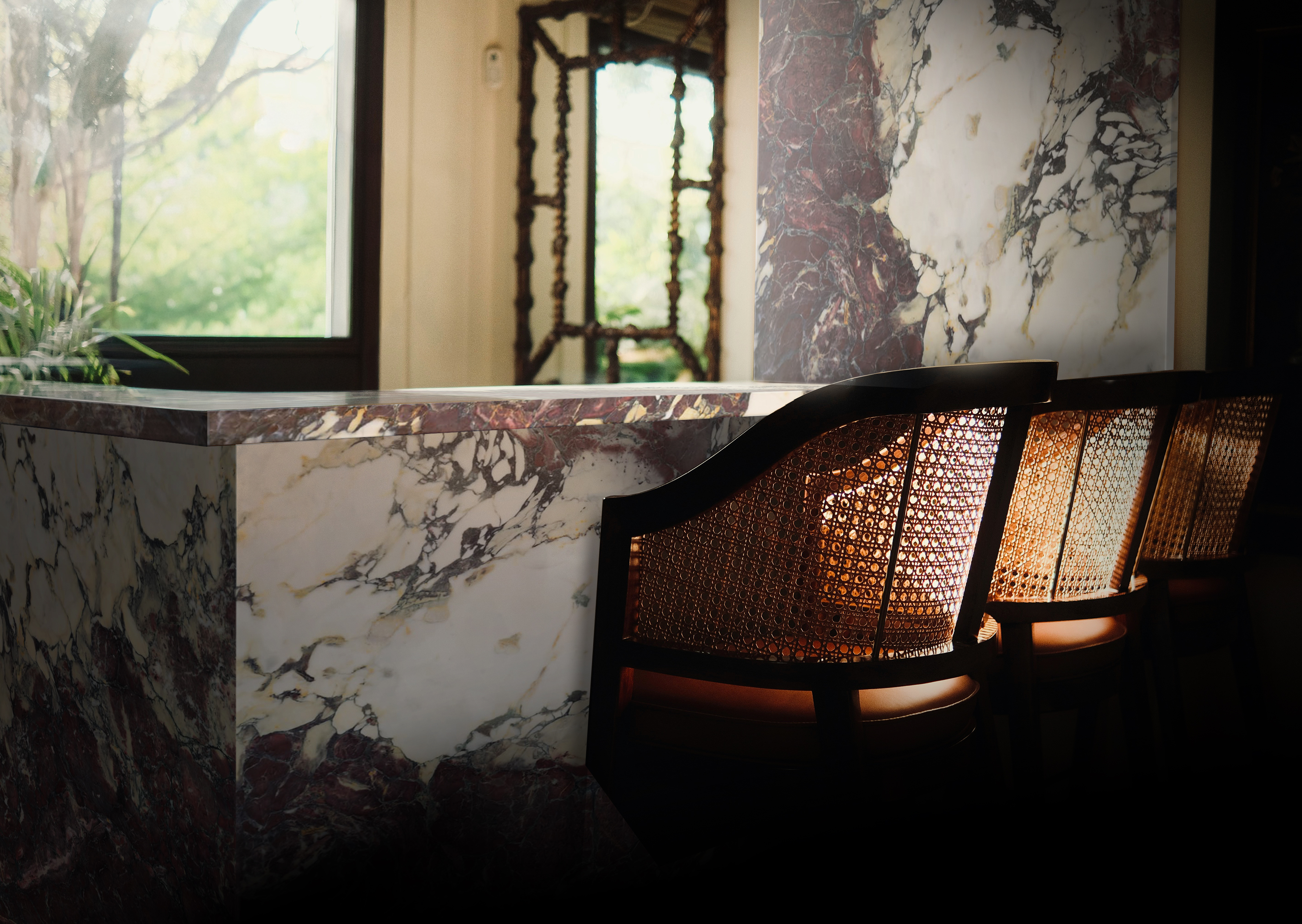
As entertaining at home becomes a more important part of how people use their interiors, the home bar is moving from a small add-on to a feature in its own right. Oli Webb, Director at Cullifords, discusses how natural and engineered stone surfaces are helping shape these spaces, from compact drinks stations to dedicated wine rooms.
“Home bars have changed significantly in recent years. They are no longer simply about storing bottles or creating a small drinks area in the corner of a room. Increasingly, they are being designed as part of the wider home, whether that is within a kitchen, dining space, living room, basement or dedicated wine room.
At Cullifords, we are seeing more homeowners and designers treat the bar as a place to introduce stronger materials, richer colour and more individual surfaces. It is a space designed for hosting, so there is often more confidence to use a stone that feels expressive or dramatic.
A kitchen may need to work hard every day and suit the whole household, but a home bar can be a little more atmospheric. That makes it a natural place to use bold veining, darker tones, high-impact splashbacks or full-height stone walls.
One of the reasons stone works so well in a home bar is that the material can be seen from several angles. In a kitchen, the surface is often used horizontally across a worktop or island. In a bar, there are more opportunities to use the slab vertically as well, whether across a bar front, splashback, shelving backdrop or waterfall end.
This allows the natural movement of the stone to become part of the design. A strongly veined marble or quartzite can be book-matched behind shelves, wrapped around an island or used to frame a drinks display. Under low-level lighting, the texture and movement of the surface becomes even more visible, which is why stone works so well in evening entertaining spaces.
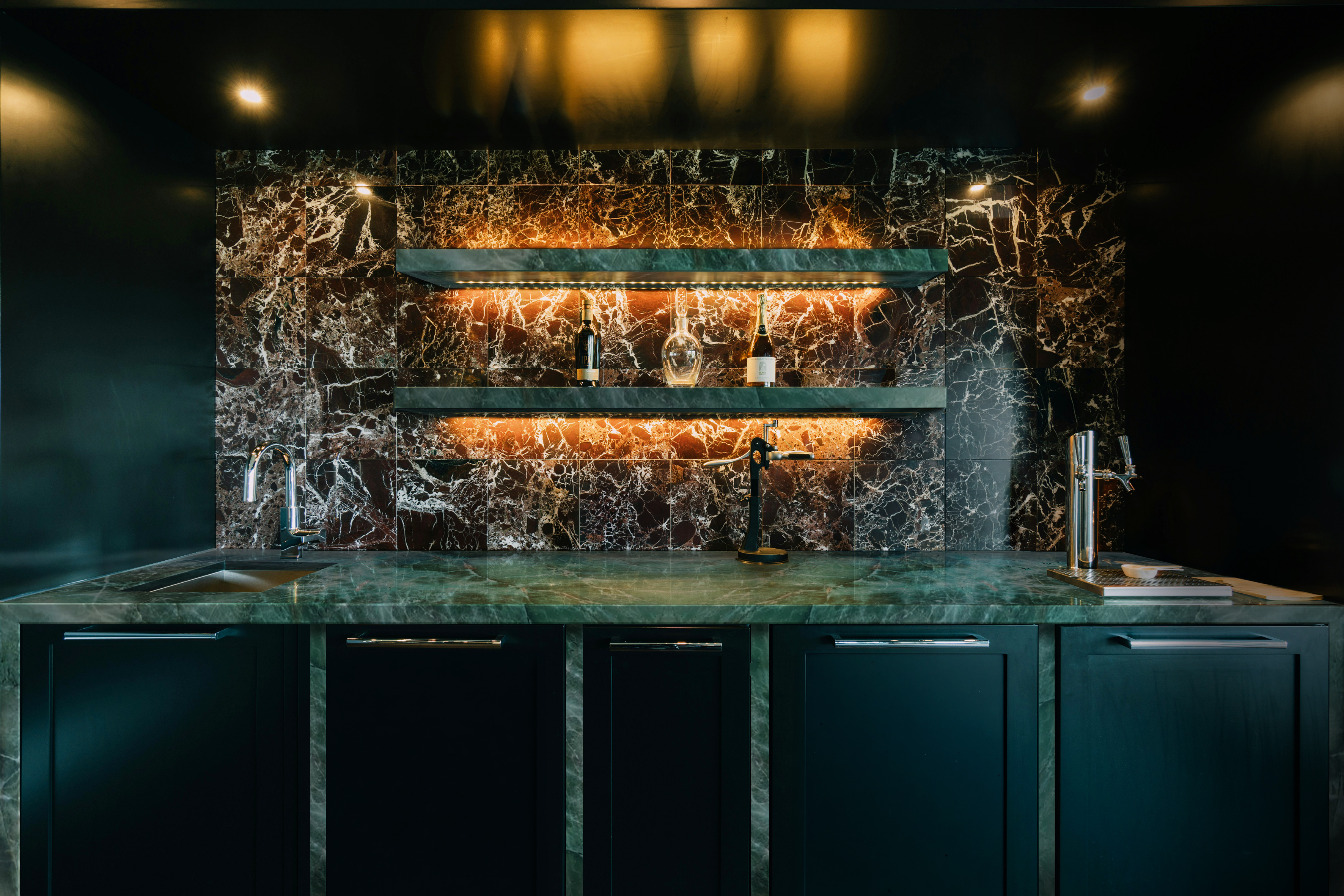
Darker stones are particularly effective in home bars. Rich green quartzites, such as Verde Cosmopolitan, introduce depth and colour, especially when paired with materials such as brass, dark timber and warm lighting. Rosso Levanto marble can bring a very different mood, with its deep red tone and pale veining creating a stronger, more dramatic effect.
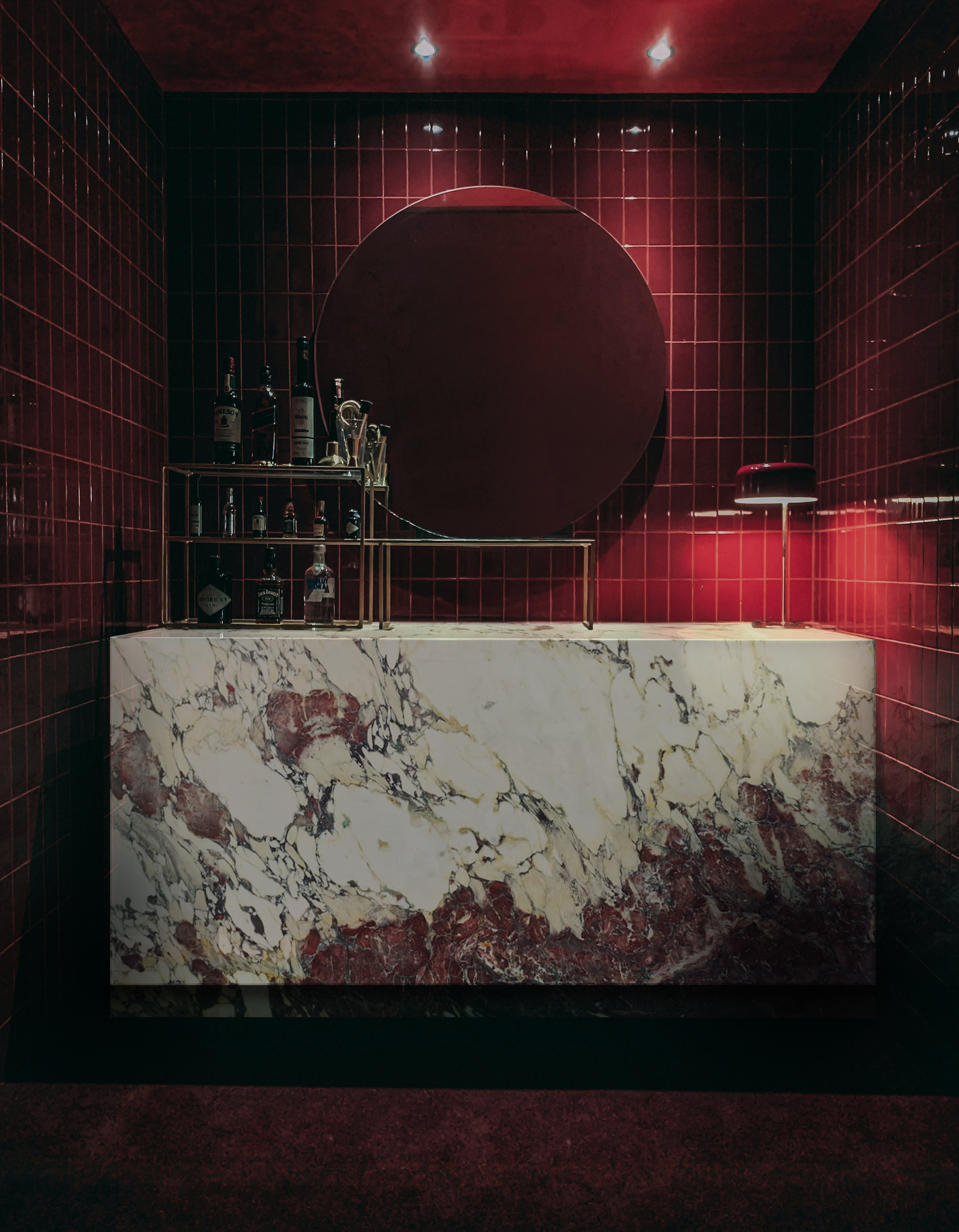
Breccia Capraia is another good option for bars where the stone needs to be the main feature. Its movement and warmer tones work well across bar fronts and waterfall islands, where the veining can continue from the top surface down the side of the unit. This gives the bar a more complete, built-in look.
For lighter spaces, Calacatta Vagli marble offers a softer alternative. Its white background and grey veining make it suitable for bars that sit within kitchens or open-plan living spaces, where the aim may be to create a feature without making the area feel too dark or separate from the rest of the room.
Then there’s the choice between natural stone and engineered surfaces, which often comes down to how the space will be used and the type of finish the client wants to achieve.
Natural stone is often selected for the individuality it brings. Each slab has its own colour variation, veining and movement, which means the finished bar feels unique. This is particularly appealing in a home bar, where people often want the space to feel personal and less predictable.
Engineered stone can be a strong alternative where consistency is important. It is well suited to larger bar tops, splashbacks and more streamlined schemes where the client wants a cleaner, more uniform appearance. It can also work well when the bar needs to sit quietly within a larger kitchen or living space.
In many cases, the most successful projects use the surface to set the tone. A smaller bar can carry a bold stone very well, because the material is being used in a more concentrated way. A larger bar or wine room may benefit from a quieter surface, particularly if it is being used across several elements.
Wine rooms are also becoming more design-led. Rather than being hidden away, they are increasingly designed as visible spaces within the home, with glass-fronted cabinetry, open shelving, tasting counters and illuminated displays.
Stone works particularly well in this setting because it provides a strong backdrop to glass, bottles, timber and metalwork. Darker marbles and quartzites can create a more intimate feel, while lighter stones can help brighten a compact room or cellar-style space.
A stone backdrop behind shelving, a tasting island or a small serving counter can make the room feel much more complete. It also creates a link between the wine room and other areas of the home, especially where the same or complementary surfaces are used in the kitchen or bar.
The most effective home bars are not always the largest either. A compact drinks station can feel just as successful when the materials are used well. Continuing stone from the worktop onto the splashback, adding a stone shelf or using an offcut for a smaller surface can give the space a more finished appearance.
Lighting is also important. Stone responds very well to warm, directional lighting, particularly where there is veining, texture or movement within the slab. Illuminated shelving, under-counter lighting or a backlit feature wall can all help bring out the character of the material.
There is also an opportunity to be practical with stone selection. A bar top needs to cope with those glasses, bottles, citrus, spills and regular use, so the finish and maintenance requirements should be discussed at the start of the project. Some clients will want a surface that develops character over time, while others may prefer something more uniform and easy to manage.
For us, the appeal of the home bar is that it gives people a place to be more expressive with stone. It does not need to match every other surface in the home. It can introduce contrast, create atmosphere and make entertaining feel more special.
As more homeowners invest in spaces designed around hosting, the home bar is becoming less about function alone and more about experience. Whether it is a full bar, a wine room or a small drinks area within a kitchen, the right surface can turn a practical space into somewhere people naturally gather.”