

News: Unwrapping 15 Years of Stone Restoration

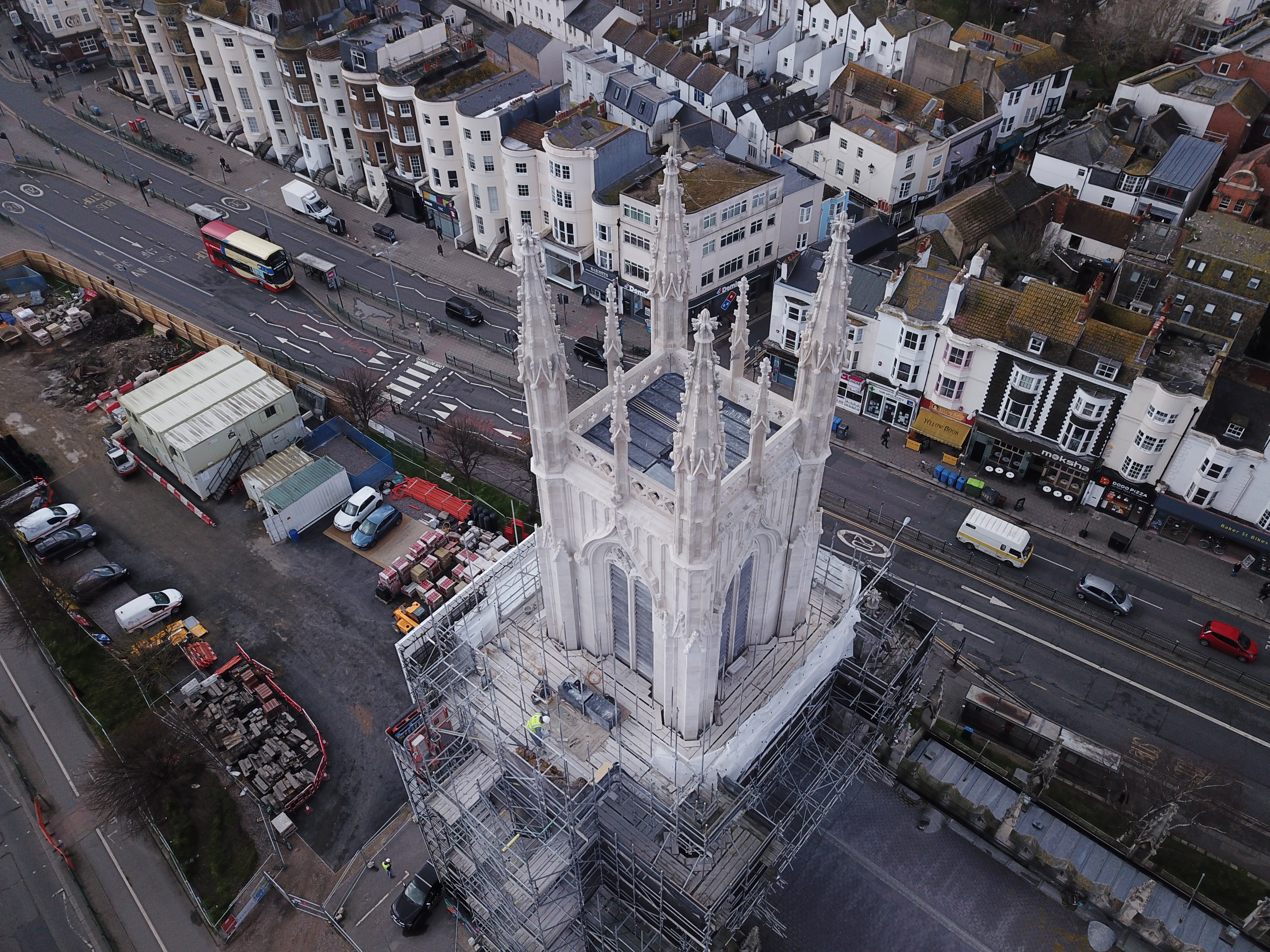
Often described locally as “Brighton’s Cathedral”, St Peter’s Church is one of the city’s most recognisable historic buildings. But as any local will testify, decades of exposure to the harsh coastal environment had left the building in a precarious condition, prompting the need for a comprehensive conservation strategy.
A 15-year programme of conservation work has secured the future of this eminent piece of architecture, following the completion of extensive stone, roof and structural repairs led by DBR (Southern) Ltd.
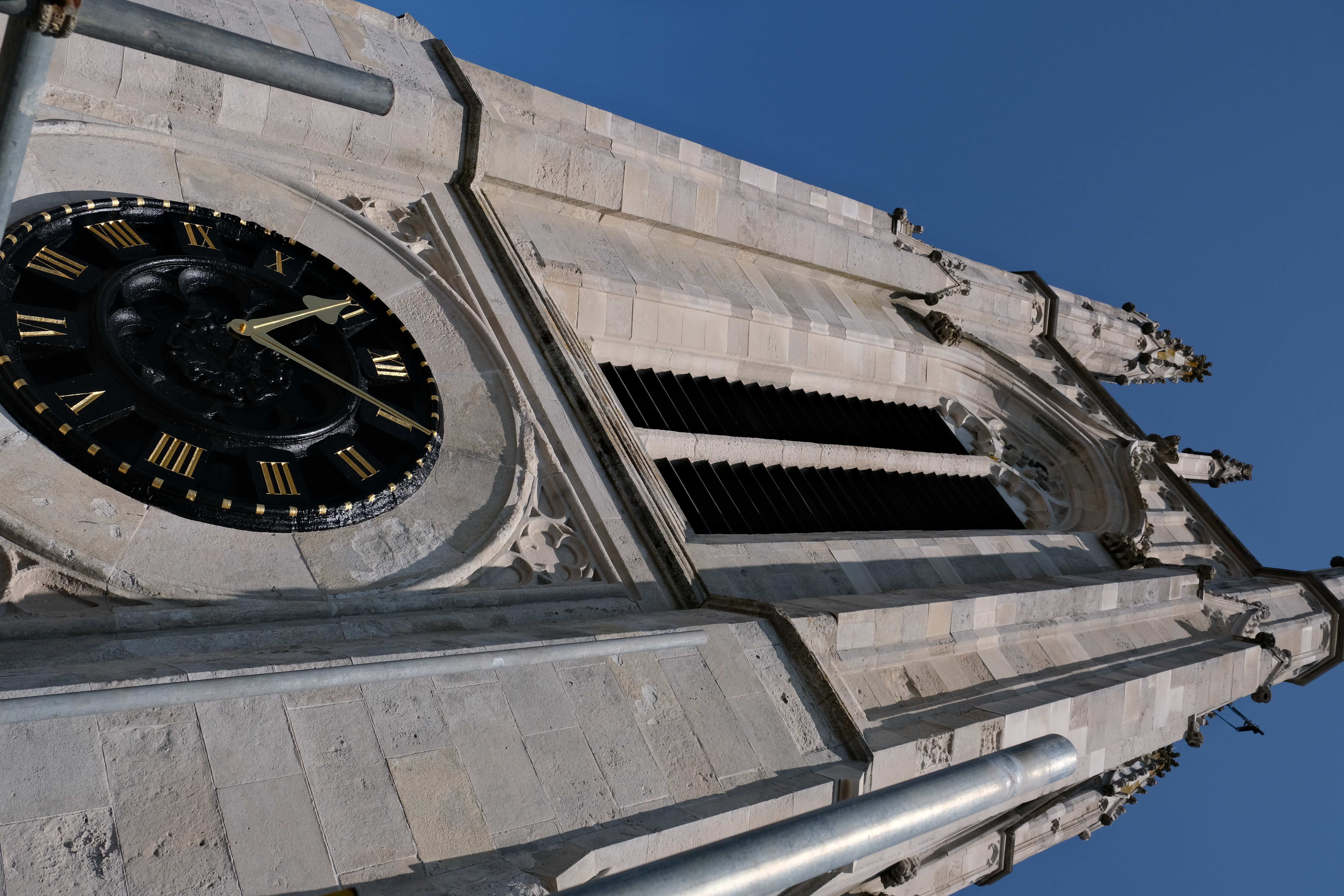
The Grade II listed church occupies a prominent position in the city, and has long been a focal point for both worship and community life. Originally built after a competition in 1824 to provide a new chapel in the Steine area, St Peter’s became Brighton’s Parish Church in 1873. DBR, a specialist contractor in historic building conservation and a recent recipient of a Royal Warrant from the King, was appointed as Principal Contractor, overseeing and delivering the multi-phased restoration programme.
When work began, the priority was to stabilise the church’s rapidly deteriorating fabric. Extensive stone erosion, failing iron cramps and water ingress from deteriorated roof coverings had combined to create serious structural risks. Its coastal proximity had accelerated corrosion and stone decay, while leaking roofs threatened internal fabric and structural integrity. Addressing these issues was critical not only to preserve the building itself but to ensure the church could continue to operate safely as a public and community space.
Early phases focused on urgent roof and structural repairs. The aisle roofs and mid-tier tower roofs were replaced in pressed zinc, incorporating modern insulation and new access hatches. Within the building, the nave roof structure was significantly strengthened using specially designed steel plates to ensure it could safely carry required loads.
Attention then turned to the church’s Portland stone façade, which demanded extensive masonry conservation. Cement-based mortars, previously used in repairs and found to be accelerating decay, were carefully removed. The building was then repointed throughout using traditional lime mortar, allowing the stonework to breathe and perform as intended.
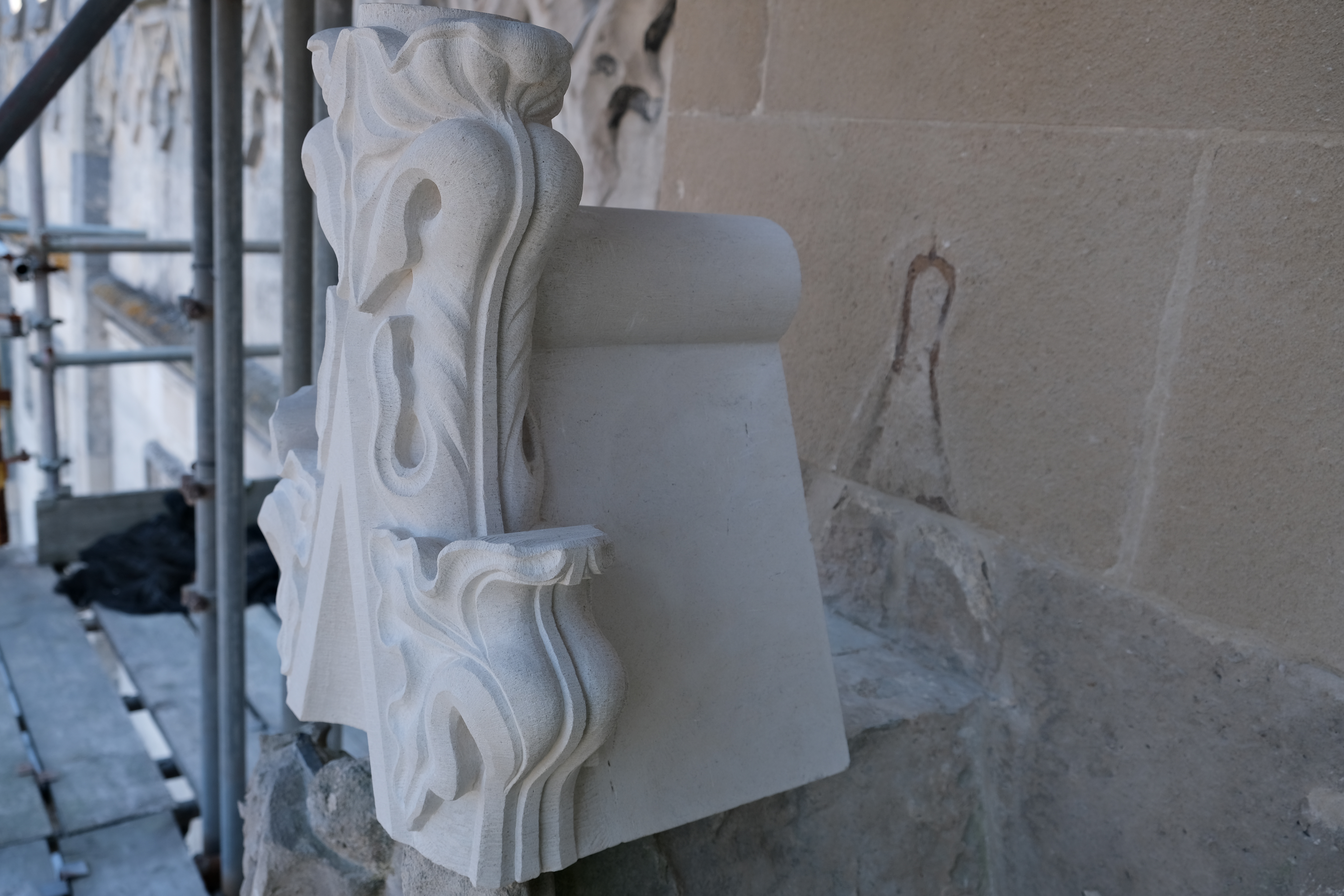
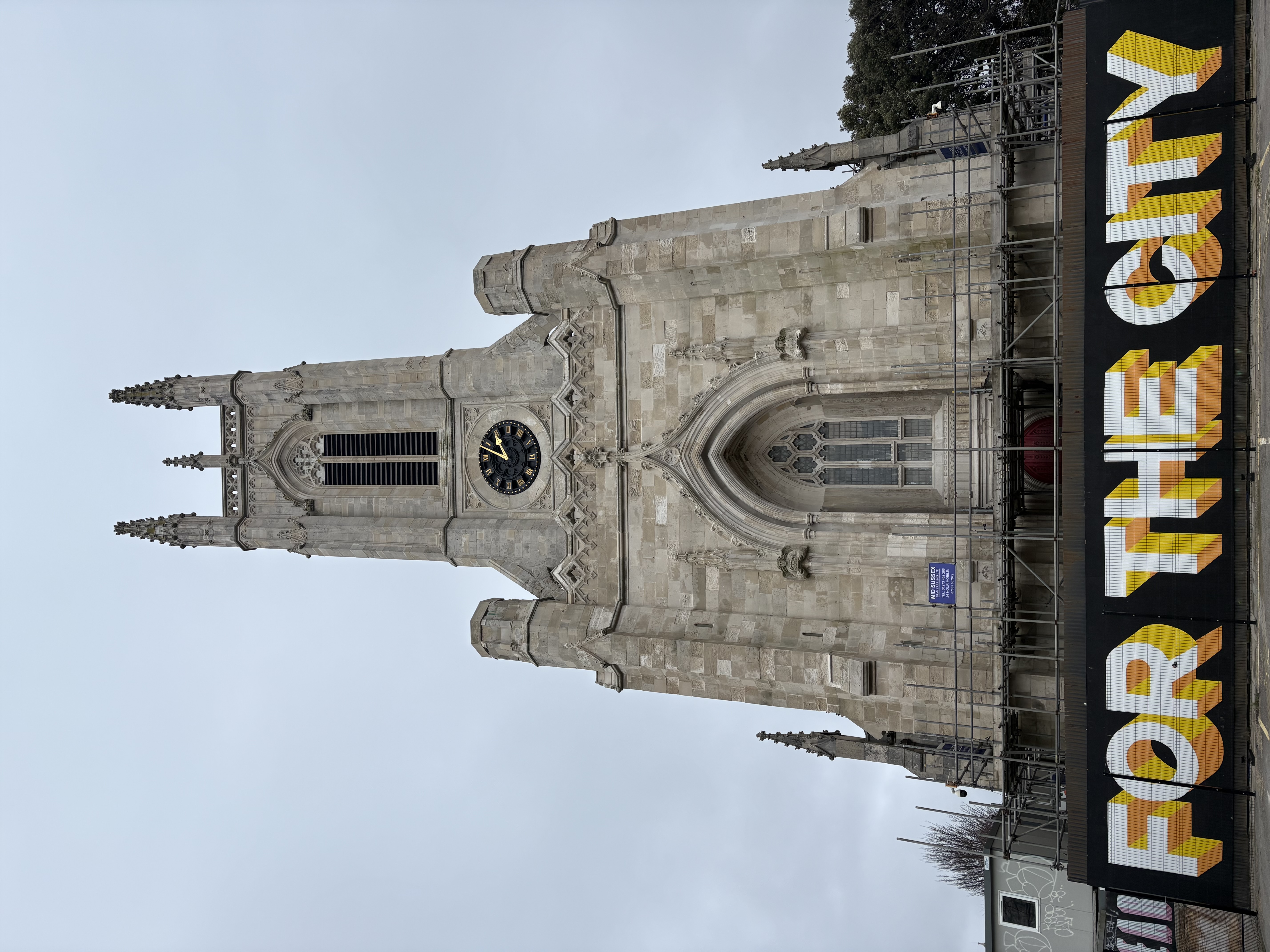
DBR’s masons also repaired numerous fractures, removed heavy accumulations of soot and stone scale, and undertook detailed on-site templating and carving to replace damaged Gothic Revival details. Such work requires a high level of craftsmanship to accurately replicate historic profiles while integrating new stone seamlessly with existing fabric. But with the scaffolding now removed, St Peter’s Church has re-emerged as a restored, elegant presence on Brighton’s streetscape.
The scale and complexity of the work required a carefully managed programme, phased over 15 years to align with successive rounds of Lottery funding. DBR coordinated and carried out the works using its in-house team of specialist craftspeople, including stonemasons, stone cleaners and metal roofers.
Reflecting on the project, Adrian Attwood ACR, Executive Director and Chairman of DBR, said: “After 15 years of working on St. Peter's Church, it is fantastic to see the scaffold finally coming down. It reveals the incredible hard work and skill of the DBR Southern team and gives this wonderful façade back to my hometown of Brighton. We are honoured to have played our part in securing the future of this remarkable building.”
The conservation works have halted long-term decay, stabilised the structure and reinstated the architectural character of one of the city’s most important historic buildings.