

Profile: Biasi Marmi

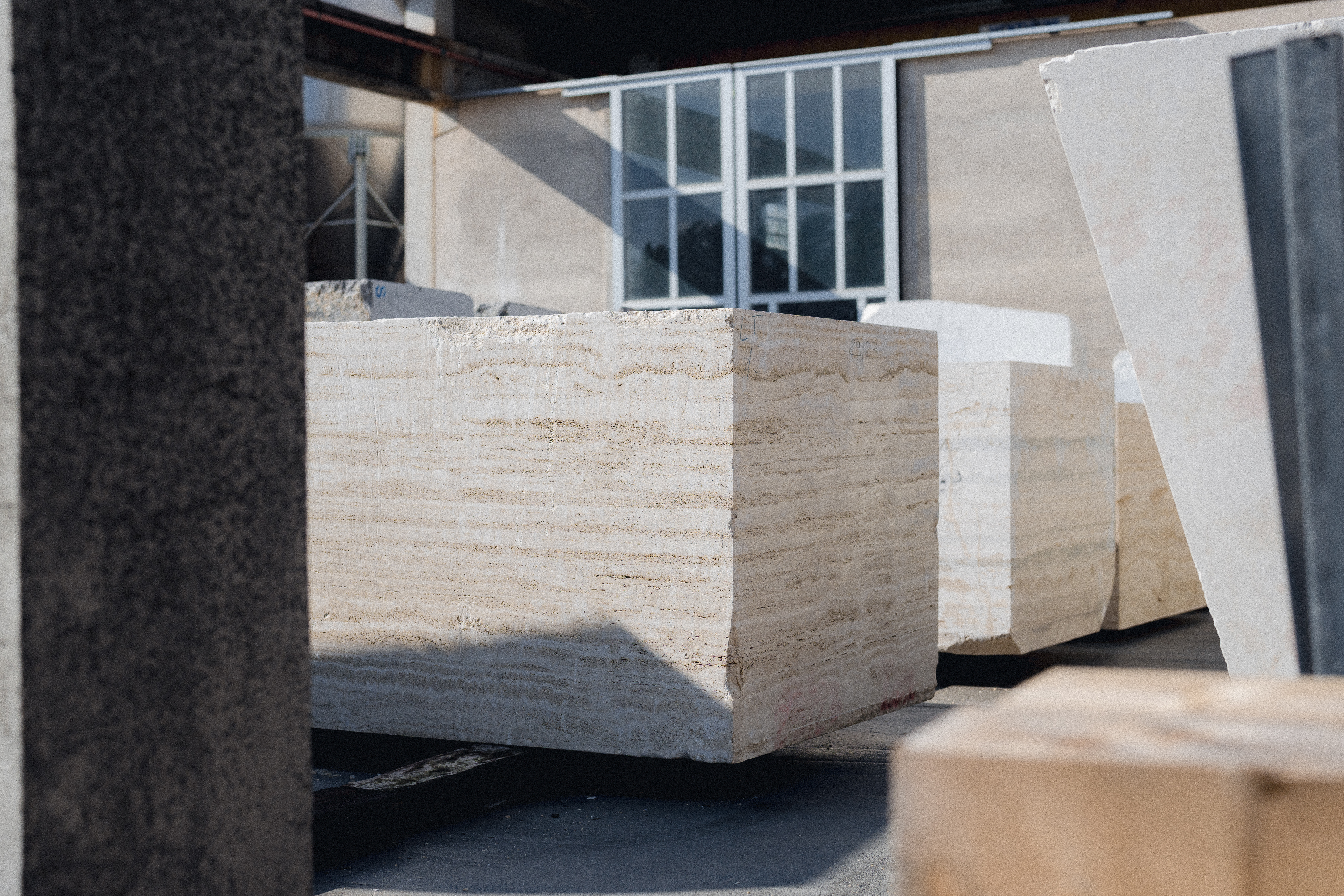
Founded in 1962 by Emilio Biasi, Biasi Marmi has spent more than six decades refining its relationship with natural stone, evolving from a traditional marble sawing operation into a contemporary producer of fully realised stone solutions. Today, under the direction of the third generation — Michele and Corrado Biasi — the Italian company represents a broader shift taking place across the stone sector: the move from raw material supply towards integrated design, fabrication and delivery.
The company’s early years were rooted firmly in block processing. Like many post-war Italian stone firms, Biasi began as a specialist in transforming quarried marble into workable slabs, serving fabricators and contractors further down the supply chain. The turning point came during the 1990s, when generational change prompted a reassessment of what a stone company could be. Rather than remaining a processor of raw material, Biasi repositioned itself as a partner capable of managing the entire lifecycle of a project, from material selection through to installation.
This transition now defines the company’s identity, and today, Biasi describes itself as a “Stone Solution” provider, reflecting a practice centred on finished products rather than intermediate supply. Its production focuses on customised architectural elements, complex surface applications and bespoke project work. Through collaboration with architects, designers and contractors, the team offers resolved outcomes for interiors, façades and shaped components.
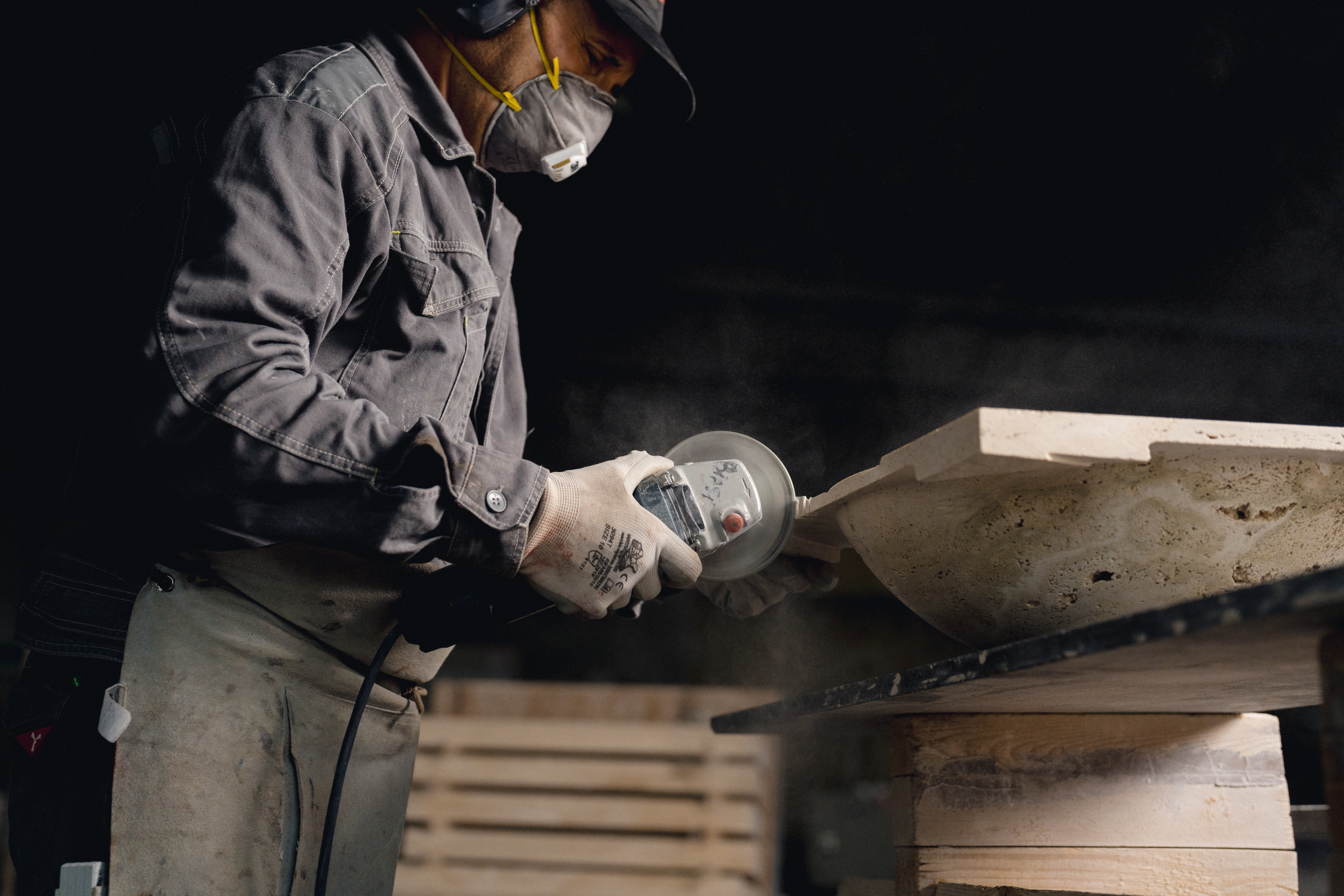
Central to this evolution is the balance between craftsmanship and technological investment. Despite its industrial expansion, Biasi continues to frame itself as an artisan company at heart. Manual knowledge, including understanding veining behaviour, structural performance and finishing techniques, remains fundamental to its approach. At the same time, the introduction of advanced machinery has expanded what that craftsmanship can achieve.
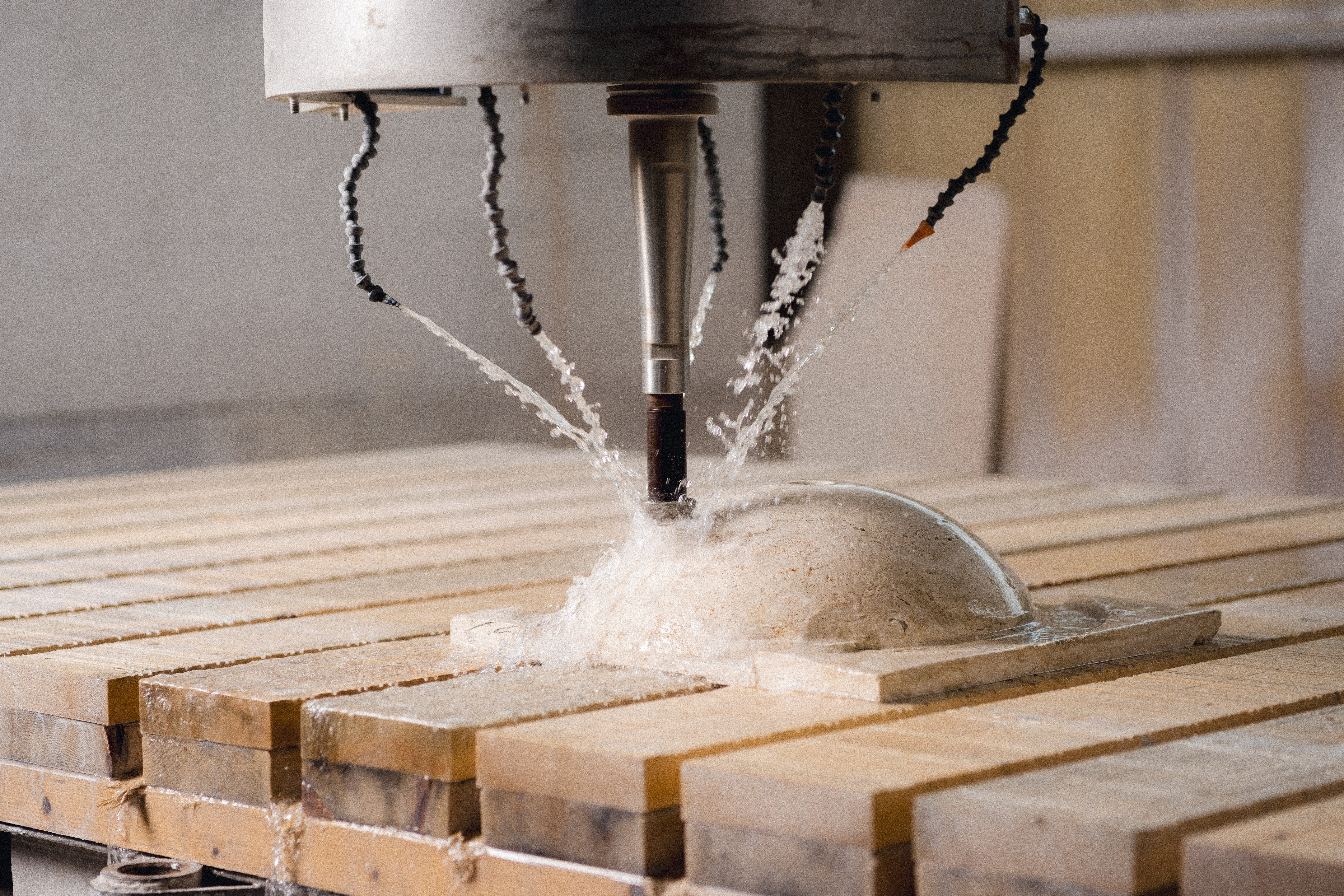
A significant milestone came in 2012 with the installation of a five-axis CNC machine, enabling complex geometries and high-precision fabrication. The technology allows natural stone to be processed with a level of consistency and efficiency aligned with contemporary architectural demands, while still retaining the material sensitivity associated with traditional Italian workshops. This merging of hand knowledge and digital production mirrors wider changes within the stone industry, where innovation increasingly enhances rather than replaces craft.
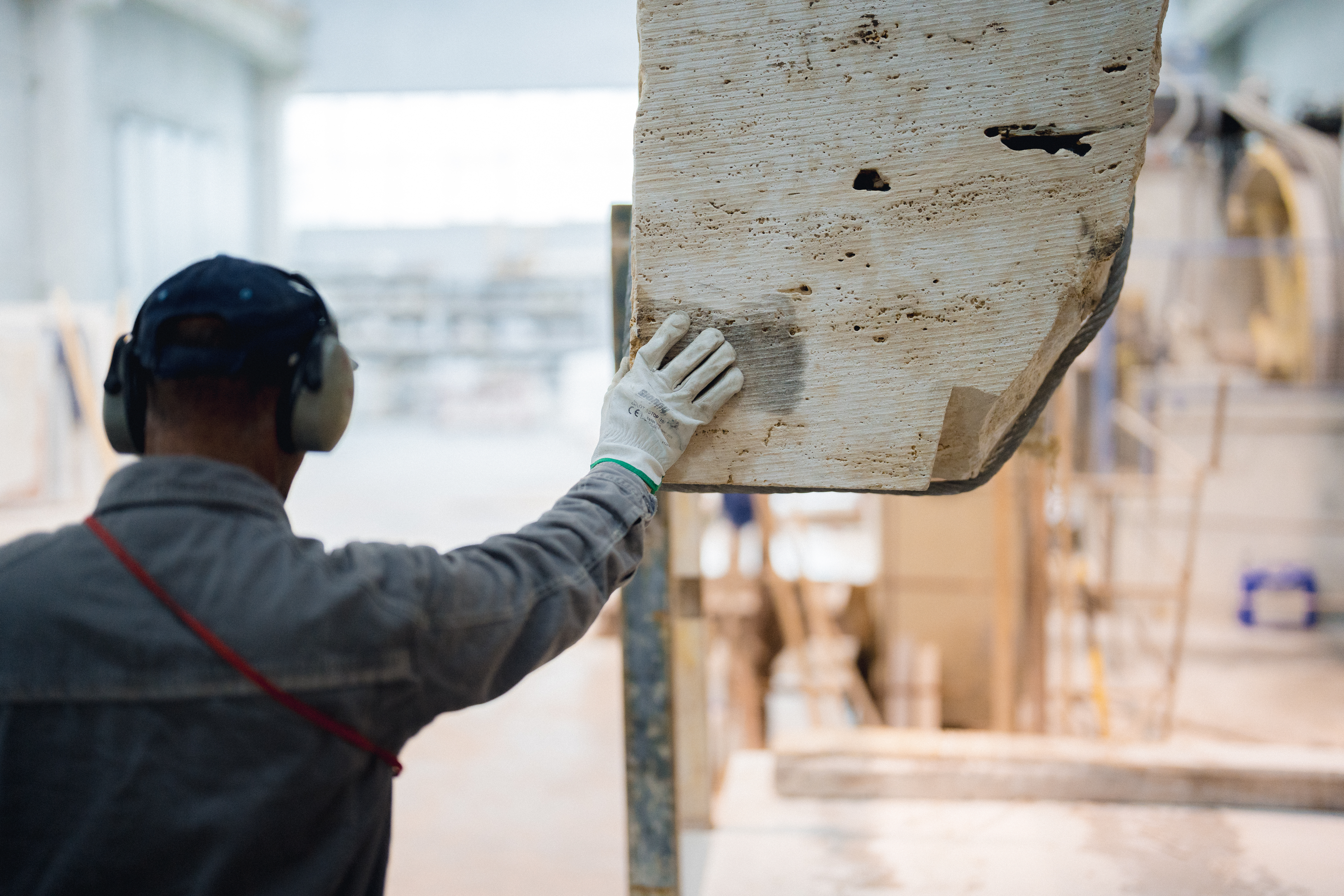
Among the materials most closely associated with the company is travertine. Biasi has developed a particular expertise in interpreting this historically familiar stone for contemporary contexts, applying modern fabrication techniques and finishes that extend its application beyond classical architecture. The result is a material language that respects tradition while accommodating current expectations around detailing, performance and aesthetic flexibility.
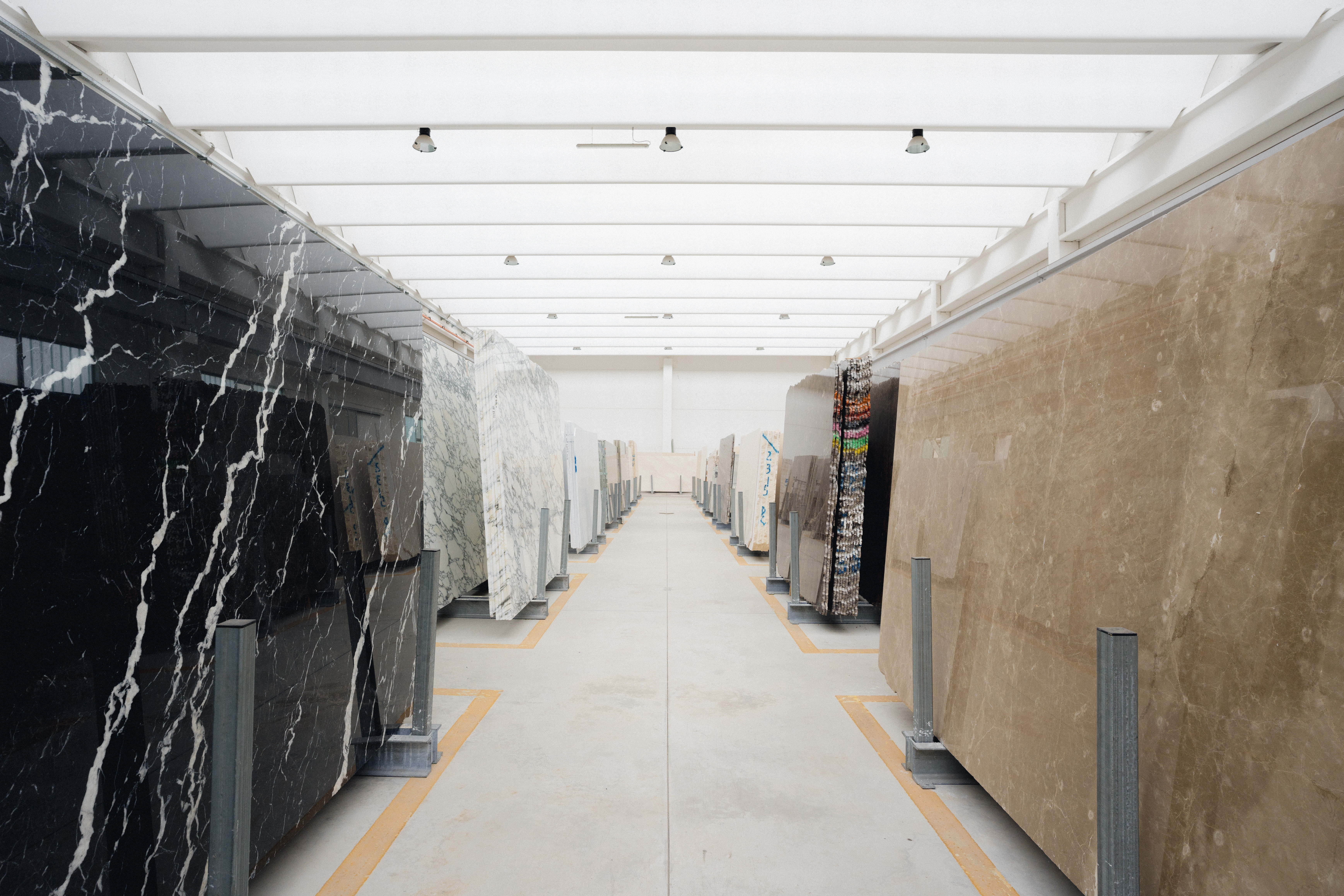
Supporting its production model is a comprehensive service structure designed to accompany projects from conception to completion. Design consultation and sampling form the starting point, with detailed analysis, surveys and mock-ups used to test material behaviour and visual outcomes before fabrication begins. A dedicated showroom allows clients to engage directly with slabs and finished surfaces, reinforcing the importance of physical selection in an increasingly digital specification environment.
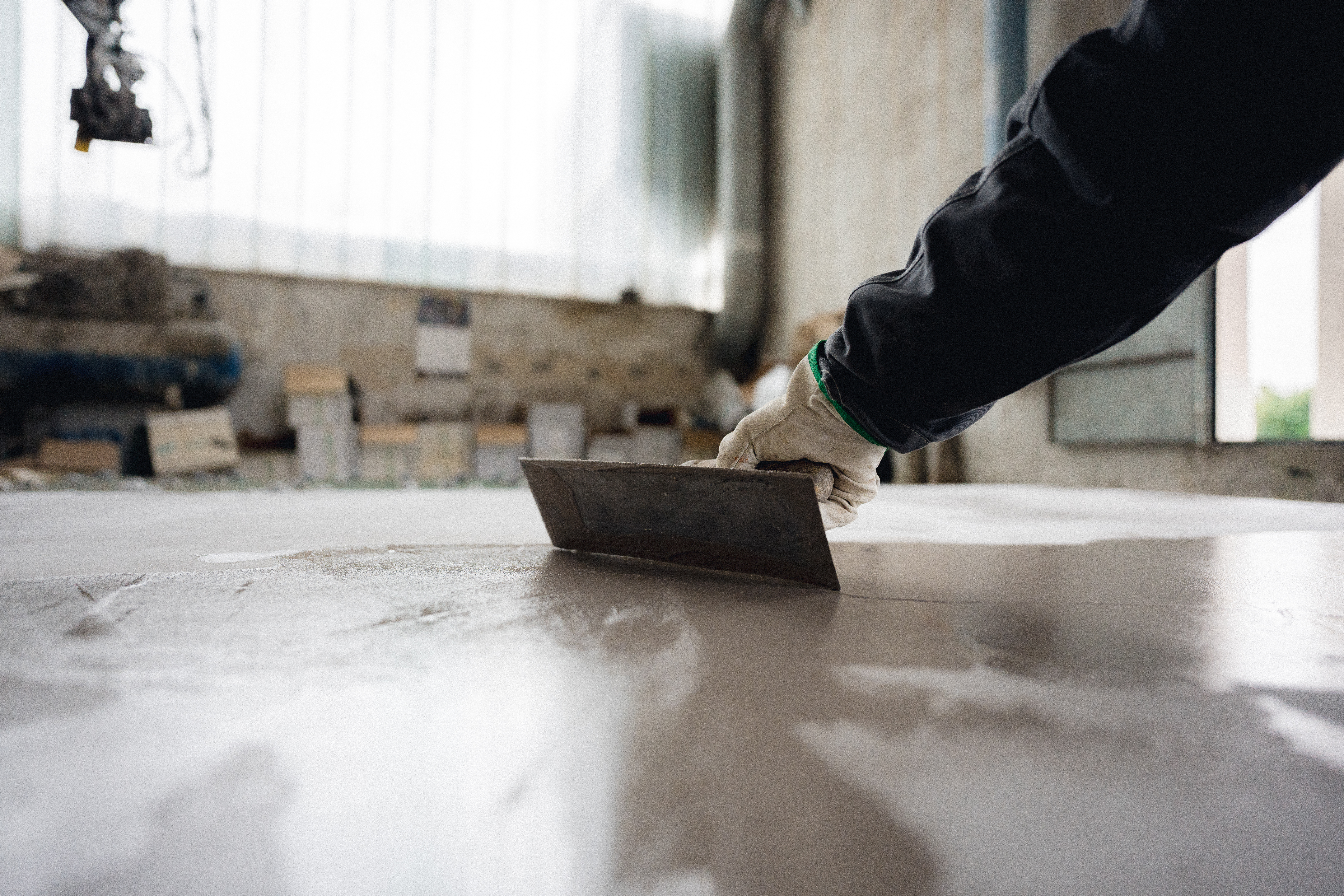
Beyond fabrication, Biasi coordinates packaging, logistics and on-site installation, positioning itself as an international ambassador for Italian stone expertise. This global outlook reflects the growing demand for integrated delivery, particularly on complex architectural projects where consistency across design, manufacture and installation is critical.
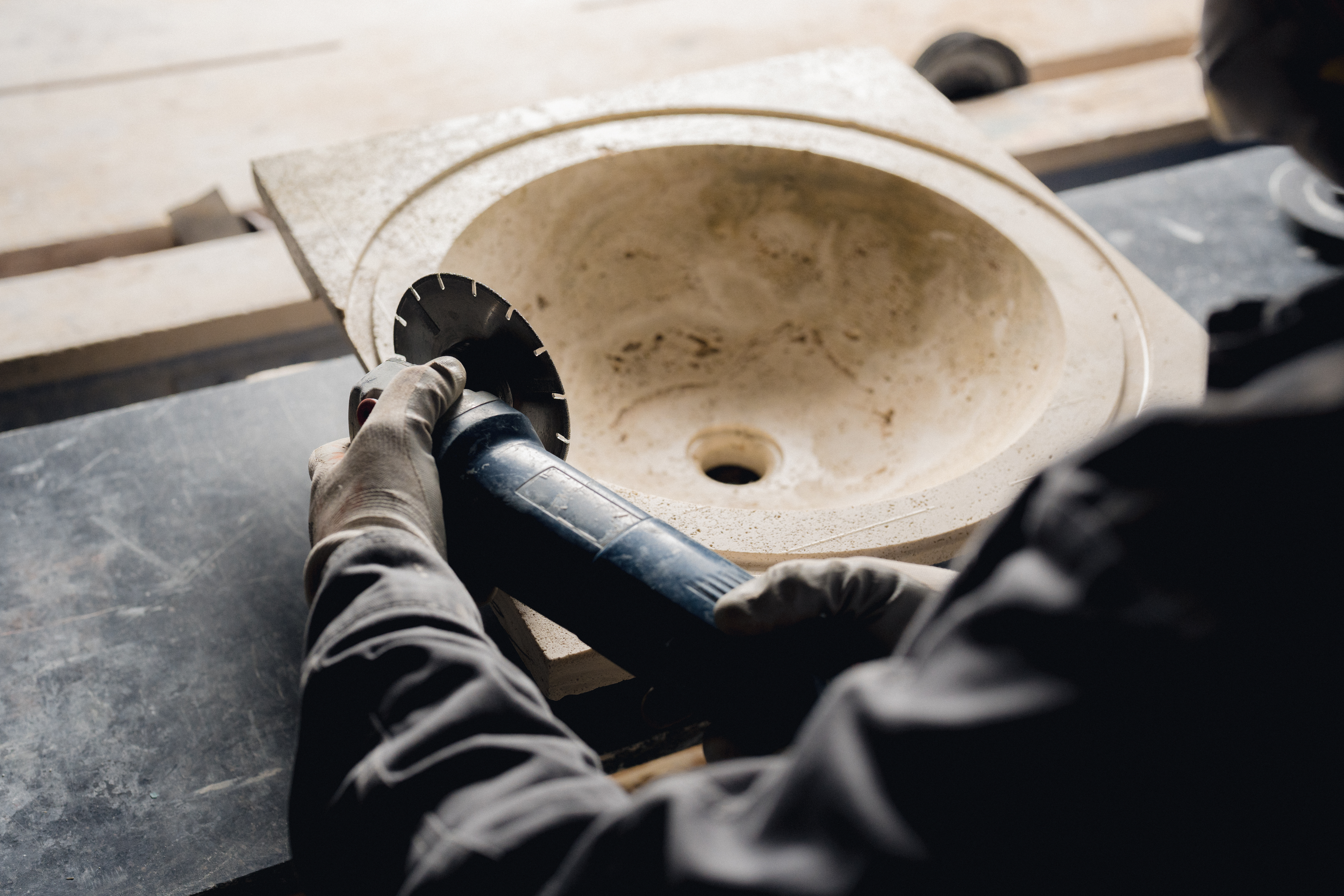
The company’s trajectory illustrates a broader redefinition of value within the natural stone sector. As architects seek greater precision, sustainability awareness increases, and projects demand tighter coordination, stone suppliers are increasingly required to operate as collaborators rather than material vendors. Biasi’s evolution from block cutter to project partner reflects this shift, demonstrating how heritage businesses can adapt without losing their identity.
More than sixty years after its founding, Biasi Marmi sees its latest phase as a “new beginning”. The company’s history remains embedded in quarry traditions and artisan knowledge, yet its future lies in a holistic understanding of material, craft and construction supported by technological innovation.