

Saqqra Rethinks the Chimney Using Stone

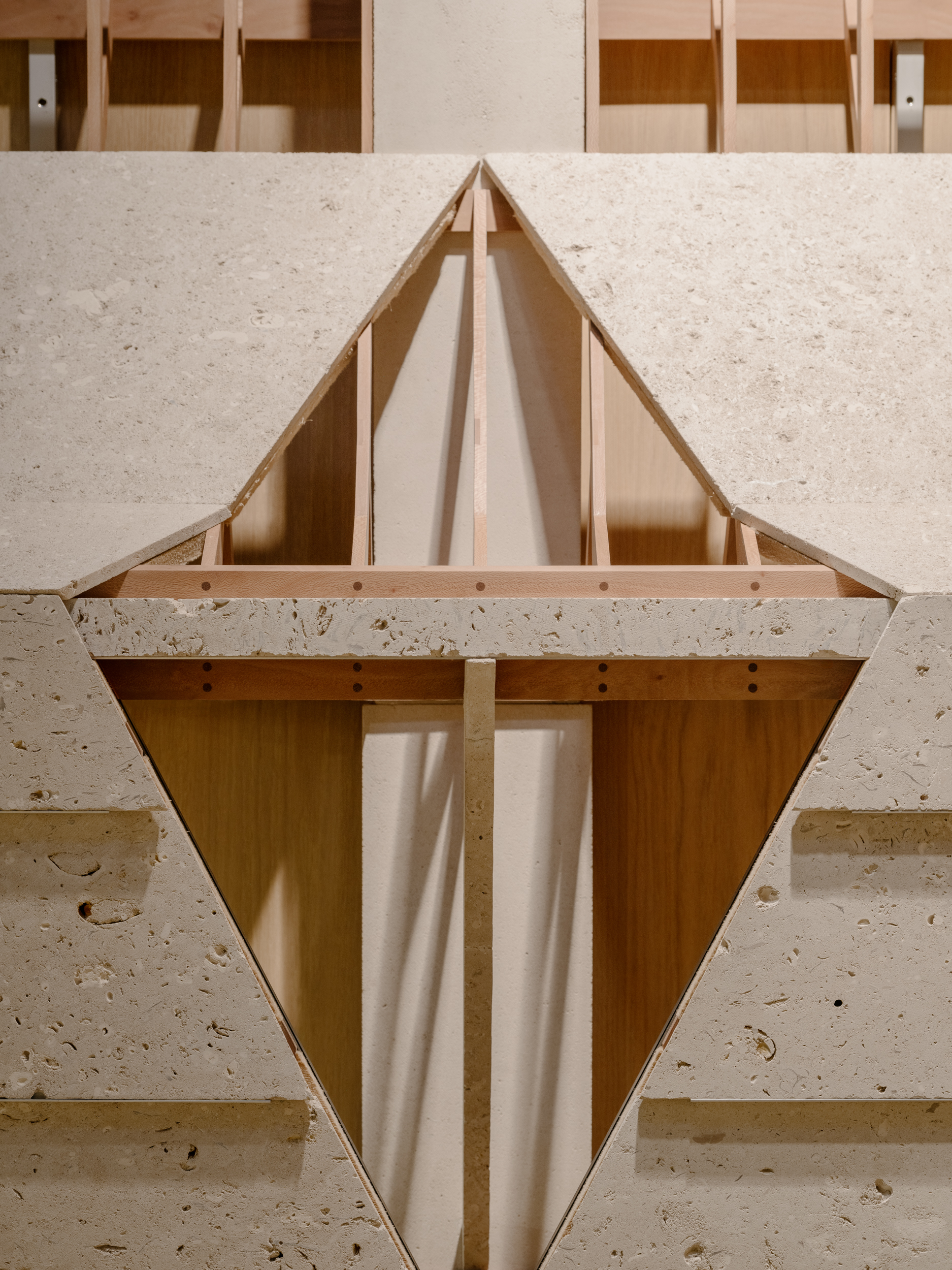
We recently reported on the Design Museum’s Tools for Transition exhibition, which explores how design innovation is helping to move the UK to a greener future. One of the four projects that make up the showing reinterprets one of the most traditional elements of the British home, the chimney, with a fresh approach to applying stone.
Historically a source of heat, Studio Saqqra’s proposal for the chimney, Hearth, reimagines it as a natural ventilation system, marking a symbolic and practical shift from heating to cooling in response to rising global temperatures. Their architectural model draws on materials developed through the Transforming Houses and Homes research programme, which is exploring sustainable retrofit solutions for 1920s council housing across the UK.
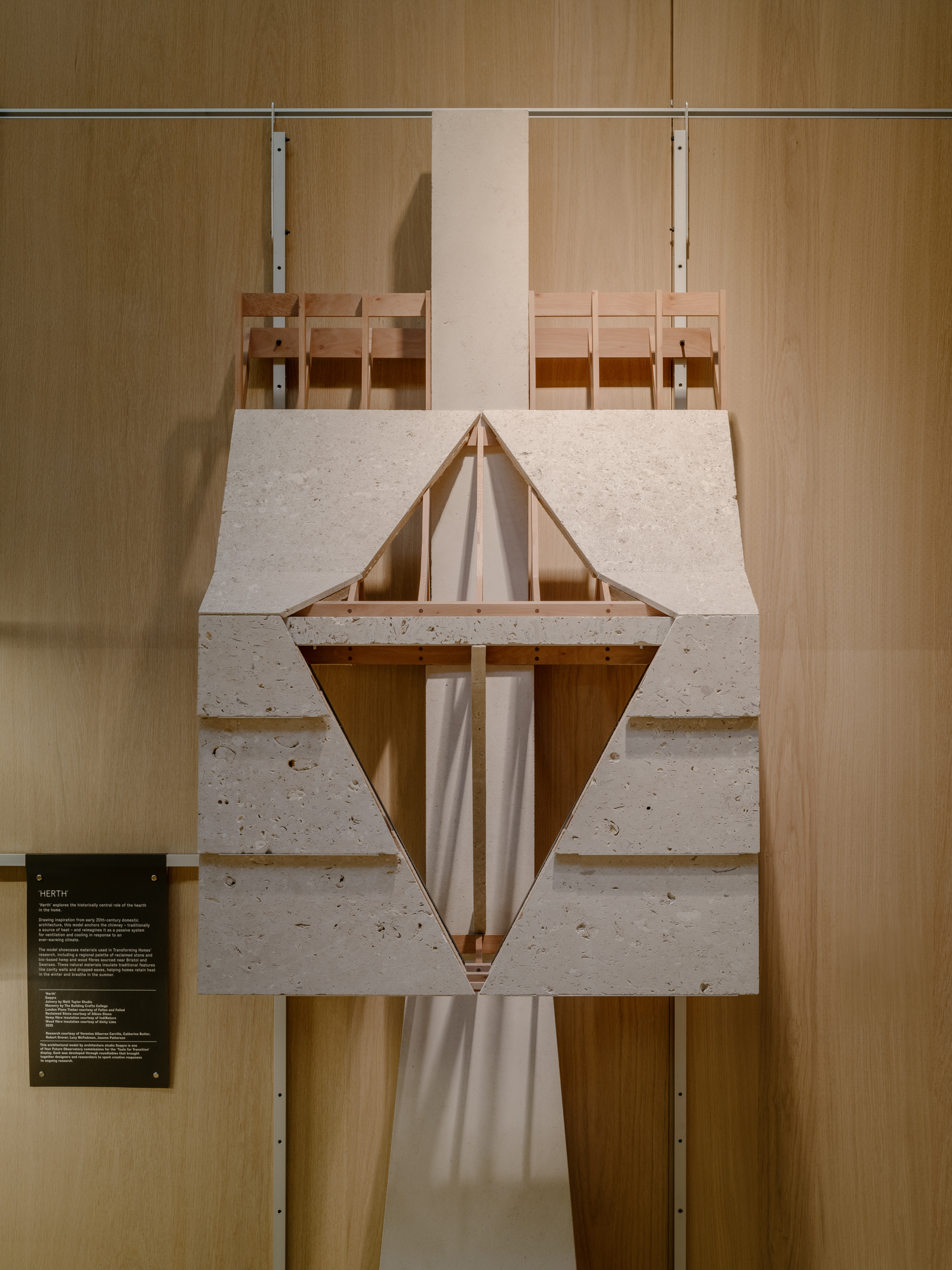
Image Credit: James Retief
Using a regional material palette, the project combines reclaimed stone with bio-based hemp and wood fibres to demonstrate how traditional and modern materials can work together to improve energy performance. The stone, repurposed from offcuts supplied by Albion Stone, references the architectural character and craftsmanship of early 20th-century housing, while the bio-based insulation materials provide enhanced thermal and moisture regulation.
The primary elements of the model, consisting of chimney, roof and facade, are each sourced from a different bed within the geological strata of the same stone. Deeper beds with more resilient stone are used to fulfil a structural purpose, while beds closer to the top and to recent history in geological time inform the construction of a lightweight roof and skin. The stepped expression of the facade makes use of an overlap detail that references traditional render drop details, translated to stone and at once protecting the fragile edges of this delicate stone.
The reimagined chimney showcases the role of passive stack ventilation, using natural air movement through vertical ducts to improve indoor air quality, working in tandem with insulated cavity walls and eaves to maintain comfortable interior temperatures. Together, these interventions address long-standing issues of damp, mould, and poor energy efficiency common in older housing stock.

Image Credit: James Retief
Developed through roundtables and co-design workshops with local residents, researchers, and industry professionals, the Transforming Homes initiative focuses on adapting council-built homes from the 1920s to 1940s, particularly in Bristol and Swansea. With over 1.4 million of these homes still occupied across the UK, the research aims to future-proof existing housing stock for changing climates while maintaining their cultural and architectural integrity.
By grounding the design in local supply chains and material reuse, the project demonstrates how regionally sourced stone and bio-based materials can support both sustainability and heritage goals. It’s hoped that their findings will inform national housing policy and influence best practices in retrofit design, from restoring historic homes to setting standards for more sustainable new builds.