

Surface Spot: Dekiln and the Search for Kiln-Free Ceramics

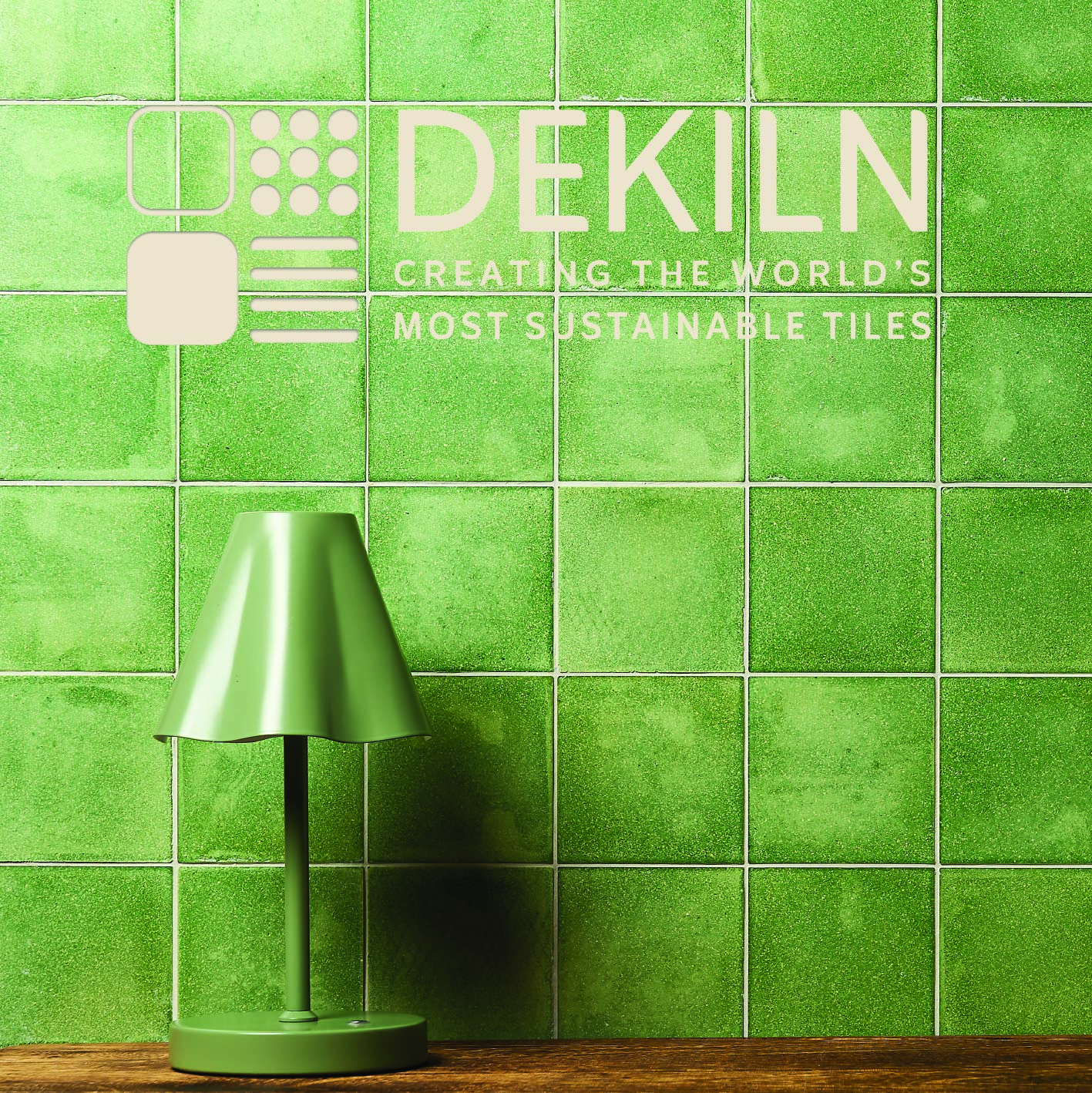
As the surfaces sector undergoes a slow but significant shift towards reduced embodied carbon, UK materials technology company Dekiln is developing a kiln-free alternative to conventional ceramic tiles and, with it, replaces high-temperature firing with a low-energy, bio-based manufacturing process.
The starting point for Dekiln is a fundamental rethink of what a tile actually is. Rather than relying on traditional clay bodies and energy-intensive kilns, the company has developed a patented composite material that mimics many of the visual and performance characteristics of ceramics without the need for sintering or glazing. The result is a tile-like material formed at ambient temperatures, using a combination of plant-derived binders and finely processed waste mineral streams, including recycled gypsum plaster.

In environmental terms, the implications are significant, with the material achieving a reduction in embodied carbon of up to 94% compared with conventional ceramic tiles, while also incorporating more than 95% recycled content. For an industry where firing kilns remain one of the most energy-intensive stages of production, the removal of high-temperature processing represents a fundamental shift in how surface materials can be made.
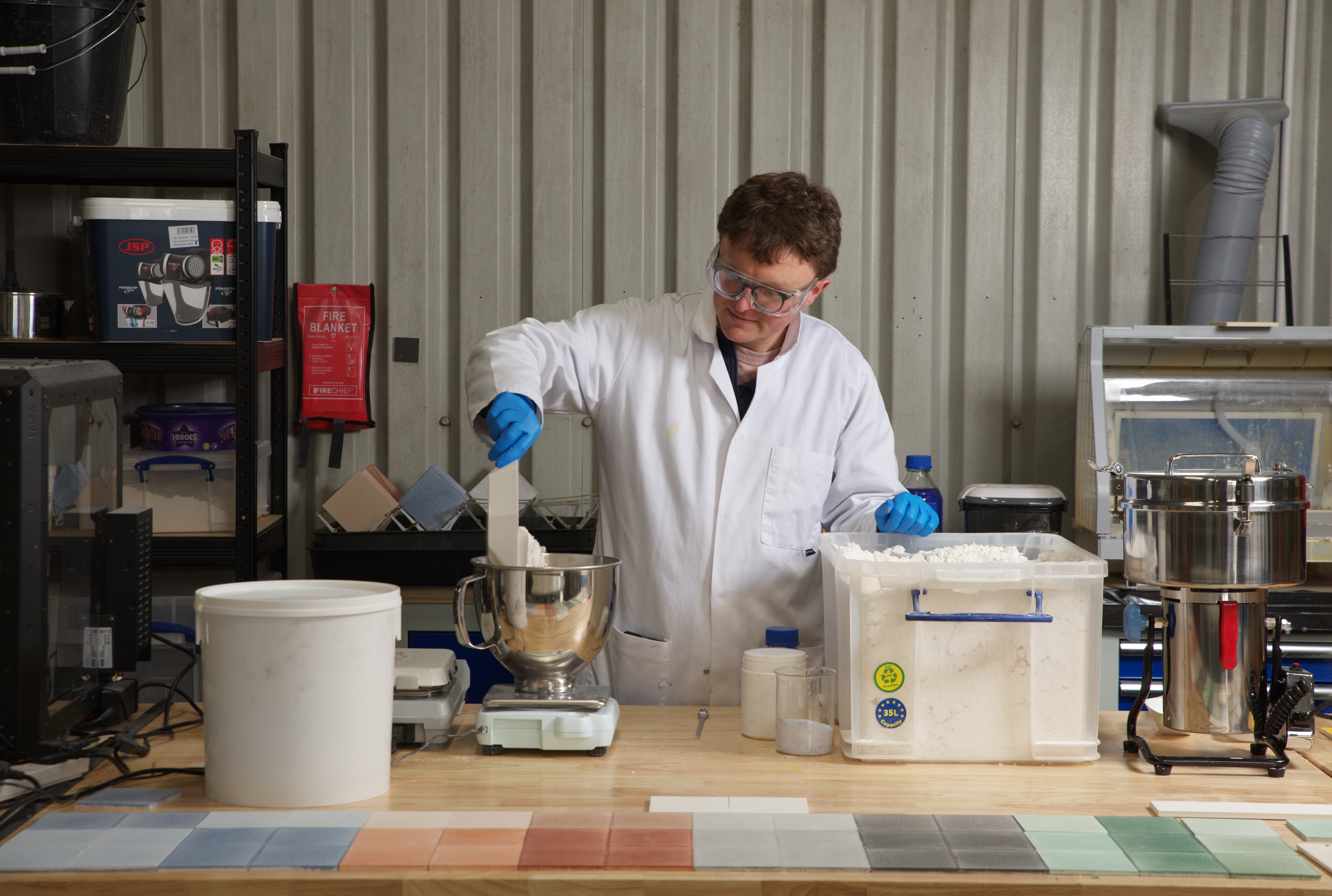
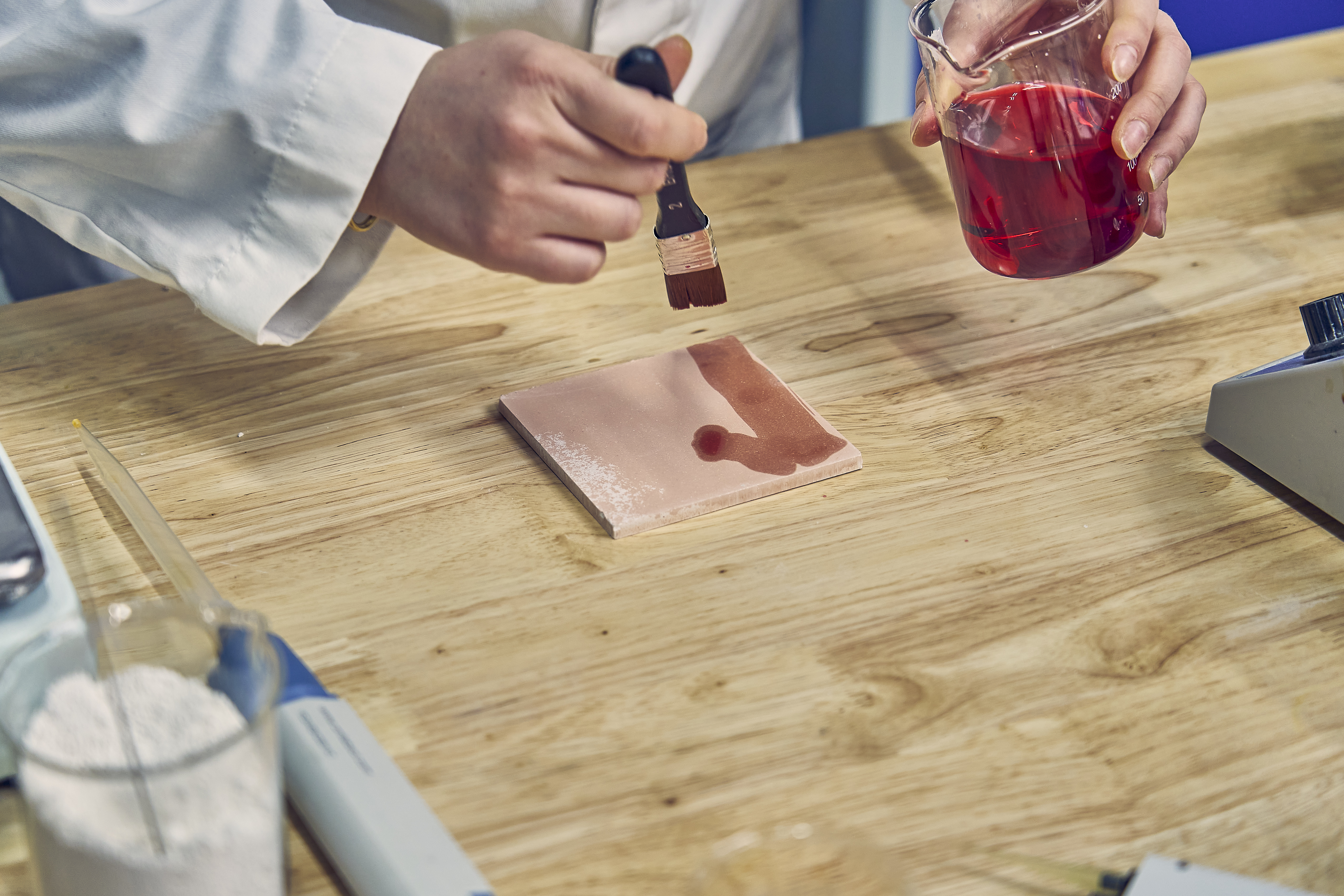
Dekiln’s approach sits at the intersection of materials science and circular economy thinking. Waste streams that would typically be downcycled or discarded are instead re-engineered into a new composite matrix, where plant-based binders act as the structural glue. Once cured, the material behaves in a way that is intentionally familiar to specifiers: it can be cut, installed and finished using processes broadly aligned with standard tile workflows, allowing adoption without wholesale changes to installation practice.
While the material itself is central to the story, the company’s trajectory is equally defined by its move from research into industrial application. Founded by materials scientist Dr Aled Roberts, Dekiln has emerged from an academic and laboratory environment into a commercial phase supported by both funding and industry collaboration. Roberts was awarded the Royal Academy of Engineering’s Green Future Fellowship, securing £3 million in support for continued development and scale-up.
That transition is now being accelerated through a partnership with Johnson Tiles, one of the UK’s leading tile manufacturers. The collaboration is focused on scaling Dekiln’s technology for commercial interiors, combining the start-up’s low-carbon material innovation with Johnson Tiles’ manufacturing capability, technical expertise and established market reach.
“This marks an important milestone for Dekiln as we transition from the laboratory to industrial scale manufacturing,” says Dr Roberts. “Johnson Tiles’ technical expertise, market reach and sustainability focus makes them an ideal partner to support our ambition to scale-up and commercialise our technology.”

From Johnson Tiles’ perspective, the partnership reflects a broader shift within the ceramics industry towards alternative production methods that retain material familiarity while significantly reducing environmental impact. As Jason Bridges, Procurement Director at Johnson Tiles, notes, the Dekiln approach challenges conventional assumptions about what is required to achieve ceramic-like performance.
“Aled’s fresh thinking on solving the recycling of waste alongside removing the sintering process to create a product with all the performance and aesthetic qualities of traditional tiles without anywhere near the embodied carbon is a real game-changer,” he says. “It aligns perfectly with Johnson Tiles’ sustainable thinking.”

Alongside technical development, the two companies are also exploring the potential for a pilot or demonstration manufacturing facility in Stoke-on-Trent - a location deeply associated with Britain’s ceramic heritage. The symbolic value of situating a next-generation tile technology within the historic heartland of kiln-fired production is not lost on the partners, particularly as the industry reassesses the future of energy-intensive manufacturing.