

Surface Spot: Excess Stone Gets a New Lease of Life

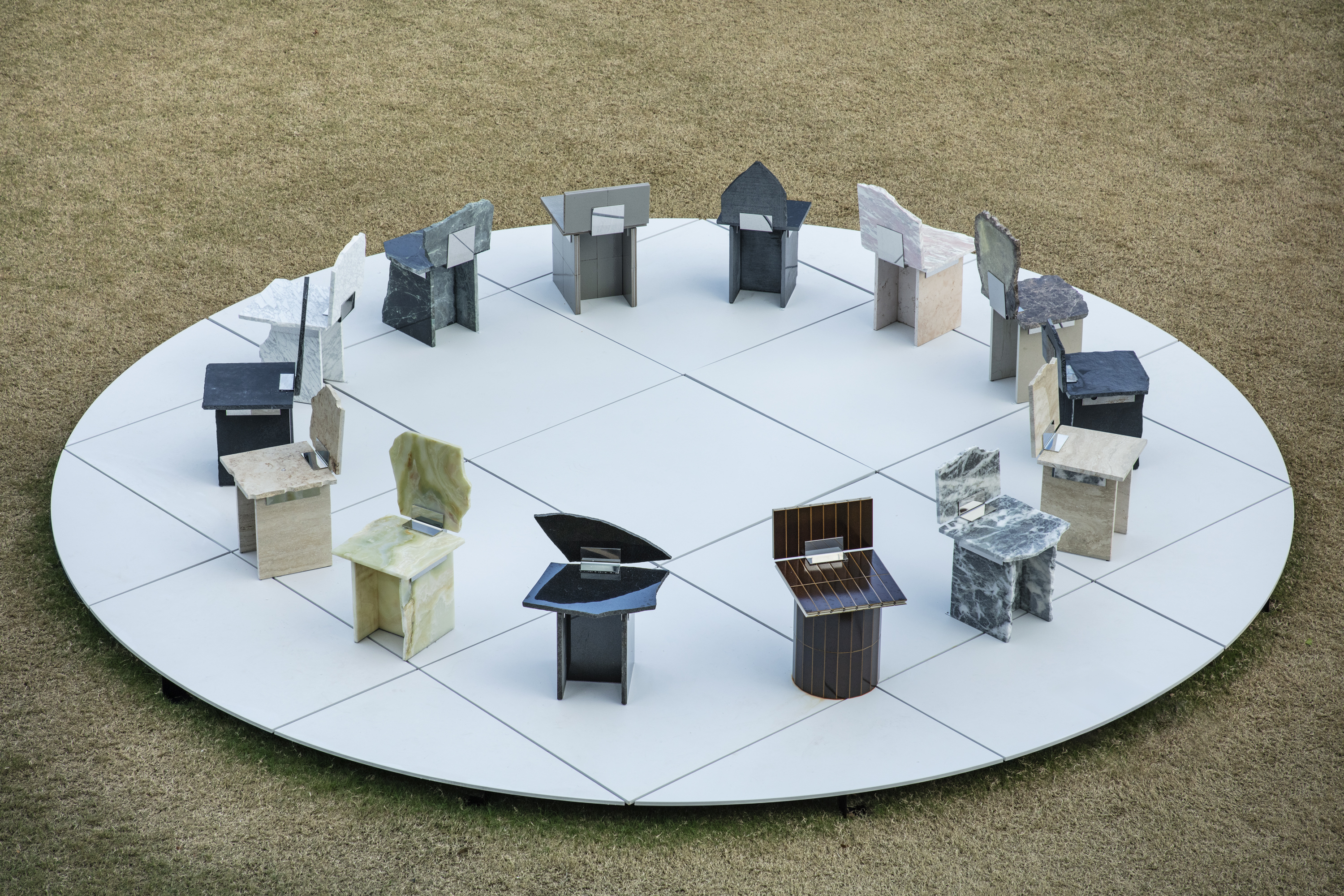
As we continue to report, designers are increasingly exploring circular approaches to material use and attention is shifting beyond recycling towards the overlooked byproducts of construction itself. Japanese architecture and design practice AtMa approaches this question through SUR+PLUS, a stone-led furniture system that reconsiders surplus materials not as waste, but as resources capable of forming new objects while retaining their individual histories.
Founded in Tokyo, AtMa works across architecture, interiors and product design, with a practice centred on the relationship between materials, making and spatial experience. Rather than pursuing uniformity, its projects often examine how existing materials and construction systems can be adapted to generate new forms and uses.
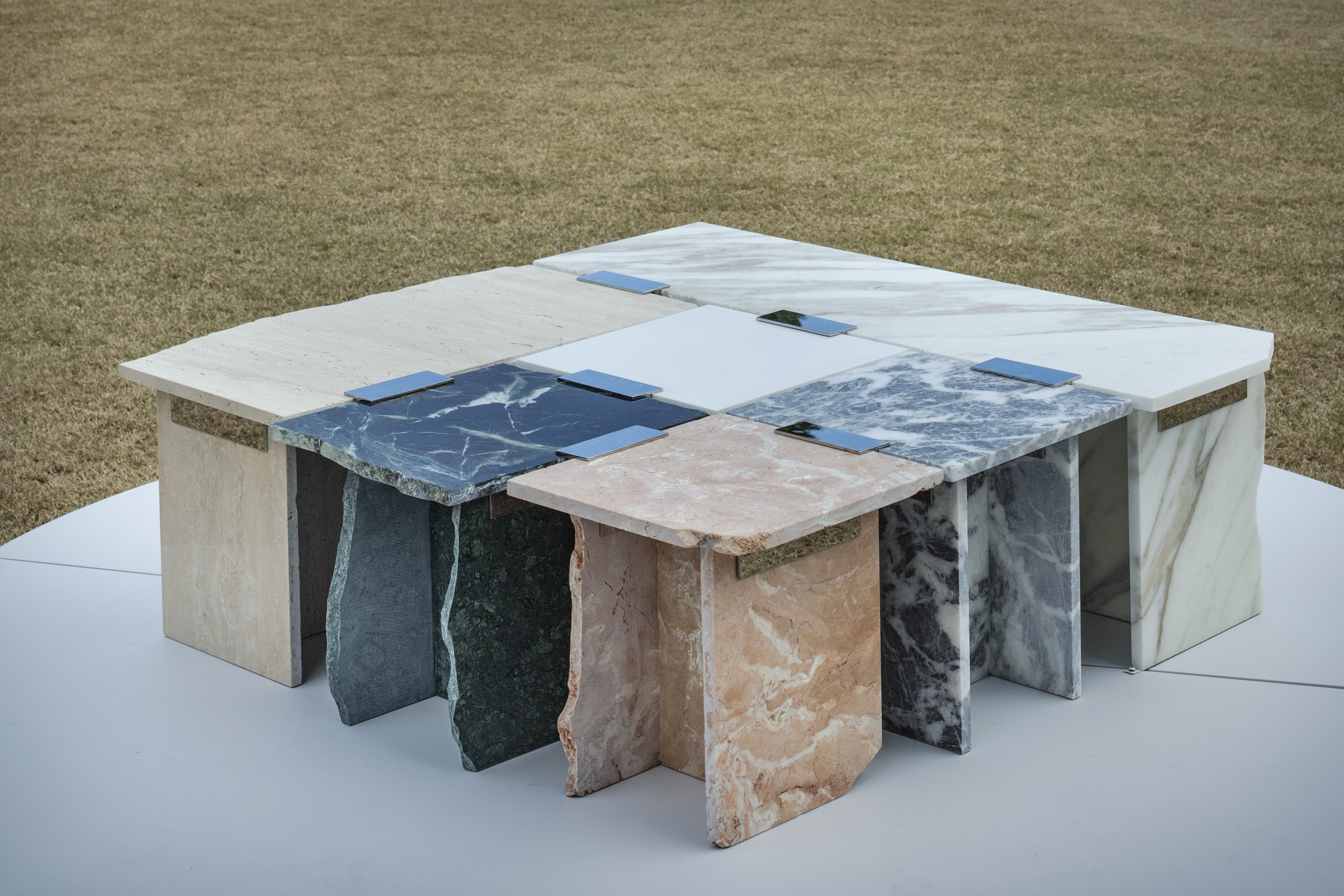
SUR+PLUS addresses a familiar consequence of interior fit-out and construction. Ordering materials with an additional margin has long been standard practice, allowing for breakages, design changes and installation tolerances. The result is an inevitable accumulation of unused stone, timber, tiles and other finishes that often remain without a purpose despite retaining their material value.
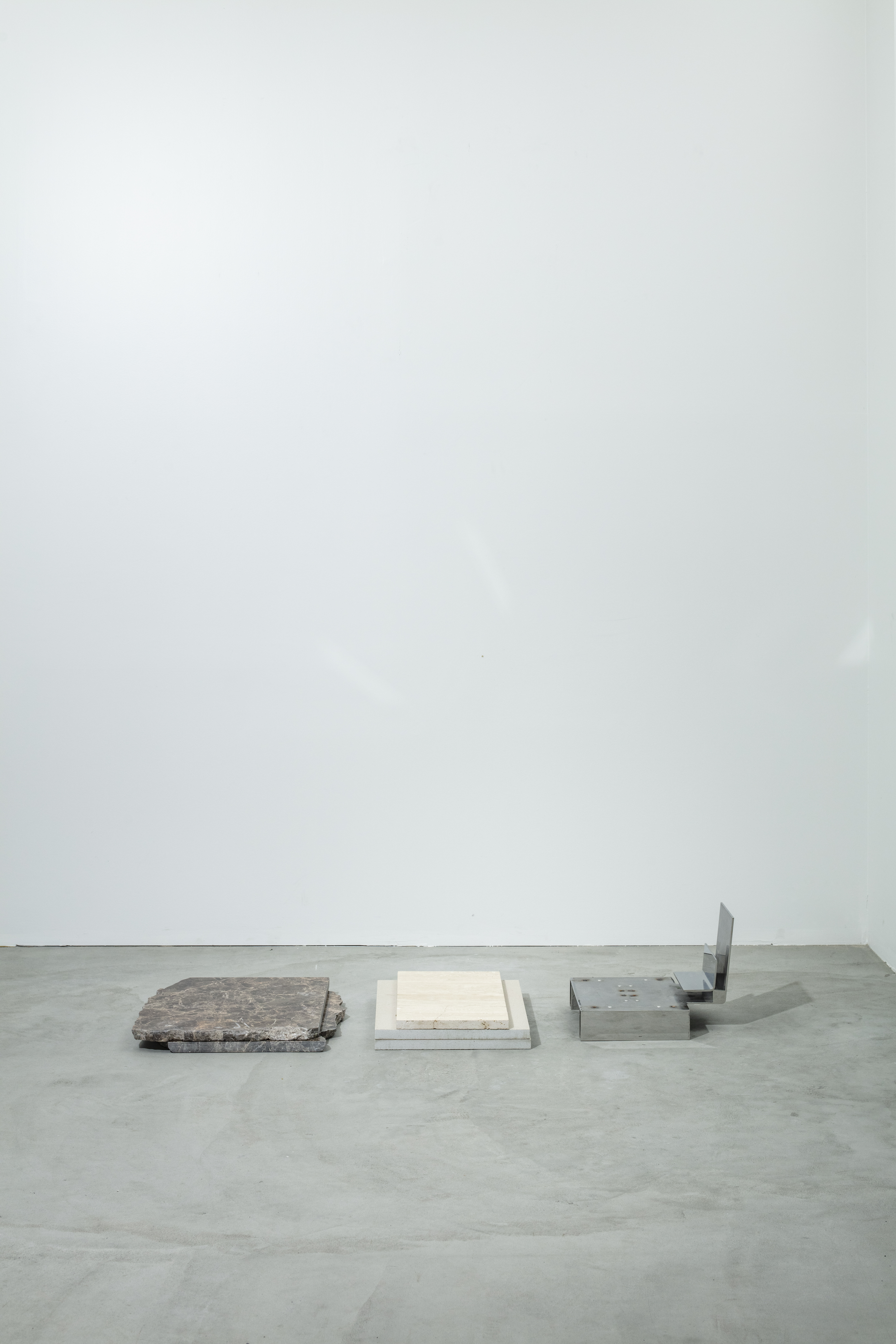
Rather than reprocessing these remnants, AtMa proposes a system that accepts them in their existing condition. Offcuts of stone, timber, ceramic tile and carpet are inserted together into specially designed joint components, allowing them to become the structural elements of chairs without cutting or reshaping new material. Seats, backs and legs emerge from fragments of differing thicknesses, textures and dimensions, each preserving the qualities that distinguished it in its previous application.
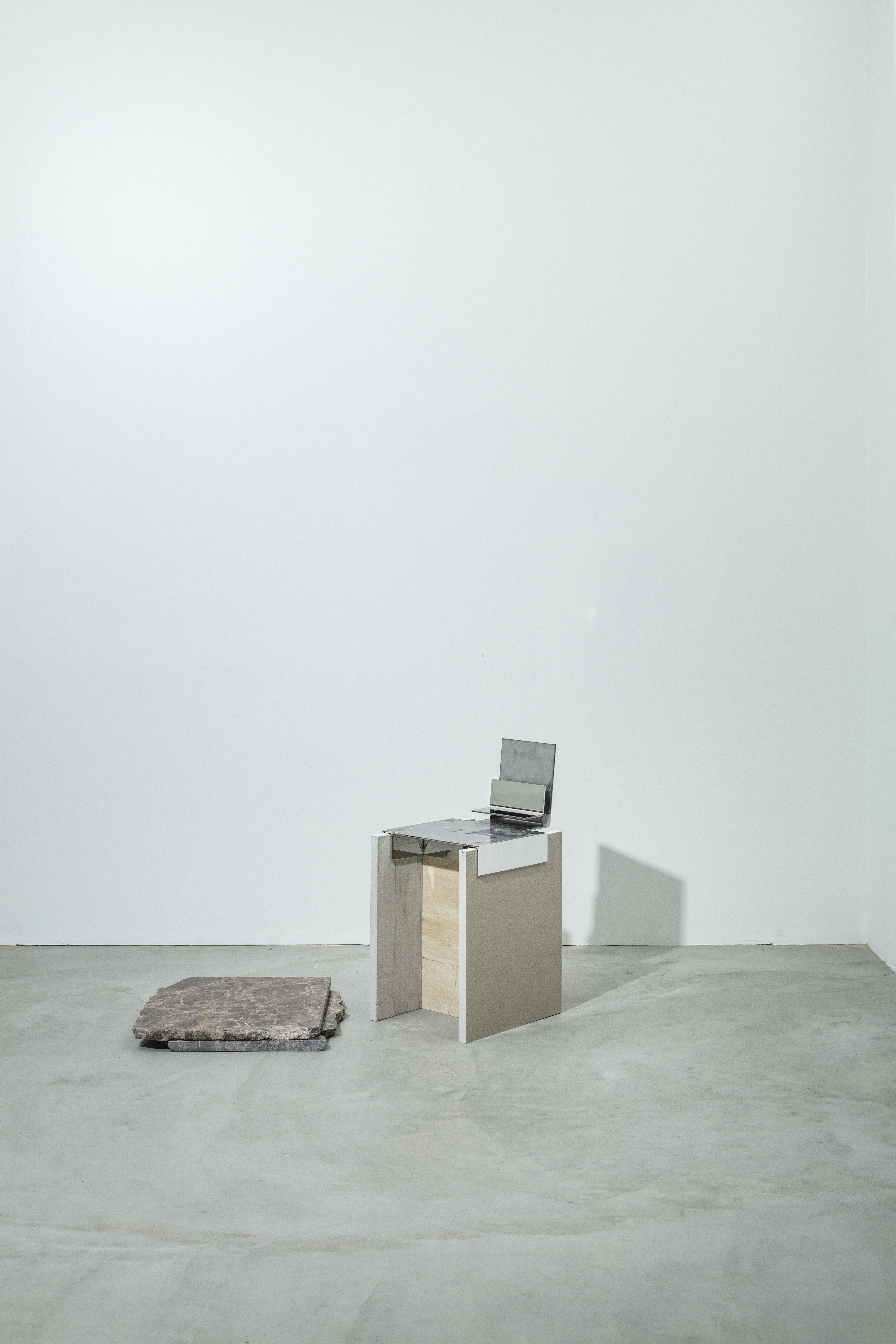
Stone plays a particularly significant role within the project. Instead of disguising chipped edges, fractured surfaces or natural variation, the system allows these characteristics to remain visible. Pieces of stone that would ordinarily be discarded become load-bearing components, their weight and permanence balanced against lighter materials through a simple assembly method.
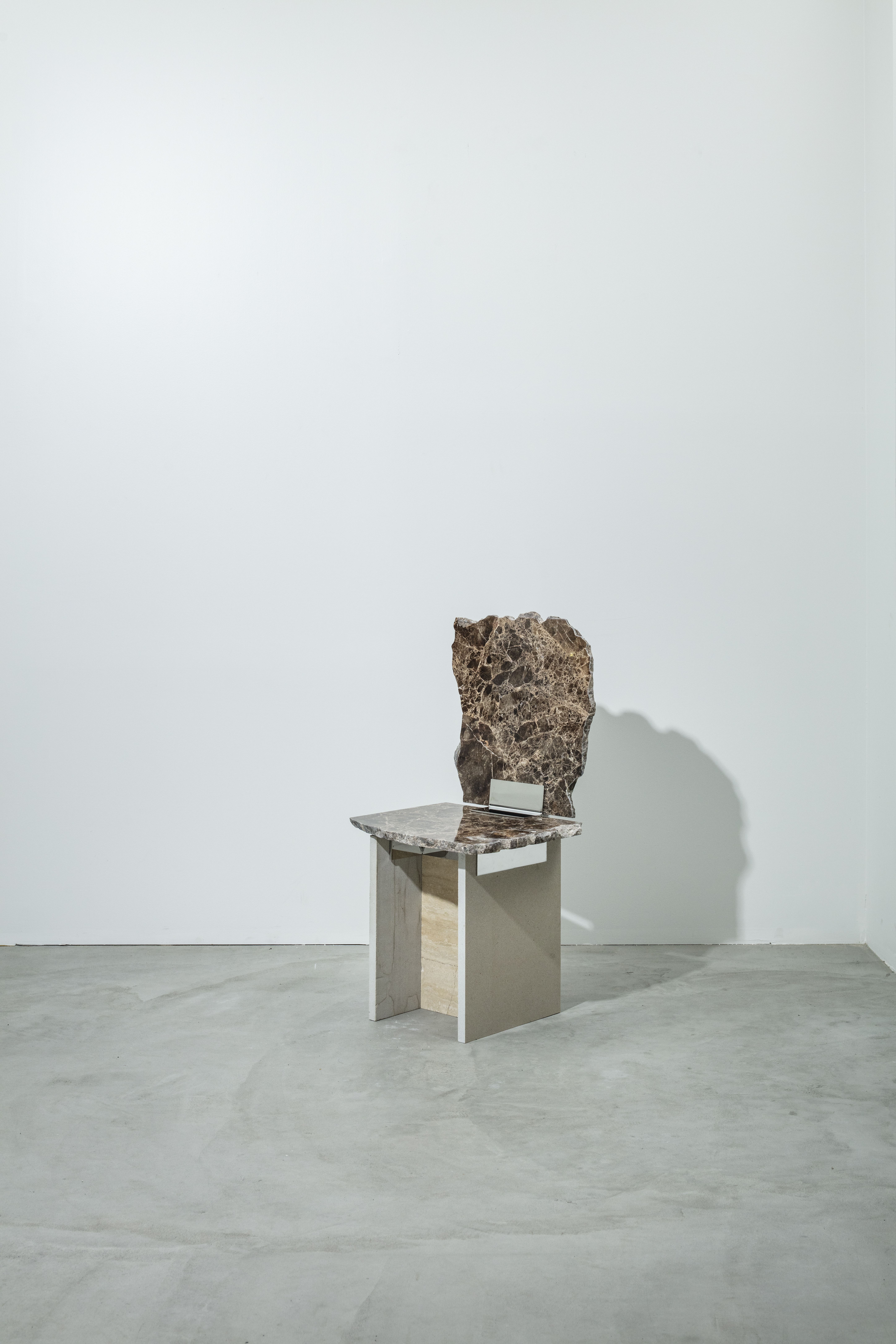
The project also rethinks the architectural idea of the joint. Conventionally developed to create precise, uniform construction, joints here perform a different function, accommodating difference rather than eliminating it. Fragments are connected with their imperfections intact, allowing contrasting materials to coexist without being forced into visual consistency.
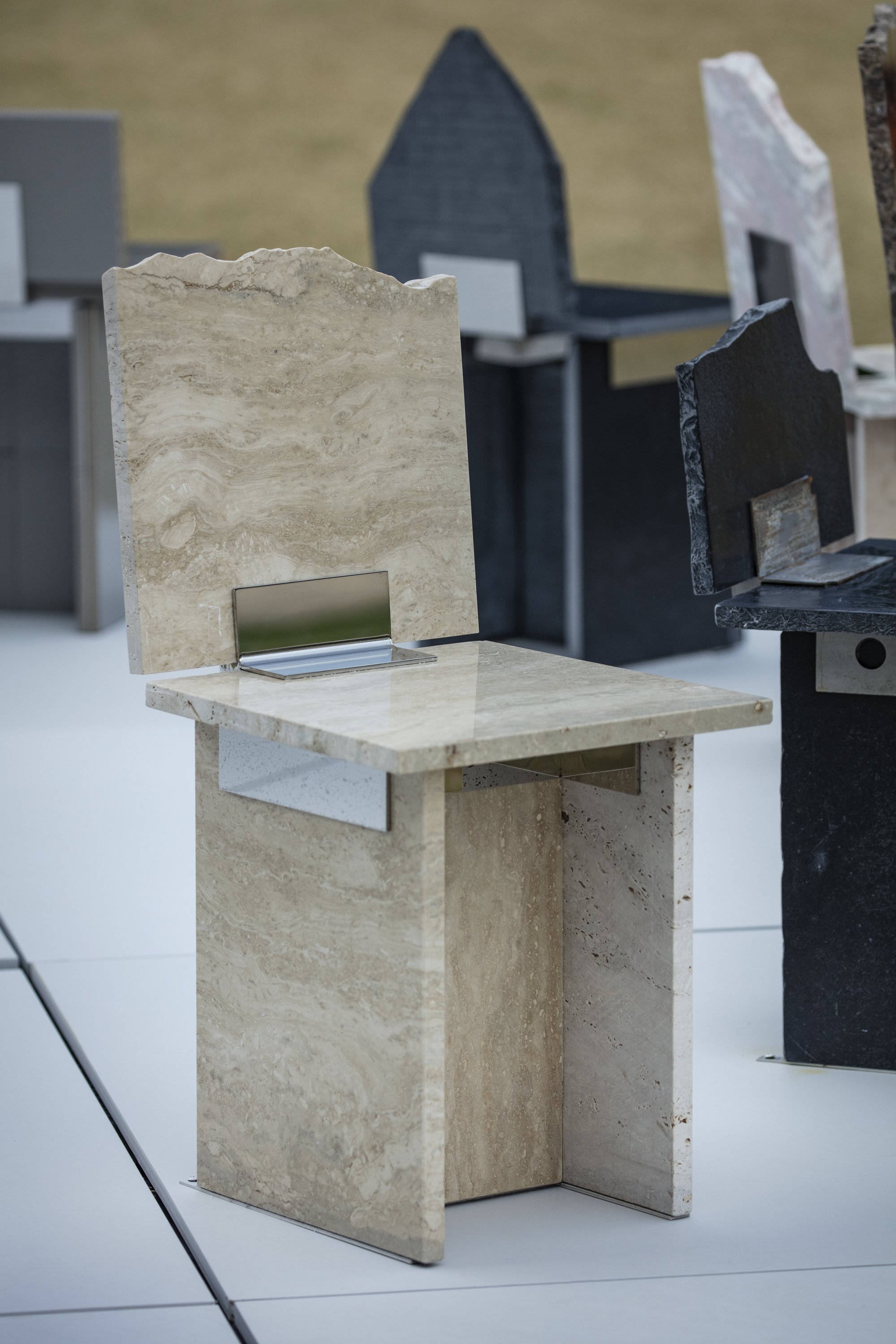
In doing so, SUR+PLUS shifts the discussion around circular design away from recycling alone and towards the systems that generate excess in the first place. By demonstrating that surplus stone and other architectural materials can retain both structural and aesthetic value without further processing, AtMa offers an alternative model in which material differences become the defining quality of the design rather than a problem to be concealed.
All images © Kenta Hasegawa