

Surface Spot: Fictional Ruins

In Greek mythology, when Pandora opened Zeus’s box, she released irreversible evils upon the earth. The recent news cycle concerning the undressing of women by Elon Musk’s Grok is, for many, further proof that AI is our modern-day version of the box.
Yet, as speculation about AI’s future impact continues to circulate at an adrenaline-inducing rate, there are clearly opportunities to utilise it as a practical tool, for good - particularly for creatives who are interested in the potential of text-to-image tools such as Midjourney.
Agata Murasko is a London-based architect and digital artist who creates spatial narratives that sit at the intersection of digital archaeology, visual storytelling and speculative design. In her work, the lines between fiction and reality are deliberately blurred.

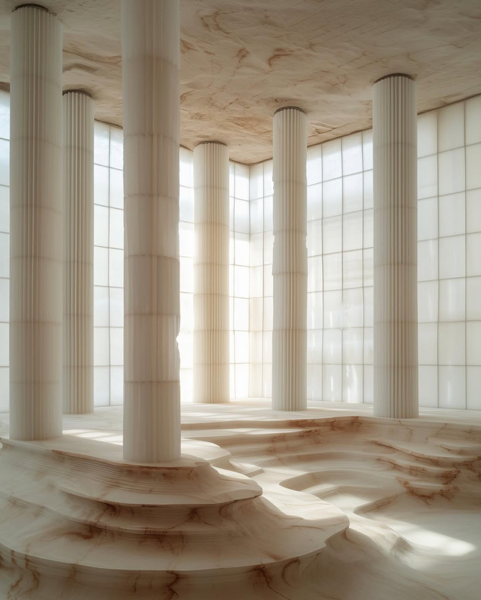
In her recent self-initiated research project titled Fictional Ruins, Agata has been exploring the notion of architectural ‘ruin’ through the collective memory of A.I. via Midjourney. Whenever prompted with a specific text, the software generates variants that conform to its own patterns, while also introducing some level of variation.
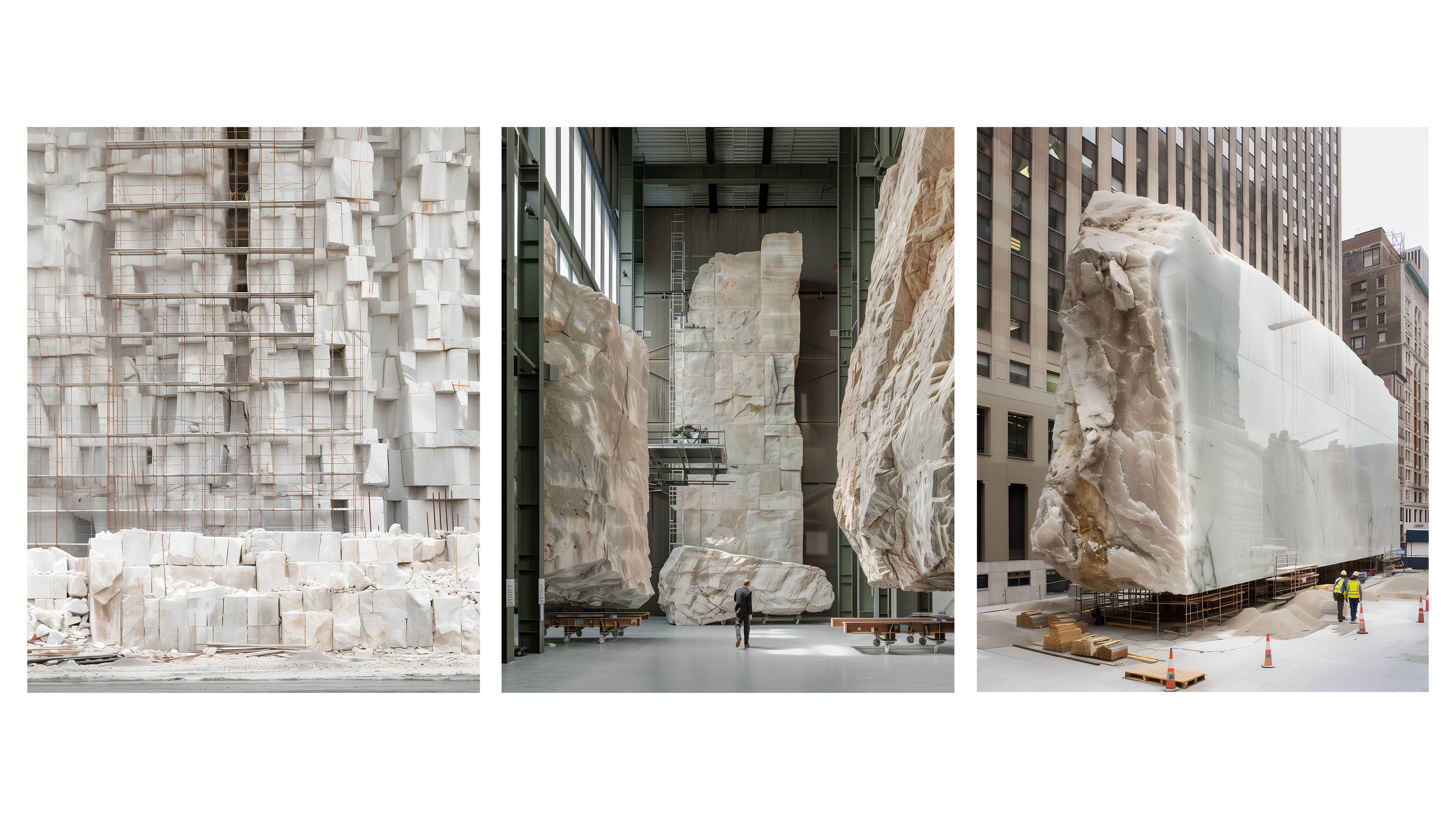
By slowly excavating visual fragments of the data used to train the A.I. tool, emerging patterns began to suggest prevailing visual representations of architectural ‘ruins’ assembled from these shards. As she explains, Agata became interested in “the slight deviations from the patterns, or one might say errors and accidental anomalies,” which she has worked into her images, while utilising the tool as a collaborator.
By blending traditional methods and A.I., Agata develops imaginary that is evocative, poetic, and at times uncanny. Her images represent spatial sequences where ancient structures anchor contemporary spaces, blurring the boundary between real and surreal. Through these speculative narratives, she aims to invite audiences to reimagine architectural ruins not as remnants, but as sites of possibility. And perhaps unsurprisingly, given its ability to endure over time, stone is consistently and prominently the material of choice to do so.
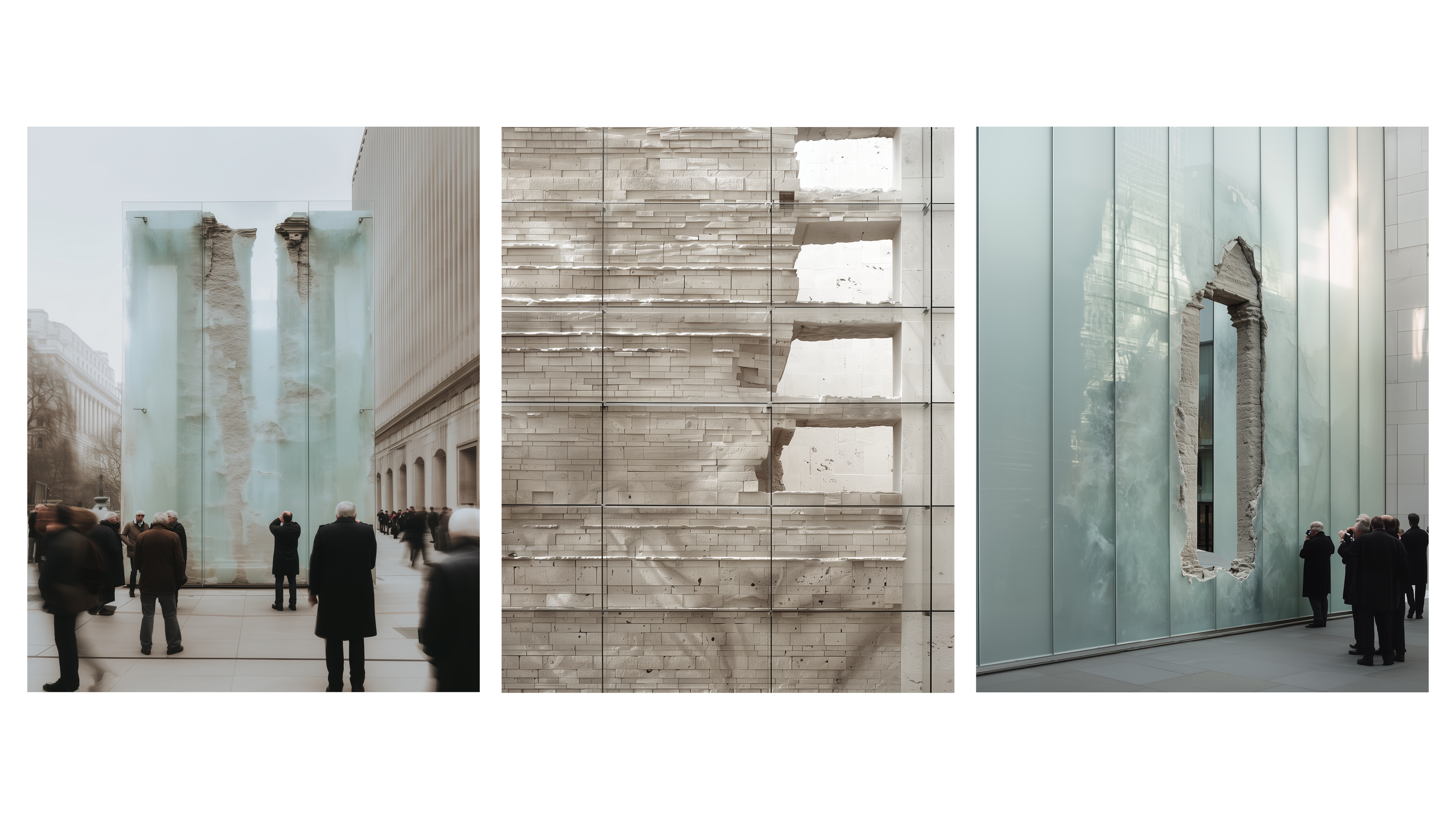
Drawing inspiration from literature, observations, and her experience as an architect working on building reuse projects, Agata is challenging this novel technology and the assumptions we may be making about it. She hopes that her images can “enhance our conceptual thinking and what value as creatives we bring in the context of the emerging A.I. technologies.” Hope is, after all, the one thing Pandora managed to leave in the box.