

Case Study: Whitberry House, Pend Architects

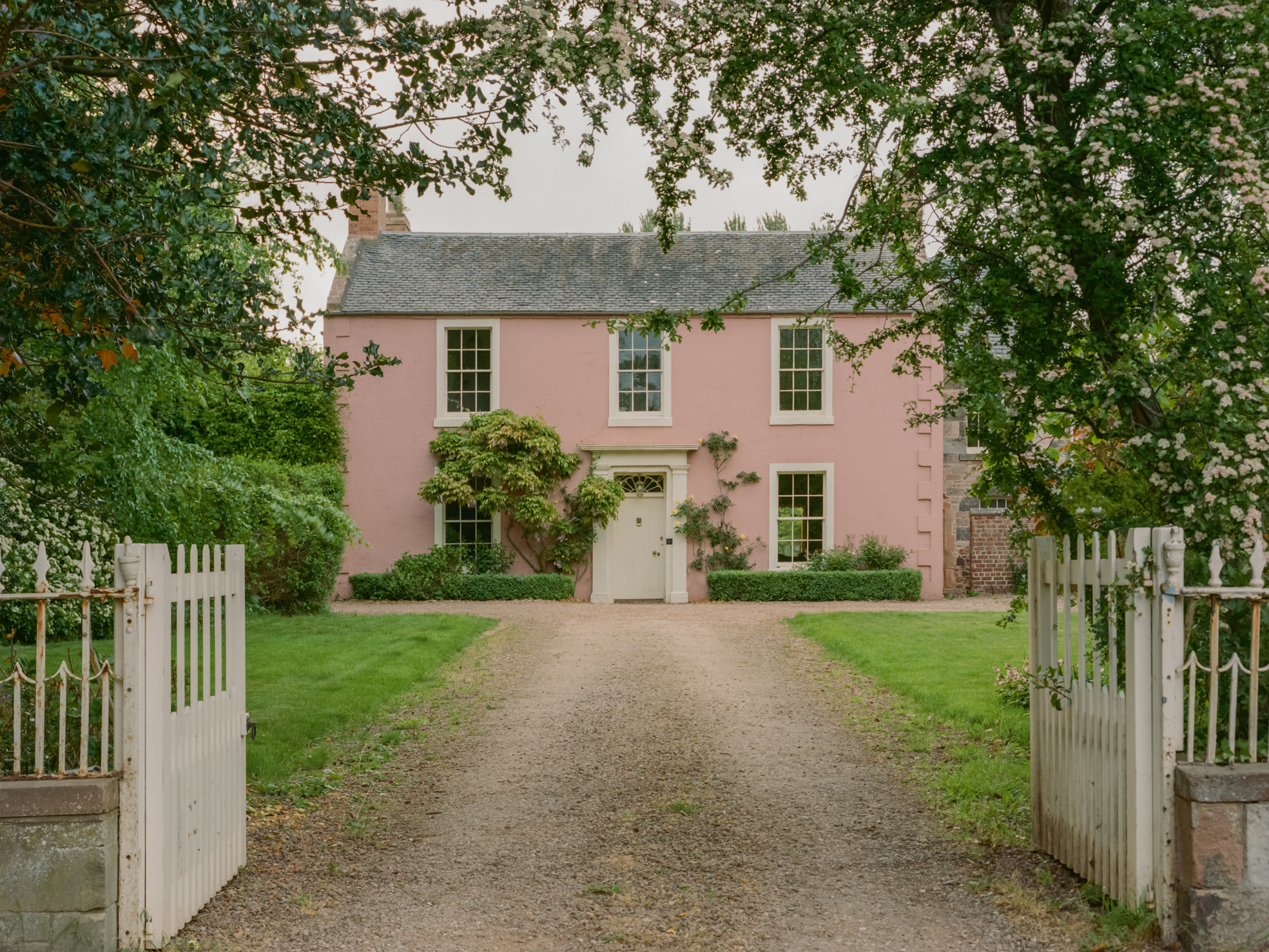
While Whitberry House may not be a brand new project, its bright and cheery exterior conjures a welcome reminder of the warmer days of its completion. As we continue to persevere through the winter gloom, and hope that this Groundhog Day won’t signal a delay to spring, it also stands out as a carefully judged example of how stone and masonry can be used to extend a historic building without resorting to pastiche or erasure.
The renovation and extension of this Grade B listed Georgian farmhouse by Edinburgh-based Pend Architects, demonstrates how contemporary stonework can take its place within a long architectural lineage.
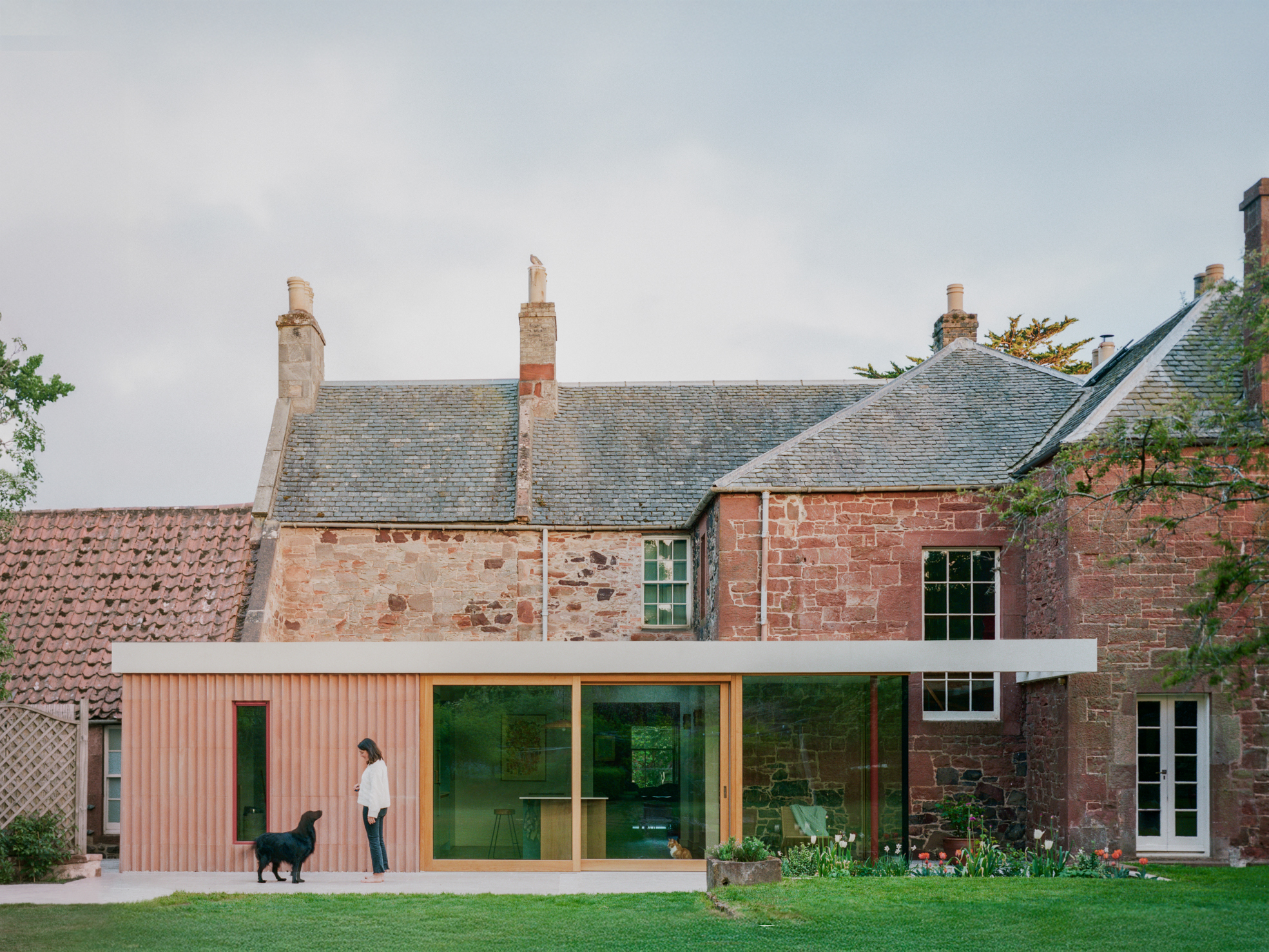
Whitberry’s front elevation is composed and familiar, finished in the soft pink tones typical of East Lothian. The rear, however, tells a different story. Over time, the house had accumulated a series of additions in reddish sandstone and brick, each reflecting the construction methods and priorities of its era. These layers of masonry were visually rich but spatially unresolved, resulting in a fragmented elevation and an interior plan broken into narrow, poorly connected rooms.
Pend Architects approached the project as an exercise in continuity rather than correction. Founded in 2021, the practice has developed a reputation for working sensitively within historic contexts, with a strong emphasis on material intelligence. At Whitberry, the aim was not to restore an imagined original state, but to add another chapter, and one that could sit comfortably alongside the existing stonework while clearly belonging to its own time.
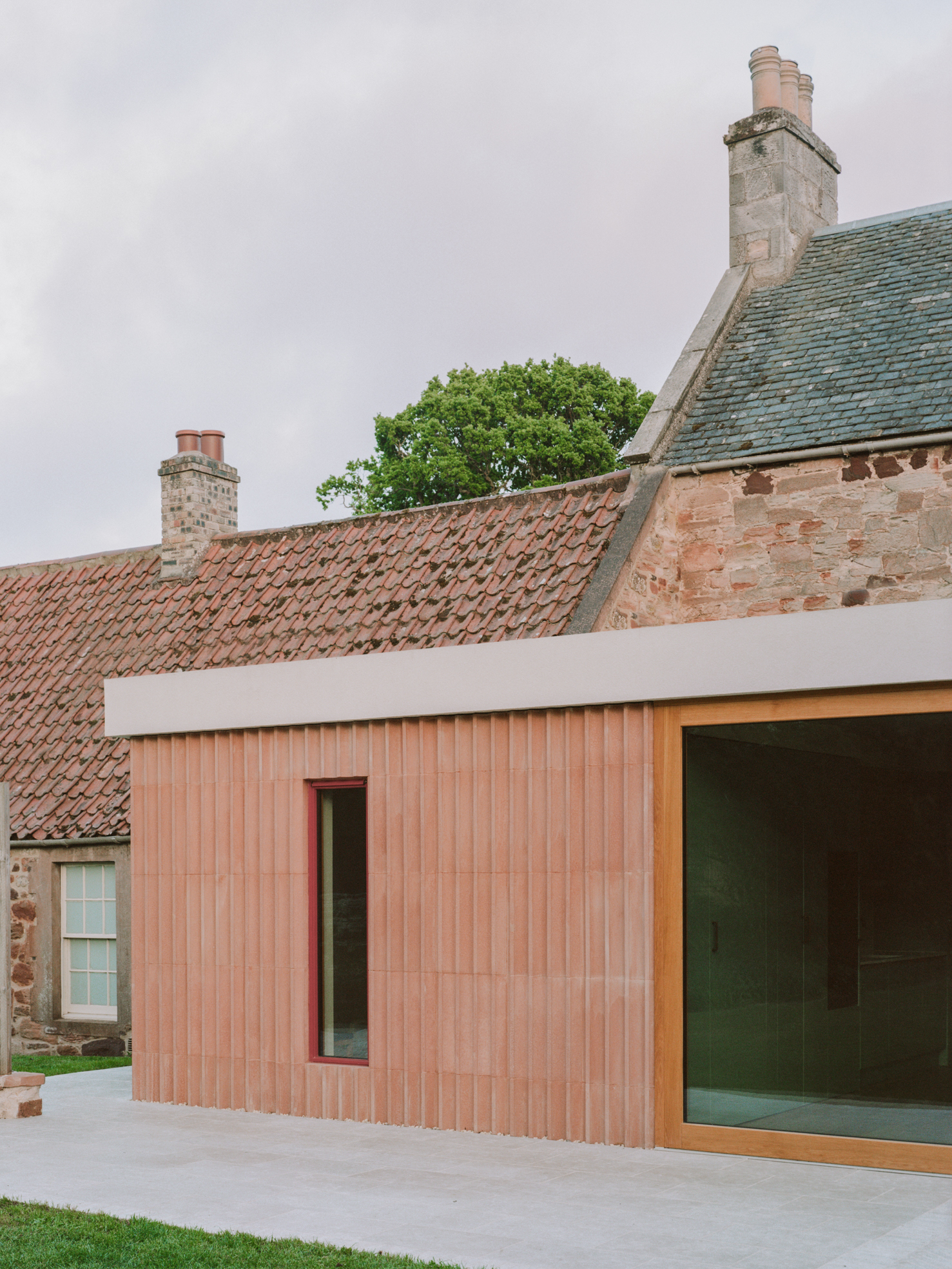
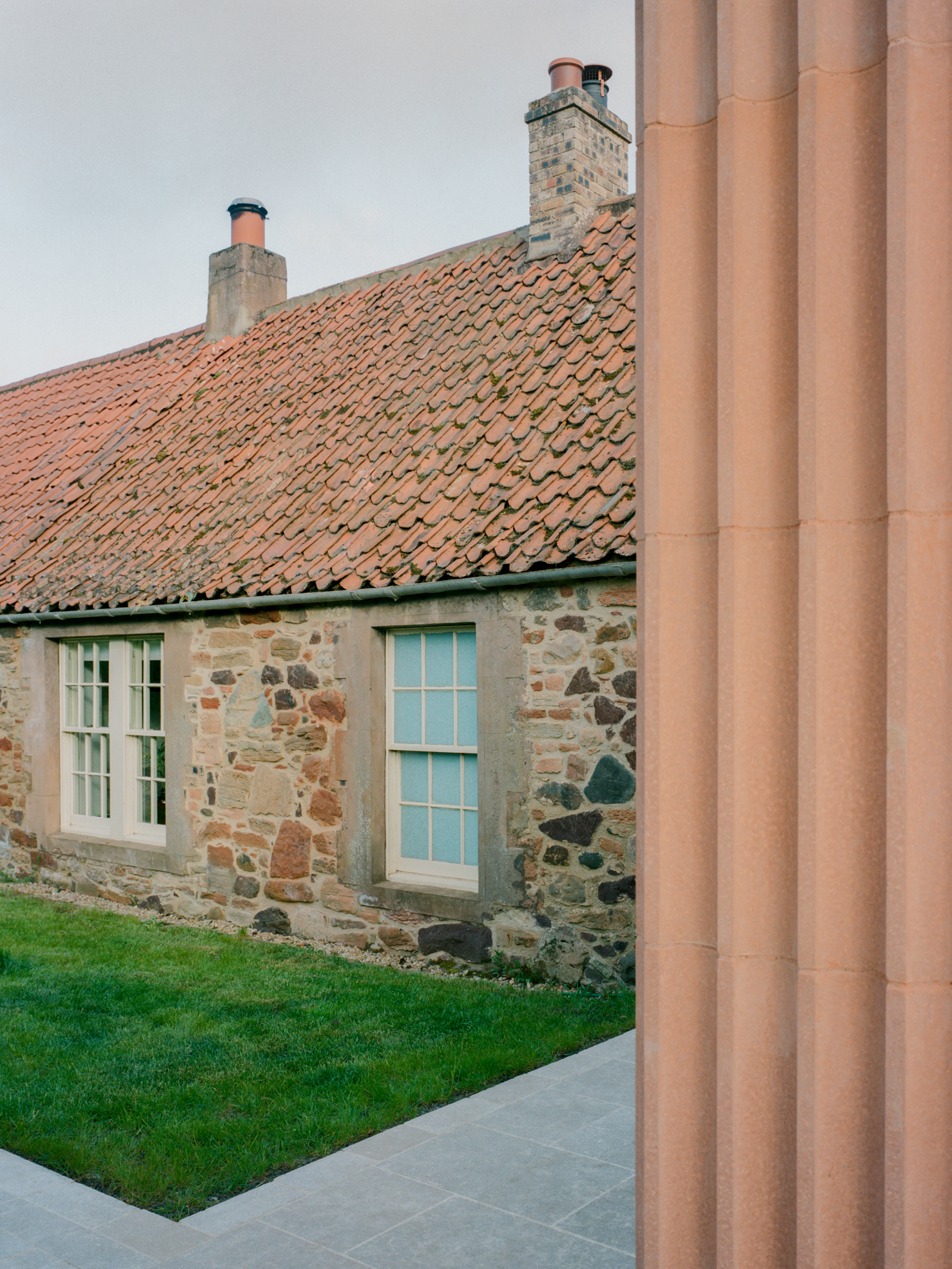
The new rear extension consolidates the disparate historic additions into a more legible composition. Central to this is a precast stone wall designed by the architects. Its pale, blush-toned colour draws directly from the existing East Lothian sandstone and brick, but the surface treatment is distinctly contemporary. Fluting introduces depth and rhythm, catching light and shadow in a way that gives the wall a changing character throughout the day. Rather than copying historic tooling or coursing, the stonework acknowledges its neighbours through proportion, colour and weight.
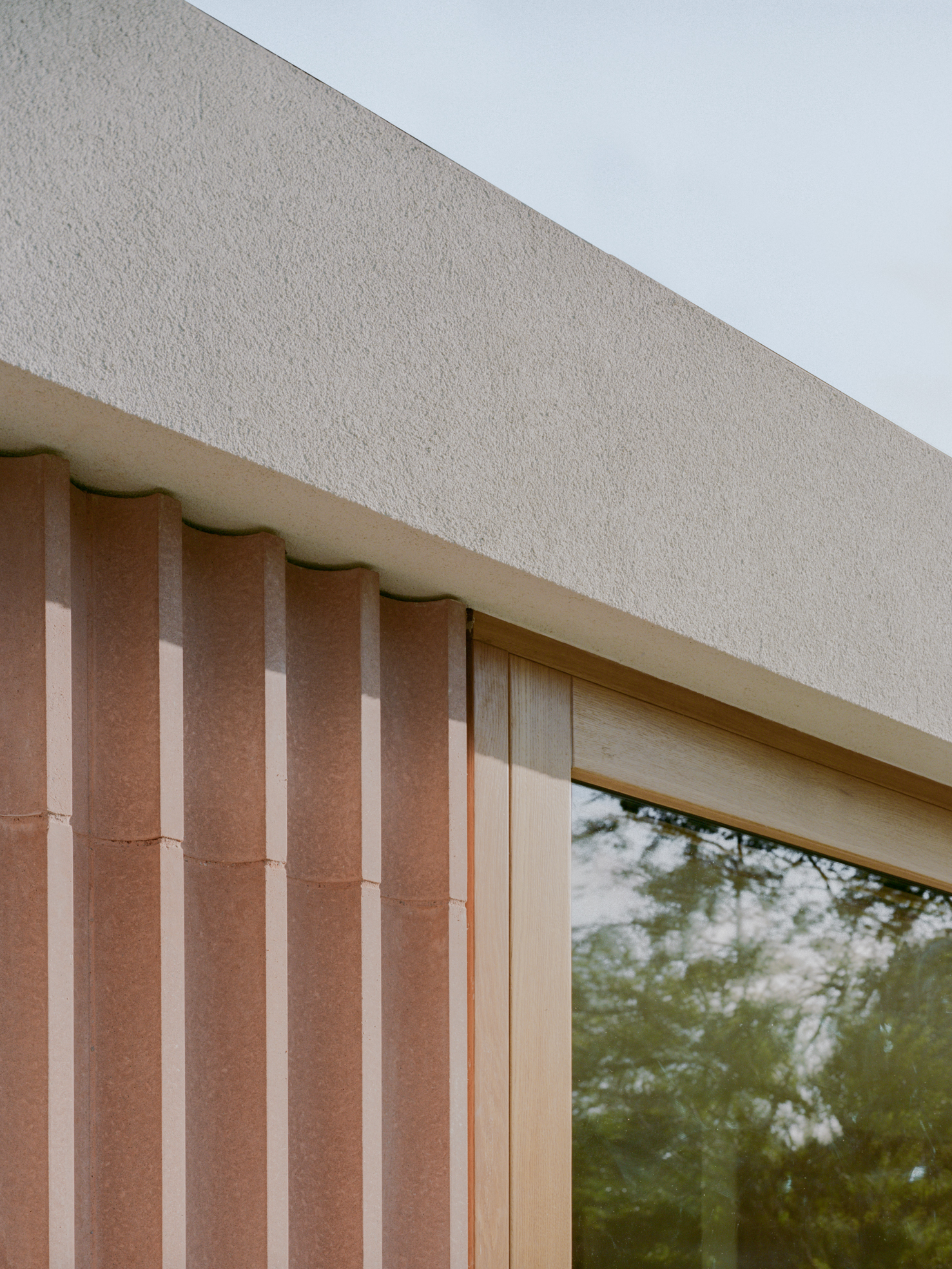
This stone wall forms the primary tactile element of the extension and is complemented by a horizontal concrete fascia that runs across the rear elevation. The fascia acts as a visual anchor, tying together old masonry and new intervention without competing with either. Below it, the stone continues the narrative of incremental growth that defines the house, while above, carefully placed glazing opens the interior to the garden.
The junctions between materials are handled with particular care. Full-height glazing meets the original stone wall of the farmhouse in a flush return, allowing the historic masonry to read uninterrupted inside the house. This move preserves daylight to an existing stair window while reinforcing the continuity of the stone fabric. Internally, the same wall becomes part of the kitchen, blurring the boundary between old structure and new space.
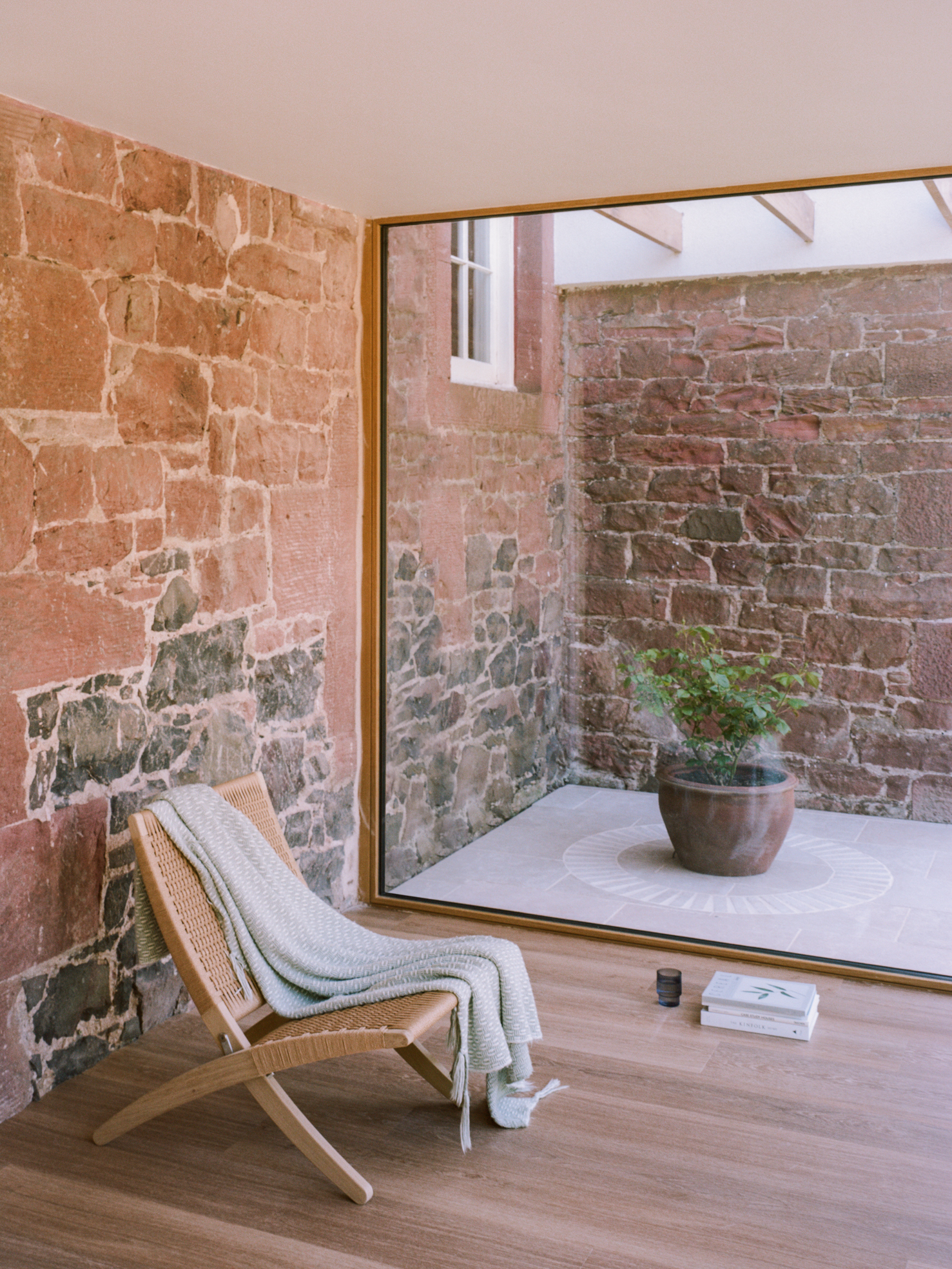
Stone and masonry are not treated as backdrop but as active participants in shaping the plan. The relocation of the kitchen into the extension allowed Pend to address one of the project’s key challenges: a dark, inward-looking ground floor. A vaulted rooflight brings daylight down onto the stone surfaces, enhancing their texture and colour, while wide internal openings allow light to filter through adjoining rooms.
Elsewhere, the existing masonry dictated a more restrained approach. Where original stone and brick were retained, interventions are minimal, allowing differences in colour, scale and construction to remain legible. The new stonework does not attempt to disguise itself as historic, but neither does it overwhelm what came before. Instead, it reinforces the idea that the house is an accumulation of moments, each expressed through the materials available at the time.
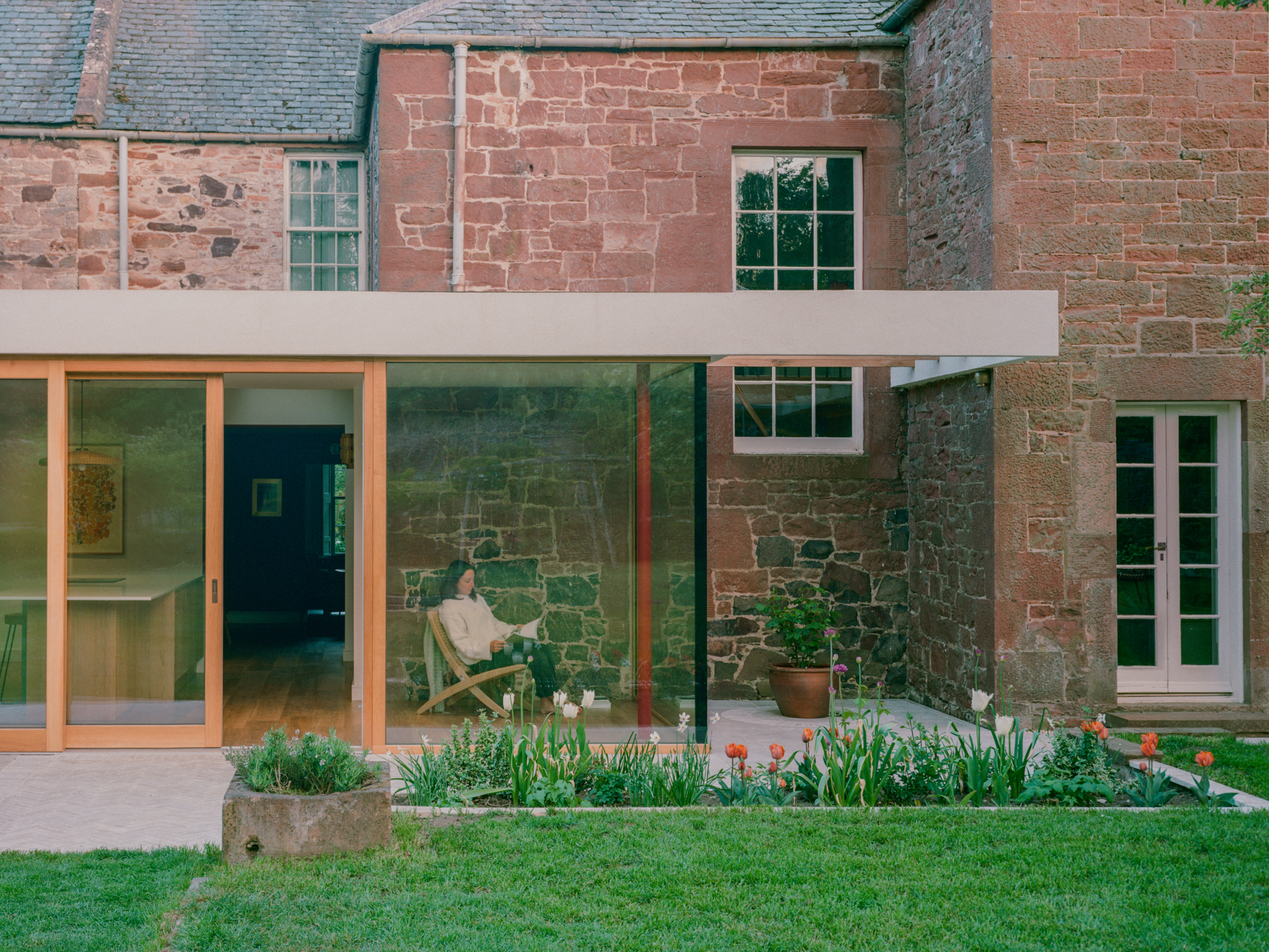
Securing planning approval for a listed building required Pend to articulate the value of adding yet another layer to an already complex structure. The argument rested on the idea that the house had always evolved through masonry additions, and that a carefully coloured, detailed and proportioned contemporary stone extension was a continuation of that process rather than a disruption.
Whitberry House shows how stone can be used not as a nostalgic gesture, but as a living material. By embracing contrast in technique while maintaining continuity in tone and mass, Pend has created an extension that feels settled, deliberate and quietly confident. It is a project that rewards close attention, particularly in the way new stonework converses with centuries of masonry already in place.
All images © Lorenzo Zandri